

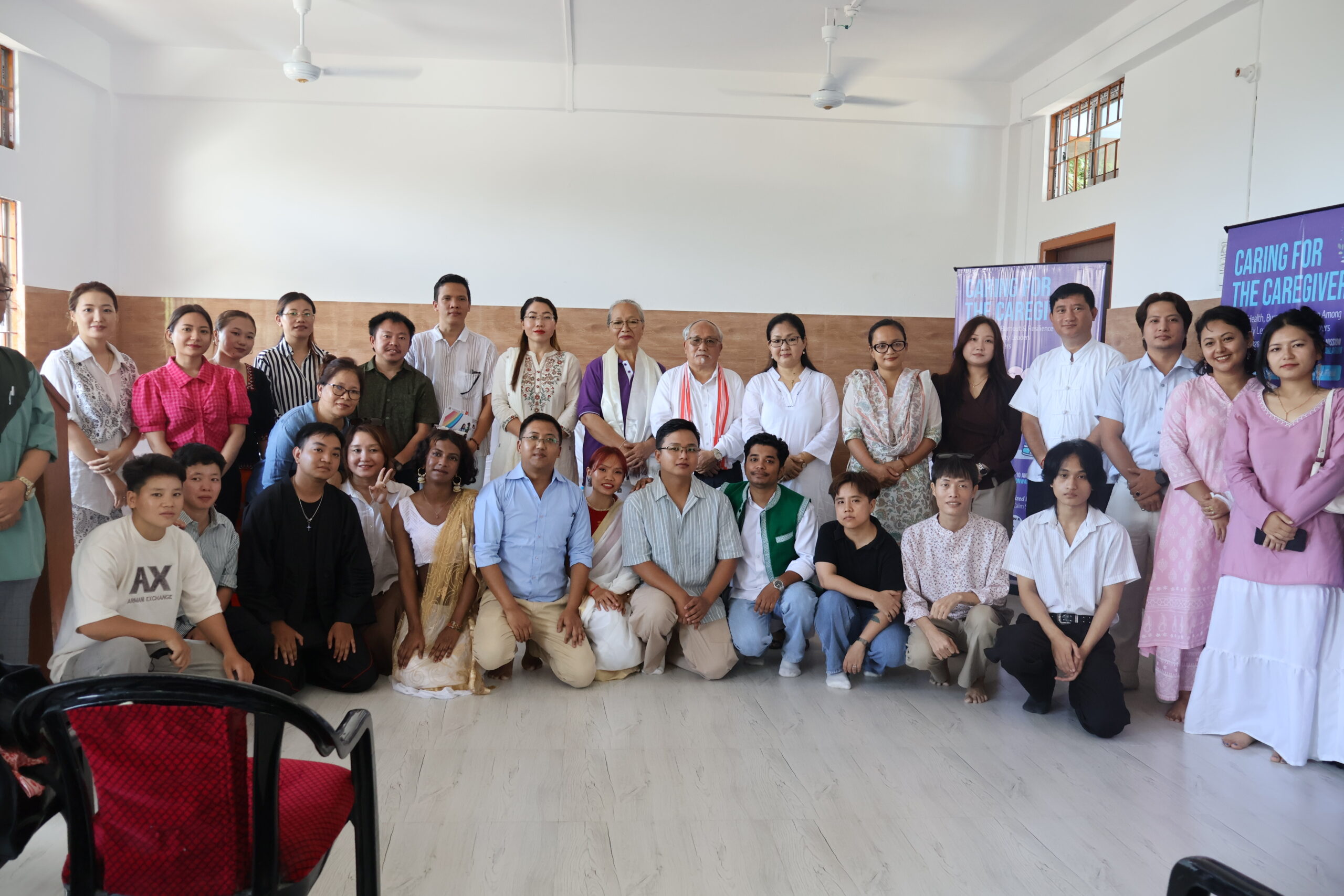
NAHARLAGUN : AP QueerStation, in collaboration with Oju Mission and The Calm Space, organised an invite-only programme titled ‘Caring for the Caregivers’ to promote conversations on mental health, burnout and resilience among community leaders, caregivers, frontline workers and changemakers.
The event brought together psychologists, journalists, police personnel, environmentalists, activists, development practitioners and social workers to reflect on the importance of supporting those who dedicate their lives to caring for others.
Welcoming the participants, Oju Mission Chairperson Anya Ratan shared her personal journey as a caregiver and the challenges of leading a care institution. Recalling the difficulties faced during the COVID-19 pandemic, she spoke about the emotional, financial and personal pressures involved in ensuring the safety and wellbeing of children under her care. She said the experience strengthened her resolve to continue serving society with compassion and urged participants to remember that caring for others must also include caring for oneself.
The chief guest, Arunachal Pradesh Women’s Welfare Society (APWWS) President and women’s rights activist Adv Jarjum Ete, highlighted the emotional pressures faced by people working in the social sector, particularly women leaders devoted to community service. Stressing the importance of self-care, she said caregivers often neglect their own physical and mental wellbeing while supporting others and urged them to prioritise their health to continue serving with empathy and resilience.
Guest of honour Arunachal Pradesh State Commission for Protection of Child Rights (APSCPCR) member Niri Chongrowju appreciated the organisers for creating a platform to discuss mental health and inclusivity. Speaking on the rights of transgender persons, he highlighted legal and policy initiatives, including the Transgender Persons (Protection of Rights) Act, 2019, the National Council for Transgender Persons, the SMILE Scheme, the National Portal for Transgender Persons and awareness initiatives aimed at promoting inclusion and reducing social stigma.
The first panel discussion, moderated by Wanggo Socia, featured senior journalist Indu Chuku, Itanagar Police Station Officer-in-Charge Inspector Rina Sonam, environmental activist Adv Ebo Mili, social activist Tadak Nalo and AP QueerStation founder Sawang Wangchha.
The panellists shared experiences from their respective professions, highlighting the emotional demands of journalism, policing, social activism and advocacy. They stressed the importance of recognising mental health challenges, building resilience and creating supportive environments where individuals feel comfortable seeking help.
Representing the LGBTQIA+ community, Sawang Wangchha spoke about the emotional impact of discrimination, bullying and the struggle for acceptance. He called for greater reliance on scientific evidence over prejudice in addressing issues affecting the community and underscored the importance of safe and inclusive spaces for vulnerable groups.
The second panel discussion, moderated by Tomo Habung, featured mental health professionals Dr Yuma Narah, Dr Leeyir Ete, Dr Tadar Amar, Mayuri Handique and Pimpy Tachung.
The experts discussed burnout, depression, chronic stress and resilience, emphasising that healing requires support, healthy coping mechanisms and timely professional intervention. They highlighted the role of counselling, creative expression and self-awareness in promoting mental wellbeing and encouraged participants to recognise early signs of burnout and seek help without hesitation.
Delivering the vote of thanks, Sawang Wangchha thanked Oju Mission, the panellists, volunteers, partners and participants for making the programme a success. He said the event was intentionally organised as an invite-only gathering to create a safe and meaningful space for open dialogue, and expressed hope that it would encourage more conversations on mental health across Arunachal Pradesh.
He also acknowledged the support of the Mariwala Health Initiative (MHI) and observed that programmes such as Caring for the Caregivers are essential for reducing stigma, encouraging people to seek support and fostering a more compassionate and mentally healthy society.
The programme concluded with participants reaffirming their commitment to promoting safe spaces, mental wellbeing and the message that caregivers, too, deserve care, support and compassion.