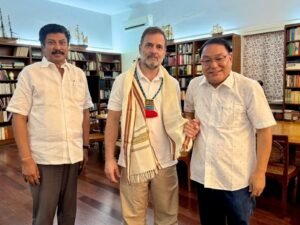

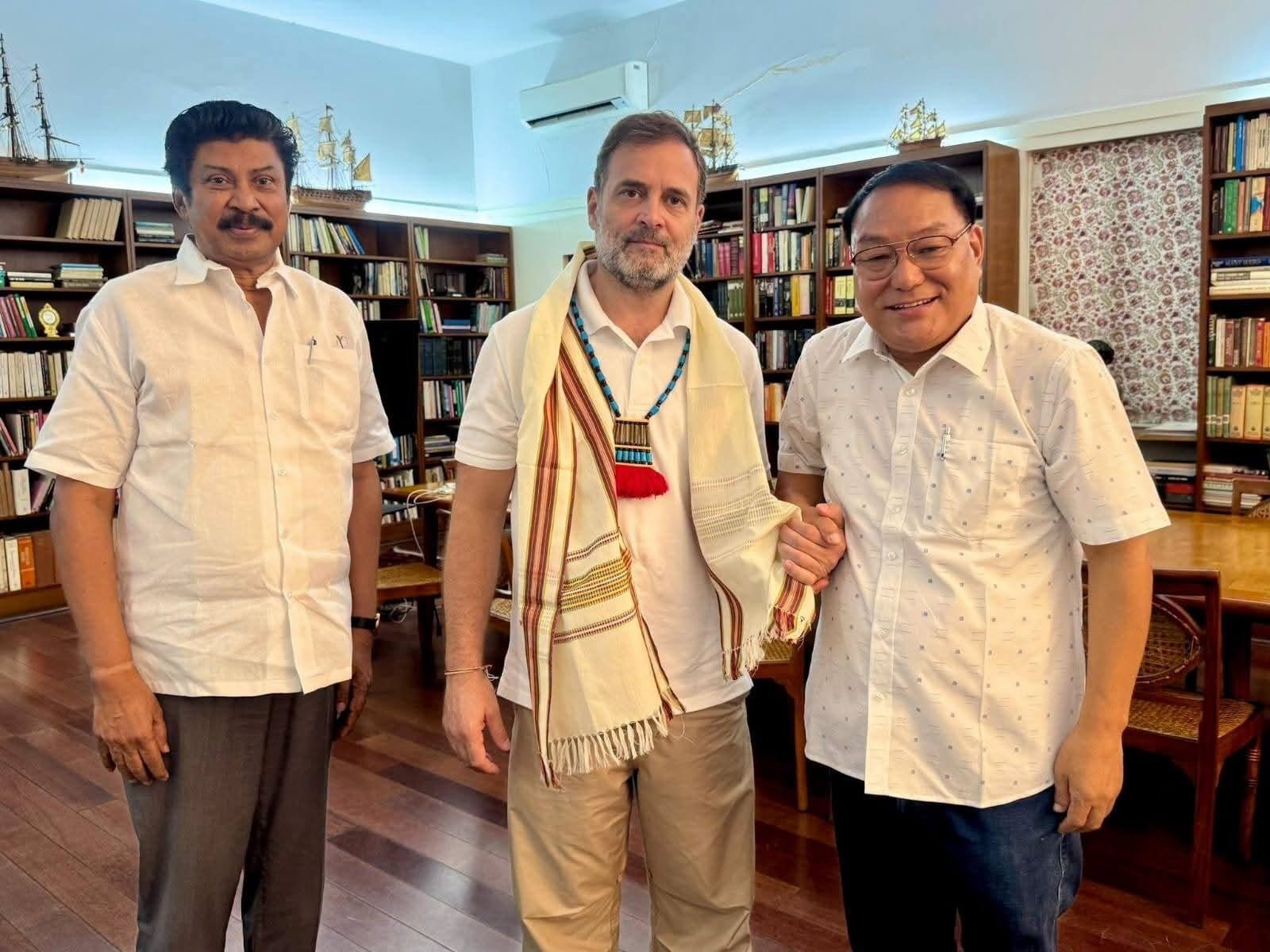
ITANAGAR : The Arunachal Pradesh Congress urged Leader of Opposition in the Lok Sabha Rahul Gandhi to take up four issues concerning the state in Parliament, alleging that the BJP-led governments at the Centre and in the state have failed to address them.
The demands were made in a memorandum submitted by state Congress president Bosiram Siram to the party leadership during an All India Congress Committee (AICC) review meeting in New Delhi, a statement said on Saturday.
The state Congress sought an amendment to Article 371(H) to bring it on a par with Article 371(A) applicable to Nagaland and Article 371(G) applicable to Mizoram, arguing that the existing provisions do not adequately protect the state’s land, customary laws and natural resources.
The state unit said stronger constitutional safeguards, on the lines of the Sixth Schedule, were needed to strengthen tribal self-governance and protect indigenous communities.
The state Congress also reiterated its opposition to the proposed Siang Upper Multipurpose Project (SUMP), alleging that the mega dam in the seismically sensitive region could trigger large-scale ecological damage.
Claiming that the project could affect more than 2 lakh people and submerge ancestral land and heritage sites such as Kekar Monying, the state Congress said national security concerns over China’s upstream activities should not override the principle of free, prior and informed consent of local tribal communities.
The memorandum also raised concerns over Chinese activities along the international border, accusing the BJP of “selective nationalism” and demanding a White Paper from the Centre on the border situation.
The state Congress also demanded the restoration of the Old Pension Scheme (OPS), criticising the National Pension System (NPS) and alleging that it leaves government employees financially insecure.
Siram urged Gandhi to strongly raise these issues in Parliament, asserting that Arunachal Pradesh should not be treated merely as a resource-rich region but as the homeland of indigenous communities. (Source: PTI)