

JOTE/ITANAGAR, AUG 26:
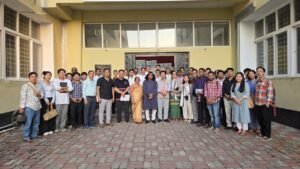
A gender sensitisation session was organised by the Gender Awareness Committee of the Film and Television Institute of India (FTII), Itanagar as part of the Orientation Week for the institute’s second batch, bringing students into an interactive discussion on gender, sexuality, identity, lived experiences and their representation in cinema.
The session was facilitated by LGBTQIA+ activist and AP QueerStation founder Sawang Wangchha and Liyom of AP QueerStation.
The discussion began with students reflecting on the representation of different identities in films and gradually moved beyond the question of visibility to examine how communities are portrayed and the assumptions and narratives associated with such portrayals.
The facilitators also discussed the LGBTQIA+ spectrum and the diverse identities and experiences it encompasses, placing the conversation in the social and cultural context of Arunachal Pradesh. Reference was made to identities and social spaces within tribal communities, including Mumbar and Mumbal, highlighting the importance of understanding local histories, cultures and social structures while engaging with questions of identity.
Wangchha encouraged students to travel across Arunachal Pradesh, interact with different communities and understand their lived realities rather than viewing communities merely as subjects for cinematic representation. He stressed the importance of listening, observation and research in developing authentic stories.
Liyom shared her lived experience as a trans woman, providing students with insights into transgender identities and the challenges and everyday realities often overlooked in abstract discussions. An interactive question-and-answer session allowed students to seek clarification and engage directly with the issues raised.
The session also examined stereotypical portrayals of queer characters, particularly in Hindi cinema, where such characters have often been reduced to comic relief, ridicule, tragedy or spectacle. Students were encouraged to critically examine these patterns and consider their responsibility as future filmmakers in creating authentic and nuanced characters.
Wangchha said filmmakers have the creative power to move beyond conventional representations and tell diverse and authentic stories. He emphasised that inclusive cinema should create space not only for sexual and gender minorities but also for Indigenous communities of Arunachal Pradesh and other underrepresented groups across India.
The discussion underscored the importance of research, sensitivity and avoiding generalisations while representing communities. Students were encouraged to engage with people and their contexts to distinguish genuine representation from reproducing preconceived ideas.
The session concluded with an emphasis on viewing sensitisation as an ongoing process of learning, questioning and unlearning. Students were encouraged to carry these principles into their filmmaking practice by listening to lesser-heard voices, understanding diverse lived experiences and approaching representation with responsibility and openness.