

ITANAGAR, SEP 1:
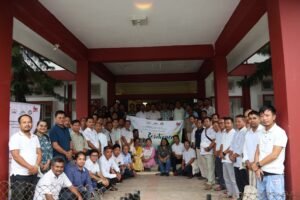
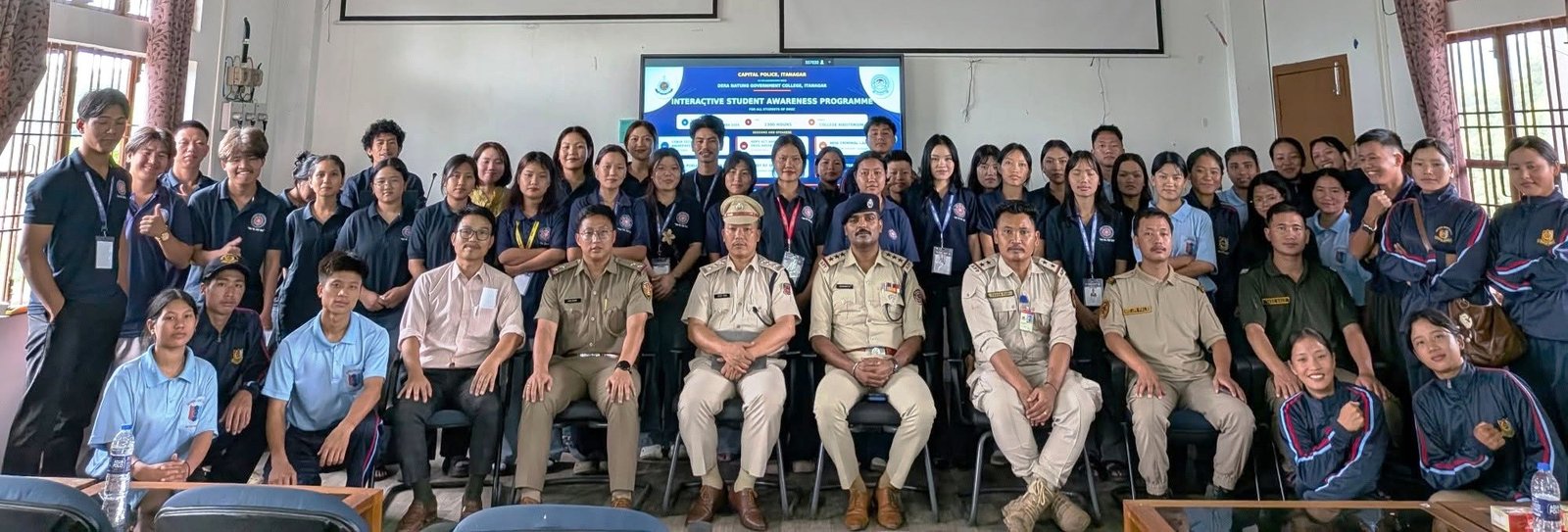
Dera Natung Government College (DNGC), Itanagar, in collaboration with Capital Police, organised an awareness programme for college students on cyber security, drug abuse prevention, new criminal laws and police-public relations at the college auditorium on Tuesday.
The programme aimed to sensitise students to emerging challenges related to cybercrime and substance abuse, familiarise them with recent changes in the criminal justice system and promote greater cooperation between the police and the public.
Capital Superintendent of Police Jummar Basar briefed the students on the responsibilities of the police in maintaining law and order, preventing crime and ensuring public safety. He emphasised coordinated efforts between law-enforcement agencies and the community, along with public cooperation, timely reporting of offences and responsible civic participation.
Speaking on police-public relations, Capital Deputy Superintendent of Police Techi Nega stressed the importance of mutual trust, communication and cooperation between the police and the public. He urged students to cooperate with law-enforcement agencies in preventing crime and maintaining peace and order.
Capital Police Inspector Sushant Saurabh Jha spoke on the new criminal laws and explained the major changes in India’s criminal justice system. He said the Indian Penal Code (IPC), 1860, the Code of Criminal Procedure (CrPC), 1973, and the Indian Evidence Act, 1872, have been replaced by the Bharatiya Nyaya Sanhita (BNS), 2023, Bharatiya Nagarik Suraksha Sanhita (BNSS), 2023, and Bharatiya Sakshya Adhiniyam (BSA), 2023, which came into force on July 1, 2024.
He explained that the BNS deals with offences and punishments, the BNSS governs criminal procedure, while the BSA deals with rules of evidence. He highlighted the greater emphasis under the new framework on technology, digital processes, speedy investigation and trial, and access to justice. Jha also urged students to remain aware of their rights and responsibilities as citizens.
On cyber security and awareness, Capital Police Sub-Inspector Kipa Robin cautioned students about common cybercrimes, including phishing, Unified Payments Interface (UPI) and Quick Response (QR) code fraud, social media impersonation, cyberbullying, stalking, sextortion and fake job or scholarship offers.
“Pause before you click, verify before you trust, and report quickly if something goes wrong,” Robin advised.
Students were also sensitised on protecting passwords, one-time passwords (OTPs) and personal information, enabling two-factor authentication and immediately reporting financial cyber fraud through helpline 1930.
Capital Police Sub-Inspector Padam Padi addressed the students on the Narcotic Drugs and Psychotropic Substances (NDPS) Act, 1985, and drug abuse prevention. He discussed factors such as curiosity, peer pressure, stress and social situations that can lead young people towards substance abuse and highlighted its adverse impact on health, academic performance, relationships and future prospects.
Padi cautioned students against possessing, carrying, storing, transporting or concealing suspicious substances for others and stressed the importance of early intervention and support for those struggling with drug dependence.
He shared the message “NO, MOVE, TELL, HELP” — refuse drugs, leave risky situations, inform a trusted person or authority when necessary, and help those requiring professional support. Students were also informed about assistance helplines, including 112, 14446 for de-addiction counselling and referral, and 1933 (MANAS) for drug-related matters.
The programme provided students an opportunity to interact with police officers and gain practical knowledge about contemporary challenges affecting young people. It concluded with a call for students to remain responsible and proactive citizens and contribute towards a safer and more informed society.