

JAIRAMPUR, SEP 2:
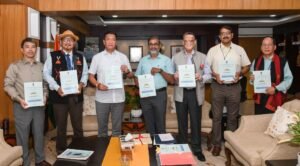
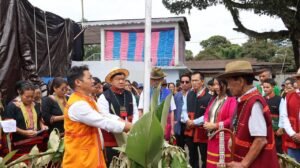
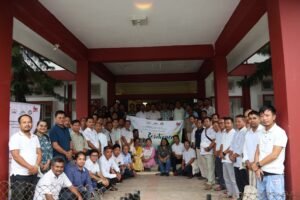
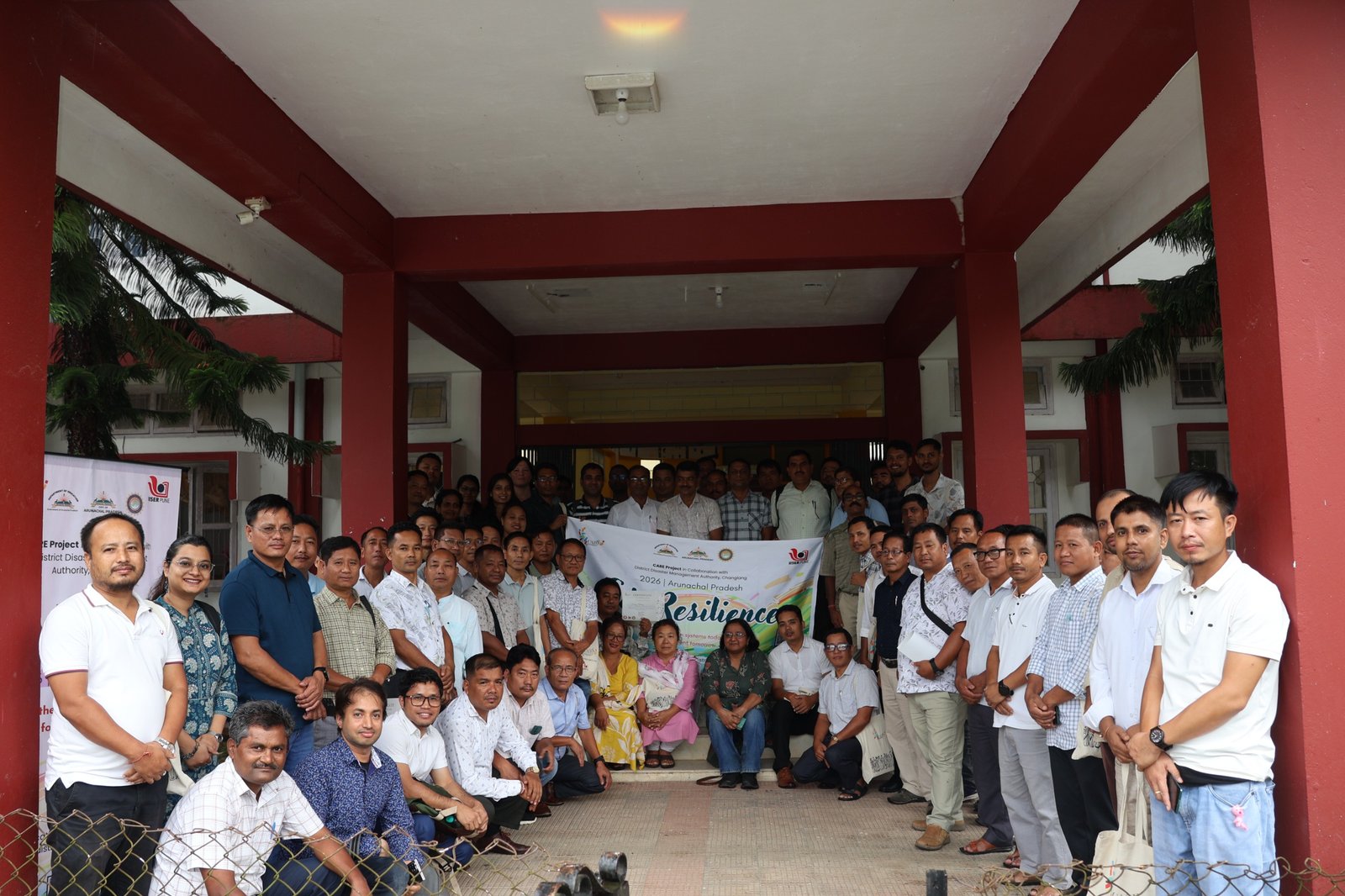
A district-level workshop, EduResilience 2026, was organised at Jairampur to strengthen disaster preparedness, climate education and resilience among schools across Changlang district.
Around 80 school headmasters, teachers, Block Resource Centre Coordinators (BRCCs) and Cluster Resource Centre Coordinators (CRCs) from across the district participated in the workshop, along with representatives of the district administration, Department of School Education, academia, development organisations and civil society.
The initiative was organised as part of a collaborative effort led by the Indian Institute of Science Education and Research (IISER), Pune, under its Communicating Action and Resilience for Environmental Health (CARE) Project, in partnership with the District Disaster Management Authority (DDMA), Changlang, and the Department of School Education, Changlang.
The workshop focused on integrating Disaster Risk Reduction (DRR), climate education and school safety into school planning and pedagogy. Participants were introduced to key DRR concepts, including hazards, exposure, vulnerability, capacity, preparedness and resilience.
A major component was the preparation of School Disaster and Climate Action Plans. Participating schools identified local hazards and climate-related risks, assessed vulnerabilities and available capacities, and developed practical measures covering preparedness, risk reduction, response and environmental sustainability.
Changlang District Disaster Management Officer (DDMO) Lobsang conducted a hands-on session on disaster management planning for schools and emphasised the importance of strengthening disaster and climate resilience in educational institutions to ensure the safety and well-being of children and the wider community.
The workshop also provided a platform for community validation of field findings from a PhD research study conducted by Sonjit Chakma, researcher at IISER Pune. Participants discussed the findings in relation to their local experiences and contributed community perspectives to the research.
IISER Pune Associate Professor and CARE Project Principal Investigator Dr Shalini Sharma highlighted the importance of climate-responsive thinking and experiential learning in schools. She said disaster and climate education was “not just a subject, but a necessity” for ensuring a livable future and equipping children to take informed action.
A practical demonstration on “Playful Paths for Planetary Care”, led by Ashok Rupner of the Science Activity Centre, IISER Pune, showcased activity-based learning approaches that can be adapted to government school settings.
District Community Health Centre Changlang General Duty Medical Officer (GDMO) Dr Dani Muna provided an overview of the public health implications of disasters and climate change. Representatives from NGOs, including Pratham and IFET, also shared perspectives on integrating climate education and resilience practices into school governance and pedagogy.
Deputy Director of School Education Changlang Rajiv Lomdak described the initiative as an important step towards strengthening climate-resilient education and disaster preparedness in schools. He emphasised the need to ensure continuity of learning during climate-related disruptions and highlighted the importance of combining local and scientific knowledge while preparing disaster and climate action plans.
During the concluding session, participating schools presented their draft plans and received feedback from facilitators and fellow participants. The presentations highlighted the importance of school leadership, student participation, coordination with local authorities and continued engagement with parents and communities.
The workshop concluded with a certificate distribution ceremony recognising the participation and contributions of the attendees.
Organisers emphasised that the plans should serve as living documents and be reviewed and updated regularly through consultations, safety assessments, awareness activities and preparedness exercises.
The initiative marked a step towards integrating disaster education and climate action into school planning across Changlang district and highlighted the importance of collaboration among educational institutions, disaster management authorities, researchers, schools, communities and civil society in building safer and more resilient learning environments.
The organisers said EduResilience 2026 would serve as a foundation for a long-term framework to strengthen climate and disaster literacy and resilience among children in Arunachal Pradesh, particularly those living in climate-sensitive and high-risk regions.