

NEW DELHI, SEP 19:
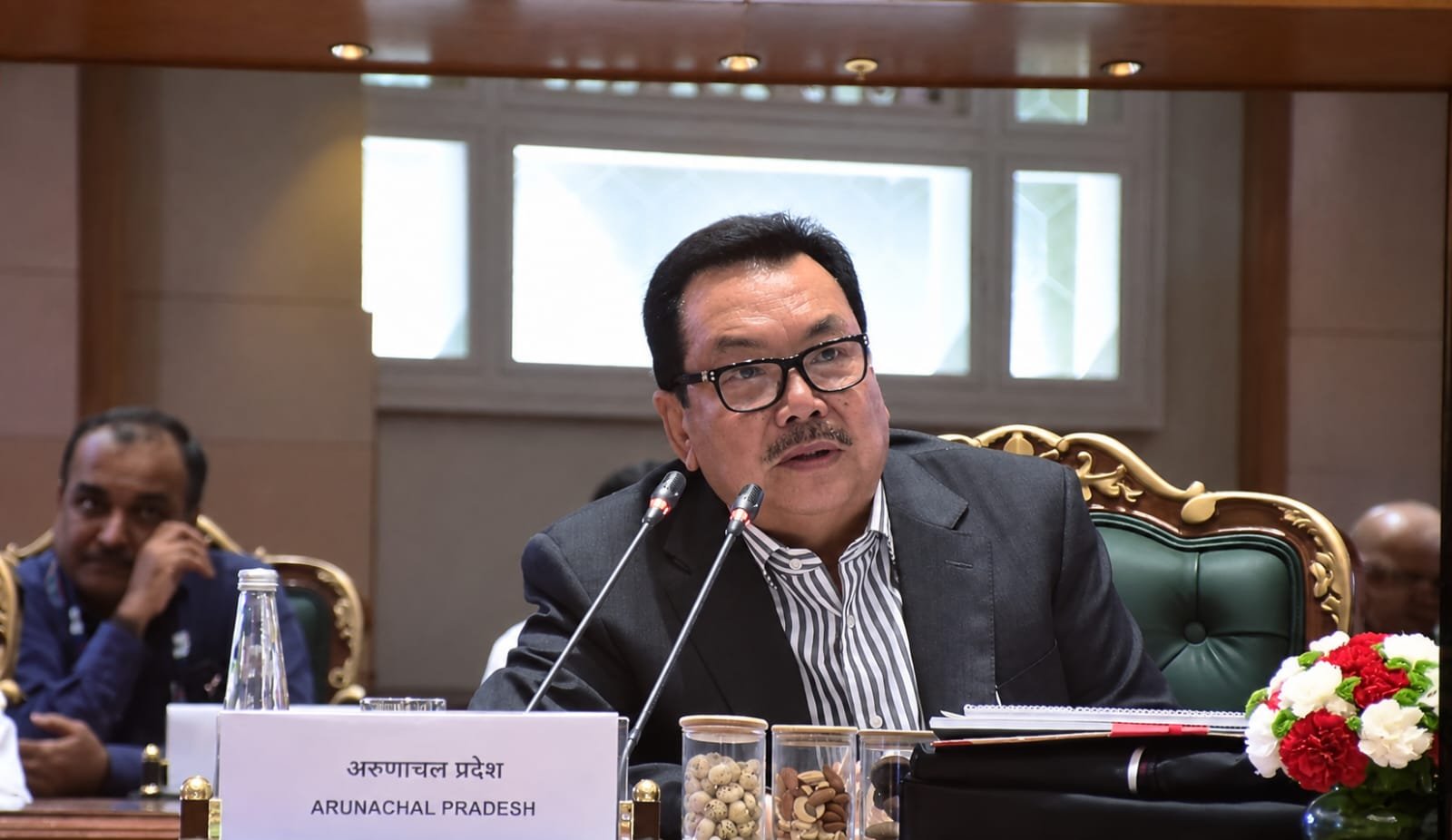
Deputy Chief Minister Chowna Mein highlighted Arunachal Pradesh’s vast hydropower potential and its strategic role in India’s clean energy transition while participating in a session on ‘Financing the Energy Transition’ at the two-day conference on ‘Financing India’s Journey Towards a Viksit Bharat’ here on Saturday.
Mein said hydropower would remain critical to India’s clean energy goals by providing stable and dependable renewable power while complementing solar and wind energy. He stressed that responsible development of Arunachal Pradesh’s hydropower resources should be viewed as a national strategic opportunity in addition to being a state priority.
With an assessed hydropower potential of nearly 58,000 MW, accounting for around 40 per cent of India’s total potential, Arunachal Pradesh is positioned to make a substantial contribution to the country’s energy security and non-fossil energy targets. The state has set a target of harnessing 40 GW of hydropower capacity by 2047.
Highlighting the sector’s growth, Mein said the state’s installed hydropower capacity had increased from 405 MW in 2016 to around 1,200 MW and subsequently to 2,270 MW following the recent commissioning of the Subansiri Lower Project.
He outlined the state’s ‘Decade of Hydropower 2025–35’ initiative, which envisages commissioning 19 GW of new hydropower capacity backed by an investment pipeline of around ₹1.9 lakh crore. Projects totalling about 19,000 MW are at various stages of development, including 4,880 MW under construction. The sector is expected to generate more than 30,000 direct and 16,000 indirect employment opportunities.
Mein stressed that power generation and transmission infrastructure must progress simultaneously. Given the state’s remote and challenging terrain, he called for integrated planning of hydropower projects with high-capacity transmission systems and renewable energy aggregation infrastructure to facilitate efficient evacuation of power to the state grid and interstate network.
He also called for greater private-sector participation in developing the state’s remaining hydropower potential and sought continued support from the Government of India through appropriate incentives and facilitation mechanisms to accelerate investment in the sector.
Mein said responsible hydropower development, supported by strong transmission infrastructure and increased investment, could create opportunities for employment, entrepreneurship and broader economic growth while contributing to India’s clean energy transition.