


Mingkeng Osik
PASIGHAT, SEP 23:
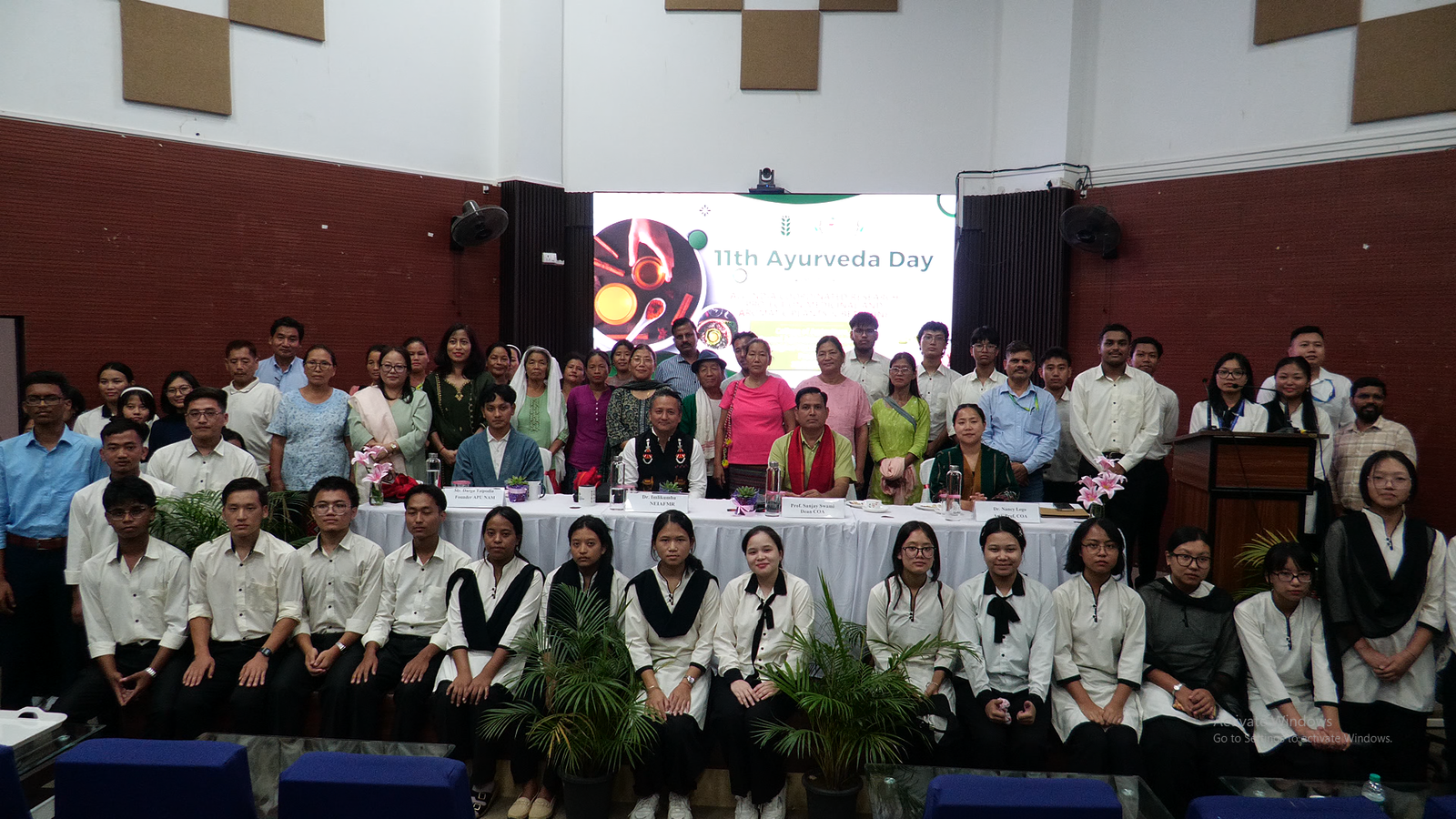
The 11th Ayurveda Day was observed at the College of Agriculture, Central Agricultural University (I), Pasighat, with a focus on Ayurveda, medicinal and aromatic plants, traditional knowledge, health and opportunities in herbal entrepreneurship.
The programme was organised by the All India Coordinated Research Project (AICRP) on Medicinal and Aromatic Plants & Betelvine. Students, faculty members and farmers participated in the programme and were apprised of the health, agricultural and commercial potential of medicinal plants.
College of Agriculture Dean Dr Sanjay Swami said Ayurveda addresses physical and mental well-being and promotes harmony between human beings and nature. He said the observance provided an opportunity to reconnect with traditional knowledge and understand the role of medicinal plants and natural resources in maintaining a balanced lifestyle.
Dr Imli Kumba highlighted the traditional uses of medicinal plants and their relevance to health and well-being. He spoke about plants including Aparni, Ashwagandha, Shankhapushpi, Brahmi, Jatamansi, Tulsi, Vacha, Yashtimadhu and Shatavari, while explaining their traditional associations with areas such as relaxation, concentration, respiratory health and general wellness.
Kumba also highlighted opportunities for farmers under the Central Sector Scheme for Conservation, Development and Sustainable Management of Medicinal Plants. He encouraged farmers to explore medicinal-plant cultivation, contract farming and organised markets, stressing the need to understand market requirements before undertaking commercial cultivation.
He also highlighted e-Charak, a digital platform intended to facilitate market access for medicinal-plant producers. He encouraged skill development and entrepreneurship through preparation of value-added herbal products such as hair oils and gels.
Speaking on herbal market utilisation, Darga Taipodia highlighted the region’s rich diversity of medicinal plants and the scope for creating greater value through scientific identification, responsible cultivation and collection, drying, processing and packaging.
Taipodia stressed the importance of branding, packaging, storytelling and digital marketing in taking local herbal products to wider markets. He said products such as herbal tea could communicate their geographical, cultural and traditional significance while creating greater value for producers.
The programme emphasised the need to combine traditional knowledge with scientific practices, value addition and modern market opportunities for sustainable development of medicinal and aromatic plants and creation of livelihood opportunities in the region.