ONLINE AGE

(Online version of the Arunachal Age newspaper)

Latest News

Latest News, Popular News, State News

KVK Tawang conducts skill training on vermicomposting, entrepreneurship

TAWANG, SEP 28: A five-day Skill Development Training Programme on “Vermicomposting and Entrepreneurship Development” was organised by Krishi Vigyan Kendra (KVK), Tawang, to enhance farmers’ practical skills in sustainable farming and promote vermicomposting as a potential livelihood and entrepreneurial activity. Twenty progressive farmers participated in the programme and received training on the preparation, use and benefits of vermicompost, along with its potential for income generation. Agronomist T. Jerang, who chaired the programme, highlighted the role of vermicompost in improving soil health and promoting sustainable farming practices. He encouraged farmers to adopt organic inputs and make greater use of locally available resources to reduce dependence on chemical inputs. Senior Scientist and Head KVK Tawang Dr Anjanand Tripathy highlighted the scope of vermicomposting in agriculture and horticulture. He said that besides providing quality organic manure, vermicomposting could also be developed as a viable small-scale enterprise, creating additional livelihood opportunities for farmers. Tripathy assured the participants of continued technical guidance and support from KVK Tawang in adopting vermicomposting and other sustainable agricultural practices. The training focused on developing hands-on skills and encouraging farmers to apply the knowledge gained to productive and income-generating activities at the farm and household levels.  

Latest News, Popular News, State News

Seva Setu camp raises awareness on NFSA, PDS entitlements

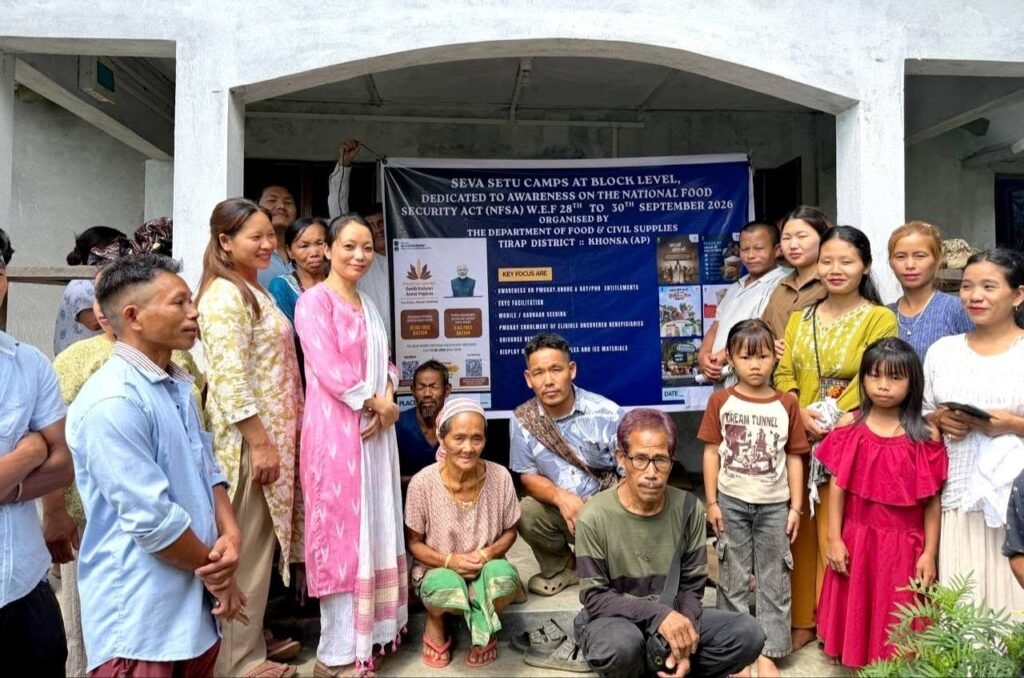
OLD LAINWANG, SEP 28: The Department of District Food and Civil Supplies, Tirap, organised a Seva Setu Camp at Old Lainwang village on Monday to facilitate essential services and sensitise beneficiaries on entitlements under the National Food Security Act (NFSA) and Public Distribution System (PDS). District Food and Civil Supplies Officer Bompi Kadu led the camp, where departmental officials briefed beneficiaries on various schemes, services and procedures for availing food security benefits. The camp covered key provisions including free foodgrain distribution under the Pradhan Mantri Garib Kalyan Anna Yojana (PMGKAY) for eligible Priority Household (PHH) and Antyodaya Anna Yojana (AAY) beneficiaries. Beneficiaries were also informed that AAY households are entitled to 35 kg of foodgrains per household per month, while PHH beneficiaries receive 5 kg per person per month. Officials facilitated e-KYC, Aadhaar and mobile number seeding for authentication and access to PDS services, besides enrolment of eligible uncovered beneficiaries under NFSA/PMGKAY. Grievance redressal and renewal and online updating of ration cards were also taken up during the camp. Hundreds of beneficiaries participated in the camp along with Gaon Burahs, Head Gaon Burahs, PRI members and members of women’s Self-Help Groups. The initiative aimed to bring government services closer to rural communities, strengthen awareness of food security entitlements and ensure that eligible beneficiaries can access benefits and services under the NFSA and PDS.    

Latest News, Popular News, State News

West Siang NCORD stresses coordinated efforts against drug abuse

AALO, SEP 28: The monthly meeting of the District-level Narcotics Coordination Committee (NCORD), West Siang, was held at the Deputy Commissioner’s Conference Hall here on Monday to review measures for preventing drug abuse and strengthening coordination among stakeholders. Deputy Commissioner Mindo Loyi chaired the meeting. Superintendent of Police and NCORD Convener Kardak Riba informed the committee that the Police Department has been conducting drug awareness programmes in both township and remote and vulnerable areas of the district. Riba said NCORD teams have also been conducting checks and taking action against drug peddlers and those involved in drug-related activities. He urged all members and stakeholders to regularly upload details of awareness programmes and related activities on the designated portal, stating that such entries would serve as official records. He also appealed to the public to share information on drug-related activities with the police, assuring confidentiality of informants. Chairperson of Mothers’ Vision stressed the need for regular drug awareness programmes among girls in schools and colleges, while Arunachal Pradesh Women’s Welfare Society (APWWS) President Kennedy Bagra highlighted the importance of collective efforts to prevent drug abuse among the younger generation. District Medical Officer Dr Linya Lollen urged residents to prevent accumulation of stagnant water in and around their homes and maintain cleanliness and a healthy environment. Loyi appreciated the Police Department, NGOs and other stakeholders for their efforts to check the inflow and spread of drugs in Aalo and West Siang. He directed the NCORD team to properly document and report drug-related activities and asked the DDSE to strengthen drug awareness programmes in schools, with content tailored to different age groups. The DC also highlighted the role of Panchayati Raj institutions in grassroots-level intervention and urged all stakeholders to actively participate in awareness activities and share information and photographs through appropriate platforms. He called for sustained and coordinated efforts involving government departments, educational institutions, Panchayati Raj institutions, police, NGOs and the community to address drug abuse in the district. ADC Kamba Ejum Angu, Padma Shri awardee and Chairperson of Mothers’ Vision, Kennedy Bagra, and APWWS President also spoke at the meeting. Police officers from various branches, NGOs and other NCORD members attended.    

Latest News, Popular News, State News

RGU hosts life science outreach prog for school students

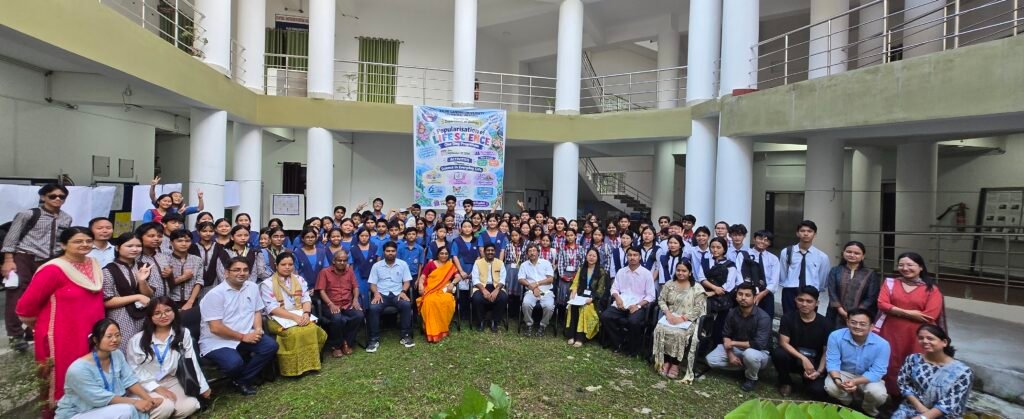
RONO HILLS, SEP 28: The Department of Zoology, Rajiv Gandhi University (RGU), organised a one-day social outreach and sensitisation programme, “Popularisation of Life Science”, on September 27 to familiarise school students with university-level science and research. Eighty-five students of Classes VII to X from Vivekananda Kendra Vidyalaya, Nirjuli; Kendriya Vidyalaya, NERIST Campus; Senior Secondary School, RGU Campus; and Alphabet Public School, Amba, Doimukh, participated in the programme. RGU Vice Chancellor Prof Shivraj attended the programme and commended the Department of Zoology for the initiative. He stressed the need for more such outreach programmes to provide school students with wider exposure to higher education and science, and suggested expanding future editions to include more schools and students. Head of the Department of Zoology and programme chairman Prof D. N. Das spoke on the relevance of zoology and the importance of understanding the living world. Organising Secretary and Convenor Dr Arnab Ghosh said social outreach and early exposure to higher education and research were important components of the National Education Policy (NEP) 2020. He said such initiatives could encourage scientific curiosity among young students. The programme featured poster-making and model-making competitions on the theme “Science in Everyday Life” for two groups—Classes VII–VIII and IX–X. Students displayed 52 posters and 15 models, linking scientific concepts with health, food, environment and everyday life. A quiz competition on life science and general science followed, with students participating enthusiastically. The competitions were judged by external experts from allied departments of the university. The students also visited the Zoology Department’s laboratories and museum collections, where they observed preserved fish specimens from Arunachal Pradesh and the Northeast, besides collections of butterflies, other insects and bird diversity of the region. Research scholars of the department guided the students during the laboratory and museum visits and explained the specimens and ongoing research. The interaction provided students with first-hand exposure to how concepts learnt in classrooms are applied in scientific research. Prof Shivraj distributed certificates and medals to the winners and congratulated all participants. The organisers said the programme aimed to strengthen links between RGU and schools in the region and encourage greater interest in life sciences and scientific research. The Department of Zoology thanked the participating schools, teachers, students, external judges and research scholars for their support in conducting the programme.  

Latest News, Popular News, State News

RGU conference stresses human-centric AI integration in higher education

RONO HILLS, SEP 28: The Association of Indian Universities (AIU) East Zone Conference on “Strategic Integration of Artificial Intelligence (AI) in Higher Education: Opportunities, Challenges and Implications” was organised by AIU, New Delhi, in collaboration with Rajiv Gandhi University (RGU), Arunachal Pradesh, at the RGU Mini Auditorium on September 25. Joint Director (Research), AIU, Dr Amarendra Pani, who was patron of the conference, highlighted the role of AIU in facilitating academic programmes that help universities develop skills to address emerging challenges in education. Tracing the evolution of technology from the Industrial Revolution to the present AI era, he urged younger generations to embrace AI while retaining fundamental natural and cultural values. Chief Guest and NIT Director Prof Mohan Vithalrao Aware emphasised responsible deployment of AI across developmental sectors. He said students and researchers should use AI to support idea development and improve performance rather than treat it as a substitute for human effort. He also highlighted the potential of generative AI to accelerate research and development. RGU Vice Chancellor Prof Shivaraj stressed the potential of AI for local community development and sustainable utilisation of local resources. He envisioned RGU emerging as a centre for AI integration in Arunachal Pradesh, while cautioning that technological advancement should not replace human ethical and moral values. He also highlighted the emerging digital divide and stressed the need to use AI to democratise the learning ecosystem. Welcoming the delegates, conference convenor Prof Sambhu Prasad, Dean, Faculty of Physical Education and Sports Sciences, outlined the objectives of the conference and stressed the need for meaningful outcomes from the academic deliberations. The technical sessions began with a plenary address by JIS University Pro Vice-Chancellor Dr Neeraj Saxena, who called for a shift from traditional teaching towards critical thinking, inquiry and critical evaluation of AI-generated responses. He said teachers in the age of AI should increasingly act as mentors and facilitate new thinking. NERIST Prof Madhusudhan Mishra outlined five levels of institutional AI adoption—experimentation, adoption, integration, governance and transformation. He highlighted AI’s potential to personalise learning and accelerate research, while stressing that it should augment rather than replace faculty and that privacy, fairness and accountability must remain central. A panel discussion moderated by RGU Assistant Professor Dr Sunil Koijam examined the implications of AI integration in teaching, research and administration. Panellists included RGU IQAC Director Prof Utpal Bhattacharjee, Prof Madhusudhan Mishra, Apex Professional University Pro Vice-Chancellor Prof Mousumi Chaudhari, RGU Assistant Professor Dr Nishanth PM and Apex Bank Managing Director and Arunachal Training Institute Deputy Director Bittu Kri. The discussion stressed the need for an AI framework in education and incorporation of ethical AI use into higher education curricula and pedagogical practices. The valedictory session was attended by AISECT University Vice Chancellor Dr Gaurav Shukla and Dr Samit Tiwari, Vice Chancellor of Dr C. V. Raman University, Bihar. The session reiterated the need for purposeful, responsible and human-centred adoption of AI in higher education. Prof Sambhu Prasad delivered the closing remarks and proposed the vote of thanks. Faculty members, students and researchers attended the conference. Dr Rupam Kumar Sharma, Dr Bomken Kamdak of the Department of Computer Science and Engineering and Sangey Tsering of the Department of Physical Education coordinated the conference.  

Latest News, Popular News, State News

APU must aim for geater heights, says new VC Prof Riddi

PASIGHAT, SEP 28: Newly appointed Vice-Chancellor of Arunachal Pradesh University (APU), Prof. Ashan Riddi on Monday held separate interactive meetings with the teaching faculty and non-teaching staff of the university and called upon the university community to work with dedication to take the varsity to greater heights. Prof. Riddi, who took charge as the second Vice-Chancellor of APU, succeeding its founding VC Prof. Tomo Riba, interacted with the faculty members in the morning and the non-teaching staff in the afternoon at the university campus. Addressing the teaching fraternity, Prof. Riddi urged the teachers to be sincere, ethical, and committed to their profession. “A university is known by its teachers. We must first strive to be good teachers before anything else,” he said. He emphasized fostering a strong research culture, ensuring quality teaching-learning, and strict adherence to the National Education Policy (NEP) 2020 and latest UGC guidelines. “Encourage curiosity, promote research and strive for excellence. Our classrooms must become centres of critical thinking and innovation,” the VC said, adding that professional growth and capacity building of teachers would be his priority. He also said that APU must strive to become a Centre of Excellence at par with national standards and called for introducing more multidisciplinary and skill-oriented courses in the coming academic sessions in line with NEP. “The responsibility of building this young university lies on our shoulders. We have to build it brick by brick with honesty and teamwork,” he said. Assuring all possible support from the administration, Prof. Riddi said he would do everything under his authority for the welfare and well-being of the teaching community. In a similar interaction with the non-teaching staff, the Vice-Chancellor said that both teaching and non-teaching are two pillars of any university and one cannot function without the other. He urged them to discharge their duties with sincerity, punctuality and a sense of ownership. “Discipline, dedication and ethical conduct are non-negotiable. If we are sincere in our duties, the university will automatically grow,” he told the staff. Prof. Riddi also sought suggestions and feedback from both the teaching and non-teaching staff regarding academic, administrative and infrastructural development. He patiently noted their grievances and suggestions and assured that he would act on them in a phased manner. He called for collective efforts to make APU a model state university known for academic excellence, transparency and inclusive growth. Prior to his appointment as Vice-Chancellor of APU on September 16, Prof. Riddi served as Senior Professor and former Head of the Department of History, Rajiv Gandhi University, and Director of RGU’s Centre for Distance and Online Education (CDOE).  

Latest News, Popular News, State News

West Kameng Police arrest murder accused within an hour of FIR

TAWANG, SEP 28: West Kameng Police arrested a man accused in a murder case within approximately an hour of registering the First Information Report (FIR), following a coordinated investigation involving field officers and forensic experts, police said. The accused, identified as Geshi Merakpa, was apprehended from Phadam village under Dirang after investigators followed leads generated through field investigation and scientific examination of the crime scene. The case was registered at Dirang Police Station as C/No. 12/2026 under Sections 103(1) and 118(2) of the Bharatiya Nyaya Sanhita (BNS) at 12.10 pm on September 27. Following registration of the case, Bomdila Police, under the supervision of DySP (HQ) Sashi Dore, initiated a coordinated investigation and moved to secure the crime scene and preserve material evidence. The investigation was led by Inspector Lam Dondu, Officer-in-Charge of Dirang Police Station, along with SI B. Mossang and other police personnel. The team was assisted by an FSL team led by SI Gagam Aje and ASI Naley, which conducted a scientific examination of the scene and collected relevant forensic evidence. According to police, forensic inputs, field investigation and questioning of relevant persons generated crucial leads that helped identify and trace the accused. Merakpa was subsequently apprehended from Phadam village approximately an hour after registration of the case. The investigation was conducted under the supervision of DySP Sashi Dore and overall supervision of West Kameng SP Dr D.W. Thongon. Further investigation is underway to establish the sequence of events and collect additional evidence in accordance with law. The accused remains an accused at this stage, and the case is subject to further investigation and legal proceedings. (Source: Mon Tawang Vigilance)    

Latest News, Popular News, State News

New Toyota Hilux arrives in Pasighat with upgraded features

Mingkeng Osik PASIGHAT, SEP 28: The ninth-generation Toyota Hilux has arrived in Pasighat, bringing a refreshed design, upgraded technology and improved performance features. Known globally for its durability and reliability, the latest Hilux is aimed at customers seeking a vehicle capable of handling both everyday driving and challenging terrain. The new Hilux is powered by a 2.8-litre four-cylinder turbo-diesel engine that delivers 201 horsepower and 500 Nm of torque. It is paired with an automatic transmission and is available in both 4×2 and 4×4 variants. Among the key upgrades are a 12.3-inch touchscreen infotainment system with wireless Apple CarPlay connectivity, a 360-degree camera, LED headlamps, LED daytime running lights and LED rear lamps. The pickup also rides on 17-inch alloy wheels fitted with 265/65 R17 tyres. Designed for rugged conditions, the Hilux retains a payload capacity of 500 kg and a water-wading capability of up to 700 mm. Its robust build and four-wheel-drive system are expected to appeal to customers who frequently travel on difficult roads and off-road routes. The vehicle is available in seven colour options — Ash Grey, Silver Metallic, Platinum Pearl White Metallic, Attitude Black, Super White, Emotional Red and Sulphur Metallic. The ex-showroom price ranges from ₹31.99 lakh to ₹36.69 lakh. Speaking on the occasion, Jacob Paron, who recently took delivery of the new Hilux, described the vehicle as dependable and well-suited for off-road driving. He also appreciated the upgraded features introduced in the latest model and encouraged young people to work hard and become self-reliant. Toyota Sales Executive Samuel Panyang expressed gratitude to Paron for choosing the Hilux. He highlighted the vehicle’s upgraded technology, rugged construction and off-road capability, stating that the model has been designed to offer a balance of strength, reliability and long-term usability. Panyang also invited prospective customers to contact Toyota’s Pasighat outlet for bookings and further information regarding the new Hilux.    

Latest News, Popular News, State News

Congress calls for joint delegation to SUMP-affected areas

ITANAGAR, SEP 27: The Arunachal Pradesh Congress Committee (APCC) has appealed to political parties, civil society organisations and community bodies to join its proposed ground visit to areas affected by the proposed Siang Upper Multipurpose Project (SUMP), seeking broader participation in its fact-finding exercise. The APCC has constituted a Study-cum-Fact-Finding Committee under the chairmanship of its Working President Tanga Byaling to assess the situation in the Siang region and other areas affected by proposed mega hydropower projects, particularly SUMP. According to the APCC, the committee was constituted against the backdrop of continuing concerns and protests by sections of project-affected communities and reports of security deployment in the Siang region in connection with proposed project-related activities. The issue has also seen continuing differences over Pre-Feasibility Report (PFR) activities in Siang and Upper Siang districts. The committee comprises Byaling as chairman, Takam Sanjoy as vice chairman, Tami Pangu as secretary, and Daniel Gao and Johny Yangfo as members. It has been tasked with interacting with project-affected families, village elders, community-based organisations and other stakeholders; assessing social, environmental and livelihood concerns; examining grievances relating to land acquisition, rehabilitation and security deployment; and submitting a report with observations and recommendations within 15 days of its notification. At its first meeting, the committee constituted a sub-committee to undertake ground visits. The sub-committee will be led by Tami Pangu, Member Secretary of the Fact-Finding Committee, and includes representatives of the APCC, District Congress Committees and district-level tribal organisations from the affected areas. The APCC said the proposed village-to-village visits would seek to ascertain the ground situation and document the views and concerns of affected communities. It has appealed to political parties, Adi Bane Kebang (ABK) and its youth wing, ABK (U) and its youth wing, Siang Indigenous Farmers Forum (SIFF) and its youth forum, student organisations, community-based organisations, Panchayati Raj Institution representatives, Gaon Burahs and Gaon Buris, women’s and youth groups, and representatives of affected villages to nominate at least one representative to accompany the sub-committee. The party said the representatives would be able to place their views, concerns, grievances and observations before the committee. It said the objective was to document facts, understand the concerns of affected communities and prepare a report reflecting the views gathered during the field visits. The APCC said the issue of mega hydropower projects should not be viewed merely through a political lens, as it has implications for land, livelihoods, environment, culture and the future of local communities. It called for differences to be addressed through a peaceful and democratic process. The party said wider participation from political parties, civil society organisations, community institutions and affected communities would make the fact-finding exercise more inclusive and representative. The APCC’s initiative comes amid continuing public debate over SUMP and its PFR activities. The State Government has meanwhile constituted an Empowered High-Level Committee headed by Rural Development and Panchayati Raj Minister Ojing Tasing to guide and coordinate the PFR survey and associated activities, with the government stressing sustained engagement with residents of Siang and Upper Siang. The APCC said the proposed exercise would seek to listen to the views of people at the grassroots and place its findings before the government and the people of Arunachal Pradesh.    

Latest News, Popular News, State News

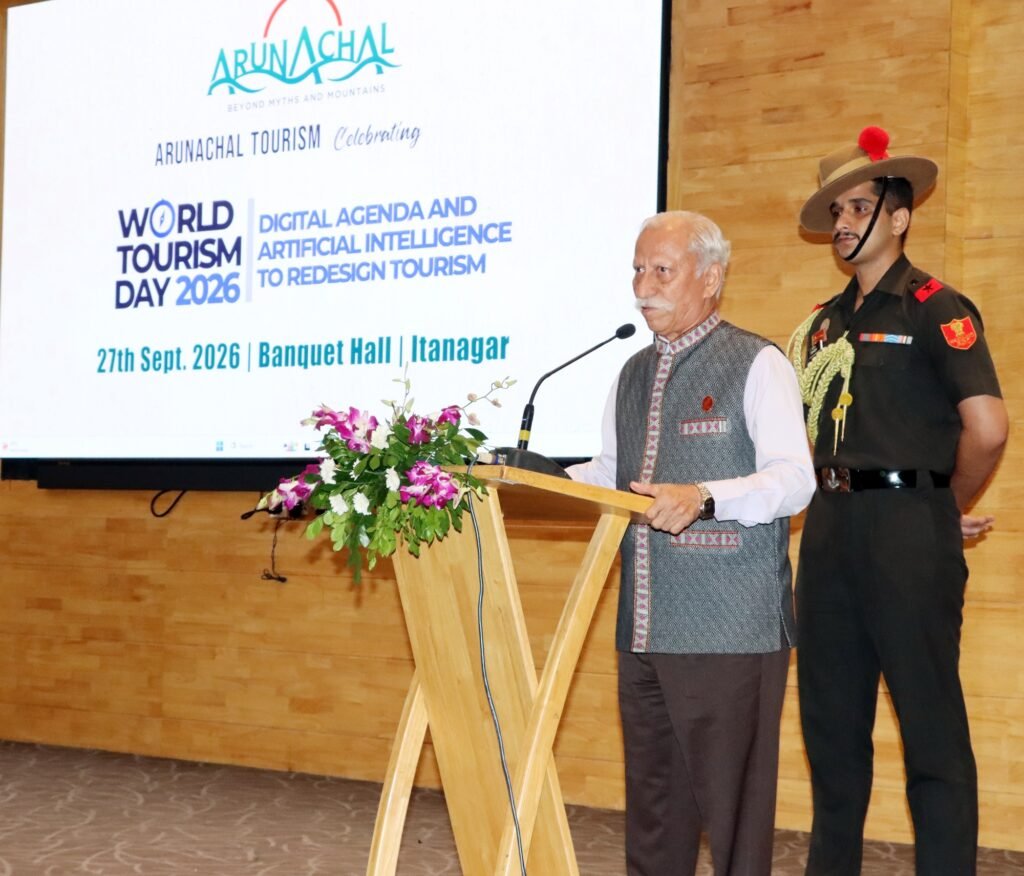
Guv calls for community-led, smart and sustainable tourism in Arunachal

ITANAGAR, SEP 27: Governor Lt Gen KT Parnaik (Retd) participated in the World Tourism Day celebration here on Sunday and conferred the annual State Tourism Awards, recognising contributions to homestay tourism, tour operations and tourism administration. Tikhak Homestay, Changlang, owned by Bela Tikhak of Miaopum Tours and Travels, received the Best Homestay Award, while Suchusi Homestay, Ziro and Bomdila Embassy, West Kameng, received commendation awards. Tsering Wange, proprietor of M/s Himalayan Holidays, West Kameng, received the Best Tour Operator Award, while BAC Voyages, Itanagar and Gandhi Darang, proprietor of M/s Ane Siang Tours & Expeditions, received commendation awards. Tourism Information Officer Dibang Valley Lamwang Aran, a 2017-batch officer, was conferred the Best Performing Tourism Officer Award. The Governor also launched the Tourism Department’s online service portal developed under the Ease of Doing Business initiative and released the book Homestay Tourism in Arunachal Pradesh, authored by Tashi Lungtan Kee and Sankar Thappa. Addressing the gathering, the Governor said tourism reflects the personality of a State and is far more than an economic activity. It creates livelihoods, empowers local communities, preserves cultural heritage and strengthens national integration. Highlighting Arunachal Pradesh’s unique tourism strengths, Parnaik said the State possesses all the ingredients to become a leading destination for responsible and experiential tourism. Its pristine natural environment, rich biodiversity, living tribal heritage, vibrant festivals, spiritual traditions and breathtaking landscapes provide a strong foundation for tourism. He called for promotion of a diverse range of tourism, including eco-tourism, cultural, adventure, spiritual, rural and homestay, agro, wildlife, wellness, border and festival tourism. The State’s unique advantage, he said, lies in offering these experiences within a single destination. The Governor stressed that the tourism vision should extend beyond a few popular destinations and encompass every district, valley and community as stakeholders in the tourism economy. He advocated integrated tourism circuits combining eco, cultural, adventure and heritage experiences to encourage longer stays and ensure wider distribution of tourism benefits. Emphasising community participation, he said every suitable tourism village should have quality homestays where visitors can experience local cuisine, agriculture, crafts, folklore and traditional lifestyles. Universities and colleges, he added, could contribute through research, documentation of oral traditions, biodiversity studies and visitor-behaviour analysis. Calling technology a key enabler, Parnaik advocated a comprehensive Tourism Geographic Information System (GIS) platform and the use of Artificial Intelligence (AI) for visitor forecasting, multilingual assistance, personalised itineraries, feedback analysis and destination management. These measures, he said, could help make Arunachal Pradesh a smart and sustainable mountain tourism destination. He also stressed the need for scientific visitor management through carrying-capacity studies, advance booking systems, seasonal distribution of visitors and promotion of lesser-known destinations. “The heart of Arunachal tourism is its people and their partaking,” the Governor said, adding that youth could become trained guides and entrepreneurs, while women could lead homestays, food enterprises and craft-based tourism initiatives. He called for an annual festival calendar, authentic cultural presentations and a distinctive “Arunachal Model of Tourism” based on community participation and personalised visitor experiences. The Governor further called for strengthening tourism infrastructure and services, including quality hospitality at destinations and along travel routes, affordable transportation, reliable information systems, professional tour operators and skilled manpower. He urged all stakeholders to work together to ensure quality, efficiency and sustainable growth of tourism in the State. Tourism Secretary Pagli Sora and Tourism Director Rujum Raksap highlighted the State’s achievements and initiatives. As part of the celebration, the Tourism Department organised competitions and presented awards in various categories. Tokmem Pertin and August Ligang jointly received the first prize in the Wall Painting Competition, while Nending Napa won the AI Videography Competition. Beyealu Kri secured the first prize in Local Cuisine Presentation and Tage Yani won the Local Wine Competition. Likha Miyu of M/s LM Enterprise received the Best Exhibitor Award. The Tourism Department, the nodal department for the Ek Bharat Shreshtha Bharat (EBSB) initiative in Arunachal Pradesh, also introduced participants of the EBSB programme and the Dekho Apna Pradesh tour. Participants from Arunachal Pradesh, Uttar Pradesh and Meghalaya, the States paired under the initiative, presented a joint cultural programme highlighting India’s cultural diversity and unity. Roots Arunachal, an Itanagar-based theatre and cultural organisation, presented a skit on Nasha Mukt Bharat, highlighting the importance of a drug-free society and encouraging youth to make healthy and responsible choices. Itanagar Municipal Corporation Mayor Likha Nari Tadar, Tourism Department officers, IMC corporators, tour operators, homestay owners, tourism stakeholders, students of Rajiv Gandhi University and Rajiv Gandhi Government Polytechnic, and members of Yuva Tourism Clubs attended the celebration.