

Natung slams Kharge over remarks on PM’s father
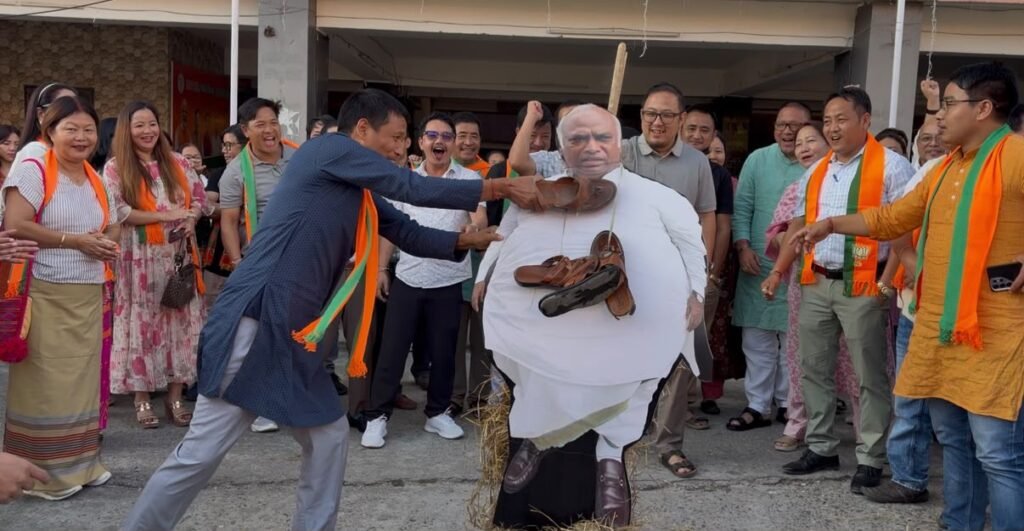
ITANAGAR, OCT 27: Arunachal Pradesh Home Minister Mama Natung on Tuesday condemned Congress president Mallikarjun Kharge’s remarks concerning the late father of Prime Minister Narendra Modi and demanded an apology from the senior opposition leader. Natung, in a social media post, described the remarks made by Kharge at a public function in Patna as “deeply reprehensible”, saying political differences should not lead to personal attacks on the families of political leaders. While acknowledging that the Opposition had every right to question the government and criticise its policies, Natung said bringing a leader’s family into political discourse crossed the boundaries of decency and democratic conduct. “The people of India expect responsible leadership, respectful debate and politics guided by dignity and accountability,” he said, urging the Congress leadership to reflect on the issue and Kharge to express regret. The controversy erupted after Kharge made the remark “Modi ka baap bhi jayega” while responding to an interruption from a person in the audience during an event in Patna on October 25. The function was organised to mark the 139th birth anniversary of Shri Krishna Singh, Bihar’s first chief minister. The remark triggered a political row, with the BJP accusing the Congress president of crossing the limits of political decency and demanding an apology from him and his party. BJP workers staged protests at several places on Monday over the remarks, while a police complaint was also filed against Kharge at the Kotwali police station in Patna. The Congress, however, defended its president, alleging that his remarks had been misinterpreted. The party claimed that a BJP worker had first made an insulting reference to Kharge’s late father and maintained that the Congress leader’s comments were directed at Modi’s ideological association with the Rashtriya Swayamsevak Sangh (RSS). The exchange has further escalated the political confrontation between the BJP and the Congress, with leaders from the ruling party criticising Kharge’s remarks and the opposition party contesting the interpretation of his statement. Natung said political discourse should remain focused on government policies and performance, stressing that public representatives must uphold dignity and accountability in a democracy. (Source: PTI)