


ITANAGAR, NOV 5:
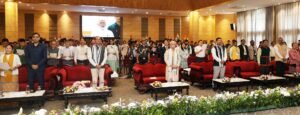
The Arunachal Pradesh State Council for Science & Technology (APSCS&T), Centre of Excellence for Bioresources and Sustainable Development, Kimin (CoE for BRSD),Department of Science & Technology, Government of Arunachal Pradesh, with the support of Department of Biotechnology, Govt of India, organized the Industry-Academia Meet 2025 to strengthen biotechnology collaboration in Northeast India.
The event, held with theme “Comprehensive Biotech Skills and Empowerment Development Programme for Postgraduates of Arunachal Pradesh and other NER States,” brought together scientists,academicians, policymakers and industry leaders to chart the future of biotechnology education, research, and employment in the North Eastern Region (NER).
Designed as a dynamic platform for dialogue and collaboration, the meet sought to bridge the gap between academic learning and industrial application, while promoting employability, entrepreneurship, and innovation among biotechnology postgraduates across the region.
Addressing the function as chief guest, former minister and APSCS&T Chairman Tage Taki highlighted the role of scientists, researchers and students in easing people’s lives with sustainable approach.
Scientist-F & Associate Head, NER Division Dr Suraksha S Diwan emphasized DBT’s continued commitment to nurturing biotechnology talent and strengthening human resource capacity in the Northeast through sustained skill development and research support.
Delivering the keynote address virtually, Dr Nitin Kumar Jain, Scientist-G/Advisor (NER Division), DBT, highlighted the need to align academic curricula with industrial needs to create a skilled and innovation-oriented biotechnology workforce for the region.
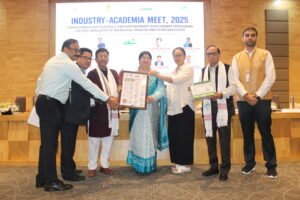
The major highlight of the inaugural session was the launch of three innovative biotechnologies by the DBT-APSCS&T Centre of Excellence for Bioresources and Sustainable Development (CoE–BRSD), Kimin-namely, the Banana Fibre Tea Bag Technology, the Mobile Cohobation Platform, and the Temperature-Independent Microbial Revival Formulation – showcasing Arunachal Pradesh’s leadership in sustainable, eco-friendly, and entrepreneurship-driven bio-innovation in the Northeast.
The four technical sessions were held during the day, featuring deliberations on biotechnology skill development, employability, and entrepreneurship. Industry representatives from Oil India Ltd., Assam Bio Ethanol Pvt. Ltd., Dabur India Ltd., and Patanjali Foods Ltd. shared insights on evolving manpower requirements, technological advances, and sectoral opportunities in the biotechnology landscape.
Academic experts from NERIST, Rajiv Gandhi University, and Assam Agricultural University discussed strategies to bridge the gap between theoretical knowledge and industrial expectations through curriculum reform and practical exposure.
Experts from IBSD, Manipur, ICAR–IARI, Assam, and BRDC, Meghalaya highlighted the importance of hands-on training, effective communication, and translational skills to ensure employability and industrial readiness among biotechnology graduates.
Speakers from Guwahati Biotech Park, Oil India Ltd., and Pabhoi Greens Pvt. Ltd. inspired young professionals to pursue research-driven entrepreneurship and innovative bioresource-based ventures across the region.
An open forum on Industry–Academia Interaction provided a valuable opportunity for participants to engage directly with industry experts, exchange ideas, discuss challenges, and explore avenues for collaboration.
The Industry–Academia Meet 2025 reaffirmed the shared commitment of academia, industry, and government towards strengthening the biotechnology ecosystem of the Northeast. It underscored the importance of collaborative partnerships, the need to address existing skill gaps through future finishing school programmes, and the collective aspiration to promote research excellence, innovation, and entrepreneurship for the sustainable bioeconomic growth of the region.