

ITANAGAR : The Arunachal Pradesh Literary Society (APLS), led by its president Yeshe Dorjee Thongchi, paid heartfelt tributes to eminent litterateur, veteran journalist and former Editor of Echo of Arunachal, Late Lummer Dai, on the occasion of his 86th birth anniversary on Monday.
Members of the APLS, including Tokong Pertin, Nani Kojin and Inumoni Das Thongchi, paid floral tributes at the grave ‘Punya Sthal’ and bust of the late literary icon located within the premises of his residence at Prem Nagar in Naharlagun. The occasion served as a solemn reminder of his immense contributions to literature, journalism and cultural documentation in Arunachal Pradesh.
Remembering his remarkable legacy, the society reflected on his enduring influence on generations of writers, readers and literary enthusiasts. The members also reaffirmed their commitment to preserving and promoting the literary heritage left behind by one of the state’s most celebrated literary figures.
Following the tribute ceremony, the APLS team met Nanni Dai, wife of the late writer and current Editor of Echo of Arunachal (EoA). The members spent time with her, enquired about her well-being, and shared fond memories of the celebrated author whose works continue to inspire literary circles across the region.
Born on June 1, 1940, at Siluk village in East Siang district, Lummer Dai was an Adi by birth and emerged as one of the most prominent voices in Assamese literature. From his student days, he began contributing articles, essays and stories to magazines and newspapers in Assam, highlighting the rich folk traditions, cultures and lifestyles of the people of Arunachal Pradesh.
As Editor of EoA, the state’s first newspaper, he penned insightful editorials and articles that helped shape public discourse during the formative years of Arunachal Pradesh. His writings not only documented the socio-cultural realities of the region but also introduced the then little-known frontier state to a wider readership.
Widely regarded as the doyen of Arunachal Pradesh’s journalism and literary movement, Late Dai authored several acclaimed works that earned him recognition across the Northeast. Among his notable literary contributions are Udayachalar Sadhu (1959), published by the Assam Sahitya Sabha, Paharor Shile Shile (1960–61), Prithivir Hanhi (1962–63), published by the Assam Publication Board, Mon Aru Mon (1965), Koinar Mulya (1975–76), and Upar Mahal, his last novel published in 2003.
Through his creative writings in Assamese, Dai played a significant role in fostering cultural understanding, harmony and brotherhood between the people of Assam and Arunachal Pradesh. His literary works vividly portrayed the traditions, customs and aspirations of the people of the region, helping bring Arunachal Pradesh into the broader literary and cultural consciousness of the country.
Though deeply rooted in his native state, Lummer Dai enjoyed immense popularity in Assam, where his contributions to Assamese literature earned him widespread admiration and respect.
His life and works continue to inspire generations and stand as a testament to the power of literature in building bridges between communities and preserving cultural heritage.
Meanwhile, the 86th birth anniversary of noted writer was also commemorated with reverence at Pasighat.
The programme was organised by the Adi Agom Kébang (AAK) in collaboration with literary enthusiasts and admirers of the celebrated literary figure.
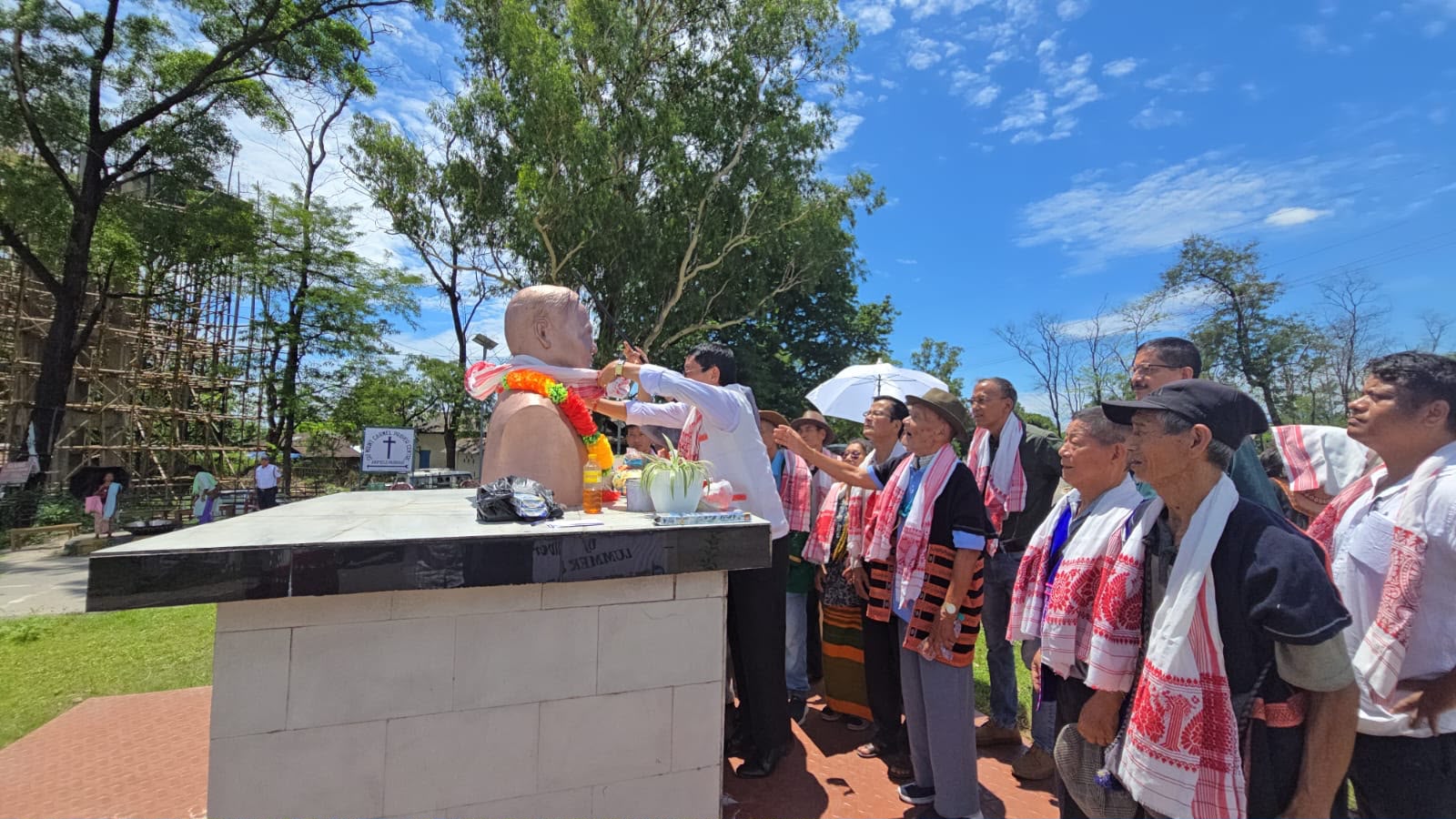
Members of the AAK led by President Bodong Yirang and Adviser Kaling Borang, along with representatives of the Arunachal Pradesh Literary Society (APLS) Pasighat Unit and the Assam Sahitya Sabha led by Green Tamuli, paid floral tributes to the late litterateur.
As a mark of respect, participants garlanded an effigy of Late Lummer Dai, while patriotic and cultural songs in Adi and Assamese were played, creating a nostalgic atmosphere during the commemorative programme.
Speakers recalled Dai’s immense contribution to literature and journalism, describing him as one of Arunachal Pradesh’s most distinguished literary personalities. Through his writings in Assamese, they noted, he vividly portrayed the rich cultural heritage, traditions and social realities of the people of the Northeast, leaving behind a literary legacy that continues to inspire generations.
More than three dozen people attended the programme and offered floral tributes. Among them were retired IAS officer Tagom Darang, retired District Medical Officer Dr Kaling Dai, noted writer Nini Pertin, literary enthusiasts, intellectuals and members of civil society.
The gathering also reaffirmed the need to preserve and promote the literary heritage championed by Late Lummer Dai and remembered his enduring contributions to literature and journalism. (Source: UNI/DIPR)