

ZIRO : A high-yielding, disease-resistant tomato variety introduced by the Krishi Vigyan Kendra (KVK), Lower Subansiri, is helping farmers in the district improve productivity while reducing crop losses and dependence on chemical pesticides.
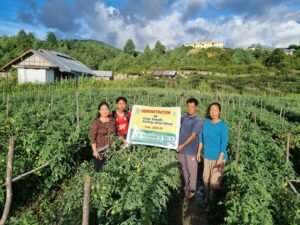
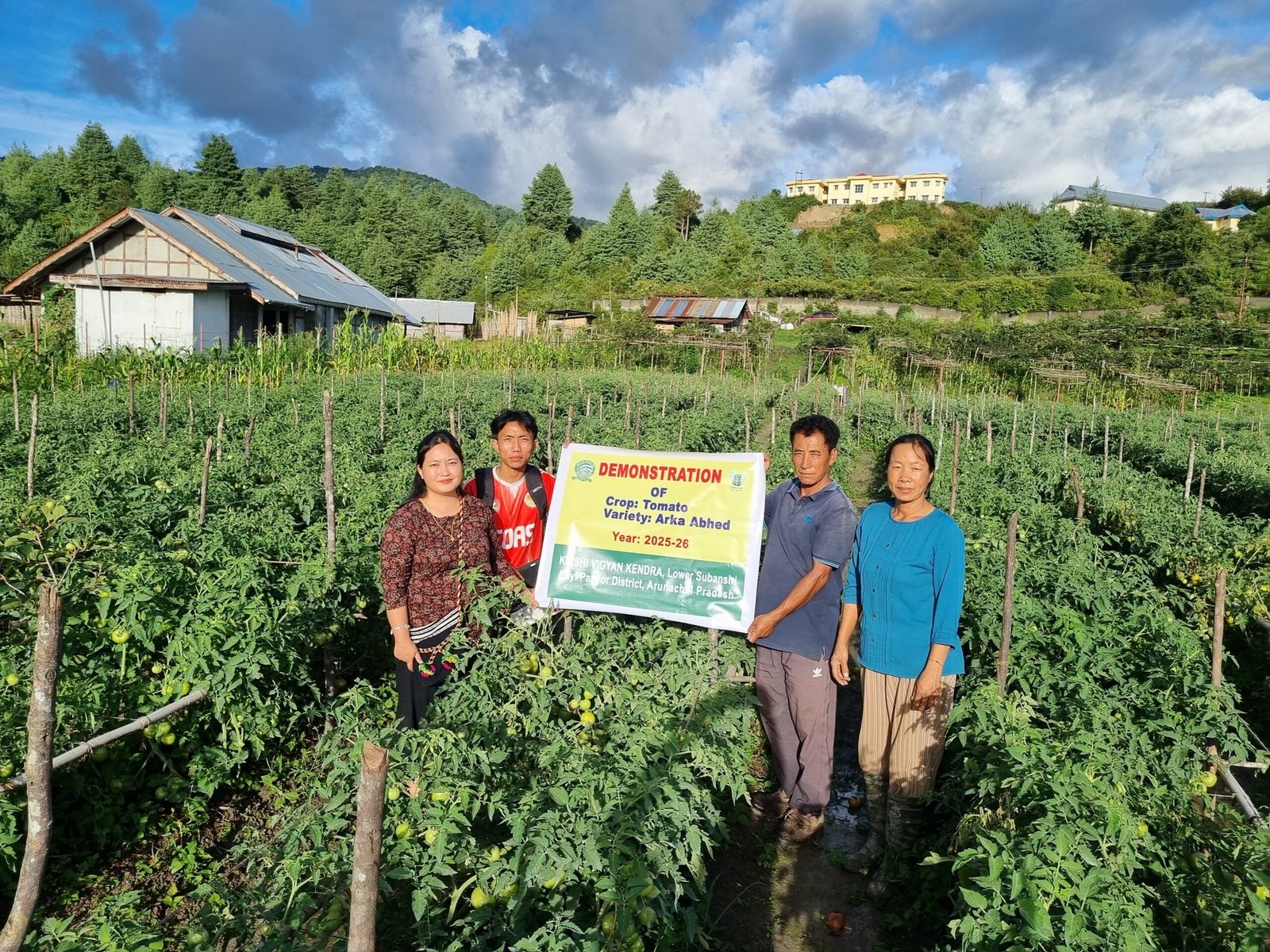
The variety, Arka Abhed, developed by the ICAR-Indian Institute of Horticultural Research (IIHR), has shown encouraging results under the humid, high-rainfall conditions of Arunachal Pradesh.
KVK Lower Subansiri began evaluating the variety through on-farm trials in 2023 to assess its suitability for the region. Following successful results, frontline demonstrations were conducted during the 2024-25 season to promote its adoption among local farmers.
According to KVK, Arka Abhed offers resistance to four major tomato diseases—Tomato Leaf Curl Virus, bacterial wilt, early blight and late blight—making it particularly suitable for the state’s hill agriculture. The disease resistance has significantly reduced the need for pesticide applications, lowering cultivation costs while enabling farmers to produce safer and better-quality vegetables.
The variety also has a yield potential of 70-75 tonnes per hectare. Its fruits, weighing about 90-100 grams, are firm, uniformly shaped and have a longer shelf life, reducing post-harvest losses during transportation to distant markets and helping farmers secure better prices.
A representative of KVK Lower Subansiri said the successful transition of Arka Abhed from trial plots to farmers’ fields demonstrated the importance of climate-resilient technologies in improving agricultural productivity and livelihoods.
Encouraged by the positive response, KVK Lower Subansiri plans to expand the promotion of the variety through continued farmer training and technical support to enable more growers across the district to adopt the improved cultivation practice. (DIPR)