ONLINE AGE

(Online version of the Arunachal Age newspaper)

Author name: OnlineAge

Latest News, Popular News, State News

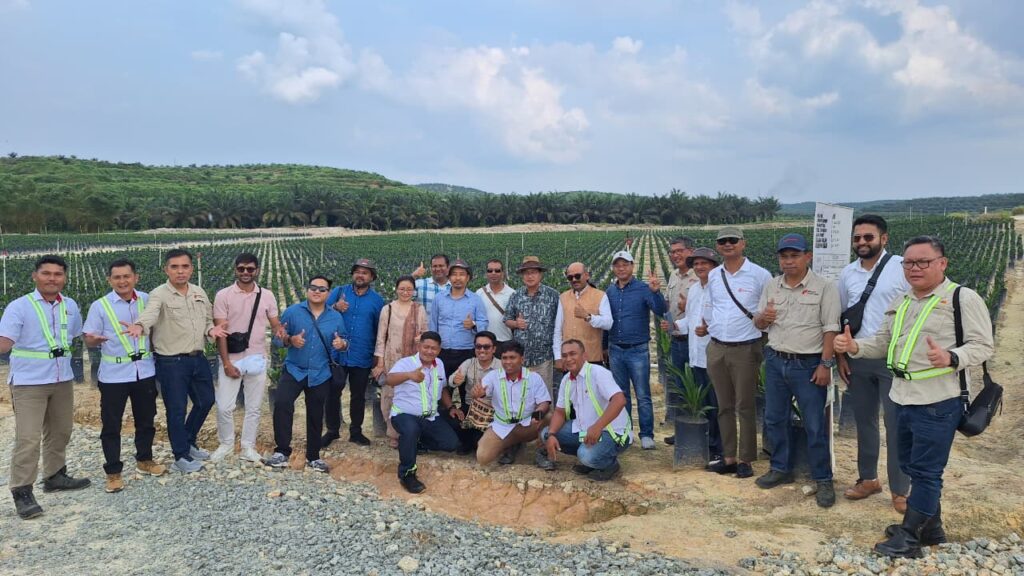
Arunachal delegation studies oil palm practices in Indonesia

RIAU, MAY 6: An official delegation from Arunachal Pradesh led by Agriculture and Allied Minister Gabriel D Wangsu visited Pekanbaru in Indonesia’s Riau province as part of an overseas exposure programme to study global best practices in oil palm cultivation. The delegation comprised senior officials, including Agriculture Department Secretary, Horticulture Department Secretary, district administrators, agriculture officers and farmers. The visit was hosted by the Consulate General of India in Jakarta, facilitating interactions with local authorities and industry stakeholders. During the programme, the team undertook field visits to oil palm plantations and processing units, focusing on cultivation techniques, productivity enhancement, harvesting systems and value chain management. The delegation also visited the Minama Research Centre, where members observed advanced breeding programmes, production of high-yielding planting materials and the application of technologies such as artificial intelligence, machine learning, drones and satellite imagery in plantation management. Exposure was also gained in biocontrol measures and integrated pest and nutrient management practices. Interactions with industry experts and researchers provided insights into policy frameworks, investment models, smallholder integration, terracing techniques and sustainability practices, including certification standards, environmental safeguards and community engagement. Officials said the exposure offered a comprehensive understanding of the oil palm value chain and would support the state’s efforts to scale up cultivation under the National Mission on Edible Oils–Oil Palm (NMEO-OP) while strengthening farmers’ livelihoods through improved technologies and practices. During the visit, Wangsu also held discussions with companies to explore potential collaborations in the oil palm sector. Earlier, the delegation visited Malaysia, where it interacted with progressive farmers and agriculture officials to study advancements in oil palm cultivation. The team also visited SD Guthrie Seeds and Agricultural Services at Carey Island in Selangor, a leading global supplier of oil palm seeds. The visit highlighted the need to address critical gaps in achieving NMEO-OP targets, including expansion of oil palm cultivation, strengthening farmer-industry linkages, improving productivity and developing processing infrastructure for a sustainable oil palm ecosystem in the state.

Latest News, Popular News, State News

Fire & Emergency Services joins SWCS

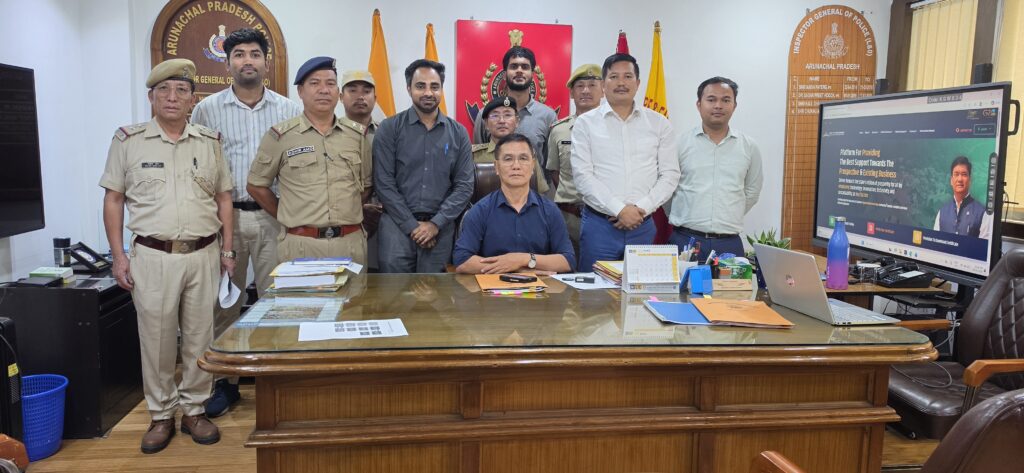
ITANAGAR, MAY 6: Arunachal Pradesh Fire and Emergency Services Department has become the fifth department in the state to operationalise the Single Window Clearance System (SWCS), marking a step forward in strengthening the Ease of Doing Business (EoDB) framework. Three key services have been brought under the online platform: application for fire safety certificate, application for no-objection certificate (NOC) prior to commencement of construction activities, and renewal of fire safety certificate. These services are now accessible through the state’s EoDB portal. A team from the Planning and Investment Department, led by Vikas Vijay, along with EoDB Cell members Nihal Pegu, Ankit Kumar and Nathan Shibu John, conducted hands-on training for officials of the Fire and Emergency Services Department to facilitate smooth implementation of the system. Arunachal Pradesh Innovation and Investment Park Chief Executive Officer Tabe Haidar commended Fire and Emergency Services Director Chukhu Appa, SP Fire John Pada, Station Officer Buru Mali and other officials for adopting the digital initiative. He also appreciated the EoDB technical team for successfully onboarding the services. Fire and Emergency Services Director Chukhu Appa urged citizens to avail the online services under the EoDB initiative to ensure transparent, efficient and seamless service delivery.

Latest News, Popular News, State News

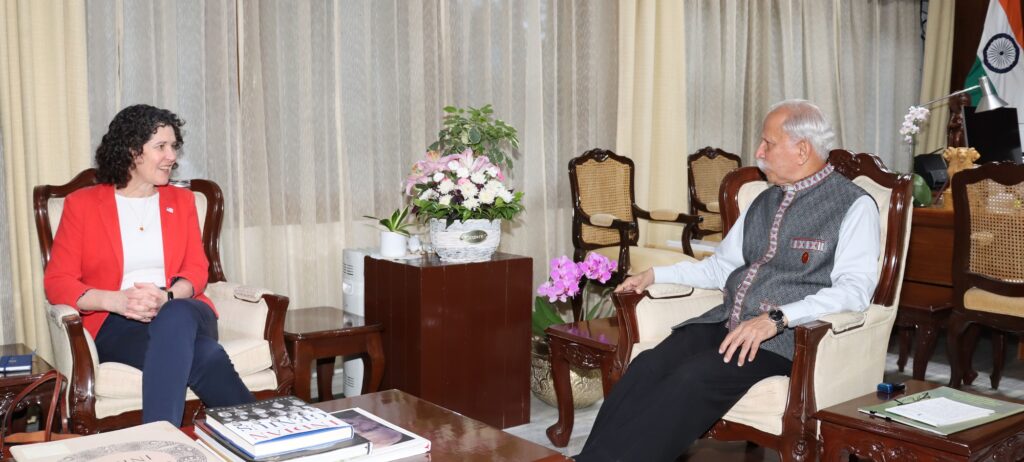
US Consul General calls on Governor, discusses cooperation

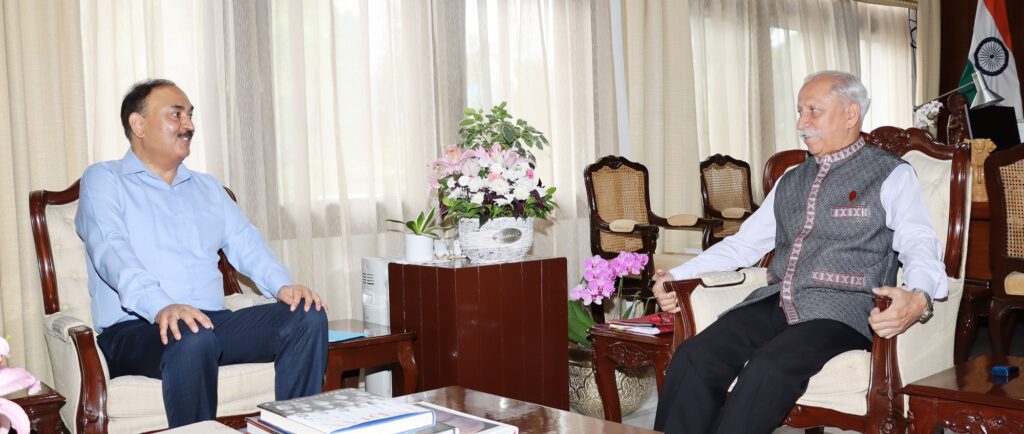
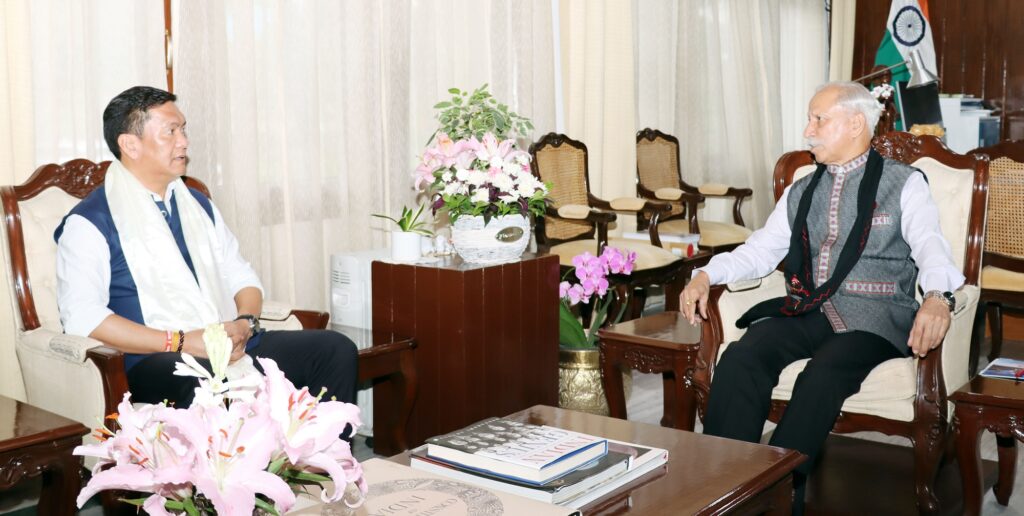
ITANAGAR, MAY 6: Consul General of the United States, US Consulate General, Kolkata, Kathy Giles-Diaz, called on Governor Lt Gen KT Parnaik Retd at Lok Bhavan on Wednesday. According to a Raj Bhavan statement, the two leaders exchanged views on areas of mutual interest and explored opportunities for meaningful cooperation. Both sides expressed intent to translate goodwill into tangible partnerships aimed at promoting sustainable development and strengthening people-to-people ties. Parnaik said that as India-United States relations continue to deepen, the people of Arunachal Pradesh look forward to stronger and more vibrant engagement between the citizens of the two democracies. He emphasised the need for inclusive partnerships, with particular focus on the aspirations and welfare of the state’s tribal communities. Highlighting Arunachal’s natural and economic potential, the Governor identified key sectors such as hydropower, horticulture, mineral resources and tourism as promising avenues for collaboration. Referring to the state’s emergence as an organic hub with rich horticultural output, he stressed the importance of strengthening market linkages and leveraging advanced American expertise in food processing and value addition. He also underscored the need to promote skill development initiatives in specialised sectors to enhance youth employability. The Consul for Political and Economic Affairs at the Consulate, Braphus Kaalund, was also present during the meeting.

Editorial

Winds of change: Rising hero, fallen bastions

The Assembly elections in four states and one Union Territory saw a big vote for change in three states and a mandate for continuity in one state and the UT. West Bengal and Tamil Nadu saw tectonic political shifts, with the Bharatiya Janata Party (BJP) poised for power in the former and the Tamilaga Vettri Kazhagam (TVK), led by actor Vijay, set to dethrone the Dravida Munnetra Kazhagam (DMK) in the latter. Kerala will see the Congress-led United Democratic Front (UDF) return to power on a bumper vote and a sweeping rejection of the CPM-led Left Democratic Front (LDF). The victory of the BJP-led coalition in Assam and the NDA coalition (comprising the BJP and the All India Anna Dravida Munnetra Kazhagam) in Puducherry was expected, and the incumbents improved their positions. For the BJP, West Bengal has been a final frontier among the major states, where it has crossed the two-thirds majority. The party was nowhere in the state’s electoral landscape in 2011, but has steadily improved its position since then, using a combination of political nous and assertions of power. It attracted leaders from other parties, used its power at the Centre  effectively, and successfully adopted social engineering as a political strategy. Polarising narratives have also been part of the playbook, placed as a counter to the Trinamool Congress (TMC)’s traditional Muslim vote base. The BJP gained from branding the TMC as anti-Hindu and supportive of illegal immigrants. Its campaign was largely pegged to issues such as undocumented migration, corruption, unemployment, and lack of women’s safety. The Election Commission of India (ECI)’s Special Intensive Revision (SIR) of electoral rolls may have hit the TMC’s numbers. However, none of these factors would have affected the TMC if there were no strong resentment against the party, which has ruled the state for three terms. Among the youth, the anxieties over the lack of opportunities are palpable. Mamata Banerjee’s support among women seems to have waned. Her loss in Bhabanipur reflects a collective shift in the voters’ mood. The RG Kar Medical College rape and murder dented the government’s image among women, especially among urban women. It is in this climate of discontent that the BJP made promises of development, good governance, and secure borders. This message of change, delivered by Prime Minister Narendra Modi and Home Minister Amit Shah, appears to have found takers across sections. A Hindu consolidation in many constituencies is also likely to have helped the party. Tamil Nadu has witnessed electoral history, with the DMK led by M K Stalin losing heavily to a party formed two years ago and considered capable only of a marginal impact. This stunning defeat shows that the sentiments against the government were strong over issues such as corruption, nepotism, and misgovernance. Stalin’s defeat in his stronghold in Kolathur best exemplifies the trend. Support for the DMK appears to be eroding significantly across all sections, especially among Dalit and minority groups. In a significant turnaround, a new party riding on the charisma and mass appeal of its leader has toppled a government and a political model built on the Dravidian identity. Tamil Nadu has always had strong links between its politics and its cinema. Vijay was at the right place to seize the moment. Notably, this is for the first time in six decades that a party and a leader without any stated credentials of the Dravidian ideology is rising to power in the state. The AIADMK, which has been grappling with a leadership crisis and political setbacks since J Jayalalitha’s death in 2016, has lost further ground. For the Congress, there is relief in the big win in Kerala, where the UDF led by the party registered a victory with two-thirds majority. The LDF government, in power for 10 years in a state that has historically seen rival alliances alternating every five years, has been hit by a strong wave of anti-government sentiment. The ruling front suffered heavy reverses, with many of its ministers and senior leaders losing their seats. A consolidation of votes in the Muslim and Christian communities appears to have pushed the mood further towards the UDF, leading to a sweep for the opposition bloc. For the first time, the BJP won three seats in the state – a commendable show, even though the party had hoped for bigger numbers. In Assam, the electorate has extended its endorsement of the incumbent BJP, which has been in power in the state for 10 years. Chief Minister Himanta Biswa Sharma has followed a policy of polarisation, both in governance and stated political positions. The no-holds-barred approach has helped the BJP to improve its position in a state that is already divided along communal lines. On the national stage, the poll results point to a weakening Opposition. Both the TMC and the DMK have been pillars of the opposition grouping, with Mamata and Stalin among the staunchest of critics of the BJP and its allies. They stand diminished now. Their defeat also signals the enfeeblement of regional political forces that were considered capable of resisting the BJP onslaught. States such as Maharashtra and Bihar have already witnessed the decline and fragmentation of regional parties. The 2026 results risk extending this pattern. In the Left’s defeat in Kerala, there is another blow to the larger national opposition: for the first time in five decades, no government in India will have a Communist presence. (Source: DH)


Latest News, Popular News, State News

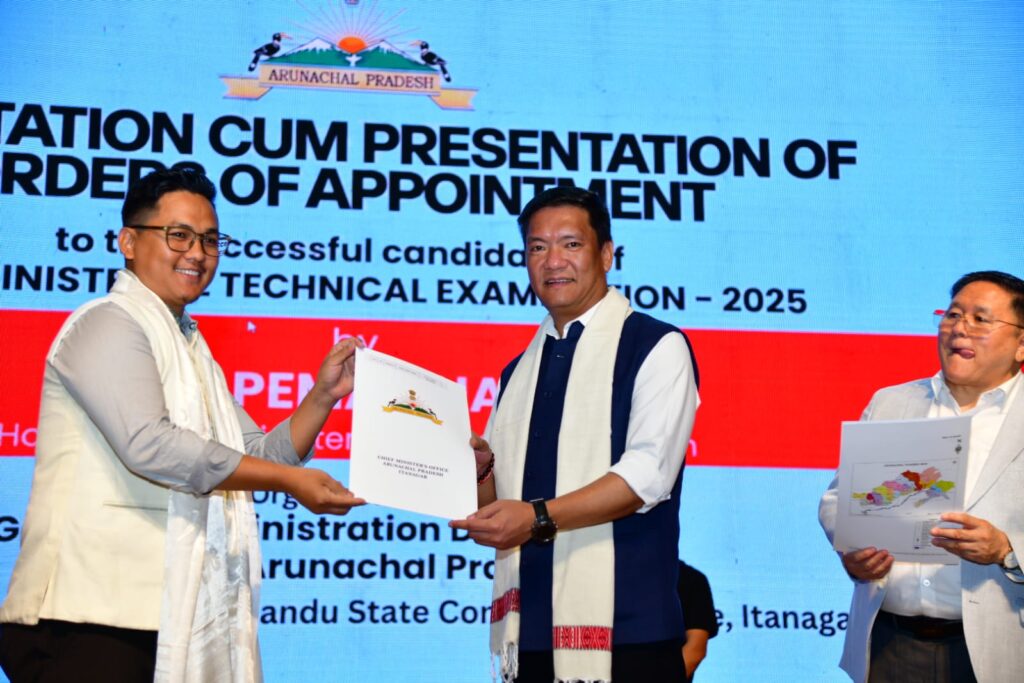
Khandu stresses merit, transparency in recruitment

ITANAGAR, MAY 5: Chief Minister Pema Khandu on Tuesday underscored merit-based recruitment, transparency and integrity in public service while urging newly appointed candidates to discharge their duties with sincerity and compassion. The chief minister was addressing candidates at a function where appointment orders were handed over to successful candidates of the Non-Ministerial Technical Examination (NMTE) conducted by the Arunachal Pradesh Staff Selection Board (APSSB). Khandu, along with Rajya Sabha MP Nabam Rebia, minister Balo Raja and Chief Secretary Manish Kumar Gupta, felicitated the candidates and congratulated them on their success, describing their achievement as a result of hard work, perseverance and merit, an official communique said. Highlighting the significance of the event, he said that while appointment orders have been issued since the establishment of the APSSB in 2017-18, the event reflects a more organised approach where candidates are brought together on a common platform, fostering a sense of camaraderie among new entrants to government service. Emphasising transparency, Khandu said the creation of the APSSB marked a transformative step in ensuring that government jobs are awarded purely on merit. He observed that earlier, the absence of a structured mechanism often posed challenges for deserving candidates, but the Board has now streamlined recruitment with near-zero error systems and full transparency. Describing the Board as an ISO-certified recruitment agency, alongside the Arunachal Pradesh Public Service Commission, he said the state has developed robust institutions to uphold fairness and equal opportunity in public employment. Encouraging aspirants to aim higher, the chief minister urged the newly appointed candidates to prepare for competitive examinations such as the Arunachal Pradesh Civil Service and the Union Public Service Commission, noting that reforms have aligned examination patterns to enable preparation for both state and national services simultaneously. Providing details of the recruitment process, he said that out of 225 sanctioned posts, 183 were filled through the examination, with 166 candidates receiving appointment orders, while some posts remained vacant due to eligibility constraints or candidates opting for other opportunities. He added that the government is considering introducing a waiting list system in future to ensure better utilisation of vacancies. Stressing capacity building, Khandu said training is essential for public service, particularly for technical personnel, and called on departments to collaborate with training institutions to design structured programmes for skill enhancement. Addressing the appointees, he reminded them that government service is fundamentally about serving the people and urged them to maintain humility, honesty and compassion in their work so that citizens feel respected and supported. Khandu also highlighted ongoing efforts to improve working conditions, including upgrading office infrastructure, healthcare facilities and residential accommodations, adding that district-wise reviews are being undertaken to identify and address gaps. Reaffirming the government’s commitment to recognising merit and hard work, the chief minister said integrity remains non-negotiable in public service and expressed confidence that the new recruits would contribute meaningfully to the state’s development and governance. (Source: PTI)