

ONLINE AGE

(Online version of the Arunachal Age newspaper)

Author name: OnlineAge

REGIONAL

Assam forest minister deliberates with Kaziranga stakeholders for sustainable tourism

GUWAHATI : Assam Forest Minister Jayanta Malla Baruah on Saturday discussed with stakeholders associated with the tourism sector in Kaziranga National Park, inhabited by the world’s largest population of one-horned rhinoceroses, to chart a sustainable conservation and tourism roadmap. The participants at the meeting also deliberated on preparations for the next wildlife tourism season, an official statement said. The meeting was attended by representatives from the tourism industry, local stakeholders and officials of the Forest Department. The discussed measures aimed at improving visitor facilities, strengthening wildlife conservation and enhancing coordination among all agencies involved in the management of Kaziranga, an official statement said. Addressing the media after the meeting, the minister said the objective of the consultation was to prepare well in advance for the next tourism season by incorporating practical suggestions from all stakeholders. He requested the stakeholders to submit their recommendations in writing to his department within the next 10 days so that they could be examined and incorporated into the action plan. “I will return to Kaziranga to review the recommendations and finalise our roadmap for the coming tourism season,” he said. Baruah said that his previous experience as the state’s tourism minister has given him a close understanding of Kaziranga’s strengths as well as the challenges faced by the tourism sector. He said the Forest Department would work in close consultation with stakeholders to identify priority interventions for conservation, visitor management and tourism development. Highlighting the importance of institutional coordination, Baruah said the Forest and Tourism departments would work together to ensure balanced development while safeguarding the ecological integrity of KNP. Referring to experiences from other wildlife destinations in the country, he said there is considerable scope to increase tourism revenue through better facilities, including quality accommodation for different categories of visitors, without compromising environmental safeguards. The minister added that increased revenue generated through responsible tourism would directly support wildlife conservation, habitat management and other developmental works within protected areas. On the issue of year-round tourism, Baruah said that tourism activities inside the core area of KNP cannot continue throughout the year due to ecological requirements, including the annual flood cycle that sustains the Park’s unique biodiversity. However, the department would explore options for promoting tourism-related activities during the off-season so that local stakeholders, including hotels and tourism service providers, could sustain their livelihoods throughout the year without affecting wildlife conservation, the minister added. The park is not just about one-horned rhinos and tigers but is also home to elephants, wild water buffalo, and several bird species. Ganges River Dolphins are also found in the rivers that crisscross the park. (Source: PTI)    
Editorial

Dissent in the age of indifference

Despite deteriorating health and appeals from multiple quarters, Sonam Wangchuk has refused to end his hunger strike. Amid legal pleas that seek to hospitalise and force-feed him, the activist has maintained that ending the agitation without a response from the Union government would undermine the purpose of the protest. He has urged people to participate in the Cockroach Janta Party (CJP)’s proposed Chalo Sansad march to Parliament on July 20, and called on educational institutions to dedicate that day for experiential education. Wangchuk’s fast signifies more than an act of defiance; it is more than an attempt to exert pressure on Education Minister Dharmendra Pradhan to resign over the mismanagement of examinations and paper leaks. It strikes one as an assertion of moral resolve, seeking accountability and integrity in public life and office. Wangchuk’s fast has drawn nationwide attention because of the moral authority he enjoys and his reputation as a non-partisan figure above political affiliations. The government has consistently attempted to project him as an Opposition proxy whenever he has voiced his opinion on social or developmental issues. However, these accusations have failed to diminish his credibility. In a broader sense, every moral or social act is political. Wangchuk’s agitation has revived a form of politics that has been losing ground in the recent past. It is the first major strike with a national resonance since the demonstrations against the Citizenship [Amendment] Act (CAA). It has also invited comparisons with Anna Hazare’s 2011 fast. However, given the massive shifts in the country’s socio-political landscape over the past decade, comparisons in terms of outcomes can be unwieldy. While the reasons to protest have not come down, the space for expressing such dissent has been steadily shrinking. This shift can be traced to a government that has been insensitive, and even hostile, to assertions of free, democratic expression. This raises a crucial question: is satyagraha still a viable tool of protest against an indifferent dispensation? Wangchuk may be providing the answer here. An act of satyagraha that transcends the individual to address a broader social or moral failing can never be futile. Fasting was also a self-cleansing act for Mahatma Gandhi, who remained unconcerned if a protest failed to meet its immediate objective. Every principled action that moves minds and hearts has a social utility. Even in the face of a hostile, unresponsive system, such action can serve as proof that society retains an alive and resilient conscience. (Source: DH)

Latest News, Popular News, State News

Cabinet rolls out major reforms, approves Rs 7,834 cr investment

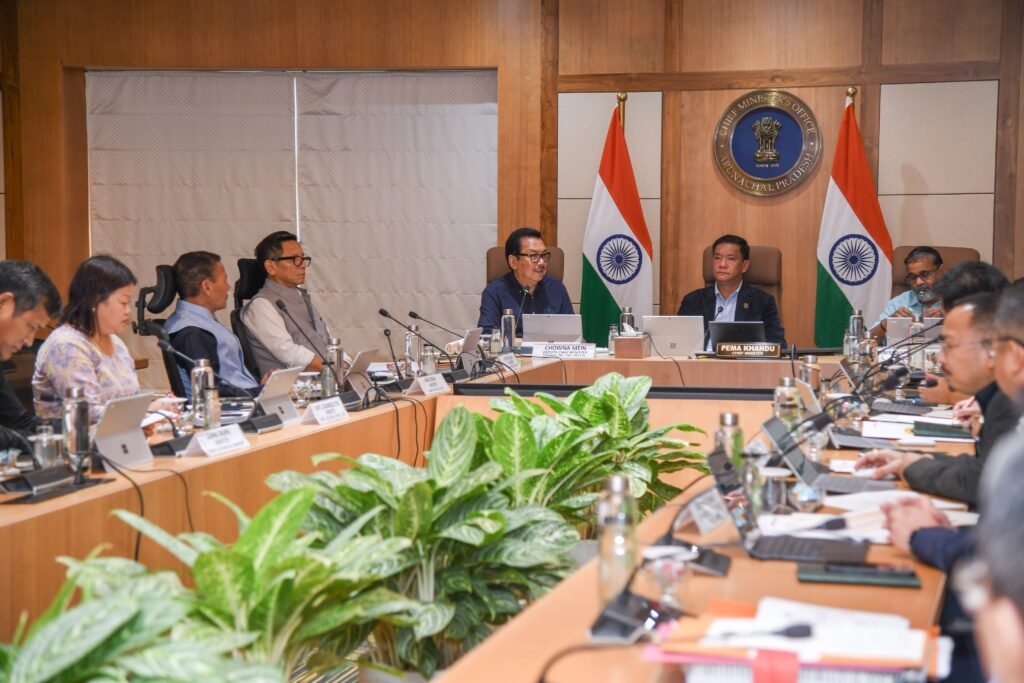
ITANAGAR : The State Cabinet on Friday approved a series of major policy decisions and development initiatives, including a cumulative investment of ₹7,834 crore for four flagship Chief Minister’s comprehensive schemes during 2026-29, aimed at strengthening infrastructure, education, power, entrepreneurship and governance while improving the ease of living and ease of doing business in Arunachal Pradesh. Chaired by Chief Minister Pema Khandu, the Cabinet approved ₹2,334 crore for Phase-II of the Chief Minister’s Comprehensive State Road Development Plan (CMCSRDP) to improve connectivity in district headquarters, township roads, Deputy Commissioner, Additional Deputy Commissioner and Sub-Divisional Officer headquarters, besides easing traffic congestion in the Capital Complex. The Cabinet noted that 62 of the 67 projects sanctioned under Phase-I of the CMCSRDP, with an outlay of ₹899.58 crore during 2019-24, have been completed and directed that the remaining works be finished by March 2027. To improve rural connectivity, the Cabinet sanctioned ₹2,000 crore under the Chief Minister’s Comprehensive State Rural Road Development Programme (CMCSRRDP) over the next three years for construction of roads and bridges to provide all-weather connectivity to habitations not covered under the Pradhan Mantri Gram Sadak Yojana (PMGSY). Another ₹2,000 crore was approved under the Chief Minister’s Comprehensive State Power Development Programme (CMCSPDP) for upgrading and modernising the state’s power infrastructure, with the objective of reducing Aggregate Technical and Commercial (AT&C) losses to 18 per cent by March 2029. The Cabinet also approved ₹1,500 crore for Phase-II of Mission Shikshit Arunachal (2026-29) to bridge infrastructure gaps in schools, strengthen teacher training and enhance real-time monitoring through the Arunachal Vidya Nidhi (AVN) platform. It reviewed the success of Phase-I, under which ₹3,112.50 crore was invested in improving school infrastructure between 2023 and 2026. The Cabinet launched the Enterprise Human Resources Management System (E-HRMS) 2.0, an artificial intelligence-powered platform to digitise and automate the entire government employee lifecycle from recruitment to retirement, and directed all departments to adopt the system expeditiously. Among the new welfare initiatives, the Cabinet approved the Chief Minister’s Frontier Sainik School Scholarship Scheme to support Arunachali students studying in eight notified Sainik Schools and the Rashtriya Indian Military College, Dehradun. It also cleared an Indian Army-led coaching and mentorship programme to prepare students for admission to Sainik and military schools and future careers as Armed Forces officers. To strengthen the state’s economy, the Cabinet approved the launch of the ARUN MSME Mission, which aims to revive and upgrade 500 micro, small and medium enterprises (MSMEs) annually while providing market linkage, export and capacity-building support. The Cabinet also approved the Arunachal Human Capital and Economic Transformation Vision 2036, which envisages skilling one lakh youths, creating 10,000 entrepreneurs, facilitating 10,000 apprenticeships, enabling 10,000 overseas placements, forging 100 industry partnerships and upgrading all 10 Industrial Training Institutes (ITIs) into modern skill hubs. In a significant employment decision, the Cabinet approved 20 per cent reservation for retired Agniveers from Arunachal Pradesh in constabulary and equivalent posts in the Arunachal Pradesh Police, Arunachal Armed Police, Indian Reserve Battalion, Fire and Emergency Services, Forest Guards, Mineral Guards, Special Tiger Protection Force, Foresters and Prison Wardens. It clarified that unfilled vacancies under the ex-Agniveer quota would revert to the regular Arunachal Pradesh Scheduled Tribe (APST) quota. The Cabinet also approved the Arunachal Pradesh Apiculture and Honey Policy, 2026, aimed at promoting scientific and commercially viable beekeeping, enhancing farmers’ and women Self-Help Group (SHG) incomes and positioning Arunachal honey as a premium product. To improve the ease of doing business, it approved the Non-applicability of Trade Licence (for Statutory Licence Holders) Notification, 2026, exempting businesses holding valid statutory licences under specified Central and State laws from obtaining separate trade licences. It also exempted 56 categories of business activities from trade licence requirements to reduce regulatory duplication. The Cabinet further recommended promulgation of the Arunachal Pradesh Fire and Emergency Services (Amendment) Ordinance, 2026, approved amendments to the Arunachal Pradesh Staff Selection Board (APSSB) Rules, 2018 by increasing the waitlist to 20 per cent of vacancies or up to five candidates, extending its validity from six months to one year, and approved the establishment of six new fire stations at Nyapin, Dambuk, Nari, Kaying, Jairampur and Menchuka. It also approved the Common Examination Scheme for Direct Recruitment to Group A and Group B Technical Posts Rules, 2026, the proposed Arunachal Pradesh Advocates Protection Bill, 2026, new service rules for the State Legal Services Authority and amendments to the Junior Librarian (Law) Recruitment Rules, 2020. To strengthen administrative capacity, the Cabinet approved the creation of 36 Assistant Sub-Inspector (ASI) posts under the 1st and 2nd Arunachal Armed Police Battalions and granted special grade designations to various categories of prison personnel.      

Latest News, Popular News, State News

RGU students to hold solidarity rally for Sonam Wangchuk on July 20

Staff Reporter ITANAGAR : A group of students from Rajiv Gandhi University (RGU), under the banner Youth for Change, will organise a peaceful solidarity rally in the capital on July 20 in support of activist and educationist Sonam Wangchuk, who is on a hunger strike at Jantar Mantar in New Delhi over the alleged paper leak issue. Addressing a press conference at the Arunachal Press Club here on Friday, the organisers said the rally will begin at 3 pm from Akashdeep and culminate at the Tennis Court near IG Park, Itanagar. The students said the march aims to express solidarity with Wangchuk’s demand for greater transparency, accountability and reforms in the examination system. They appealed to students, youths and concerned citizens to participate in the rally peacefully and uphold democratic values throughout the march. Wangchuk has been on a hunger strike at Jantar Mantar, demanding the resignation of Union Education Minister Dharmendra Pradhan over the alleged irregularities in the education system. He has also announced that he will conclude his fast on July 20 after participating in the “Sansad Chalo” (March to Parliament) programme organised by the Cockroach Janata Party (CJP).      

Blog

State Cabinet approves 3 initiatives on healthcare, TB and substance abuse

ITANAGAR : The Arunachal Pradesh Cabinet on Friday approved three major initiatives to strengthen healthcare and social protection, combat drug and substance abuse and intensify the fight against tuberculosis (TB) through a 30-day statewide integrated health campaign. The Cabinet led by Chief Minister Pema Khandu approved the launch of CM CARES (Chief Minister’s Comprehensive Action for Resilient, Equitable & Healthy State) as an umbrella initiative to improve access to affordable and quality healthcare, financial protection and integrated social support services across the state. Under CM CARES, existing flagship programmes, including the Chief Minister Arogya Arunachal Yojana (CMAAY), CM Organ Transplant Services, CM Health Emergency Life Protection Services, CM Free Chemotherapy Services and CM Social Security Schemes, will be strengthened, an official statement said. The financial assistance under CMAAY for kidney, liver and bone marrow transplants will be increased by Rs 2.5 lakh each over the existing coverage. Specialised healthcare services, including cochlear implantation and corneal transplantation, will also be covered. The initiative will expand patient support infrastructure through guesthouses and referral services, besides strengthening early screening and intervention for childhood development disorders, including autism spectrum disorder. Through the Holistic Ecosystem for Active Living and Wellness (HEAL) framework, the government also seeks to shift focus from treatment to prevention, health promotion and overall well-being. The cabinet also launched Mission SURAKSHA (State Unified Response Against Drugs, Substance Harm & Addiction), a comprehensive framework to tackle substance abuse and its impact on youth, mental health, HIV, families and community safety. In another major decision, the Cabinet approved the Ayushman Aarogya Shivir, a 30-day statewide campaign of integrated health camps aimed at taking preventive, promotive and curative healthcare services to people, particularly in remote areas. The campaign will focus on achieving the goal of TB Mukt Arunachal Pradesh through intensified screening, early detection and timely treatment, officials said. The camps will provide services related to TB elimination, maternal and child health, immunisation, non-communicable disease screening, mental health, eye and oral healthcare, elderly care, nutrition and AYUSH, besides facilitating Ayushman Bharat enrolment. (Source: PTI)  

Latest News, Popular News, State News

DEHP seeks state-level recognition for Dr Daying Ering

Staff Reporter ITANAGAR : The Daying Ering Heritage Portal (DEHP), an NGO, has urged the Arunachal Pradesh government to accord state-level recognition to late Dr Daying Ering in honour of his immense contribution to the development of the state. Addressing a press conference at the Arunachal Press Club here on Friday, DEHP chairman Taring Tabi highlighted the life, sacrifices and contributions of Dr Ering, describing him as the “Architect of Modern Arunachal Pradesh.” Tabi said the organisation has submitted a memorandum to the state government seeking official recognition of Dr Ering’s legacy so that future generations remain aware of his role in shaping the state’s history and development. Among its key demands, the DEHP sought installation of statues of Dr Ering at prominent locations across the state, renaming of the Ranaghat Bridge in his honour, and declaration of his birth anniversary as a State Commemorative Day or its inclusion in the official state calendar. “The younger generation should know and remember the invaluable contributions made by Dr Daying Ering towards the progress and development of Arunachal Pradesh,” Tabi said. The organisation expressed hope that the government would positively consider its demands and take appropriate steps to preserve and promote the legacy of one of the state’s foremost leaders.        

Latest News, Popular News, State News

Army interacts with RRU students, showcases military capabilities

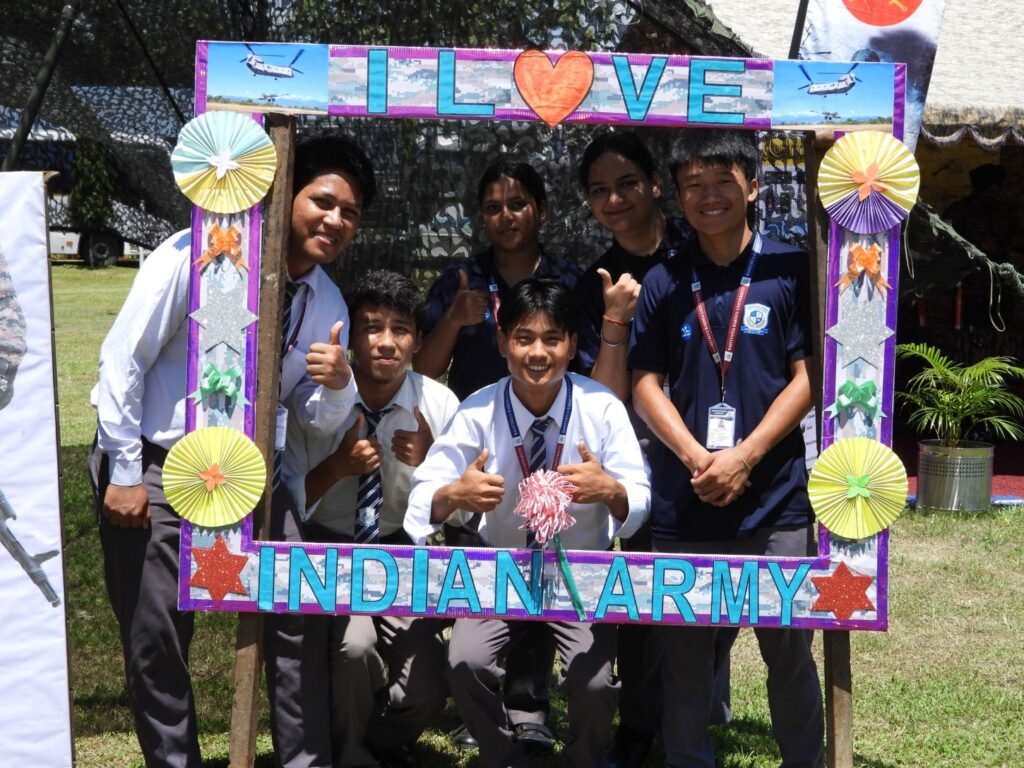
PASIGHAT :  Under the aegis of the Spearhead Division, the Spearhead Gunners of the Signals Regiment (SIGAR) Military Station conducted a military interaction and strategic weapon display for students of Rashtriya Raksha University (RRU), Pasighat, as part of the university’s orientation programme for the 2026-27 academic session. The programme aimed to familiarise students with the ethos of military service, leadership, discipline and the career opportunities available in the Indian Armed Forces, while promoting patriotism, nation-building and responsible citizenship. Addressing the students, the Commander of the Spearhead Gunners said the true strength of the Indian Army lies not only in its modern weaponry but also in the character, courage and professionalism of its personnel. He encouraged the students to lead lives of purpose and integrity, emphasising that national security is a shared responsibility requiring committed citizens and capable leaders. The strategic weapon display gave students an opportunity to interact with serving soldiers and officers and gain insights into the operational role of various weapon systems, military equipment and the professionalism that underpins Army operations. Interactive sessions also offered participants a glimpse into life in the Armed Forces and highlighted the importance of teamwork, discipline and leadership. A dedicated interaction with Army officers and a career information session generated keen interest among students, who sought information on officer entry schemes, Agniveer recruitment and other career opportunities in the Indian Army. An Army-themed selfie point was also set up to enhance student engagement. The programme received an enthusiastic response from students and faculty members of Rashtriya Raksha University and reaffirmed the Indian Army’s commitment to youth engagement, leadership development and strengthening civil-military ties through nation-building initiatives. (DIPR)    

Latest News, Popular News, State News

Khandu govt completes 10 years; Cabinet adopts resolution

ITANAGAR : The Arunachal Pradesh Cabinet on Friday unanimously adopted a resolution marking the completion of 10 years of ‘Team Arunachal’ in office under the leadership of Arunachal Pradesh Chief Minister Pema Khandu. The Cabinet congratulated the Chief Minister on the milestone and reaffirmed its collective commitment to ensuring peace, dignity, prosperity and development for the people of Arunachal Pradesh. The resolution also congratulated Prime Minister Narendra Modi on completing 4,399 days of continuous service as an elected Prime Minister on June 10, 2026, making him the longest-serving elected Prime Minister in consecutive terms. It acknowledged the continued support extended by the Government of India towards the development of the Northeast, particularly Arunachal Pradesh, since 2014. The Cabinet observed that the past decade had ushered in a new phase of development and aspirations for the State under the guiding principles of ‘Sabka Saath, Sabka Vikas, Sabka Vishwas, Sabka Prayas’ and the spirit of ‘Reform, Perform and Transform’. The resolution noted that over the last 10 years, the government had focused on initiatives benefiting youths, women, farmers, students, sportspersons and senior citizens, while promoting entrepreneurship, skill development, start-ups, handloom, handicrafts, agriculture, horticulture and tourism. It further stated that Arunachal Pradesh had witnessed significant progress in infrastructure and connectivity and had emerged as an integral part of India’s growth story. At the same time, the Cabinet reiterated its commitment to preserving the State’s indigenous identity, culture, languages, traditions and knowledge systems while pursuing the twin goals of development and heritage conservation. The Cabinet also appreciated the contributions of public representatives, government officials, media personnel and citizens in strengthening governance and ensuring effective implementation of developmental initiatives across the State. Reaffirming its vision of building a ‘Viksit Arunachal Pradesh’ by 2047, the Cabinet pledged to continue working with unity, discipline, dedication, innovation and empathy, while striving to build a “Sundar, Swachh, Surakshit, Shikshit, Swasth and Samridh Arunachal Pradesh”.      

Latest News, Popular News, State News

NABARD’s 45th Foundation Day celebrated

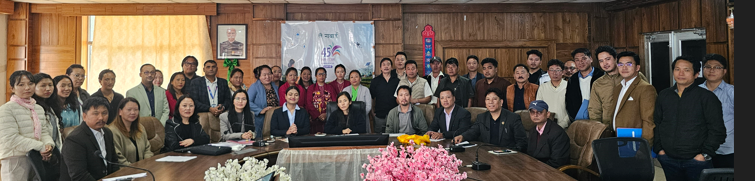
TAWANG : The 45th Foundation Day of the National Bank for Agriculture and Rural Development (NABARD) was celebrated at the Deputy Commissioner’s Conference Hall here on Friday, marking over four decades of the institution’s contribution to rural development, sustainable agriculture, financial inclusion and livelihood promotion. The programme was attended by Tawang Deputy Commissioner Namgyal Angmo, Additional Deputy Commissioner Rinchin Leta, Assistant Commissioners Tenzin Jambey, Nawang Thutan and Tsering Choden, besides heads of departments, bankers and members of Self-Help Groups (SHGs). Welcoming the gathering, NABARD Tawang District Development Manager (DDM) Keertika Kashyap presented an overview of the institution’s 45-year journey and highlighted its initiatives in agriculture, rural infrastructure, financial inclusion, skill development and livelihood promotion. The occasion also witnessed the release of the NABARD Annual Report by the Deputy Commissioner. As part of the nationwide ‘Ek Ped Maa Ke Naam’ campaign, star anise saplings were distributed among SHG members to promote environmental conservation while paying tribute to mothers. Addressing the gathering, Angmo extended greetings to the NABARD fraternity and said the institution has immense potential to support Tawang across diverse sectors. She urged government departments and SHGs to actively utilise NABARD’s technical expertise, financial assistance and developmental programmes for sustainable and inclusive growth. The DC also appreciated the proactive role of DDM Keertika Kashyap in collaborating with various departments and supporting innovative initiatives in the district, and encouraged closer coordination with NABARD to maximise the benefits of its schemes. Additional Deputy Commissioner Rinchin Leta congratulated NABARD on its Foundation Day and acknowledged its significant contribution to rural development and community empowerment. During the interactive session, representatives of various departments discussed opportunities for enhanced collaboration with NABARD in strengthening agriculture and allied sectors, promoting entrepreneurship, empowering SHGs, improving rural infrastructure and creating sustainable livelihood opportunities. The programme concluded with a collective resolve among all stakeholders to work closely with NABARD for the holistic and inclusive development of Tawang district. (DIPR)      

Latest News, Popular News, State News

Tawang farmers trained in scientific mushroom cultivation

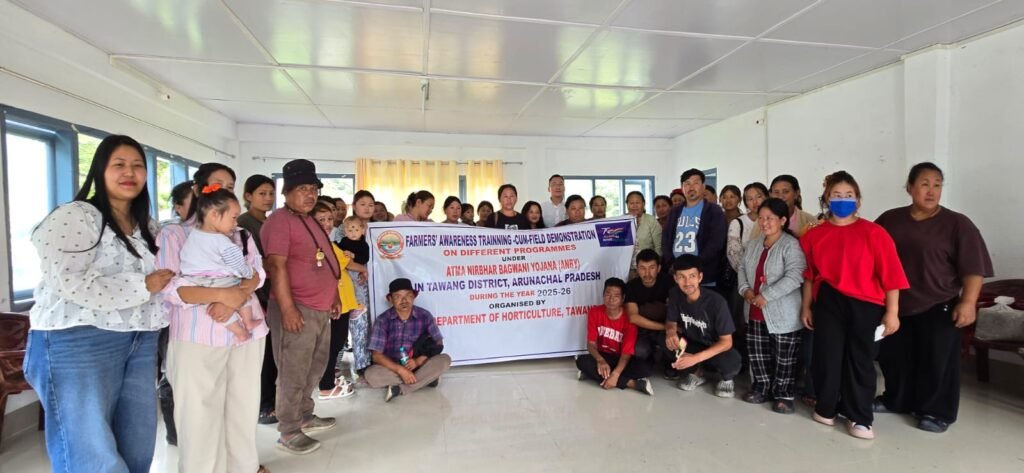
JEMEITHANG : A one-day training programme on oyster and shiitake mushroom cultivation was organised at Jemeithang on Friday to promote sustainable livelihood opportunities and enhance farmers’ income. The programme was attended by 54 farmers, including members of various Self-Help Groups (SHGs), reflecting the growing interest in scientific mushroom cultivation as an alternative source of livelihood. Tawang District Horticulture Officer Koncho Gyatso conducted a hands-on training session on oyster mushroom cultivation, covering the entire production process, including substrate preparation, spawning, harvesting and post-harvest management. Describing oyster mushroom as a low-investment, short-duration and high-return crop, he encouraged farmers to adopt it as an additional source of income and self-employment. Arunachal State Rural Livelihoods Mission (ArSRLM) Block Coordinator Tenzin Yangzom conducted a technical session on shiitake mushroom cultivation, explaining scientific production methods, environmental requirements and the market potential of the premium-value crop. She encouraged SHG members to take up mushroom cultivation as a group enterprise to strengthen rural livelihoods. To facilitate immediate adoption of the technology, mushroom cultivation kits containing oyster mushroom spawn, poly bags, paddy straw and other essential inputs were distributed to all participating farmers. The programme concluded with an interactive session during which participants sought guidance on cultivation practices, disease management, value addition and marketing opportunities. Farmers appreciated the practical demonstrations and expressed confidence in adopting mushroom cultivation in their respective villages. The organisers said the initiative is expected to promote entrepreneurship, nutritional security and sustainable income generation while supporting the diversification of horticultural activities and rural economic development in the district. (DIPR)