ONLINE AGE

(Online version of the Arunachal Age newspaper)

National

Latest News, National, Popular News, State News

No proposal to declare cow national animal or ban slaughter: Meghwal

NEW DELHI : There is currently no proposal under the Centre’s consideration to declare the cow the national animal or impose a nationwide ban on cow slaughter, Union Law Minister Arjun Ram Meghwal has said, noting that such demands continue to be raised by various groups. Meghwal noted that laws relating to cow slaughter vary across states and decisions are often taken based on local considerations. Responding to a question on calls for granting the cow national animal status and prohibiting cow slaughter across the country, Meghwal, in an interview to PTI, said such representations are regularly made to MPs and the government. “Various organisations keep working on these issues and approach MPs as well. People submit applications and make representations saying such a measure should be taken,” he said. However, the minister said no such proposal is presently under consideration by the Union Cabinet. “As of now, there is no such matter before us that is under consideration of the Cabinet. If at any point a proposal reaches a stage where it warrants a government decision or Cabinet consideration, we will inform you,” he said. “Different states take decisions on such matters based on their own circumstances and merits,” he said, referring to the BJP-led West Bengal government’s recent move to step up enforcement of cattle slaughter regulations under the state’s 1950 law. The minister acknowledged that demands for a complete ban on cow slaughter continue to be raised and are widely discussed, including on social media. “It is an issue that people keep bringing up. Efforts are being made by those advocating it, and discussions keep happening. But at present, it is not at a stage where a decision-making process has begun at the government level,” he said. While Hindu groups have been demanding the prohibition of cow slaughter in the country, several Muslim organisations and clerics have also called for declaring the cow the national animal and imposing a nationwide ban on cow slaughter. Jamiat Ulama-e-Hind chief Maulana Arshad Madani has been among those backing the demand, arguing that such a move could help reduce tensions surrounding the issue. Former vice-president Hamid Ansari has also supported the proposal, saying that if granting the cow national animal status could help address recurring disputes linked to cow slaughter, it should be considered. Ansari had also appealed to Muslims to avoid cow sacrifice, noting that Islam does not mandate the sacrifice of any particular animal. Maulana Khalid Rashid Farangi Mahali, a senior executive member of the All India Muslim Personal Law Board, has also endorsed the demand, saying recognition of the cow as the national animal would reflect respect for the religious beliefs and cultural sentiments attached to it by many Hindus. Similar appeals were made by many other Muslim leaders and clerics ahead of Eid-ul-Azha, bringing the issue back into public discussion in recent weeks.      

Latest News, National, Popular News, State News

CBSE OSM row: Cong seeks CBI probe into ’emerging scandal’, Pradhan’s resignation

NEW DELHI :  The Congress on Saturday alleged an “astonishing mix of incompetence, corruption, and callousness” marked the CBSE’s planning and implementation of the Class 12 Board exams, reiterating its demand for Education Minister Dharmendra Pradhan’s resignation and a full CBI probe into the “emerging scandal”. Senior Congress leader Jairam Ramesh flagged two investigations — one by CBSE Class 12 student Sarthak Sidhant and another by a newspaper — and said they had raised fresh questions over the CBSE’s intent and preparedness in introducing the On-Screen Marking System (OSM) for the Class 12 Board exam. In a post on X, Ramesh referred to media reports and posted 10 questions, saying parents and students were seeking answers from Prime Minister Narendra Modi, “Who is, according to the Solicitor General, personally supervising this mess?”Jairam Ramesh Why was the CBSE so insistent on introducing OSM that it rushed the process within 74 days before the board exams, Ramesh asked. Pointing out that the CBSE had flagged at least 36 technical, operational, and evaluation-related concerns from the OSM dry run it conducted in five Delhi schools, he asked why these concerns were not acted upon before the exams. “The CBSE issued three RFPs to award the contract for the OSM system. Why was the proviso that disqualified bidders with a past record of poor performance removed in the third RFP? Was this done to favour COEMPT, which had previously been blacklisted in Telangana?” Ramesh said. Why was the proviso, which prohibited bidders who were previously blacklisted, watered down to exclude only bidders who were currently blacklisted, he further asked. “Was the minimum company turnover for the bidder specifically set at Rs 50 crore to enable COEMPT (which had a three-year average turnover of 50.86 crores) to qualify for the contract?” Ramesh said. He also questioned the dilution of the Capability Maturity Model Integration level for contractors from Level 5 to Level 3. Why was the project criteria changed to favour vendors who have smaller, fragmented university contracts over vendors having experience with large student counts, Ramesh asked. “Why were the RFP provisions changed from favouring contractors having their own data centres to those having MeitY empanelled data centres? Was this done to systematically favour COEMPT, which used AWS (MeitY empanelled) over TCS (which has its own data centers)? Why did the CBSE give up its right to blacklist the contractors in case the contractors made mistakes?” the Congress general secretary in charge of communications said. Why was the technical and operational capability of the score matrix modified to favour fragmented vendors, Ramesh asked. “It is increasingly clear that an astonishing mix of incompetence, corruption, and callousness went into the CBSE’s planning and implementation of the Grade 12 Board Exams. Mantri Pradhan must resign, and a full CBI investigation must be conducted into this emerging scandal,” Ramesh said. Congress leader Rahul Gandhi had on Friday said that Prime Minister Modi’s silence on the CBSE debacle and inaction against the education minister showed he cared only about the survival of his government and not the future of lakhs of students. In a post on X, Gandhi had said he had been demanding an independent judicial probe from day one into the CBSE’s on-screen marking and the award of the contract to COEMPT, as the youth of the country deserved to know the truth. Gandhi had shared media reports and called upon people to read them carefully. “CBSE called for OSM tenders thrice. Zero bids the first time. No qualified bidder the second time. And finally, the technical bar was lowered until COEMPT could clear it. Scanning resolution cut. Robotic scanner requirement dropped. CMMI certification lowered from Level 5 to Level 3. Penalties for errors in answer sheets removed. “TCS, India’s biggest IT services company, qualified in the third round too. TCS lost. COEMPT – a company with a spectacular track record of failure – won. And what are CBSE students complaining about today? Badly scanned answer sheets. Missing pages. A broken evaluation portal,” he had said. (Source: PTI)        

National, REGIONAL

Kuki groups seek separate administration, probe into violence in Manipur

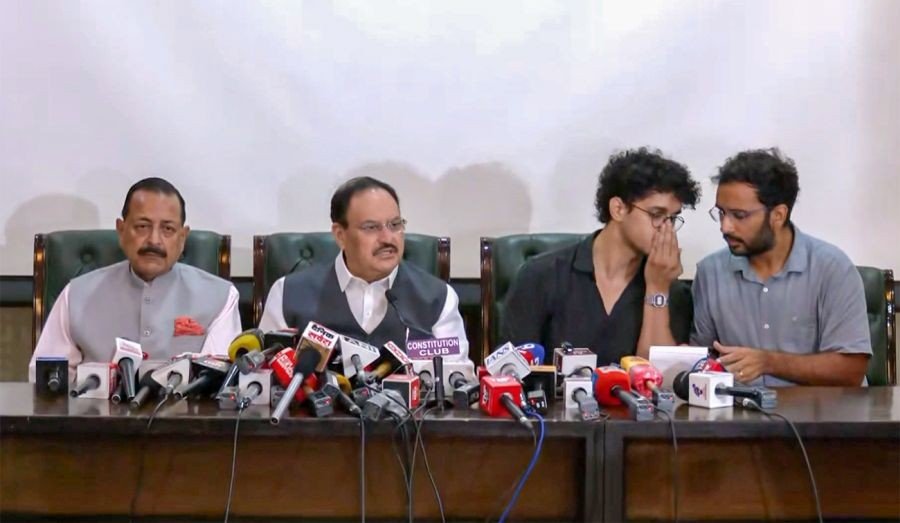
NEW DELHI : Kuki organisations on Saturday demanded a separate administration for the Kuki-Zo people and impartial investigations into the recent clashes in Manipur, asserting that the community has faced decades of displacement, violence and constitutional marginalisation. In a statement issued at a press conference in Delhi, the Kuki Students’ Organisation (KSO) Delhi and NCR and other Kuki representatives said the demands were part of a broader call for justice, security and a political solution to the ongoing crisis in the northeastern state. The groups called for enforcement of Article 371C and restoration of the constitutional role of the Hill Areas Committee, alleging that administrative powers over hill villages had been transferred to valley-based authorities in violation of constitutional safeguards. They claimed that 462 hill villages had been brought under valley-based revenue jurisdiction, 192 hill villages placed under valley police stations and valley sub-registrar offices exercised jurisdiction over hill lands. The groups also renewed their demand for a formal inquiry into the 1992-93 violence involving the NSCN-IM, alleging that more than 1,000 Kuki civilians were killed and over 360 villages destroyed during the period. “There has never been a full accounting,” the statement said, demanding rehabilitation and justice for affected families. Referring to the ethnic violence that erupted in Manipur in May 2023, the Kuki representatives alleged large-scale destruction and displacement of the community. They claimed that thousands of homes and over 200 churches and places of worship had been damaged or destroyed and more than 41,000 people displaced. The KSO Delhi and NCR also expressed concern over the continued detention of 14 Kuki-Zo individuals allegedly held by Manipur Naga groups in Senapati district and demanded their “safe, immediate and unconditional release”. The organisation urged the Government of India and central security agencies to intervene decisively and initiate criminal proceedings against those responsible for the alleged abductions. The Kuki groups strongly condemned the killing of three Thadou-Kuki church leaders on May 13, alleging that the attack was carried out by the ZUF (Kamson faction), which they described as a proxy of the NSCN-IM. The KSO said no arrests had been made despite public outrage and demanded a fair and time-bound investigation by central agencies. The organisations further alleged renewed violence in parts of Ukhrul and Kamjong districts this year, including attacks on villages, killings and displacement. Calling for a long-term political settlement, the KSO urged the Centre to expedite dialogue with Suspension of Operations (SoO) groups representing the Kuki-Zo people and work towards what it described as an “honourable, constitutional and lasting political solution”. The groups maintained that the Kuki-Zo people were not seeking “sympathy or special favour” but justice, constitutional protection and security. “We are demanding justice, equal protection under the Constitution, security and the fundamental right to live with dignity and peace,” the KSO said in its statement. (Source: PTI)      

National, REGIONAL

Mandaviya to review National Games preparations in 3-day Meghalaya tour

NEW DELHI : Sports Minister Mansukh Mandaviya will chair a review meeting for the 39th National Games in Meghalaya and also inaugurate an Integrated Multipurpose Indoor Sports Complex in Shillong during a three-day visit to the North-Eastern state starting Friday. The Host State Contract for the National Games to be held in March next year will be signed with Meghalaya in the presence of senior dignitaries and representatives of the Indian Olympic Association. Mandaviya will also participate in a series of programmes related to youth affairs, sports infrastructure development, and review centrally-sponsored schemes in the state. During the visit, the Minister will attend a Chintan Shivir organised by Department of Youth Affairs. Meghalaya Sports and Youth Affairs Minister Shakliar Warjri and other senior officials will also be present. Mandaviya will inaugurate the Integrated Multipurpose Indoor Sports Complex in Shillong on Saturday along with Chief Minister Conrad K Sangma. “The Integrated Multipurpose Indoor Sports Complex, being developed at a project cost of Rs 132.9 crore, is designed as a modern multi-functional sports facility capable of hosting disciplines such as basketball, badminton and volleyball, besides other indoor sporting events,” the ministry stated. The complex is also a key venue for the National Games and will include integrated infrastructure such as multipurpose halls, auditorium, banquet facilities,etc. The review meeting of the Games preparations will include presentations and discussions involving officials from Meghalaya and representatives from other North-Eastern states. As part of the visit, Mandaviya will inspect the Umsawli Sports Complex in Shillong, including the aquatics and tennis facilities, to review ongoing sports infrastructure development in the state. The Minister will additionally review the implementation and progress of centrally sponsored schemes in Ri-Bhoi district of Meghalaya under the Poorvottar Sampark Setu initiative on May 31. (Source: PTI)

National, REGIONAL

Delhi court issues notice to Assam CM Himanta Sarma over remarks on ‘Miya Muslims’

NEW DELHI : A Delhi court has issued a notice to Himanta Biswa Sarma on a plea filed by activist Harsh Mander seeking the registration of an FIR against the Assam chief minister for his “provocative” remarks on “Miya Muslims”. Additional Sessions Judge Sonu Agnihotri issued the notice to Biswa while hearing a revision petition filed by Mander against the April 20 order of a magisterial court, which refused to order the filing of an FIR against the BJP leader. In its order dated May 26, the court said, “The counsel for the petitioner further drew my attention to the standard operating procedure (SOP) for Zero FIR and E-FIR issued by the Ministry of Home Affairs filed by the petitioner on record with the revision petition. In view of the submissions made by the counsel for the petitioner, issue a notice of revision petition to the respondents on filing of appropriate reply for July 15, 2026.” In April, Mander had moved an application seeking an FIR against Sarma over an allegedly communally charged statement made on January 27 during an event at Digboi in Assam’s Tinsukia district. According to the plea, Sarma allegedly said that “four to five lakh Miya voters” would be removed from the electoral rolls during the Special Intensive Revision (SIR) of electoral rolls in Assam. ‘Miya’ is a pejorative term used for Bengali-speaking Muslims in Assam, and the non-Bengali-speaking people generally identify them as Bangladeshi immigrants. In recent years, activists from the community have started adopting the term as a gesture of defiance. Mander’s application also claimed that the Assam chief minister incited people against ‘Miyas’ by allegedly saying that “only if they face troubles will they leave Assam” and that “we are ensuring that they cannot vote in Assam”. Before the sessions court, the counsel for Mander argued that the trial court had wrongly dismissed the application on grounds of lack of territorial jurisdiction. The counsel submitted that information relating to a cognisable offence could be provided to any police station irrespective of where the offence was committed, relying upon the concept of Zero FIR. The court noted the submissions and said, “Issue notice of revision petition to the respondents.” (Source: PTI)

Latest News, National, Popular News, State News

Demographic changes due to illegal migration not limited to border areas: MHA

NEW DELHI : The demographic changes due to illegal migration are not limited just to border areas, but their impact has extended, “affecting urban centres, industrial corridors, tribal regions, and other socially and economically sensitive areas,” said a government notification. The notification issued by the Union Ministry of Home Affairs on the constitution of a High-Level Committee on Demographic Changes (HLCDC) under Justice Prakash Prabhakar Naolekar, a retired Supreme Court judge, said “extensive challenges” have arisen from demographic changes due to illegal immigration. Union Home Minister Amit Shah had announced the formation of the committee to assess demographic changes across India due to “illegal immigration and other unnatural causes”. Headquartered in New Delhi, the committee will also include the Census Commissioner, along with retired IAS officer Durga Shankar Mishra, ex-IPS officer Balaji Srivastava and Dr Shamika Ravi as members and will submit its report in a year. “The joint secretary (foreigners-l), Ministry of Home Affairs, will serve as the member secretary of this committee,” Shah had said on Tuesday. The notification said demographic changes have been observed in certain regions of the country, which are “not attributable to normal fertility or mortality trends” but are instead emerging due to external abnormal factors such as “illegal immigration, irregular population mobility, and administrative laxity”. “Although these changes are most visibly concentrated in the border districts, their impact has extended beyond those areas, now affecting urban centres, industrial corridors, tribal regions, and other socially and economically sensitive areas, thereby severely impacting public service delivery, local governance, resource distribution, and social cohesion,” it said. The existing institutional framework has not been adequately equipped to undertake coordinated, evidence-based, and time-bound evaluation and response to such demographic shifts, the notification said. “…therefore, the Government of India resolves to constitute a High-Level Committee on Demographic Changes (HLCDC) under the Ministry of Home Affairs to undertake scientific study of the nature, causes and consequences of such demographic changes occurring across the country and to recommend appropriate policy, administrative and legal measures,” it said. The committee is tasked to submit its report within a year after undertaking an extensive consideration of the challenges arising from demographic changes, including illegal immigration. The panel will study the possible causes of such demographic changes, such as variations in fertility, cross-border movement (including illegal immigration), economic opportunities, and other socio-environmental factors and underlying factors behind changes, including illegal immigration, abnormal settlement patterns, and planned migration. It will analyse the structural population changes at the level of religious or social communities, especially those diverging from uniform trends and recommend a well-organised and permanent operational system for the “legal, fair and time-bound identification, detention, and deportation of illegal immigrants already residing in the country.” The panel will also recommend an institutional mechanism to strengthen border management, population stabilisation, and identification systems for sustained monitoring of such trends, besides proposing a comprehensive policy framework to enhance coordination between the Centre and state governments in such matters, it said. (Source: PTI)    

Latest News, National, Popular News, State News

Arunachal para athletes win silver at Indian Open Championships

BENGALURU : The Paralympic Association of Arunachal (PAA) has congratulated para athletes Kipa Mero and Tingong Wangpan for their impressive performances at the 8th Indian Open International Para Athletics Championships 2026 held in Bengaluru from May 25 to 27. Kipa Mero won the silver medal in the Women’s F-12 category, while Tingong Wangpan secured silver in the Men’s T-37 sprint category, bringing laurels to Arunachal Pradesh at the international-level championship. The association said the achievements reflect the growing standard, dedication and potential of para athletes from Arunachal Pradesh on national and international sporting platforms. The Arunachal contingent was led by coach Techi Sonu and team manager Takam Pario, who guided and supported the athletes throughout the championship. The PAA also expressed appreciation to the Government of Arunachal Pradesh for its continued support towards the development of para sports in the state. Extending best wishes to all para athletes, the association expressed hope for greater success and achievements in future international competitions.                

National, REGIONAL

Trial in Manipur ethnic violence cases needs to be expedited: SC

NEW DELHI : The Supreme Court on Wednesday said that the ongoing trial in the 2023 Manipur ethnic violence needs to be expedited and sought a status report from authorities. Ethnic violence in Manipur broke out on May 3, 2025, after a ‘Tribal Solidarity March’ was organised in the hill districts. The protest was held against the Meitei community’s demand for Scheduled Tribe (ST) status. The violence claimed over 260 lives and left thousands of people displaced. On Wednesday, a bench of Chief Justice of India Surya Kant and Justice Joymalya Bagchi noted that, according to a SIT report, chargesheets had been filed in 207 cases against more than 400 accused. The bench was hearing a plea of CBI against the grant of bail by the Gauhati High Court to two accused, Arun Khundongbam and Nameirakpam Kiran Meitei, who allegedly gangraped the victims and paraded them naked. “We are of the view that the ongoing trial needs to be expedited. We have asked the CBI and others to provide legal aid counsel who are well-versed in Manipuri to counsel the victims…The status of the ongoing trial must be filed in the next hearing,” it said. At the outset, the bench said that the matter was to be heard regarding the issue of providing legal aid to victims’ families and that it would not interfere with other issues. Referring to a CBI report, the bench said that 20 chargesheets had been filed and trials had commenced in 16 cases, while, according to the SIT status report, chargesheets had been filed in 207 cases against over 400 accused. The bench also noted that, according to a report filed by former IPS officer Dattatray Padsalgikar, the law and order situation in the state was “precarious” on April 7 and 18 this year with some incidents of violence and the state police were stressed. The bench also said that the victims’ faith in the system was of key importance and that “confidence-building measures” with them were needed. On September 8, 2025, the Gauhati High Court granted bail to the two accused on the grounds that they had been in custody for two years while charges were yet to be framed, and termed it to be “unjustified prolonged incarceration”. “While the accusations here are grave and shocking, this court cannot overlook that indefinite detention without trial amounts to pretrial punishment, which is impermissible in law,” the Gauhati High Court had said in its order. The CBI sought the cancellation of bail due to grave allegations of sexual violence. During the proceedings on Wednesday, advocate Nizam Pasha, appearing for some of the victims, said that the same court, which on May 9, 2025, noted the heinous nature of offences, granted bail on September 8 on the grounds of delay. “As it is a matter of liberty, an egregious ground is required to cancel the bail. Our main concern is bringing home the truth, and for that, whatever rehabilitation measure is necessary, we will examine…” the apex court bench said. Earlier in March, the apex court had directed the appointment of legal aid counsel for the victims by the state legal services authority. On July 20, 2023, the apex court took suo-moto cognisance of the matter after a video of the assault surfaced online and was widely shared months later, triggering nationwide outrage. The violence was preceded by earlier tensions over the eviction of Kuki villagers from reserve forest land, which had led to a series of smaller agitations. In August 2023, the Centre constituted the Justice Gita Mittal Commission to oversee relief and rehabilitation of the victims of ethnic violence in Manipur on the recommendation of the government of Manipur, citing the necessity of an inquiry into a matter of public importance. Its tenure was recently extended till July 31. (Source: PTI)        

Latest News, National, Popular News, State News

Govt forms high-level panel on demographic change to tackle infiltration

NEW DELHI : Union Home Minister Amit Shah on Tuesday announced that the Centre has constituted a high-level committee under retired Supreme Court judge Justice Prakash Prabhakar Naolekar to assess demographic changes across India due to “illegal immigration and other unnatural causes”. In a message on ‘X’ in Hindi, he said infiltration and other reasons are causing “unnatural” demographic change, which poses a significant challenge to the present and future of any nation. “To address this very challenge, on August 15, 2025, Prime Minister @narendramodi ji had announced the ‘high-level committee on demographic change’. I am delighted to inform you that the government has now constituted this committee,” Shah said. The home minister said the committee will be chaired by Justice Naolekar (retd) and will also include the census commissioner, along with retired IAS officer Durga Shankar Mishra, ex-IPS officer Balaji Srivastava and Dr Shamika Ravi as members. “The joint secretary (foreigners-l), Ministry of Home Affairs, will serve as the member secretary of this committee,” he said. Shah emphasised that demographic change is a serious issue linked not only to the country’s sovereignty but also to national security, law and order, profound changes in social structure and the preservation of tribal society. “This committee will conduct a comprehensive assessment of demographic changes occurring across India due to illegal immigration and other unnatural causes, analyse patterns of abnormal population shifts at the levels of religious and social communities, and present a planned and time-bound solution for the same,” he said. The high-level committee will conduct a scientific evaluation of the demographic changes taking place in different regions of the country due to illegal immigration and other unusual factors, examine their causes, and suggest suitable policy, legislative, and administrative interventions, a government statement said. According to the Terms of Reference of the committee, it will comprehensively deliberate upon the challenges arising from demographic changes, including illegal immigration. It will study the possible causes of demographic changes, such as cross-border activities (including illegal immigration), economic opportunities, and other socio-environmental factors, the statement said. The panel will also identify the underlying factors behind these changes, which include illegal immigration, abnormal settlement patterns, and orchestrated migration, it said. Further, the committee will analyse structural population changes at the level of religious or social communities, particularly where they deviate from broader trends. It will recommend a streamlined and permanent operational mechanism for the legal, fair, and time-bound identification, detention, and deportation of illegal immigrants already residing in the country, the statement said. The committee will also suggest an appropriate institutional mechanism to strengthen border management, population stabilization, and identification systems for the continuous monitoring of such trends, it said. In addition, it will propose a comprehensive policy framework to enhance coordination between the central and state governments on matters related to illegal immigration and the resulting demographic imbalances. The committee may also suggest any additional measures it considers necessary to address the challenges resulting from demographic changes, including illegal immigration. Speaking from the ramparts of the Red Fort in his Independence Day speech last year, Prime Minister Narendra Modi had announced a high-powered demographic mission to tackle the problem. Modi had said there was a “pre-meditated conspiracy” to change the country’s demography through illegal infiltration. “Today I want to alert the country about a concern, a challenge. Under a well-thought out conspiracy, the demography of the country is being changed. Seeds of a new crisis are being sown. These ‘ghuspaithiye’ (infiltrators) are snatching the livelihood of the youth of my country, these ‘ghuspaithiye’ are targeting the sisters and daughters of my country, this will not be tolerated,” he had said. The prime minister had also said that ‘ghuspaithiye’ are misleading the innocent tribals and grabbing their land. Modi had warned that when demographic changes take place, especially in the border areas, they create a national security crisis. (Source: PTI)      

Latest News, National, Popular News, State News

Indian Army observes Sati Baba Day in Tuting

TUTING : The Indian Army under the Spear Corps solemnly observed Sati Baba Day in the Tuting sector of Upper Siang district on May 23, paying tribute to the sacrifice and legacy of Sepoy Satwinder Singh of 4 Sikh Light Infantry, fondly remembered as “Sati Baba”, the eternal guardian of the Siang Valley. Sepoy Satwinder Singh, son of Amar Singh and Sukwinder Kaur, was part of a high-altitude patrol in the Tuting sector in 2020. During the operation, he reportedly fell into a mountain nala while attempting to save a fellow soldier and was never found. Over the years, his sacrifice has come to symbolise courage, protection and faith among soldiers, porters and local residents of the Siang Valley. According to local accounts, an Adi porter who had accompanied the patrol later experienced a dream on May 23, 2021, in which the soldier assured him that he would continue to protect troops and civilians traversing the difficult Himalayan terrain. Since then, Sepoy Satwinder Singh has been revered by troops and local communities as a guardian spirit of the valley. To honour his sacrifice, the Indian Army established the Sati Baba Sentry Post in the Tuting sector on land donated by a local Adi resident. The memorial has emerged as a symbol of unity and communal harmony. The porter associated with the vision follows Buddhism, the Commanding Officer who initiated the memorial belonged to the Maratha Light Infantry and practised Hinduism, while Sepoy Satwinder Singh was a Sikh. The memorial has evolved into a place of remembrance and faith, reflecting the strong bond between the Armed Forces and local communities. Recently, the Army and General Reserve Engineer Force (GREF) personnel jointly undertook renovation works at the site, including installation of a bust of the soldier and construction of a permanent overhead shed for visiting troops and civilians. The annual observance includes wreath-laying ceremonies by Army officers, civil dignitaries and representatives of 4 Sikh Light Infantry, along with traditional rituals such as the ceremonial flag change. Local residents also participate in large numbers, underscoring the enduring relationship between the Army and the people of the region. Sati Baba Day continues to honour the spirit of sacrifice, courage and comradeship associated with the Indian Army, while also symbolising the longstanding support extended by Adi villagers to the Armed Forces since the 1962 war. As residents of Tuting often say, “The river took his body, but left his spirit to guard the valley.” (DIPR)