

ONLINE AGE

(Online version of the Arunachal Age newspaper)

Author name: OnlineAge

Editorial

Defiant Mamata signals democracy’s strain

There is much pique in Trinamool Congress chief Mamata Banerjee’s response to the defeat of her party in the West Bengal Assembly elections, and extends an acrimonious poll campaign beyond the results. She has refused to accept defeat and step down as Chief Minister, claiming the elections were unfair and alleging conspiracy in their conduct. A chief minister’s refusal to resign after an electoral defeat presents an entirely new situation; this is uncharted constitutional territory. Implicit in this is a divergence between constitutional intent and democratic convention. The Constitution does not clearly demand the resignation of a defeated chief minister. The incumbent can hold office until a new chief minister is sworn in. So, Mamata’s refusal is not legally wrong, but it is democratically improper. Legality is only the alphabet of the democratic process; its meaning reflects in actions that comply with the spirit of the mandate, expressed formally through elections, and informally through multiple ways of popular engagement and conventions. There is no doubt where propriety lies, and if Mamata sticks to her decision, the Constitution has its ways to assert itself. Her dismissal from office and even more severe actions can be contemplated. The resulting drama will be more political than legal, and Mamata would rather flaunt herself in rebellious political colours than present herself as someone following process and procedure. Mamata’s stance shows that politics is moving away from its known paths of assertion, resistance, and established means of remediation and relief. The democratic process is under stress in the country. Serious questions about the Special Intensive Revision (SIR) procedures, which impacted elections in West Bengal at least in terms of inclusion and participation, have not been answered. The Election Commission of India (ECI) is under a shadow; doubts exist about the judiciary’s ability to provide remedies and guidance. The government has long ceased to be fair; it has used instruments at its disposal to politically perpetuate itself and weaken the Opposition. Mamata has thrived on rebellion and drama, but her present defiance does not stem from mere personal desperation. It also signals a crisis inflicted on Opposition parties and a larger crisis of politics as such. This does not augur well. Through her actions, Mamata may be mimicking those who seize power unfairly and refuse to quit. The symbolism is striking and unnerving. As in governance, politics has due processes; when these fail, the system comes under undue attack. (Source: DH)

Latest News, Popular News, State News

CM writes to Centre seeking CUET centres in Arunachal

ITANAGAR, In a significant initiative aimed at safeguarding the interests of students from Arunachal Pradesh, Chief Minister Pema Khandu has formally taken up with the Union Government the issue relating to allotment of examination centres for the Common University Entrance Test (CUET) 2026 outside the state. In a letter addressed to Union Education Minister Dharmendra Pradhan, Khandu expressed serious concern over reports that a large number of students from Arunachal Pradesh have been allotted examination centres in other states, often at faraway locations, causing immense inconvenience and hardship to candidates and their families. Highlighting the unique geographical challenges of Arunachal Pradesh, Khandu pointed out that difficult terrain, limited connectivity and underdeveloped transport infrastructure make long-distance travel extremely challenging for students appearing in national-level examinations. He stated that such circumstances not only impose financial burdens on families but also adversely affect the mental and physical well-being of students, potentially impacting their examination performance. The Chief Minister urged the Union Minister to reconsider the allocation of examination centres and ensure that adequate CUET centres are established within Arunachal Pradesh, or at least at nearby accessible locations, so that students can appear for the examination without undue hardship. Reaffirming the state government’s commitment to supporting national examinations, Khandu informed the Union Minister that Arunachal Pradesh had recently conducted the NEET Examination 2026 smoothly and successfully at multiple locations across the state. He assured that the state government is fully prepared to extend all necessary logistical support to the National Testing Agency (NTA) for conducting CUET examinations at convenient locations within Arunachal Pradesh. The Chief Minister also highlighted that the matter had already been taken up at different levels by the state government. He noted that P D Sona had earlier written to the Ministry of Education requesting the inclusion of four additional district headquarters -Pasighat, Bomdila, Tezu and Aalo- as CUET examination centres for the convenience of students. In addition, the issue has also been actively pursued by Education Commissioner Amjad Tak with the concerned authorities. Emphasizing the importance of equitable access to higher education opportunities,Khandu appealed for compassionate and pragmatic intervention from the Union Ministry in the larger interest of students from the state. He expressed confidence that the Government of India would take a positive decision to ease the difficulties faced by aspiring students of Arunachal Pradesh. “The state government remains committed to ensuring that students from the state receive equal opportunities and necessary support in accessing national-level educational platforms and competitive examinations,” the Chief Minister added.

Latest News, Popular News, State News

Conference hall inaugurated at APSMPB office

ITANAGAR, Arunachal Pradesh State Medicinal Plants Board (APSMPB) chairman Goruk Pordung inaugurated the “Charaka Conference Hall” at the board’s premises in Chimpu near here on Thursday. Named after Acharya Charaka, regarded as the father of Ayurveda, the newly established conference hall has been created as a dedicated facility for the Department of Environment, Forest and Climate Change, Government of Arunachal Pradesh. The hall is expected to serve as a key venue for deliberations, training programmes, workshops, capacity-building initiatives and meetings related to medicinal plants, traditional healthcare systems, biodiversity conservation and allied sectors. Speaking on the occasion, Pordung stressed the need to promote traditional medicinal knowledge and strengthen institutional infrastructure for conservation and sustainable utilisation of medicinal plants in the state. Later, the 10th General Body Meeting of APSMPB was held under the chairmanship of Pordung. The meeting discussed various agenda items related to the board’s activities, achievements and future roadmap for promotion, conservation, cultivation and value addition of medicinal plants in Arunachal Pradesh. Senior officials from the departments of Environment, Forest and Climate Change, Health, Industries, Agriculture and Horticulture, along with representatives from the Botanical Survey of India (BSI), non-governmental organisations and APSMPB officials attended the programme.  

Latest News, Popular News, State News

Heroin seized, one arrested

PASIGHAT, Continuing its anti-drug drive under Operation Dawn 2.0, East Siang Police apprehended a suspected drug peddler and seized suspected heroin and ganja during an operation conducted under Pasighat Police Station. Acting on specific intelligence inputs regarding illegal trafficking of narcotic substances, a police team led by ADS IC Ayup Boko, along with Inspector Amum Panyang, SI K Tangha, SI Kodak Dagium and other personnel, laid a naka on May 5 and intercepted Maklung Tayeng of Mebo while he was travelling to Pasighat in a Night Super bus. In the presence of Pasighat Sub-Divisional Officer Sanjay Taram, who acted as Executive Magistrate, police conducted a body search and recovered 1.49 grams of suspected heroin, including the packet, and 3.12 grams of suspected ganja, including the packet. Police stated that the seized contraband was weighed, packed, sealed and documented in accordance with legal procedures. The entire operation was videographed to maintain transparency and procedural compliance. The accused was apprehended and the seized items were handed over to the concerned police station for further legal action. A case has been registered at Pasighat Police Station vide PSGT/PS/C/No. 45/26 under Sections 21(a) and 20(b)(ii)(A) of the Narcotic Drugs and Psychotropic Substances (NDPS) Act. Further investigation is underway. East Siang Superintendent of Police Pankaj Lamba commended the police team and Anti-Drug Squad (ADS) for the successful operation and reiterated the district police’s zero-tolerance policy against drug-related offences. He also appealed to the public to remain vigilant and cooperate with police by reporting any illicit activities to help build a drug-free East Siang.

Latest News, Popular News, State News

Four Upper Siang villages back SUMP survey activities

TUTING, Residents of four villages in Upper Siang district on Thursday signed memorandums of understanding (MoUs) supporting the pre-feasibility report (PFR) survey activities of the proposed Siang Upper Multipurpose Project (SUMP) during a programme held at Tuting. Altogether 127 families from Ningging, Singging, Angging and Rising villages extended their consent for the PFR activities in the presence of more than 300 people attending the programme. The MoUs were signed between Upper Siang Deputy Commissioner Talo Jerang, representing the state government, and village representatives Rikdu Yalik of Ningging, Momok Lipir of Singging, Olom Sitek of Angging and Oni Tondrang of Rising village. Among those present were MLA of Tuting-Yingkiong constituency and Advisor to the Chief Minister Alo Libang, hydro power development chief engineer K Perme, state nodal officer (SUMP) Atek Miyu, among others. Libang appreciated the public response and urged people to continue supporting developmental initiatives in the region. The deputy commissioner clarified issues related to the survey works and said the large public participation reflected a changing mindset towards development and progress. “This shows that our people are gradually embracing a progressive mindset, which will go a long way in transforming the lives of the people,” he said. Jerang also assured that transparency and accountability were being maintained throughout the process and appealed to the public to remain cooperative and positive. He said the district administration travelled to Tuting to facilitate the signing process despite adverse weather conditions and road blockades for the convenience of villagers. The proposed SUMP is considered strategically and economically important for the region, with potential benefits including hydropower generation, flood moderation, water resource management and infrastructure development. The PFR survey is a crucial preliminary step aimed at assessing the technical, environmental and socio-economic feasibility of the mega project before further stages of planning and execution. (Source: PTI)  

Latest News, Popular News, State News

Women-led rural tourism can boost Buddhist circuit development: Pul

TAWANG, Arunachal Pradesh Cultural Affairs minister Dasanglu Pul on Thursday said women-led rural tourism could become a powerful medium for promoting cultural exchange, sustainable development and regional cooperation across the Himalayan Buddhist belt. Addressing a regional workshop on “Development of the Buddhist Circuit in Northeast India” in Tawang, Pul praised the initiative aimed at linking Buddhist centres in Northeast India with neighbouring countries such as Nepal, Bhutan and Sri Lanka through a women-led rural tourism model. The workshop brought together delegates from Nepal, Bhutan, Sri Lanka, Assam and Sikkim, with discussions centred on strengthening regional cooperation and promoting sustainable tourism rooted in shared Buddhist heritage. Highlighting Arunachal Pradesh’s tourism potential, Pul said the state, often referred to as the “Land of the Rising Sun,” is home to several important spiritual destinations, including Tawang, Mechukha and the Golden Pagoda in Namsai. She said women in rural and tribal communities have traditionally played a key role in preserving oral traditions, handicrafts, indigenous cuisines, festivals and rituals, adding that involving them in tourism initiatives would not only help preserve cultural heritage but also create livelihood opportunities and empower local communities. Pul said the state government is committed to supporting working women through skill development, micro-financing, infrastructure development and digital promotion of local experiences. She also underlined the need for stronger tourism and cultural linkages with neighbouring Buddhist nations to boost international tourism and deepen people-to-people ties. The workshop featured speeches by representatives from participating countries, along with technical sessions on regional cooperation, connectivity, branding and the role of women-led rural tourism. Deliberations were also held on identifying key Buddhist heritage sites across the region. Officials described the workshop as an important step towards enhancing regional collaboration and unlocking the tourism potential of Northeast India through inclusive and sustainable development models.  

Readers Forum

Local Bodies – Perform or Perish: SC

Manish Gupta The Honourable Supreme Court of India has issued a stern warning to the local bodies – both Municipal Corporations/Councils as well as the Gram Panchayates/Zilla Panchayats to put their acts together in maintaining cleanliness and management of Solid waste. In its recent order passed on 5th May 2026, and another order issued on 19th Feb 2026 in the matter of Bhopal Municipal Corporation Vs Dr Subhash Pandey and others, hearing of which was attended by all the Chief Secretaries as well as senior representatives from Government of India, the Hon SC has ordered all stakeholders, including the Central Government, State Government, Municipalities, Panchayats, waste generators and people’s representatives to coordinate their efforts to administer the Solid Waste Management Rules 2026 in its letter and spirit, and preserve the planet from man-made destruction caused by mis-management of solid waste. “It should be a shared commitment to leave behind a tolerable planet for future generations”, the court said. The issue has come into the limelight due to recent notification of Solid Waste Management (SWM) Rule 2026 by Ministry of Environment and Forests, Government of India which has very specific prescriptions to all the authorities and waste generators and managers, on how to handle and manage solid waste. This is the third revision of SWM Rules effected by the Ministry. The first generation Rules, 2000 focused on Municipal Authorities and basic collection and disposal practices by local bodies. The SWM Rules 2016, expanded the scope beyond municipal areas to include census towns etc, and specific public areas like railway stations, bus stations etc. The current generation Rules, 2026, transitions to a circular economy framework and introduces Extended Bulk Waste Generator Responsibility (EBWGR). Bulk waste generators are required to set-up and operate waste processing facility on-site. If unable, they may get their waste delivered and processed through local body’s processing centre on payment, and obtain EBWGR certificates. These 2026 rules are also designed to close historical compliance gaps by making EBWGR and local bodies accountable, transparent and responsible for proper management of waste. They are required to register on centralised portal, and file real-time returns and data of compliance to the rules. The new rules also require four stream segregation of waste – Wet, Dry, Sanitary and Special Care to be mandatorily followed by all. The Hon Supreme Court has issued directions to the Councillors, Mayors, Chairpersons of the Municipalities, Corporators or Ward-members, Gram panchayat and Zilla Panchayat members, being the primary elected representatives of the people, and designated them as lead facilitators for implementing source segregation and education of public. “It is their statutory duty to enrol every citizen within their ward in the implementation of the 2026 rules” it has said. Deputy Commissioners have been directed to communicate the orders of the Hon SC through their respective Commissioners/CEO/Panchayat Secretaries to all the elected councillors and panchayat members. The Hon Court has further directed that the local bodies (Panchayats and Municipalities) must bring door-to-door collection of waste and source segregation at its focus. They shall prepare a framework for ensuring four stream segregation and Bulk waste generator compliance protocols. Door to door mapping of waste generators and identification of Bulk Waste Generators should be done along with challaning of non-compliant persons. RRR (Reduce-Reuse-Recycle) centres should be established in the neighbourhoods, to facilitate citizen to meet their obligations. Collection and (secondary) transportation of waste should be in closed vehicles, Garbage vulnerable points should be monitored, and penalties should be imposed on persons littering. Local bodies should utilise services of Special Purpose Vehicles – set up for solid waste management, having specialisation in managing / processing all streams of waste. There should be no dumping of waste in legacy dump-sites, and only rejects after processing of waste should be allowed to such landfills. Local bodies have been mandated to furnish compliance returns along with photographic evidence to the District Collector on regular basis. District Collectors have been given responsibility for supervising the administration and implementation of SWM Rules 2026, by the said local bodies, Waste generators and other stakeholders. They will not only oversee the implementation, but also have been granted powers under section 23 of Environment Protection Act 1986 to issue directions, including that for stoppage of water / electricity to bulk generators who disregard the said rules. They can also supervise and inspect waste processing, dump sites, public spaces and waste transportation vehicles and issue directions to local bodies (or any other agency) if the rules are being disregarded. District Collectors have also been empowered to carry out infrastructure audits of SWM set up (by local body/bulk waste generators) and fix timelines to all such agencies for ensuring compliance. The State Governments have been directed to review sanctioned and available manpower in the local bodies (municipalities and panchayats) and fill identified vacancies in a time bound manner, as well as creating technical capabilities in such local bodies. Apart from providing the funding under Swachch Bharat Mission (Urban) and Swachch Bharat Mission (Gramin) to the concerned local bodies, state government has been directed to consider appropriately financing the local bodies to implement the SBM Rules 2026. The Hon Supreme Court has expressed strict actions over non-compliance of the Rules and the directions issued by it. The failure to comply shall no longer be treated as a mere administrative lapse, and there will be three tier enforcement of directions. Tier-1 – Immediate imposition of fine for initial non compliance on generators / local authorities; Tier-2 – Continued disregard will result in criminal prosecution under environmental laws; and Tier-3 – Prosecution will extend to persons neglecting their responsibilities and statutory duty. The Court also intends to deploy mobile courts to address real time violations. The directions of the Hon Supreme court coincides and resonates with the vision of our Prime Minister under the Swachch Bharat Mission to make our country clean and healthy, and improving waste management and creating a sense of civic duty amongst the citizen. The order, not only makes our

Latest News, Popular News, State News

World Red Cross Day: Guv urges youth to join humanitarian efforts

ITANAGAR, Governor Lt Gen KT Parnaik (Retd) extended warm greetings to members and volunteers of the Indian Red Cross Society (IRCS), Arunachal Pradesh State Branch, and all those engaged in humanitarian service on the occasion of World Red Cross Day. Expressing hope that this year’s themes — “Keeping Humanity Alive” and “United for Humanity” — would further strengthen the spirit of compassion, solidarity and selfless service, the Governor said the occasion offers an opportunity to renew commitment to the ideals of humanity, impartiality, neutrality and voluntary service that continue to inspire millions across the world. In his message, Parnaik appreciated the efforts of the IRCS Arunachal Pradesh State Branch in advancing humanitarian causes, supporting disaster response, strengthening healthcare initiatives, promoting voluntary blood donation and extending assistance to vulnerable sections of society. He said the organisation, through its spirit of volunteerism and dedicated service, has emerged as a beacon of hope for many people in need. The Governor also expressed hope that the occasion would inspire greater participation of youth in humanitarian activities, deepen community engagement and reinforce collective responsibility towards the underprivileged and distressed. “May this observance encourage all of us to keep humanity alive through acts of kindness and service, and strengthen our resolve to stand united for humanity in building a more compassionate, inclusive and humane society,” he said.

Latest News, Popular News, State News

Arunachal govt to promote local artistes on world stage, explores tie-ups with streaming platforms

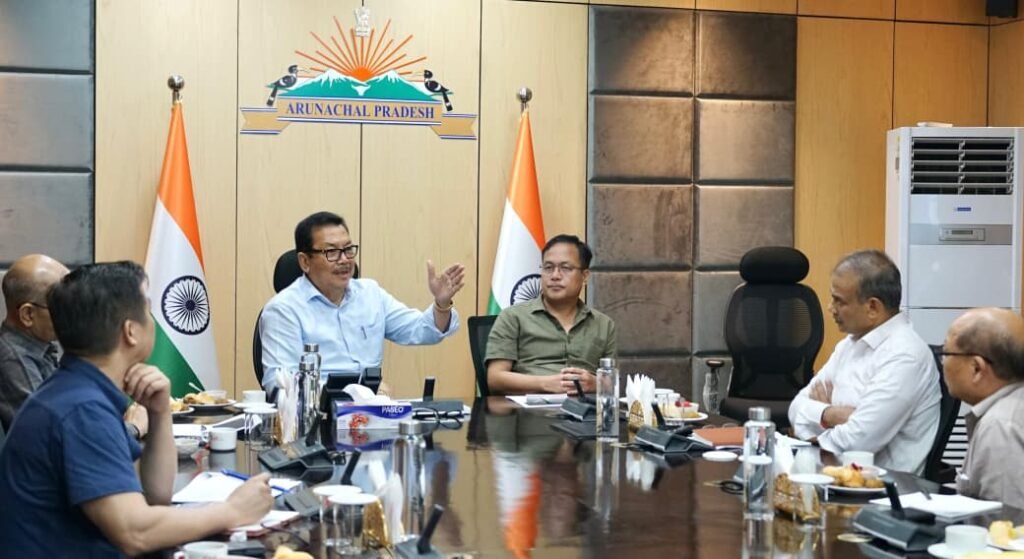
ITANAGAR, Chief Minister Pema Khandu on Thursday said his government was exploring collaborations with global streaming platforms to promote indigenous talent to help youth build sustainable careers in the entertainment industry. Chairing a high-level review meeting with organisers of premier state events, he said cultural platforms must evolve beyond annual competitions and provide participants with clear pathways to professional opportunities in music, fashion, media and performing arts. “Our goal is to ensure that every event moves beyond being a standalone competition and instead evolves into a structured talent pipeline. We are not just looking for performers; we are building careers,” he said. The meeting focused on six flagship state platforms, Miss Arunachal, Mr & Mrs Arunachal, Arunachal’s Got Talent, Arunachal Super Dance, and Arunachal Idol, an official statement said. To strengthen institutional support for the sector, Khandu announced that the Creative Economy Cell within the Chief Minister’s Office would be reinforced to facilitate industry linkages and career progression for local talent. He said the government was also exploring strategic collaborations with global digital platforms, including Spotify, to help emerging singers from the state reach wider audiences. “We want the world to engage with and appreciate our indigenous music, art and cultural expressions,” Khandu said. Citing the Ziro Festival of Music as a successful model for promoting independent musicians, he assured the meeting of continued government support for similar initiatives. In another major decision, the chief minister said his government was finalising a fresh agreement with organisers of the six major events to extend their term for five years under the official state calendar. The meeting also reviewed the growth of technical expertise within the state’s creative ecosystem. “The creative economy is emerging as a powerful pillar of growth in Arunachal Pradesh. We are seeing a shift where our youth and women are not just performers, but entrepreneurs, evolving from singers into composers and from models into fashion designers,” Khandu said. The initiative is being implemented under the Arunachal Pradesh Regulatory Board of State Events, chaired by Mallo Attu, which will oversee the new standards aimed at strengthening the state’s presence in the national entertainment and Bollywood circuits. (Source: PTI)