

ONLINE AGE

(Online version of the Arunachal Age newspaper)

Author name: OnlineAge

REGIONAL

Nagaland to convene special assembly session for FNTA law, CM to visit Delhi for consulting Centre

KOHIMA : The Nagaland cabinet decided to convene a special session of the assembly to enact a law for the proposed Frontier Nagaland Territorial Authority (FNTA), while seeking the Centre’s approval for conferring legislative powers on the body. The cabinet, which held an emergency meeting with members of the Eastern Nagaland Legislators’ Union (ENLU) and senior officials on Monday, also resolved to urge the Centre to enhance the proposed development package for the region from Rs 5,000 crore to Rs 10,000 crore. The decisions were announced in a statement issued by the Home Department amid concern over delays in implementing the Memorandum of Agreement (MoA) signed on February 5 among the Centre, the Nagaland government and the Eastern Nagaland People’s Organisation (ENPO) for creation of the FNTA. The decisions were taken as the ENPO announced a public rally and shutdown in the eastern districts on July 10 over the delay in the implementation of the accord. The government said the proposed legislation would incorporate provisions to confer legislative powers on the FNTA over transferred subjects and departments in the districts under its jurisdiction, subject to consultation with and approval of the Ministry of Home Affairs (MHA) and in conformity with the Constitution. It said the state had earlier drafted and introduced the FNTA Bill during the Budget session, but its passage was deferred after the MHA informed the government that constitutional issues relating to granting legislative powers to the authority were still under examination. The cabinet also reiterated that the safeguards under Article 371(A) were “sacred and sacrosanct” and would not be diluted or altered. A delegation led by Chief Minister Neiphiu Rio, along with ENLU members, will visit New Delhi to seek the Centre’s advice, approval and guidance on the matter, the statement said. The government also appealed to the ENPO to reconsider its proposed public rally and shutdown in the eastern districts on July 10 in view of the steps being taken to establish the FNTA. (Source: PTI)  
REGIONAL

Manipur DGP asks police officers to strengthen anti-extortion activities

IMPHAL : Manipur DGP Mukesh Singh on Tuesday directed police officers to step up action against extortion activities and ensure speedy investigation and disposal of pending cases, a police statement said. Singh issued the directions during a visit to the Noney District Police Headquarters, where he reviewed the law and order situation, crime scenario and operational preparedness. “During the review, the DGP emphasised maintaining law and order, strengthening anti-extortion operations, and ensuring prompt investigation and disposal of pending cases through quality investigation. He urged officers to remain proactive in curbing extortion activities,” the statement said. The DGP also visited the CRPF camp at Lamdangmei in the hill district to assess the security situation in fringe areas and chaired a coordination meeting with commanding officers of Central Armed Police Forces (CAPFs) deployed in the district. “Special emphasis was laid on ensuring adequate security for the movement of essential commodities along NH-37 (Imphal-Jiribam),” it said. Later, Singh interacted with civil society leaders of Noney, assured full cooperation from the district police and appealed for continued public support in maintaining law and order and fostering lasting peace, the statement added. (Source: PTI)    

REGIONAL

Protesters in Imphal demand special Assembly session, scrapping of SoO pact

IMPHAL : Hundreds of demonstrators on Tuesday staged a protest here demanding that the Manipur government convene a special session of the Assembly to discuss measures for restoring peace and abrogate the Suspension of Operations (SoO) agreement with Kuki militant groups. The protest was jointly organised by the Naga People’s Union Imphal, Imphal Naga Business Association, Imagi Meira and several other organisations, with participation from members of the Naga and Meitei communities. Addressing the gathering, Kshetrimayum Shanti, a women leader from Khwairamband market, said the joint participation of hill and valley communities in the protest was a positive step towards restoring peace. “The conflict cannot be resolved unless the SoO agreement with Kuki militant groups is withdrawn,” she said. Claiming that several rallies had been held and memorandums submitted to the authorities, Shanti alleged that the government had failed to respond adequately. The demonstrators also urged the state and central governments to take immediate steps to restore lasting peace and fulfil their responsibilities toward the people of the state. (Source: PTI)    

REGIONAL

Tripura CM demands raising cap of externally aided projects to Rs 10,000 cr

AGARTALA : Tripura Chief Minister Manik Saha on Tuesday pitched for increasing the annual cap on externally aided projects from Rs 4,000 crore to Rs 10,000 crore, saying the existing limit hampers the execution of large infrastructure projects in small states. The chief minister said the Centre has fixed a maximum limit of Rs 4,000 crore per annum for externally aided projects in Tripura, which often falls short for undertaking mega development works. Addressing a government programme at Bardowali, Saha said development activities have gathered pace under the “double-engine government” to meet people’s expectations. “Massive infrastructure building is taking place in the northeastern state over the past few years, from implementation of the Smart City Mission to the Lighthouse project, strengthening the power sector and beautification of urban amenities,” he said. “I have categorically demanded an increase in the maximum cap for externally aided projects from Rs 4,000 crore to Rs 10,000 crore in the presence of Union Finance Minister Nirmala Sitharaman during the last NEC plenary session in Shillong. I hope the Centre will consider our legitimate demand for development,” he said. Saha said he had inaugurated and laid the foundation stone of development projects worth Rs 1,500 crore in the past year to accelerate infrastructure creation. The state has rejuvenated water bodies in Agartala for Rs 137 crore and spent Rs 581 crore under the Smart City Mission to improve civic amenities, he said. Claiming that investors and entrepreneurs are showing keen interest in Tripura, the CM said projects worth Rs 8,000 crore out of investment proposals valued at Rs 15,000 crore received during last year’s investment summit have already been grounded. He said the state has set a target of attracting MoUs worth Rs 1 lakh crore during the ‘Destination Tripura: Business Conclave 2026’, scheduled to be held on July 9 and 10 at the International Fair Ground in Hapania in West Tripura district. (Source: PTI)    

REGIONAL

IIT-Guwahati study finds blue-green algae can remove lead from polluted water

GUWAHATI : Researchers at the Indian Institute of Technology-Guwahati have uncovered how blue-green algae can remove lead from contaminated water, it said in a release. “In a first-of-its-kind study, the IIT-Guwahati research team has identified cyanobacteria, commonly known as blue-green algae, that can be used to absorb lead from contaminated water,” the institute said. The research team was led by Debasish Das, a Professor in the Department of Biosciences and Bioengineering. “A key feature of this approach is the vast availability of these algae in village ponds, lakes, reservoirs, paddy fields and slow-moving freshwater bodies,” the release said. Based on the research, the team found that the sticky, sugar-rich material found in algae, called exopolysaccharides (EPS), absorbed the highest amount of lead from water. In controlled laboratory experiments, the EPS, produced by blue-green algae, successfully removed up to 66.2 per cent of toxic lead from contaminated water, it said. The findings are subject to further validation and should not be interpreted as final or ready for commercial application, IIT-Guwahati said. “In our recent study, we found that EPS organism can remove lead, one of the most toxic heavy metals, from polluted water. EPS can form associations with fungi to form cyanolichens, enrich soil by fixing nitrogen, and act as a natural biofertiliser to boost agricultural productivity,” Das said. To understand how the EPS absorbs lead from water, the researchers used different techniques to examine the material’s composition and its interaction with lead. “They found that naturally occurring chemical groups in the material bind lead particles, making it effective at removing lead from contaminated water. The research team also found that blue-green algae naturally changes its chemical composition to capture lead,” the release said. The findings have been published in the Journal of Environmental Chemical Engineering. The research team now plans to evaluate the performance of EPS using real industrial wastewater containing mixtures of toxic metals, as well as work upon recyclability of the biosorbent, and develop a scalable system that can be used for continuous water treatment. (Source: PTI)

Editorial

United in celebration, divided in spirit

America turned 250 this weekend, and the birthday came wrapped in fireworks, heat warnings, and a president who could not resist turning it into his own campaign. That combination — genuine national milestone, genuine logistical chaos, and unmistakable self-promotion — tells you almost everything about where the country stands as it enters its next quarter-millennium. The official festivities were real enough. Crowds gathered on the National Mall after it reopened despite a punishing heatwave. But the anniversary’s defining image came a day earlier at Mount Rushmore, where Donald Trump delivered a speech billed as a tribute to American exceptionalism that veered, as several outlets noted, into warnings that communism poses a “mortal threat” to American liberty — an odd note of menace for a birthday toast. It fit a pattern: at an earlier Freedom 250 kickoff in Iowa, Trump told supporters of his political opponents, “I hate them. I cannot stand them because I really believe they hate our country.” Trump has been building a parallel apparatus — Freedom 250, a White House-created entity he personally chairs — that sits awkwardly alongside the congressionally chartered America250 commission. The Interior Department funneled at least $68.3 million in taxpayer money to the effort, while Freedom 250 solicited corporate sponsorships up to $10 million from companies like Palantir, Boeing, and United Airlines — firms that also hold hefty federal contracts. House Democrats have called it a “hotbed of corruption”; Freedom 250 calls the charge false. Either way, a shared national anniversary has been split into two competing brands, one of them built around a single man. Which raises the harder question the fireworks can’t hide: is any of this evidence of a country still capable of running the world, or of one too distracted by its own internal fights to notice it’s slipping? The honest answer is that both camps have real evidence. Beijing’s leadership calls America a “fading giant,” and there’s no shortage of American commentators cataloguing debt, dysfunction, and eroding alliances to match. But the counterargument is equally solid: no rival, China included, has matched America’s combination of military reach, financial centrality, and technological depth, and polling shows Americans themselves remain divided rather than resigned about their country’s trajectory. What’s genuinely new isn’t decline — it’s the spectacle of a leader treating a shared civic milestone as personal marketing. Empires have survived worse than a gaudy sponsor list. Whether they survive a citizenry that no longer agrees on what the anniversary is for is a different, and much older, American question. (Source: DH)

Latest News, Popular News, State News

Rain batters eastern Arunachal, heat wave hits ICR

ITANAGAR : While monsoon rain continues to lash several parts of Arunachal Pradesh, the state capital is witnessing a contrasting spell of scorching heat, prompting the Itanagar Capital Region (ICR) administration to issue a heat wave advisory. The India Meteorological Department (IMD) forecast intensified rain in parts of eastern Arunachal Pradesh for Tuesday and issued an ‘orange’ alert asking all to be prepared, as it warned of heavy to very heavy showers accompanied by thunderstorms and lightning for Namsai and Lohit districts. The ICR administration, on the other hand, has issued a heat wave advisory, asking residents to remain cautious following the IMD’s forecast of above-normal temperatures. According to the district-wise forecast issued by the Meteorological Centre here on Monday, widespread rainfall is likely to occur across the state on July 7, with heavy rain and thunderstorms expected in Namsai and Lohit. Thunderstorms accompanied by lightning and moderate to heavy rainfall are also likely in several adjoining districts placed under yellow alert. The weather is expected to remain unsettled on Wednesday, with the orange alert continuing for Namsai. Tirap district has also been placed under an orange alert, while yellow alerts remain in force for most central and eastern districts, indicating the possibility of thunderstorms, lightning and heavy rainfall at isolated places. On Thursday, rainfall activity is likely to ease slightly. But the IMD has retained yellow alerts for a large part of the state, indicating the likelihood of thunderstorms, lightning and moderate to heavy rain at isolated locations. The forecast for Friday suggests a further reduction in adverse weather conditions. Most districts in western, central and northern Arunachal are expected to remain free from any warning, although yellow alerts continue for parts of the eastern and southern districts where isolated spells of rain and thunderstorms may persist. Meanwhile, the ICR administration has advised people to avoid prolonged exposure to the sun, particularly between noon and 3 pm, drink plenty of water, wear light-coloured cotton clothing and avoid strenuous outdoor activities during the hottest part of the day. People travelling outdoors have been asked to carry sufficient drinking water, avoid alcohol and caffeinated or carbonated beverages, and consume oral rehydration solution (ORS) or homemade drinks such as lemon water, buttermilk and rice water to prevent dehydration. Residents have also been advised to seek immediate medical attention if they experience symptoms such as dizziness, weakness or fainting. The advisory further cautioned against leaving children or pets inside parked vehicles and recommended keeping homes well-ventilated to reduce indoor heat. Various departments have been directed to implement preventive measures with immediate effect. The health department has been asked to maintain adequate stocks of ORS, essential medicines, intravenous fluids and ice packs at hospitals and Anganwadi centres while strengthening surveillance of heat-related illnesses. The education department has been instructed to adjust school timings to avoid peak afternoon heat, ensure the availability of safe drinking water on campuses and suspend outdoor physical activities during heat wave conditions. The power department has been directed to ensure an uninterrupted electricity supply to essential institutions, particularly hospitals and schools. (Source: PTI)      

Latest News, Popular News, State News

Former AAPSU leaders join BJP

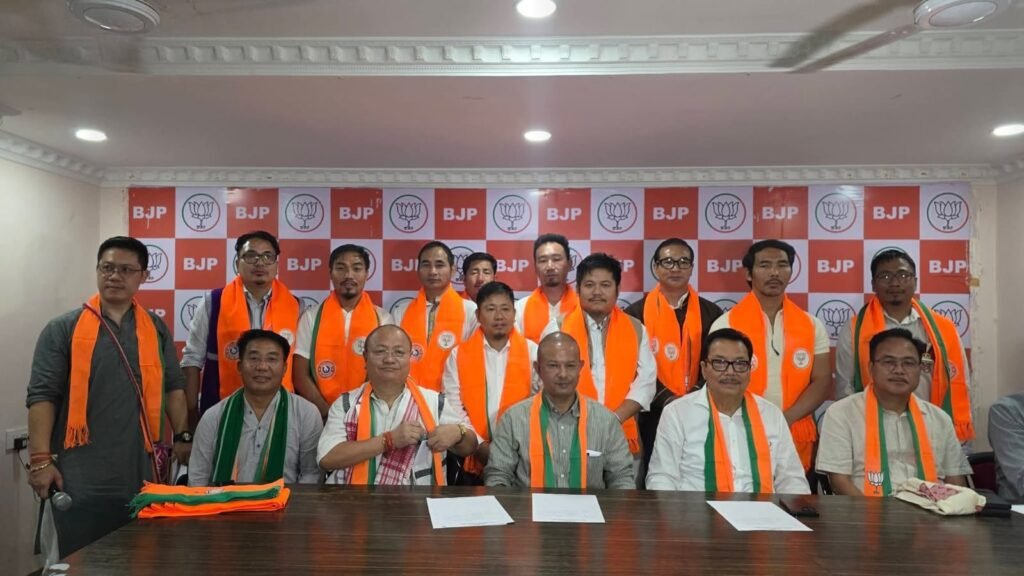
ITANAGAR : The Bharatiya Janata Party (BJP), Arunachal Pradesh unit, inducted several prominent youth leaders into the party during a mass joining programme held at its state headquarters here on Monday. The new entrants were led by former All Arunachal Pradesh Students’ Union (AAPSU) president Tana Dozi Tara and former AAPSU general secretary Ritum Tali, along with several other youth leaders from across the state. The programme was attended by Deputy Chief Minister Chowna Mein, State BJP president Kaling Moyong, Agriculture, Horticulture, Animal Husbandry and Veterinary Minister Gabriel D Wangsu, BJP state vice-president Chow Zingnu Namchoom, Rajya Sabha MP Tai Tagak, BJP state general secretary Tadar Niglar and other party leaders. Welcoming the new members, Mein stressed the importance of understanding the BJP’s ideology and participating actively in the party’s organisational activities with a spirit of voluntary service. He said that while student organisations primarily work for the welfare of the state, joining a political party carries a greater responsibility of serving both the state and the nation. Highlighting the state’s development, Mein said Arunachal Pradesh has witnessed significant progress under the leadership of Chief Minister Pema Khandu, particularly in infrastructure and social sectors. He also acknowledged the contributions of earlier leaders in shaping the state’s growth while stating that development has gained new momentum under the present government. Addressing the gathering, Moyong urged the new members to work closely with party workers and strengthen the organisation from the Booth Level Committees (BLCs) to the mandal and district levels. He also advised them to coordinate with their respective mandal presidents and district units to maintain organisational discipline and cohesion. Reiterating the BJP’s guiding philosophy of “Nation First, Party Second, Self Last”, Moyong called upon the new entrants to dedicate themselves to the service of the nation and the state. The newly inducted leaders include Tana Dozi Tara (Balijan), Ritum Tali (Liromoba), Suraj Tayem (West Seppa), Sonam Tenzing (Tawang), Karma Tsering (Dirang), Pakmik Taipodia (Likabali), Sohalo Ngadong (Anjaw), Tsangpa Tashi (Tawang), Marto Nyodu (Basar) and Pangngam Wangnaw (Pangchou-Wakka). The party said the induction of the youth leaders is expected to further strengthen its grassroots organisational network across Arunachal Pradesh.  

Latest News, Popular News, State News

Wangsu calls for united action to prevent zoonotic diseases

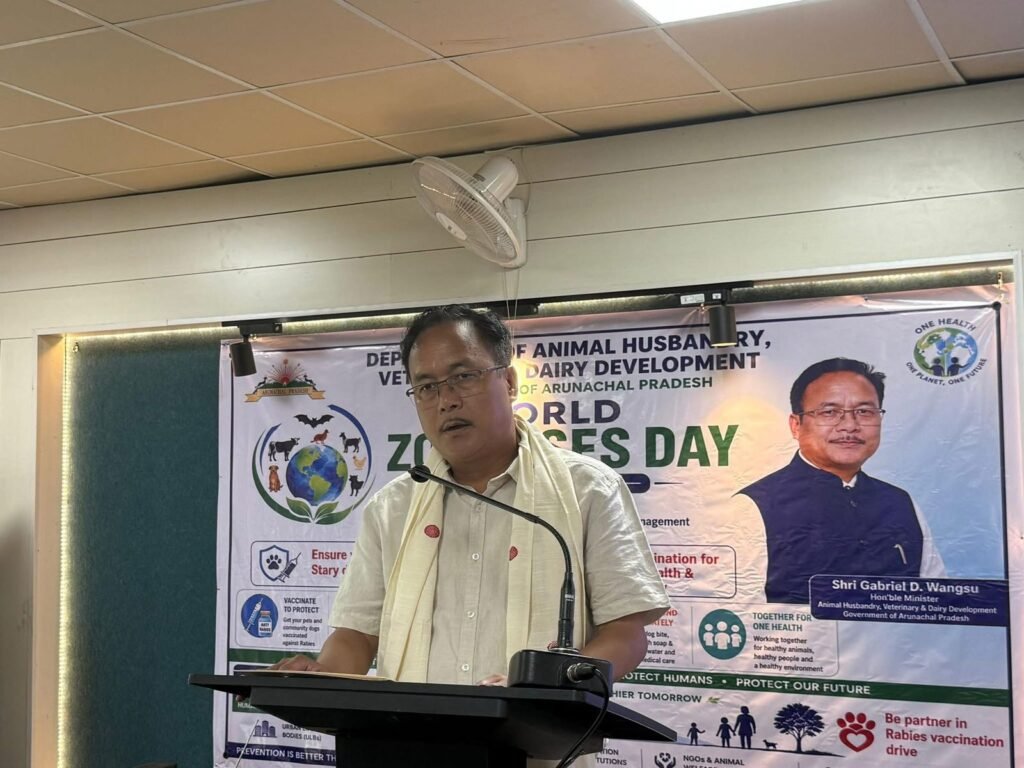
ITANAGAR : Animal Husbandry, Veterinary & Dairy Development Minister Gabriel D Wangsu on Monday called for a coordinated effort involving government departments, healthcare professionals, local bodies and the public to strengthen the ‘One Health’ approach for preventing zoonotic diseases. Stressing that animal and human health are closely linked, he urged citizens to ensure regular vaccination of pets, support scientific management of stray animals and actively contribute towards building rabies-free communities. Addressing the state-level World Zoonoses Day here, Wangsu said nearly 60 per cent of infectious diseases affecting humans originate from animals, while around 75 per cent of emerging infectious diseases have an animal source, an official statement said. He said the COVID-19 pandemic highlighted the need for stronger coordination among veterinarians, doctors, environmental experts, civic bodies and communities to prevent future health emergencies. “Good health does not begin in hospitals alone. It begins in our homes, farms, villages and forests, where people, animals and the environment coexist. Protecting animal health is protecting human health,” the minister said. Earlier in the day, Wangsu inaugurated the Animal Birth Control (ABC) Centre at Ganga here, aimed at scientific management of stray animals, rabies prevention and promotion of animal welfare in the capital region. He also virtually inaugurated a similar centre at Namsai to extend the facility to eastern Arunachal Pradesh. The minister also released Information, Education and Communication (IEC) materials and launched a week-long Anti-Rabies Vaccination and Animal Birth Control Awareness campaign across the state. He administered a public pledge on responsible pet ownership, urging people to vaccinate their pets regularly, avoid abandoning animals and help create rabies-free communities. Highlighting the significance of World Zoonoses Day, Wangsu said the day commemorates the successful administration of the world’s first rabies vaccine by Louis Pasteur on July 6, 1885, marking a milestone in disease prevention. He praised the contribution of veterinarians, para-veterinary personnel and field workers, saying their work in vaccination, disease surveillance, food safety, emergency response and livestock healthcare plays a vital role in protecting public health. “Every time a veterinarian vaccinates a dog against rabies, an entire neighbourhood becomes safer. Their work goes beyond treating animals as they also protect human lives, strengthen food security and support the livelihoods of farmers,” he said. Appealing to the public to become partners in disease prevention, Wangsu urged pet owners to vaccinate their dogs and cats every year, never abandon pets and seek immediate medical attention in case of animal bites. He also asked livestock farmers to report unusual illnesses in animals promptly and encouraged communities to support humane stray animal management through scientific Animal Birth Control and anti-rabies vaccination programmes. The minister added that government efforts alone would not be enough to eliminate rabies and other zoonotic diseases and stressed that public participation was equally important. (Source: PTI)      

Latest News, Popular News, State News

Mein calls for balancing development with environmental sustainability

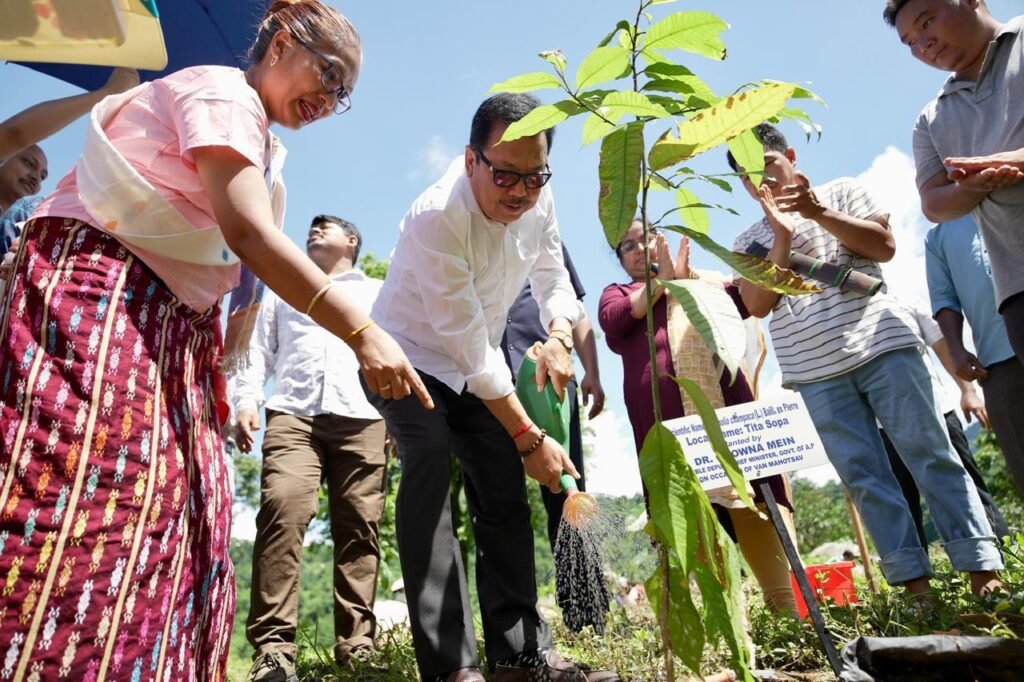
ITANAGAR : Deputy Chief Minister Chowna Mein on Monday called for balancing development with environmental sustainability. Speaking at the ‘Van Mahotsav’ celebrations here, he urged the youth to preserve the state’s rich biodiversity, indigenous knowledge and cultural heritage. Mein said biodiversity, cultural diversity and sustainable development are closely linked and must be protected together. Emphasising that true progress lies in embracing modernity without losing cultural roots, the deputy chief minister urged the youth to preserve and promote Arunachal Pradesh’s indigenous traditions, saying these practices have enabled communities to live in harmony with nature for generations. He said tree plantation drives should not end with planting saplings but success should be measured by the number of trees that survive. Expressing concern over the high mortality of saplings planted along roadsides and in public institutions, Mein appealed to schools, government departments, community organisations and citizens to take collective responsibility for nurturing every tree planted. He said Arunachal Pradesh is part of one of the world’s 12 biodiversity hotspots and is home to diverse ecosystems ranging from tropical evergreen forests to alpine regions. Researchers, he said, continue to discover new species of plants, insects, amphibians, fish and wildlife in the state, highlighting its ecological importance. Calling for greater efforts to protect rare and endangered plant species, Mein said taxonomy and ethnobotanical research play a vital role in documenting and conserving the region’s unique biodiversity. He encouraged students and researchers to develop scientific curiosity and contribute to conservation efforts. The deputy chief minister said environmental conservation and sustainable development must go hand in hand, adding that protecting forests, rivers and watersheds not only conserves biodiversity but also strengthens livelihoods, improves water security and supports rural development. He also expressed concern over indiscriminate hunting and the declining population of birds and wildlife, urging communities to promote responsible eco-tourism, bird-watching, trekking and other nature-based activities that generate sustainable livelihoods while protecting the environment. Highlighting the close spiritual and cultural relationship between Arunachal Pradesh’s indigenous communities and nature, Mein said traditional respect for forests, rivers and mountains offers valuable lessons for sustainable living and should continue to guide future development. Referring to climate change, global warming, floods, landslides and soil erosion, he said these challenges underscore the need to maintain ecological balance. “Development must always be planned with environmental sustainability at its core,” he said. Mein also praised Prime Minister Narendra Modi’s vision of the Northeast as ‘Ashtalakshmi’, saying the goal of ‘Viksit Bharat’ can be achieved only through the inclusive development of the region while preserving its biodiversity and cultural heritage. During the programme, the deputy chief minister was presented with Ophiorrhiza chownaii, a newly described plant species named in his honour for his contributions to environmental conservation, biodiversity protection and sustainable development. Accepting the recognition, he dedicated the honour to the people of Arunachal Pradesh and reaffirmed his commitment to protecting the state’s natural heritage. The event was organised by the state regional centre of Botanical Survey of India (BSI) in collaboration with the G B Pant National Institute of Himalayan Environment (GBPNIHE), North East Regional Centre, here. The event began with a plantation drive at the BSI campus where Mein, along with scientists, academicians, researchers, NCC cadets and students, planted saplings as a mark of commitment towards environmental conservation. (Source: PTI)