

ONLINE AGE

(Online version of the Arunachal Age newspaper)

Author name: OnlineAge

Latest News, Popular News, State News

Farmers trained in Scientific Mithun Husbandry

  MEDZIPHEMA : A four-day training programme on “Scientific Mithun Husbandry for Enhanced Productivity and Profitability” was conducted by the Indian Council of Agricultural Research-National Research Centre on Mithun (ICAR-NRCM), Medziphema, from June 2 to 5. The programme was attended by 28 mithun farmers from Mirem village in Arunachal Pradesh and aimed at promoting scientific livestock management practices to improve productivity, animal health and farm income. In his inaugural address, ICAR-NRCM Director Dr Girish Patil highlighted the importance of adopting scientific mithun husbandry techniques to enhance productivity and profitability while strengthening the livelihoods of tribal farming communities. During the training, participants were introduced to various aspects of scientific mithun management, including breeding, feeding, healthcare, fodder cultivation, housing management and entrepreneurship development. A key feature of the programme was an exposure visit to the institute’s Mithun Farm, where farmers gained firsthand experience of scientific rearing and management practices. The participants also visited the Khonoma Mithun Conservation Unit in Kohima district and learned about community-based conservation initiatives and sustainable mithun management practices. Practical demonstrations on value addition of mithun meat and milk provided insights into processing techniques and enterprise opportunities for generating additional income through mithun-based products. The programme concluded with the distribution of certificates to the participants. The farmers appreciated the practical orientation of the training and expressed their willingness to adopt the scientific technologies and management practices demonstrated during the programme. (Source: Eastern Mirror)
Editorial

The fires we fail to learn from

Two deadly accidents on successive days have yet again exposed systemic failures that have left India’s fire safety protocols under a perpetual threat of breach. In Delhi, a fire at a bed-and-breakfast facility killed 21 people. Fire in a hospital Intensive Care Unit (ICU) in Bihar’s Muzaffarpur killed at least five. In March, a fire at a Cuttack medical college and hospital claimed 12 lives. Seven newborns were charred to death in a fire in an East Delhi hospital in 2024. More than 90 people died in a Kolkata hospital fire in 2011. Fire in a Kolkata hotel, in April 2025, saw 14 deaths. The numbers reveal a disturbing continuity spanning decades, pointing to a system that has failed to learn from the past. Hospitals, restaurants, cinema halls, and offices in India remain vulnerable to fire accidents. The reasons across incidents have largely been common: faulty electrical circuits, unscientifically constructed and overcrowded buildings, lack of ventilation, narrow passages and exits, absence of basic fire-fighting devices, and poor awareness of safe exit procedures are prominent among them. The multi-storey building in South Delhi where the fire occurred on Wednesday stood in a crowded area with narrow lanes, which made firefighting difficult. People jumped from the building’s upper floors to escape the fire. Many guests, including foreign nationals, were in the city for medical treatment. An electrical short circuit is suspected to have caused the fire in Muzaffarpur. Multiple fire accidents have highlighted the deadly fallout from poorly maintained electrical systems, especially in high-footfall locations, such as hospitals. The B&B did not have operational clearance from the Department of Delhi Fire Service. Though the facility had the approval for only six rooms, it hosted guests in 25. The building had only one entry and exit point. These are standard red flags across the hospitality sector, but corrections happen, if they happen, only in isolation and after tragedy hits. The violation of basic building and fire safety norms is extensive, and civic authorities who allow the illegalities are complicit. In January, the Delhi High Court directed the authorities to formulate an action plan for fire safety in hospitality establishments. Following the accident, the Municipal Corporation of Delhi has launched a crackdown on illegal commercial establishments. But this is familiar ad hocism. Beyond the inevitability of human errors, these mishaps persist primarily due to weak enforcement of established guidelines; they persist due to a system that fails to ensure essential oversight. (Source: DH)

Latest News, Popular News, State News

Congress urges govt to resolve DIET salary delay issue

ITANAGAR : The Arunachal Pradesh unit of the Congress on Saturday urged the state government to address the grievances of teacher educators and staffers of SCERT and district institutes of education and training (DIETs), warning that continued delays in salary payments have pushed employees to the brink of an indefinite strike. In a statement, Arunachal Pradesh Congress Committee (APCC) president Bosiram Siram expressed concern over the ongoing agitation by the Arunachal Pradesh Teacher Educators’ Association (APTEA), which has been demanding a permanent solution to the recurring delay in salary disbursement among teaching and non-teaching staff of SCERT and 11 DIETs across the state. The association has been pressing for a resolution through a series of protests. It first observed a day-long pen-down strike on May 29, followed by a two-day strike on June 4 and 5. Claiming that repeated representations to the authorities have failed to yield any concrete assurance, APTEA has announced an indefinite pen-down strike from June 15 under the banner of ‘no pay, no work’ if its demands remain unresolved. Pointing out that the salary issue has persisted for several years, with employees allegedly facing irregular and delayed payments since 2019, the party said the prolonged delays have caused severe financial hardship, affecting employees’ ability to meet household expenses, repay loans and support their children’s education. Siram said the association’s primary demand is for salaries of DIET employees to be paid directly from the state exchequer. APTEA has argued that dependence on funding mechanisms linked to centrally sponsored schemes often leads to delays and uncertainty in salary disbursement. The Congress leader said the issue goes beyond employee welfare and has implications for the state’s education system, as teacher educators play a crucial role in training future teachers and strengthening educational institutions. “It is unfortunate that educators entrusted with shaping the future of our education system have been compelled to resort to agitation for redressal of their legitimate concerns,” Siram said. He added that delayed salary payments not only affect the livelihood of employees and their families but can also undermine the functioning of teacher-training institutions and impact the quality of education. The APCC urged the government to immediately engage with the agitating association and resolve the issue through dialogue. It also called for better coordination among the education and finance departments and other authorities concerned to ensure timely salary disbursement and prevent such situations from recurring. “Education is the foundation of progress, and the concerns of those who serve the education sector must never be ignored,” Siram said, reiterating the party’s support for a fair, humane and time-bound resolution of the issue. (Source: PTI)

Latest News, Popular News, State News

GST outreach prog concludes

SEPPA : A two-day Goods and Services Tax (GST) outreach programme jointly organised by CGST Bhalukpong and SGST Seppa concluded on Saturday at the conference hall of the Deputy Commissioner’s Office, Seppa. The programme, held on June 4 and 5, was attended by Seppa Deputy Commissioner, reflecting the district administration’s support for efforts aimed at enhancing awareness and simplifying tax compliance. Resource person CA Aayush Kumar Gupta from Tezpur conducted the sessions, explaining various aspects of the GST framework in a simplified and practical manner. The first day focused on the fundamentals of indirect taxation, GST registration procedures and the basics of return filing. The second day covered key topics such as the Input Tax Credit (ITC) mechanism, GST-related offences and penalties. The programme concluded with an interactive question-and-answer session during which participants received clarifications on practical issues related to GST compliance. The joint initiative by the CGST and SGST departments was appreciated for bringing essential tax awareness and financial guidance to the district while encouraging transparent and voluntary tax compliance among stakeholders.

Latest News, Popular News, State News

Plantation drive organized

  DAPORIJO : A Social Service-cum-Tree Plantation Drive was organised at the highway-side area adjacent to Jaring Ground, Daporijo, under the aegis of the Apatani Welfare Committee (AWC), Upper Subansiri district, as part of preparations for the forthcoming Dree Festival 2026. Held under the theme “Clean Daporijo, Green Daporijo,” the programme witnessed enthusiastic participation from members of the Apatani community, government officials and representatives of various organisations. The event was attended by Tagin Cultural Society President Larji Rigia Dukam as chief guest. Upper Subansiri Deputy Commissioner and Daporijo Additional Deputy Commissioner, along with executive members of the Apatani Welfare Committee, led the programme. Several prominent personalities and officials participated in the drive, including PWD Nacho Executive Engineer Er Tumkam Nalo, executive members of the Tagin Cultural Society, the women’s wing general secretary of the society and other members. Members of the Apatani community residing in Upper Subansiri district, including men, women and children, turned out in large numbers to support the initiative. Participants carried out a cleanliness drive and planted palm-oli saplings along the designated stretch, contributing to the beautification and greening of Daporijo township. Speaking on the occasion, the dignitaries stressed the importance of environmental conservation, community participation and sustainable development. They appreciated the organisers for promoting ecological awareness while strengthening social responsibility and inter-community harmony. The programme formed part of the broader preparations for Dree Festival 2026 and reflected the community’s commitment to preserving nature and creating a cleaner and greener environment for future generations. The event concluded with participants pledging continued support for environmental initiatives and collective efforts towards making Daporijo a model green township.

Latest News, Popular News, State News

Muslim body demands equal action against all illegal religious structures in ICR

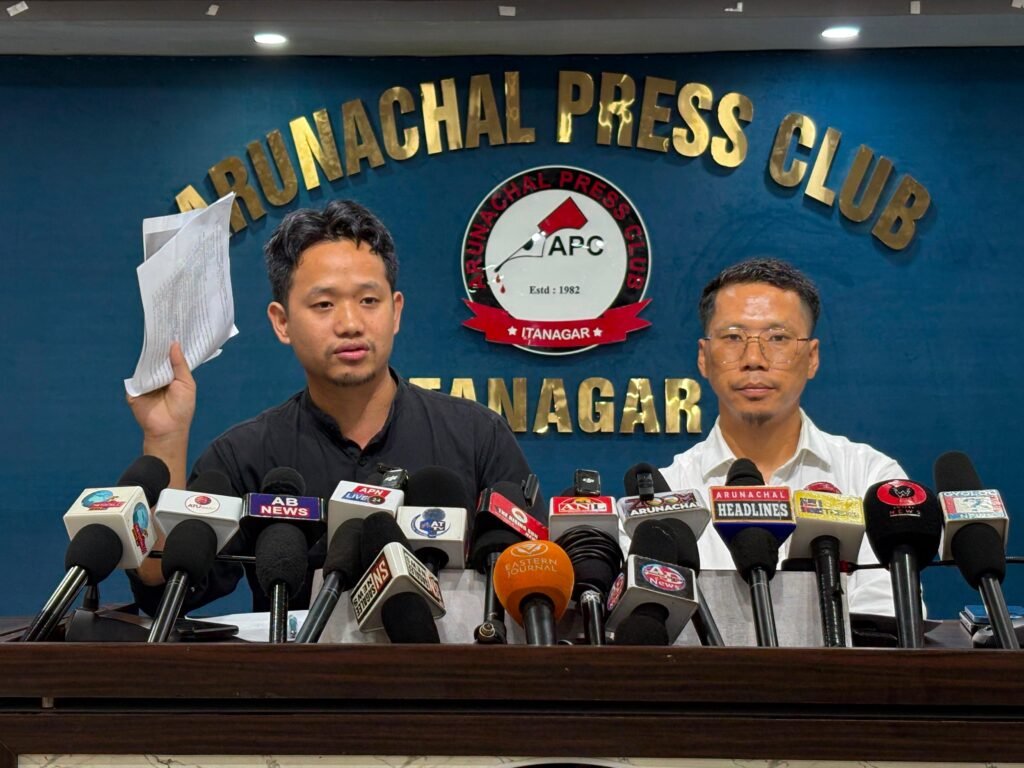
Staff Reporter ITANAGAR : The All Arunachal Pradesh Masjid Welfare Committee (AAPMWC) has urged the Arunachal Pradesh government to ensure equal treatment of all communities and outsiders residing in the Itanagar Capital Region (ICR), irrespective of religion. Addressing a press conference at the Arunachal Press Club here on Saturday, AAPMWC president Giah Limpeah Sultan described the recent sealing of masjids in the ICR as a one-sided action against the Muslim community and questioned the district administration’s claims regarding the number of mosques operating in the region. Sultan argued that issues relating to registration and construction permissions alone were insufficient grounds for sealing the structures and called on the authorities to provide stronger legal justification for the action. Referring to information obtained under the Right to Information (RTI) Act, he claimed that several churches and temples in the region also lack construction-related documents in official records. According to Sultan, records of the District Land Revenue and Settlement Department indicate that documents pertaining to 15 churches and temples are unavailable in government records. He asserted that if action had been initiated against the masjids on grounds of illegality, similar measures should be taken against all religious structures found to be operating without requisite permissions, irrespective of faith. Clarifying the committee’s stand, Sultan said AAPMWC harbours no hostility towards any religious community in the state. However, he maintained that growing concerns and ongoing campaigns directed against Muslims had compelled the organisation to raise the matter publicly. The committee called upon the state government to uphold the principles of equality, fairness and impartiality while dealing with issues concerning religious institutions and communities.      

Latest News, Popular News, State News

110 Geku households sign pact supporting SUMP PFR

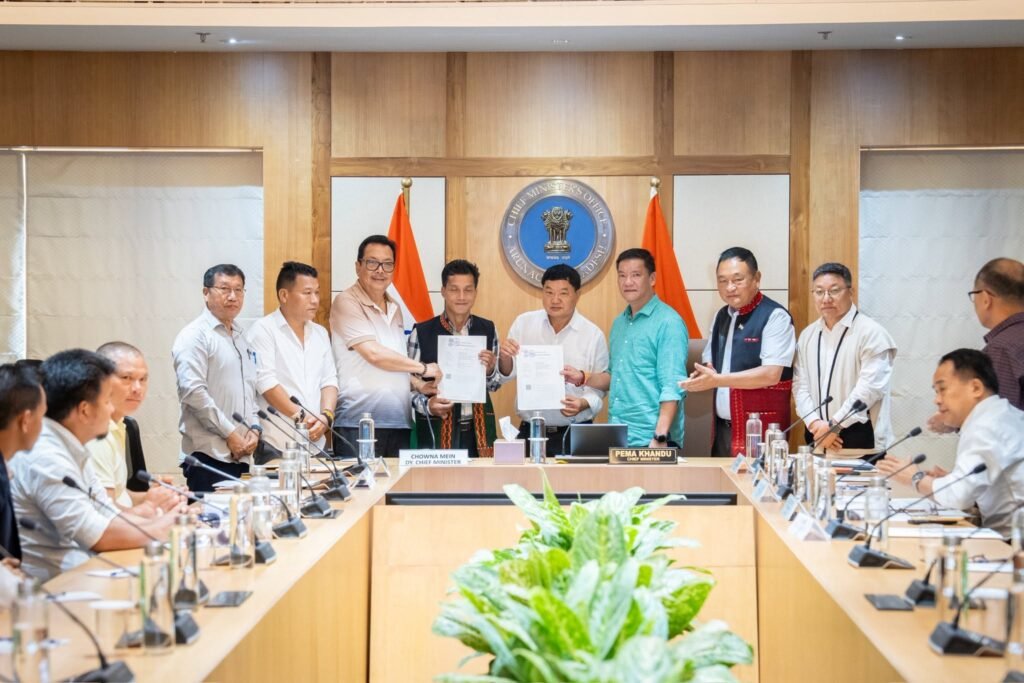
ITANAGAR : In a significant development for the proposed Siang Upper Multipurpose Project (SUMP), 110 households from Geku have signed a Memorandum of Understanding (MoU) expressing support for the project’s Pre-Feasibility Report (PFR). Welcoming the development, Chief Minister Pema Khandu congratulated and thanked the participating families, describing their decision as a demonstration of “tremendous courage and vision.” “Every citizen who supports a project of national importance is a partner in nation-building,” Khandu said. Highlighting the broader significance of the proposed project, the Chief Minister said SUMP is not solely aimed at hydropower generation but also serves strategic and protective purposes. “The Siang Upper Multipurpose Project is not just about power generation. It is about protecting the Siang and the communities living along its banks from any potential threat arising from unregulated or sudden water discharges by a country to our north,” he stated. Khandu also acknowledged the contributions of several leaders and stakeholders in facilitating the signing of the MoU. He thanked Arunachal Pradesh Deputy Chief Minister [Name], Adviser and Hydropower Development Minister-in-Charge [Name], Mariyang-Geku MLA Oni Panyang, community leaders, elders and other stakeholders for their efforts in achieving the milestone. The proposed 11,000 MW Siang Upper Multipurpose Project in Upper Siang district is envisioned as a major hydroelectric and strategic infrastructure project on the Siang River. Besides power generation, it is expected to provide flood moderation, strengthen water security and enhance safeguards against potential impacts arising from upstream developments on the Yarlung Tsangpo River in Tibet.          

Latest News, Popular News, State News

Review Upper Subansiri-Kamle boundary demarcation, says Tanga Byaling

Staff Reporter ITANAGAR :  Former Home Minister and senior political leader Tanga Byaling has urged the Arunachal Pradesh government to review and re-notify the boundary demarcation between Upper Subansiri and Kamle districts, citing concerns over the long-standing inter-district boundary dispute. Addressing a press conference at the Arunachal Press Club here on Saturday, Byaling said the Home Department notification issued on May 27, 2020 requires a comprehensive review to ensure fairness, transparency and clarity in the demarcation process. He stated that while Ligu and Liruk villages were included under Kamle district through the Arunachal Pradesh (Reorganisation of Districts) Acts of 1980 and 2017, the 2020 notification reportedly brought several other areas and colonies—Sigum Rijo, Dilidi Colony, Sinyik Colony, Power Grid Colony, Santi Colony and Lidu Colony—under Kamle district’s jurisdiction despite their long-standing association with Upper Subansiri district. Maintaining that villages and settlements historically belonging to Upper Subansiri should not be excluded through administrative notifications, Byaling called on the state government to initiate a transparent, impartial and mutually acceptable process for physical demarcation of the inter-district boundary. Expressing concern over the ongoing Special Intensive Review (SIR) process, he urged the government to ensure that an estimated 4,000 to 6,000 residents affected by the boundary dispute are not deprived of their rights or excluded during the exercise. Byaling further claimed that the 2020 Home Department notification extended the jurisdiction of the Raga Police Station up to the Sigin River under Kamle district. He appealed to the Upper Subansiri Deputy Commissioner and Kamle Deputy Commissioner to jointly examine the gazette notification and undertake an unbiased and transparent boundary demarcation exercise in the larger interest of the affected population. A fair and amicable resolution of the boundary issue, he said, is essential to prevent administrative confusion and safeguard the interests of residents living in the disputed areas.        

Latest News, Popular News, State News

Khandu urges people to make tree plantation lifelong mission

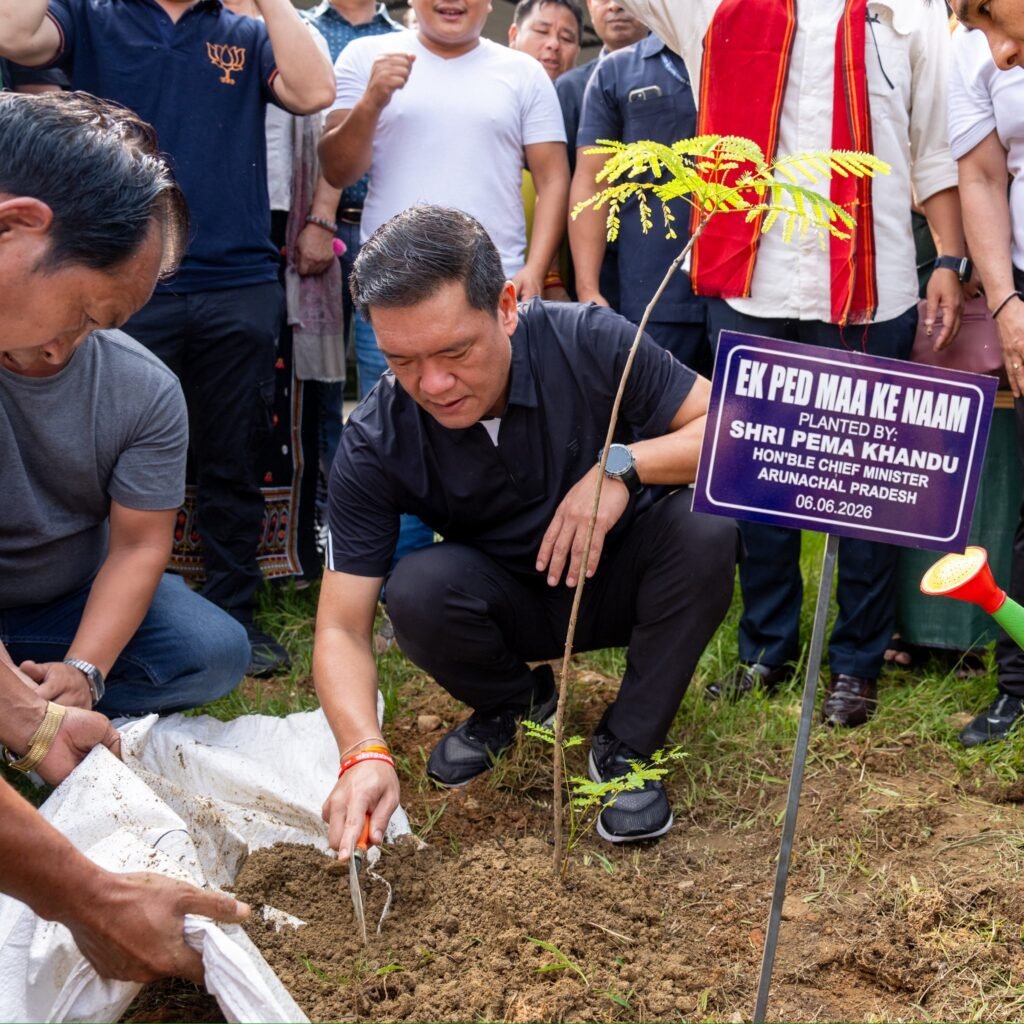
TANAGAR : Chief Minister Pema Khandu on Saturday urged people of the state to make tree plantation a lifelong mission rather than a symbolic annual exercise, asserting that environmental conservation and development must progress together for a sustainable future. Participating in the ‘Ek Ped Maa Ke Naam’ plantation drive near here, Khandu said every tree planted would contribute to cleaner air, a healthier environment and a better future for the coming generations. “Planting trees is not something we do once a year and forget. It must become a lifelong mission,” Khandu said in social media post after the event. “As the nation celebrates 12 years of transformative leadership and service under Prime Minister Narendra Modi, this campaign reminds us that development and environmental responsibility must go hand in hand,” he said. Khadu also said that on the occasion of the tree plantation drive, he had the opportunity to interact with students, teachers, and authorities at the Government Secondary School, Chimpu. “The visit also provided an opportunity to hear firsthand the concerns and grievances of the school. The state government has taken note of the issues raised and will work towards addressing them,” he added. (Source: PTI)    

Latest News, Popular News, State News

Rare yellow puffball mushroom recorded in Longding

LONGDING : A team from ICAR-Krishi Vigyan Kendra (KVK), Longding has recorded a striking yellow-coloured puffball mushroom growing naturally on decaying woody debris and organic-rich soil at Zedua village in Longding district, highlighting the rich yet underexplored fungal biodiversity of Arunachal Pradesh. The specimen was observed during a field visit on June 4 and was tentatively identified as Bovista colorata (Yellow Puffball Mushroom) by ICAR-KVK Longding SMS (Plant Pathology) Dr Deep Narayan Mishra based on its characteristic yellow globose fruiting body and puffball-like morphology. According to Dr Mishra, detailed microscopic examination and molecular characterisation will be required for definitive taxonomic confirmation. However, a preliminary review of available scientific literature indicates that documented records of the species from Longding district are currently lacking. If confirmed, the observation could represent one of the earliest documented field records of Bovista colorata from the district and a valuable addition to the known macrofungal diversity of Arunachal Pradesh. Unlike conventional mushrooms that bear gills beneath a cap, puffball fungi produce spores within a closed spherical fruiting body. Upon maturity, the internal tissue transforms into a powdery spore mass that is dispersed by wind, rain or physical disturbance, aiding long-distance distribution. Researchers noted that puffball fungi play an important ecological role as decomposers by breaking down plant residues and contributing to nutrient recycling, carbon cycling and soil organic matter formation. Several puffball species are also known for their nutritional value and the presence of bioactive compounds with antimicrobial, antioxidant and anti-inflammatory properties. At the same time, experts cautioned against consuming wild mushrooms without proper identification, as certain poisonous species can resemble edible puffballs during their early stages of development. The observation underscores the need for systematic surveys, herbarium documentation, microscopic studies and DNA barcoding of wild macrofungi in the Eastern Himalayan region to better understand their ecological significance and explore their agricultural, nutritional, medicinal and biotechnological potential. The field documentation was carried out with the active participation of ICAR-KVK Longding SMS (Horticulture) Vikas and SMS (L&WM Engineering) Dr Amit Kumar.