ONLINE AGE

(Online version of the Arunachal Age newspaper)

Latest News

Latest News, Popular News, State News

Dr Tayek Talom appointed VC of Apex Professional University

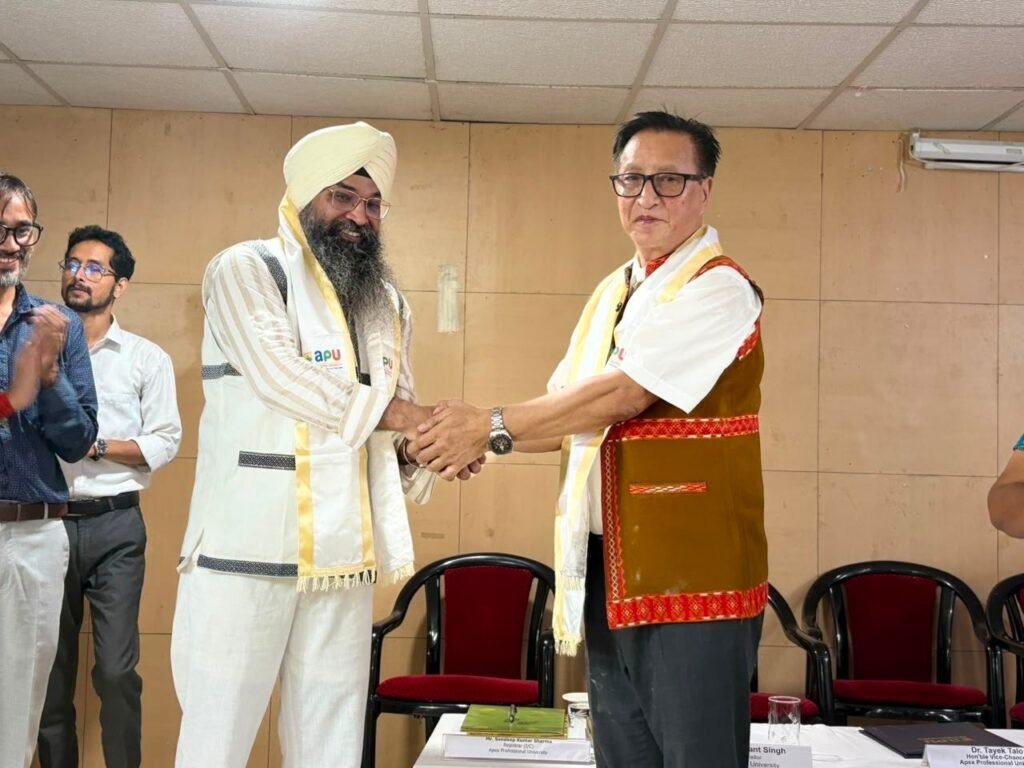
Maksam Tayeng PASIGHAT : In a landmark development for higher education in Arunachal Pradesh, noted educationist Dr Tayek Talom has been appointed Vice Chancellor of Apex Professional University (APU), Pasighat, becoming the first person from the state to hold the post since the university’s establishment 13 years ago. Dr Talom officially assumed office on August 1 after taking the oath of allegiance administered by APU Chancellor Acharya Dhanwant Singh during a formal ceremony. A distinguished academic administrator, Dr Talom previously served as Director of Higher and Technical Education in the Arunachal Pradesh Government. With decades of experience in higher education administration, institutional governance, policy implementation and academic leadership, he is widely regarded as an accomplished educationist. Addressing the university community after assuming office, Dr Talom outlined his vision of developing APU into a student-centric institution committed to academic excellence, innovation, research, creativity, discipline, ethical leadership and enhanced employability. He said the university would focus on strengthening research and innovation, promoting interdisciplinary learning, integrating emerging technologies into teaching, expanding collaborations with industry and academic institutions, enhancing student support services, and ensuring that higher education remains inclusive, accessible and responsive to the aspirations of students. The university expressed confidence that Dr Talom’s leadership would further strengthen its reputation for quality professional education, research and innovation while producing globally competitive graduates. The university fraternity also extended its congratulations, expressing optimism that APU would achieve new milestones under his leadership. Established under the Apex Professional University Act, 2013, APU is a University Grants Commission (UGC)-recognised state private university and a member of the Association of Indian Universities (AIU). It offers undergraduate, postgraduate, doctoral and research programmes in disciplines including law, forensic sciences, education, liberal arts, management, technology, pharmacy, nursing, paramedical sciences, naturopathy, yogic science, architecture and planning. Its programmes are approved by statutory regulatory bodies, including the Bar Council of India (BCI), Council of Architecture (CoA), National Council for Teacher Education (NCTE), Pharmacy Council of India (PCI) and the Arunachal Pradesh Nursing Council (APNC), wherever applicable.    

Latest News, Popular News, State News

FDP begins at JNC Pasighat

PASIGHAT : A week-long Faculty Development Programme (FDP) on “Presentation and Communication Skills” commenced at Jawaharlal Nehru College (JNC), Pasighat, on Monday. The programme is being organised by the DBT STAR College–Jawaharlal Nehru College in collaboration with ICT Academy, with support from the DBT STAR College Scheme and the Internal Quality Assurance Cell (IQAC), JNC. Inaugurating the programme, JNC Principal Dr Gindu Borang underscored the importance of continuous skill development for both teachers and students. He urged participants to make the best use of the training and apply the knowledge gained to effectively mentor and inspire students. He observed that in the rapidly evolving academic environment, embracing technology and continuously upgrading professional skills had become essential. Speaking as the guest of honour, Vice Principal Dr Leki Sitang highlighted the significance of the collaboration between JNC and ICT Academy, expressing confidence that it would strengthen faculty development initiatives while creating better industry-oriented learning and placement opportunities for students. ICT Academy resource person Sunil Borah said the academy was committed to enhancing faculty competencies as well as equipping students with the 21st-century skills needed to succeed in a competitive world. He also expressed optimism about a long-term partnership with the college. Earlier, Programme Coordinator Dr Manish Kumar Shukla of the Department of Physics welcomed the participants and said the primary objective of the FDP was to enhance the information technology, presentation and communication skills of faculty members, thereby enriching classroom teaching and improving students’ learning outcomes. The inaugural session was attended by IQAC Coordinator Dr D P Panda, DBT STAR College Scheme Coordinator Dr Temin Payum, ICT Academy Senior Relationship Manager Samarendra Barua, Heads of Departments and faculty members. The five-day programme, which concludes on August 7, aims to strengthen faculty competencies in presentation, communication and digital skills to enhance teaching-learning practices and improve student outcomes. (DIPR)    

Latest News, Popular News, State News

Arunachal joins nationwide ‘Nasha Mukt Yuva’ campaign

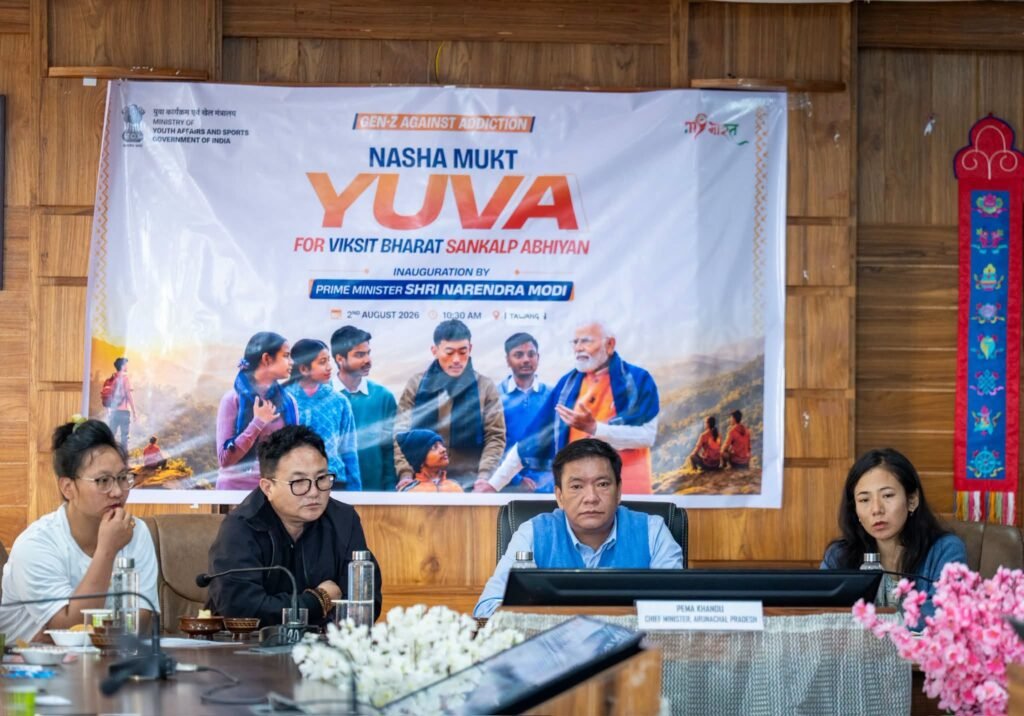
ITANAGAR : Arunachal Pradesh on Sunday joined the nationwide launch of the Nasha Mukt Yuva for Viksit Bharat Sankalp Abhiyan, with Chief Minister Pema Khandu, district administrations, educational institutions and youth organisations participating in the 100-week campaign against substance abuse. Chief Minister Pema Khandu joined Prime Minister Narendra Modi’s virtual launch of the campaign from Tawang and urged the youth of the state to become ambassadors of the movement against drug abuse. The campaign, spearheaded by Mera Yuva Bharat (MY Bharat) under the Ministry of Youth Affairs and Sports, commenced with more than one crore young people across over 10,000 locations taking a pledge to stay away from drugs and contribute towards nation-building. Launching the initiative, Prime Minister Narendra Modi said a developed India requires mentally and physically healthy youth free from substance abuse. Describing the campaign as a movement involving not only young people but also families, communities and the nation, he urged the youth to reject drugs, warning that while substance abuse may provide temporary pleasure, it ultimately destroys careers and lives. The Prime Minister called upon young Indians to participate in the 100-week Jan Bhagidari campaign, under which awareness programmes, sports events, walkathons, meditation sessions, cultural activities, street plays, discussions and community outreach programmes will be organised every Sunday across the country. In a social media post, Khandu said India, under the leadership of Prime Minister Modi, had transformed the fight against substance abuse into a true people’s movement. “I urge every youth in Arunachal to become an ambassador of this movement and encourage their families, friends and communities to choose a healthy, disciplined and drug-free life,” he said. Meanwhile, district administrations across Arunachal Pradesh also participated in the virtual launch of the nationwide campaign. In East Siang district, Women Against Social Evils (WASE) joined the virtual programme and reaffirmed its commitment to spreading awareness against substance abuse and mobilising community participation in support of the campaign. At North Eastern Regional Institute of Science and Technology (NERIST), Nirjuli, MY Bharat, Itanagar, organised a special programme under the campaign in which more than 520 youths participated. Itanagar Capital Region Deputy Commissioner Toko Babu administered the Nasha Mukti Pledge, urging participants to become ambassadors of a healthy, responsible and drug-free society. Addressing the gathering, he appreciated the efforts of MY Bharat volunteers and called upon them to continue their campaign against drug abuse. He also stressed the need for stronger coordination with de-addiction and rehabilitation centres to support affected youth. The programme featured the Prime Minister’s virtual address, cultural performances and youth engagement activities promoting awareness, social responsibility and collective action against substance abuse. The event was organised by MY Bharat Itanagar under District Youth Officer Vineeta Chaudhary, under the supervision of State Director Dr Salam D Singh, in coordination with NERIST. It reflected the growing commitment of Arunachal Pradesh’s youth to the vision of a Nasha Mukt Bharat and Viksit Bharat@2047. In Lower Siang district, the District Administration, in collaboration with the Police and Health departments, organised an awareness-cum-youth interaction programme at the Government Higher Secondary School auditorium in Likabali. Addressing the gathering, Lower Siang DC Gobi Nyicyor said the country’s progress towards a Viksit Bharat depends on a healthy, responsible and empowered youth. He urged young people to become ambassadors of a drug-free society and called for collective efforts by all stakeholders to prevent substance abuse and safeguard the future of the younger generation. Lower Siang SP Bomken Basar, heads of departments, teachers, students and other stakeholders attended the programme, during which participants took the Nasha Mukt Bharat Pledge. Officer-in-Charge of Likabali Police Station Abraham Tayeng and Dr Gobuk Doke, who served as resource persons, highlighted the physical, mental and social consequences of substance abuse. They stressed the importance of awareness, early intervention and community participation, while urging students to stay away from drugs and spread awareness among their peers and families. The programme concluded with the live telecast of Prime Minister Narendra Modi’s address, reinforcing the national resolve to combat substance abuse through collective action. (DIPRO) Meanwhile, MY Bharat West Siang, under the Ministry of Youth Affairs and Sports, organised the district-level programme at Ramakrishna Mission School, Aalo, in association with Ramakrishna Mission. North East Frontier Technical University Vice-Chancellor Tejum Padu attended the programme as chief guest, while Ramakrishna Mission School Principal Swami Swayamprabhananda presided over the event. Both speakers highlighted the vital role of youth in nation-building and emphasised the importance of adopting a healthy, disciplined and drug-free lifestyle. Students, faculty members, National Service Scheme (NSS) volunteers and youth participants joined the Prime Minister’s virtual address and took the Nasha Mukti Pledge, committing themselves to remain free from substance abuse and spread awareness in their educational institutions and communities. The programme concluded with a renewed commitment to strengthen the fight against substance abuse through sustained awareness campaigns, education, sports, cultural activities and community participation. (DIPR) In West Kameng district, an awareness-cum-youth interaction programme was organised at the Deputy Commissioner’s Conference Hall in Bomdila under the nationwide campaign. Addressing MY Bharat volunteers, National Cadet Corps (NCC) cadets and students, West Kameng DC Dr Dilip Kumar said the country’s progress towards a Viksit Bharat depends on the strength and well-being of its youth. He urged young people to become ambassadors of a drug-free society and called for collective efforts to eliminate substance abuse. Participants took the Nasha Mukt Bharat Pledge before joining the live telecast of Prime Minister Narendra Modi’s address. The programme was attended by the Deputy Director of School Education, District Medical Officer, Sub-Divisional Police Officer, Kalaktang, Town Magistrate and other district officials. Meanwhile, Upper Siang district observed the campaign at Government Higher Secondary School, Yingkiong, where DC Talo Jerang, SP Token Saring, heads of departments, teachers and students participated in the live launch. Addressing the gathering, Jerang said the fight against substance abuse requires community participation and individual responsibility. Stressing the role of educational institutions, he urged schools to regularly sensitise students about the harmful effects of drugs and advocated preventive measures in


Latest News, Popular News, State News

Guv calls for ‘detect-counsel-prevent-skill’ approach to fight drugs

ITANAGAR : Governor Lt Gen KT Parnaik (Retd.) on Sunday participated in Prime Minister Narendra Modi’s virtual interaction with youth during the launch of the Nasha Mukt Yuva for Viksit Bharat Sankalp Abhiyan from Lok Bhavan here and called for a sustained, community-driven campaign against substance abuse. The Prime Minister launched the 100-week nationwide Jan Bhagidari campaign, addressing more than one crore young people from over 10,000 locations across the country, including educational institutions and youth centres in Arunachal Pradesh. The initiative highlighted the role of youth in building a drug-free, healthy and developed India under the vision of Viksit Bharat@2047. Following the virtual interaction, the Governor held discussions with officials and proposed organising ‘Nasha Mukt Street Shows’ every Sunday across the state for the next 100 days to generate public awareness and mobilise communities, particularly the youth, against drug abuse. Advocating a grassroots-driven strategy, he called for adopting a ‘Detect-Counsel-Prevent-Skill’ approach to tackle substance abuse. He urged Gaon Burahs, community elders and Panchayat leaders to identify vulnerable youth, counsel affected families and help prevent drug abuse at the village level. The Governor also suggested involving Self-Help Groups in rehabilitation and recovery initiatives at the circle level and proposed appointing recovered youth as Anti-Drugs Ambassadors (ADA) to motivate and guide others towards a drug-free life. Highlighting the need for a multi-pronged strategy, he stressed skill development, productive youth engagement and greater participation in games and sports as effective preventive measures. Referring to the recently launched Rupa Football League–Independence Cup Football Tournament, themed ‘Say No to Drugs, Yes to Football’, he said sports can play a significant role in steering young people away from substance abuse. The Governor also emphasised the use of technology and intelligence-based surveillance to identify drug trafficking routes, networks and distributors. Calling for strict enforcement of the law, he said those involved in drug-related offences must be dealt with firmly under the provisions of the Bharatiya Nyaya Sanhita, 2023, and other relevant laws to safeguard the future of the nation’s youth.      

Latest News, National, Popular News, State News

Arunachal teams dominate RFC India 2026 with double podium finish

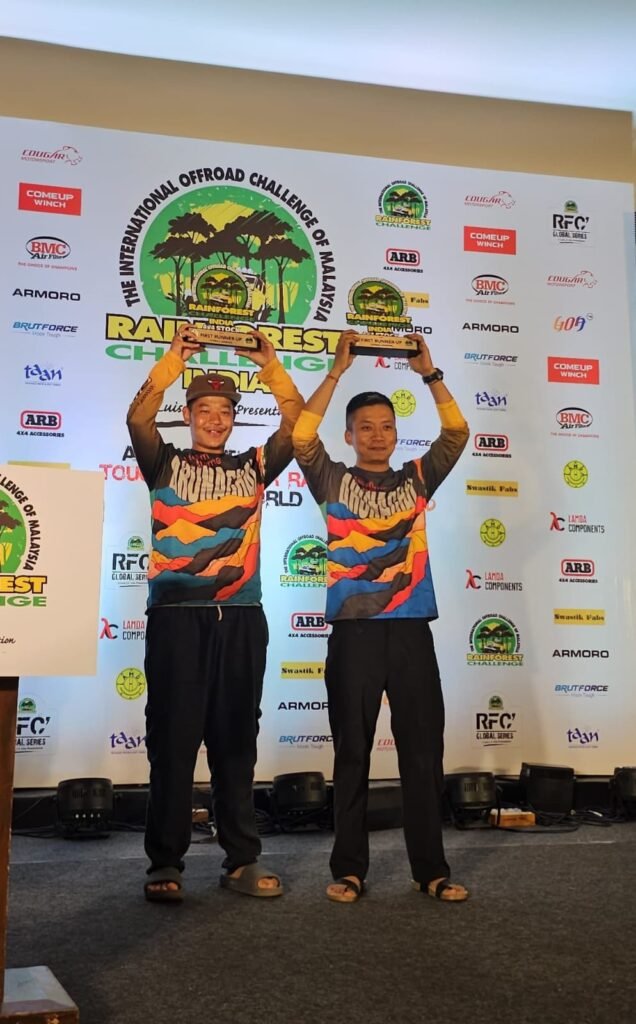
ITANAGAR/GOA : Arunachal Pradesh’s off-road motorsport enthusiasts delivered an impressive performance at the Rainforest Challenge (RFC) India 2026, securing two podium finishes in the country’s toughest 4×4 competition held in Goa. Team Moca emerged champions in the 4×4 Extreme category, while Team Xtreme Arunachal finished runners-up in the highly competitive 4×4 Stock category, underlining the state’s growing prominence in Indian off-road motorsports. Representing Team Moca, driver Ujjal Namshum and co-driver Chetthan Chengappa claimed the championship title after displaying exceptional driving skills, tactical precision and teamwork throughout the week-long competition. Team Xtreme Arunachal, represented by driver Naku Hage Chada and co-driver Loda Punyo, secured second place in the premier 4×4 Stock category, which featured challenging hill climbs, deep mud pits, water crossings, technical recovery sections and endurance-based obstacle courses. The double podium finish marks a significant achievement for Arunachal Pradesh and reflects the Northeast’s growing presence in one of the country’s most demanding motorsport disciplines. Speaking to The Arunachal Age, Team Xtreme Arunachal group leader Jaong Mirip Singpho described the achievement as a proud moment for the state. “Representing Arunachal Pradesh at a prestigious national event like the Rainforest Challenge is itself a matter of immense pride. Winning a podium finish has made the experience even more memorable,” he said. Singpho said the team travelled from Itanagar to Goa with the sole aim of giving its best performance. “Our driver Naku Hage Chada and co-driver Loda Punyo gave their absolute best to secure the top position. Although we narrowly missed the championship, we are satisfied with our performance and determined to return stronger in the next edition,” he added. Describing RFC India as the toughest motorsport event the team has participated in, Singpho said every stage tested both the vehicles and competitors to their limits. “The experience has been incredibly valuable, giving us greater confidence and preparedness for future competitions,” he said. Organised by Cougar Motorsport, the 12th edition of RFC India was held in Goa from July 26 to August 1. Recognised as India’s toughest off-road motorsport competition and among the world’s top off-road challenges, the event featured multiple categories, including 4×4 Extreme, 4×4 Modified and 4×4 Stock, with competitors tested on precision driving, vehicle recovery, navigation, endurance and teamwork under extreme terrain conditions.      

Latest News, Popular News, State News

Guv hails January Tali, Hachu Lombo for historic Mt Kun ascent

ITANAGAR : Governor Lt Gen KT Parnaik (Retd.) has congratulated January Tali and Hachu Lombo on successfully summiting Mt Kun (7,077 metres) in the Zanskar region of Ladakh. Describing the achievement as a moment of immense pride for the state, the Governor said the two mountaineers have created history by becoming the first women from Arunachal Pradesh to scale the challenging peak. He noted that Mt Kun, one of India’s most demanding high-altitude climbing destinations, tests climbers with its steep snow-covered slopes, treacherous glaciers, thin air and unpredictable weather conditions. Their successful ascent, he said, reflected exceptional courage, determination, endurance and mental resilience. The Governor said the duo had brought laurels to Arunachal Pradesh and expressed confidence that their achievement would inspire young people, particularly women, to dream big and strive for excellence. He also hoped their accomplishment would encourage the state’s youth to embrace physical fitness, adventure sports and the spirit of perseverance.      

Latest News, Popular News, State News

AP QueerStation highlights emerging Queer Movement at Himalayan Gender Dialogue

GANGTOK : The Foundation for Indian Contemporary Art (FICA), in collaboration with Royal Enfield and the Department of English, Sikkim University, organised Gender Dialogues in the Himalayas: The Role of Institutions, Society and the Arts on July 31, bringing together scholars, artists, researchers and practitioners from across the Himalayan region to discuss gender, identity, culture, institutions and the arts. Held in a hybrid format, the programme served as an interdisciplinary platform for dialogue on gender, artistic practices and community engagement, with participants from different parts of the country. The event commenced with a welcome address by Dr Abrona L Aden, followed by an introduction to the Himalayan Fellowship by lead consultant Mary Therese Kurkalang, who outlined the fellowship’s objective of promoting research and creative practices across the Himalayan region. Representing Arunachal Pradesh, AP QueerStation founder Sawang Wangchha shared the organisation’s efforts to build safer and more inclusive spaces for LGBTQIA+ communities in the state. He highlighted the increasing visibility of LGBTQIA+ individuals in Arunachal Pradesh while drawing attention to the challenges of loneliness, isolation and the lack of safe spaces faced by many indigenous queer persons. Drawing from AP QueerStation’s work in advocacy, mental health, storytelling, cultural engagement, research and public sensitisation, Wangchha spoke about the emerging queer movement in Arunachal Pradesh and stressed the need for community-led initiatives rooted in dignity, inclusion, dialogue and indigenous realities. The panel also featured Avinam Manger, Prof Rosy Chamling, Davidson Kumam and Shiva Pathak, with the session moderated by Lobsang Norbu. Discussions focused on the role of institutions, communities, literature, visual arts and cultural traditions in shaping conversations on gender and identity across the Himalayan region. Speakers collectively underscored the importance of strengthening dialogue, promoting inclusive cultural spaces and ensuring meaningful representation of diverse Himalayan communities, including indigenous and LGBTQIA+ groups, in academic, artistic and public discourse. The programme concluded with an interactive session between the speakers and participants, followed by a vote of thanks delivered by Dr Saswati Saha, Assistant Professor, Department of English, Sikkim University. AP QueerStation expressed gratitude to FICA, Royal Enfield and the Department of English, Sikkim University for providing a platform that brought together diverse voices from across the Himalayan region to engage in meaningful discussions on gender, identity and inclusion.    

Latest News, Popular News, State News

PHED officials assesses damage to water supply infra at Tene camp

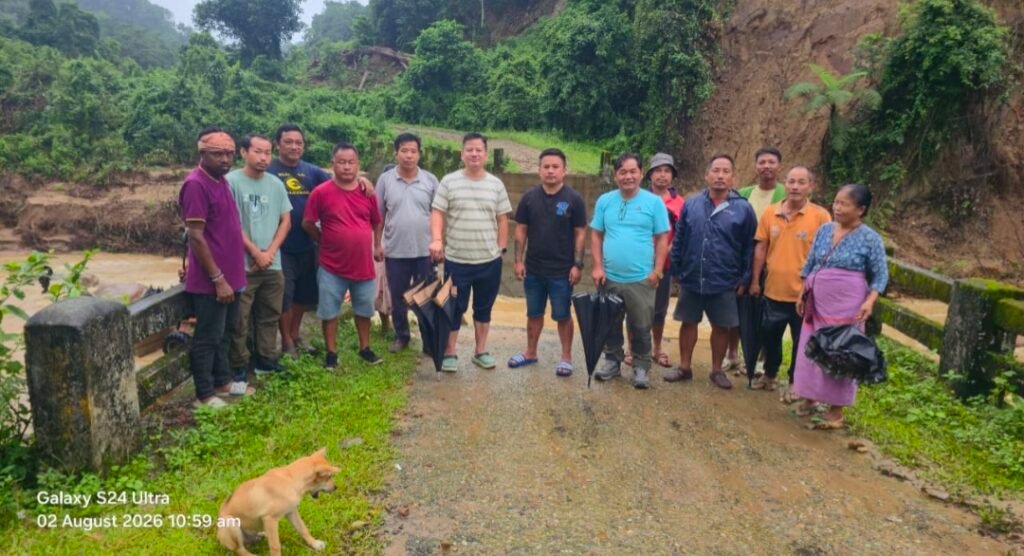
LIKABALI : A team from the Public Health Engineering and Water Supply (PHE&WS) Department on Sunday inspected flood-damaged water supply systems at Tene Camp and Tene village in Lower Siang district following the recent cloudburst at Upper Ramle Banggo. The inspection team, led by Likabali Executive Engineer Binga Gara, accompanied by Koyu Junior Engineer Mikshep Kadu and field staff, was initially scheduled to assess the damaged water supply infrastructure at Koyu Headquarters. However, the team could not reach the area due to a road blockade between Tene Camp and Kakki Village. The officials subsequently visited Tene Camp and Tene Village, where they inspected the damaged water supply systems and interacted with affected residents to assess the extent of the damage and understand their immediate requirements. During the visit, the team also distributed grocery items to flood-affected families as a gesture of support. The field inspection enabled the department to assess the impact of the recent natural calamity on water supply infrastructure and the difficulties being faced by the affected communities. The department is expected to carry out a detailed assessment and initiate restoration measures once road connectivity to the affected areas is restored. (DIPR)      

Latest News, Popular News, State News

Teachers urged to lead fight against substance abuse at APU

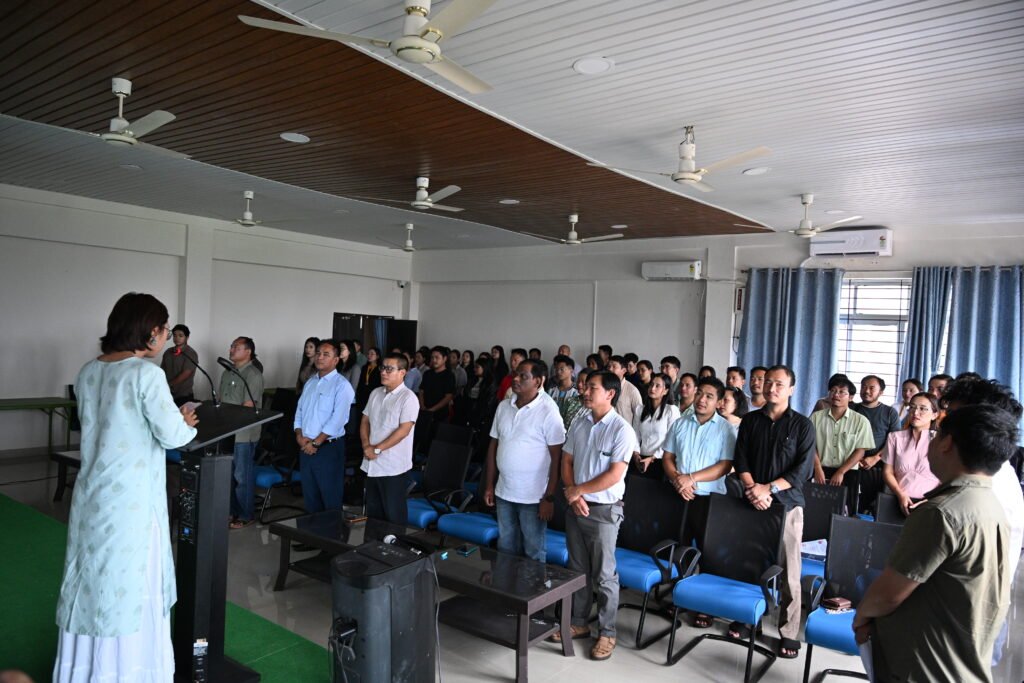
PASIGHAT : Arunachal Pradesh University (APU), Pasighat, on Sunday observed Nasha Mukt Bharat with a special programme on campus, emphasising the role of educational institutions and teachers in building a drug-free society. Welcoming the gathering, Assistant Registrar (Academics) Likha Rinchin outlined the objectives of the campaign and stressed that a drug-free nation begins with drug-free campuses. He said universities have a vital responsibility to guide young minds away from substance abuse and called for coordinated efforts involving the administration, faculty, students and the wider community to combat the menace of drugs. Dean of Academic Affairs Prof Jena said the campaign was more than an administrative initiative and represented a collective vision for an addiction-free society. Stressing the influential role of teachers, he urged the teaching community to actively sensitise students to the harmful effects of substance abuse both inside and outside the classroom. He said teachers should consider themselves active stakeholders in creating a substance-abuse-free campus and added that self-awareness and self-discipline among individuals were essential for the success of the campaign. He also reaffirmed the university’s commitment to safeguarding the younger generation and contributing to a healthier society. Anti-Tobacco Cell chairperson and Assistant Professor of Social Work Ngurang Mana administered the Nasha Mukt Bharat pledge to students, faculty and staff, who vowed to remain free from drugs and tobacco and discourage their use on campus. Addressing the gathering, Mana reiterated that APU is a tobacco-free campus and urged students to refrain from using tobacco or other substances anywhere on the university premises. She warned that violations of the university’s tobacco-free and drug-free policies would invite strict disciplinary action while encouraging students to act as peer motivators in spreading awareness. Assistant Professor of Commerce Dr Yab Rajiv Camdir encouraged students to channel their energy into academics, sports and healthy pursuits. He said discipline was the key to both academic success and avoiding harmful habits, urging students to remain focused on constructive goals. The programme also featured the live telecast of Prime Minister Narendra Modi launching the Nasha Mukt Yuva for Viksit Bharat Sankalp Abhiyan through video conferencing. The campaign, spearheaded by MY Bharat under the Ministry of Youth Affairs and Sports, marks the launch of a 100-week nationwide Jan Bhagidari initiative against substance abuse, with weekly awareness activities to be organised every Sunday across the country. In his address, the Prime Minister described the campaign as a movement for individuals, families and society, reaffirming the government’s commitment to building a developed India with a healthy, mentally strong and addiction-free younger generation. Among those present were Registrar Narmi Darang, Dean of Student Welfare Dr Eli Doye, Assistant Registrar (Finance) Anil Nangkar, heads of departments, faculty members, staff, students and research scholars.    

Latest News, National, Popular News, State News

More dialogue with youth needed amid AI-driven job fears: Former NITI VC

NEW DELHI : Calling for sustained dialogue between policymakers and the young generation, former NITI Aayog Vice Chairman Rajiv Kumar said that the rise of Artificial Intelligence has created uncertainty and frustration among Indian youth regarding future job opportunities and employability. In an interview with PTI Videos, Kumar said that India’s youth is very uncertain and very unclear about the future because of Artificial Intelligence (AI). “This is generating fears of both employability and employment generation,” he said while replying to a question about youth’s anger and recent NEET-related protests. Kumar said the recent periodic labour force survey (PLFS) data has shown that the youth unemployment rate in India for the 1529 age group has stood at around 20 per cent. “Now, if you are faced with their circumstances, then of course you will be frustrated. And, I think this is why we need to have an on-going dialogue with the youth,” he said. According to the Periodic Labour Force Survey (PLFS) Monthly Bulletin June 2026, Unemployment Rate among females aged 15- 29 years was 20.7 per cent and 14.6 per cent for males in the age group in the month. Kumar also suggested that Infosys co-founder Nandan Nilekani, who is heading a task force to reform India’s examination system, should engage with the youth to find out what is bothering them and to somehow give an assurance to the young people of this country that the future is good for them. Last month, a nationwide protest movement by youth, led by the Cockroach Janta Party (CJP), led to the resignation of Union education minister Dharmendra Pradhan. India needs to grow higher than 8% to become an upper middle-income nation by 2047 Asked what India needs to do to achieve its ambitious target of becoming an upper-middle-income country by 2047, Kumar said India must now target to grow at higher than 8 per cent. “In-fact, the target should be to grow in double digits. That, it can do this is proven by many states, which have grown at double digits for the last few years,” he said, adding that the process should be replicated across other states, and India should not be treated as one homogeneous economy because it is not so. According to Kumar, what India needs is a development strategy for each state to grow in double digits, to be able to reach the aspiration of becoming an upper-middle-income country by 2047. “Some years you will grow at less than eight, and some times more than 10. But China has shown that the whole economy could grow at 10 per cent for 30 years,” he observed. Kumar also noted that strengthening the domestic economy will also be India’s best foreign policy. Recently, four Asian countries, Vietnam, Philippines, Sri Lanka, and Jordan, were upgraded from lower middle-income countries to upper middle-income countries by the World Bank. India, despite its strengths, missed the mark. Asked why the share of manufacturing in GDP remained stuck around 16-17 per cent for around two decades, Kumar said, “We were not able to achieve the ease of doing business to promote the private enterprise as much as we should have done.” He lamented that it is quite shocking to know that India’s share of global exports has remained less than 2 per cent for the last three decades, and the manufacturing sector is actually only employing 10- 11 per cent of the labour force. “India has been an export pessimist for a long time. “Our manufacturing sector should target the world market and not focus only on the domestic market,” Kumar said, adding that change has not happened, as a result of which our manufacturing sector has not been able to grow. The eminent economist emphasised that the government has to work with the private sector to identify a few sectors in which all the relevant stakeholders should be focused on raising India’s share in the world market. “But I think a major problem today is that India has one export policy for the whole country. Now this is impossible. What is good for export promotion for Punjab can hardly be relevant for Tamil Nadu. So what we need today is state-specific export promotion policies, and each state must work to design and implement such a policy,” Kumar suggested. He said the Department for Promotion of Industry and Internal Trade (DPIIT), a central government department under the Ministry of Commerce and Industry, which is looking after export promotion, should work with each state to identify its comparative and competitive advantage, and then create the conditions for sharply ramping up exports from each State. “It is absolutely necessary for India to increase its export share in the world market because if we do not do that, we will not be able to expand our manufacturing capacity, and if we do not expand our manufacturing capacity, we will not be able to generate the employment opportunities that are desperately required,” Kumar said. (Source: PTI)