

ONLINE AGE

(Online version of the Arunachal Age newspaper)

Latest News

Latest News, Popular News, State News

Lazu steps up community effort against opium cultivation, drug abuse

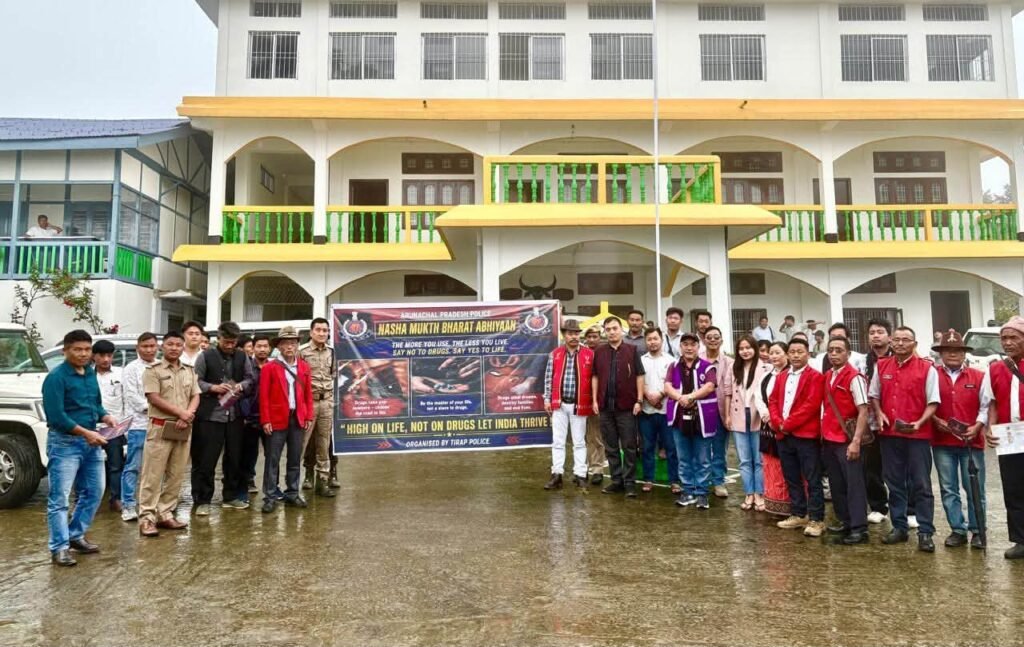
LAZU, SEP 17: An awareness programme on “Illicit Opium Poppy Cultivation and Drug Abuse” was organised at Lazu Inspection Bungalow on Thursday under the aegis of Nasha Mukt Yuva for Viksit Bharat, with the District Administration, Tirap, collaborating with the District Level Narcotics Coordination Committee (NCORD). Assistant Commissioner of Tax, Excise and Narcotics Monika Lowang, while welcoming the gathering, highlighted the department’s efforts to curb illicit opium cultivation in the district. She said awareness programmes are being conducted every Saturday to reach out to local communities. Referring to Lazu’s past association with poppy cultivation, she expressed hope that collective efforts would help the area move towards more sustainable and positive livelihoods. A recovered addict from Care Me Home De-Addiction Centre shared his experience of overcoming addiction and rebuilding his life through rehabilitation. Now working as an activist, he urged people, particularly the youth, to avoid the path of substance abuse. Advocate Najen Rangwang, ZPM Lazu; Nanhang Phuksa, ZPM Tutnu; and AOWA president Wanggo Lowang highlighted the impact of drug abuse on families and communities. They called for continued support from the district administration, police and line departments, particularly in creating sustainable livelihood opportunities and ensuring better market access for local produce as alternatives to opium cultivation. District Horticulture Officer Tagom Ronya suggested alternatives including mithun rearing, fish farming and commercial agriculture, and assured villagers of departmental support in adopting sustainable livelihood options. Deputy Superintendent of Police Padi Payang highlighted the legal consequences of drug-related activities under the Narcotic Drugs and Psychotropic Substances (NDPS) Act. He cautioned that illicit opium cultivation can contribute to a wider cycle of addiction and substance abuse. Addressing the gathering, Tirap Deputy Commissioner Badonlum Tawsik stressed that combating drug abuse requires sustained community participation. He urged villagers to take responsibility at the grassroots level by identifying and discouraging drug peddling in their areas and emphasised the need to protect the younger generation from addiction. Tawsik assured the gathering that the district administration would continue to extend all possible support towards reducing illicit poppy cultivation and addressing drug abuse in the region. Assistant Commissioner Lazu NL Naam and Tirap DIPRO Ponung Tasing also attended the programme. Village chiefs, Gaon Burahs, PRI members, students, youths and local residents participated in the programme, reflecting the community’s collective resolve to address drug abuse and illicit opium cultivation. (DIPR)  
Latest News, Popular News, State News

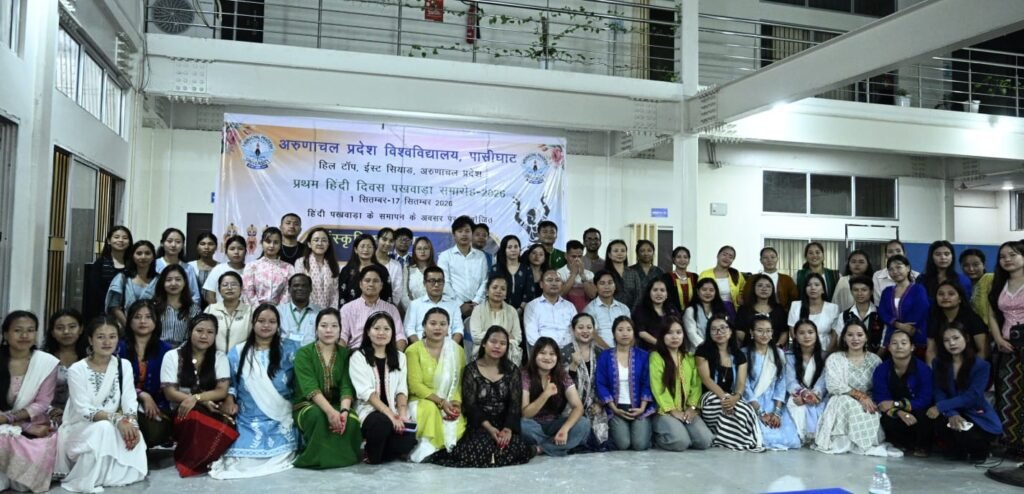
APU’s maiden Hindi Pakhwada culminates in ‘Abhivyakti Ka Utsav’

PASIGHAT, SEP 17: The first-ever Hindi Pakhwada at Arunachal Pradesh University (APU), Pasighat, concluded on Thursday with a cultural evening titled ‘Sanskritik Sandhya: Abhivyakti Ka Utsav’, marking the culmination of a fortnight-long celebration of Hindi literature, creativity and cultural expression. Organised by the Department of Hindi from September 1 to 17, the Pakhwada was the department’s first major initiative since its establishment in August 2025. The department currently offers M.A. and Ph.D. programmes in Hindi. The valedictory programme featured literature, theatre, music and dance, with students of the Department of Hindi staging Bhartendu Harishchandra’s celebrated satirical play ‘Andher Nagari’ as the highlight. The performance was followed by musical and dance presentations by students. Addressing the gathering, APU Registrar Narmi Darang appreciated the Department of Hindi for the initiative and lauded the enthusiastic participation of students, faculty and staff. He said academic, literary and cultural activities contribute to a vibrant academic environment and highlighted the role of language and literature in fostering creativity, communication and cultural understanding. Earlier, Head of the Department of Hindi Dr Ing Perme highlighted the significance of Hindi Diwas and described the university’s maiden Hindi Pakhwada as a meaningful beginning towards building a tradition of dialogue, literature and cultural engagement at APU. She also thanked the university community for its active participation. As part of the Pakhwada, a one-day workshop-cum-employment awareness programme on ‘Employment Opportunities and Prospects for Students of Hindi’ was organised on September 8 to familiarise students with academic and professional avenues in the field. Essay writing, self-composed poetry, extempore speech and poetry recitation competitions were also held, with poetry recitation conducted separately for students, teaching faculty and non-teaching staff. The programme was coordinated by Assistant Professor Dr Linu Ronya, who proposed the vote of thanks and acknowledged the contributions of the university administration, faculty members, officers, staff, research scholars and students. The organising team included Assistant Professors (Guest) Dr Aseng Apum, Nanang Yirang and Om Jong Tangha, along with Dakjum Ete. The valedictory function was attended by teaching faculty, administrative officers, non-teaching staff, research scholars and students.    

Latest News, Popular News, State News

Training on substance use disorder begins

NAHARLAGUN, SEP 17: The first phase of a three-day training programme on Substance Use Disorder (SUD) for doctors, nursing officers and clinical psychologists commenced here on Thursday. The training is being organised by the Arunachal Pradesh Drug De-addiction Society (APDDAS), Department of Health and Family Welfare, in association with the National Drug Dependence and Treatment Centre (NDDTC), AIIMS, New Delhi, as part of human resource capacity building under the Nasha Mukt Bharat Abhiyaan. The programme aims to enhance the clinical skills of healthcare workers in the treatment of people affected by drug dependence and promote an appropriate, empathetic approach while providing care and support. Earlier, Health and Family Welfare Secretary Vivek H.P. apprised Professor Siddharth Sarkar of the upcoming Mission Suraksha during the latter’s call on him. Professor Sarkar, Department of Psychiatry, AIIMS, is monitoring the training programme and has been requested to extend possible technical assistance for the initiative. A total of 55 healthcare workers are attending the first phase. The training will be conducted in three phases at Naharlagun, Pasighat and Namsai, with around 300 healthcare workers expected to be trained by the completion of the third phase. The master trainers include Professor Siddharth Sarkar, Dr Karo Teng, Psychiatrist; Dr Oson Borang, in-charge, Drug De-addiction Centre (DDC), Pasighat; Dr Kamlom Mosang, MD, DH Changlang; Dr Miso Yubey, Psychiatrist, TRIHMS; and Dr Karpe Meena Lombi, Assistant Programme Officer, APDDAS. (DIPR)

Latest News, Popular News, State News

Blood donation camp held

ZIRO, SEP 17: A voluntary blood donation camp organised on Wednesday by the NSS Unit of Indira Gandhi Technological and Medical Sciences University (IGTAMSU), Ziro, in collaboration with the Blood Centre of Gyati Takka Zonal General Hospital (GTZGH), added 28 units of blood to the hospital’s emergency reserve. The camp was organised as part of the annual Nationwide Mega Voluntary Blood Donation initiative of the Ministry of Health and Family Welfare, Government of India. Led by Dr Tongbram Bidyananda Singh, Assistant Professor and Head of the Department of Pathology and Medical Laboratory Science (MLS), the camp witnessed 69 community members coming forward for donation, including 27 men and 42 women. Following screening and counselling, 28 donors successfully donated blood—16 men and 12 women. The collected units comprised 13 O-positive, six A-positive, five B-positive and four AB-positive units. The blood will support emergency care and patient treatment across Lower Subansiri district. The screening process also resulted in 39 prospective donors being temporarily deferred, including 10 men and 29 women. Low blood pressure and anaemia were among the common reasons, while other cases involved recent infections, ongoing antibiotic treatment, underweight status, hypertension, hypothyroidism and recent vaccination. Medical staff highlighted the importance of adequate hydration, balanced nutrition and sufficient rest in helping prospective donors prepare for future donation drives. The GTZGH Blood Centre team thanked IGTAMSU, its NSS volunteers and all donors for their participation. Both institutions reaffirmed their commitment to organising similar blood donation drives in the future.    

Latest News, Popular News, State News

Guv participates in Vishwakarma Puja

ITANAGAR, SEPT17: Governor Lt Gen KT Parnaik (Retd) participated in the Vishwakarma Puja celebrations at the Mahadev Mandir compound in B-Sector, Raj Bhavan Complex, Itanagar, on Thursday. The Governor offered prayers for peace, prosperity and progress of the people of Arunachal Pradesh. Vishwakarma Puja, dedicated to Lord Vishwakarma, regarded as the divine architect and a symbol of craftsmanship, innovation and technical excellence, is observed across the country to honour skill, hard work and creativity. Parnaik commended the organising committee for conducting the celebration and contributed a token amount towards the Puja celebrations.    

Latest News, Popular News, State News

Sona stresses values, compassion in education

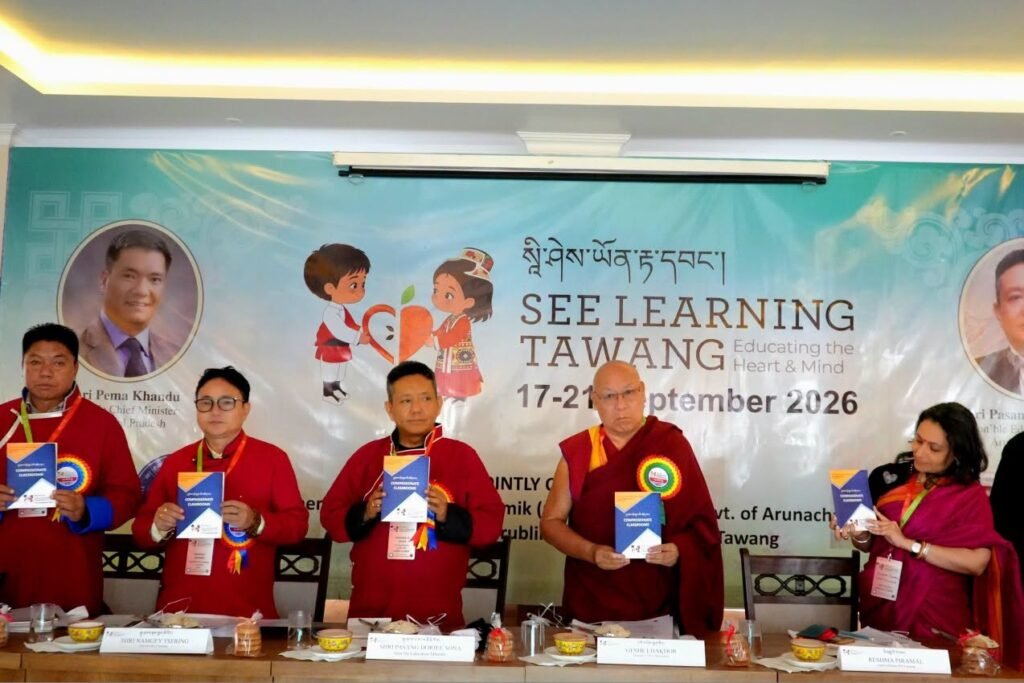
ITANAGAR, SEP 17: Education minister PD Sona on Thursday stressed the need to go beyond academic learning and give equal importance to values and emotional development of children, saying education must help nurture compassionate and responsible individuals. Inaugurating a three-day workshop on social, emotional and ethical (SEE) learning in Tawang district, the education and tourism minister stressed the need to go beyond academic learning and give equal importance to values and emotional development of children, saying education must help nurture compassionate and responsible individuals. The workshop is being organised by the Department of Karmik and Adhyatmik Affairs (DoKAA) in collaboration with the Thupten Shedrupling Foundation, with a focus on integrating social, emotional and ethical values with academic learning, an official statement said. The minister said the State Council of Educational Research and Training (SCERT) had worked for nearly one-and-a-half years to develop a curriculum centred on moral values for students of classes 3 to 5, which has been introduced from the current academic session. He suggested that experts from DoKAA collaborate with SCERT to further enrich and fine-tune the curriculum. Referring to the message delivered by keynote speaker Geshe Lhakdor, director of the Library of Tibetan Works and Archives (LTWA), Dharamshala, Sona said compassion should extend beyond fellow human beings to the environment and all forms of life. He observed that environmental degradation, disasters and destruction caused by reckless human activities should not always be viewed simply as acts of nature when they are consequences of human actions. SEE learning, he said, could play an important role in nurturing compassion, responsible behaviour and greater sensitivity towards society and the environment among young learners. Delivering the keynote address on ‘Educating the Heart and Mind for Quality Education’, Lhakdor underlined the transformative role of education in creating a peaceful and compassionate society. He said human beings have the unique ability to communicate through language and dialogue and should therefore seek to resolve differences and misunderstandings through meaningful communication. Despite possessing intelligence, knowledge and advanced capabilities, humanity at times uses these strengths in destructive ways, Lhakdor observed. Lead facilitator Reshma Piramal gave an overview of the SEE learning framework and the state roadmap, familiarising participants with its approach and objectives. Earlier, DoKAA director Thupten Kalden highlighted the growing relevance of SEE learning in the contemporary educational environment and welcomed the dignitaries, resource persons and participants. The workshop is aimed at helping educators deepen their understanding of SEE learning and explore practical approaches to creating compassionate, responsible, inclusive and value-based learning environments in schools. The programme emphasised that education should focus not only on intellectual development but also on nurturing compassionate hearts, ethical awareness, responsible behaviour and sensitivity towards society and the environment. (Source: PTI)    

Latest News, Popular News, State News

JNC faculty attend DBT Star College Review Meet in Maharashtra

PASIGHAT, SEP 17: Two faculty members of Jawaharlal Nehru College (JNC), Pasighat, are participating in the Coordinator’s Meet-cum-7th Review Meeting of the Task Force under the Department of Biotechnology (DBT) Star College Programme in Maharashtra. Dr Alakesh Phukan, Departmental Coordinator, Chemistry, and Dr Gete Umbrey, Departmental Coordinator, Mathematics, are representing JNC at the three-day programme being held from September 16 to 18 at K J Somaiya College of Arts, Commerce and Science, Kopargaon. The programme is organised by DBT, Ministry of Science and Technology, Government of India, and hosted by the Kopargaon Taluka Education Society. The inaugural session was addressed by senior DBT officials and members of the National Task Force. Dr Garima Gupta, Scientist ‘F’ and Programme Head, Star College Scheme, Human Resource Development (HRD) Division, DBT, spoke on the evolution of the scheme, which was initially launched with financial support of Rs 5 lakh per department and later expanded to rural institutions, including colleges in the North-Eastern Region. Dr Dhananjay Kumar Tiwary, Senior Adviser, Head of the Directorate and Scientist ‘H’, DBT, stressed efficient utilisation of sanctioned funds and transparent implementation of the programme. He urged participating colleges to strengthen their academic ecosystems and pursue continuous institutional upgradation, while emphasising foundational literacy and numeracy and responsible use of Artificial Intelligence. Task Force Chairperson Prof Suresh K Garg, Director General, Maharaja Agrasen Institute of Management Studies, New Delhi, and former Principal of Deen Dayal Upadhyaya College, University of Delhi, stressed applied thinking and innovation in science education. He encouraged colleges to involve undergraduate students in minor research projects, provide summer research opportunities at universities, and facilitate laboratory exposure and mentoring for students from neighbouring schools. He also called for greater collaboration among Star Colleges to facilitate exchange of institutional practices and strengthen the academic ecosystem. The programme features special lectures by Dr Naveen Chandra Bisht, Professor, Department of Plant Molecular Biology, University of Delhi South Campus, on ‘Improving Mustard for Functional Foods, Better Nutrition and Sustainable Agriculture’, and Dr Surajit Sarkar, Professor, Department of Genetics, University of Delhi South Campus, on ‘Finding Big Insights Through Simple Experiments’. It also includes peer perspectives from leading Star Colleges, along with presentations and review of 31 completed projects and poster presentations by ongoing Star Colleges. JNC Pasighat is the first college in Arunachal Pradesh to receive support under the DBT Star College Programme. The programme covers four undergraduate science departments—Botany, Chemistry, Physics and Mathematics—under the stewardship of Dr Temin Payum, Associate Professor, Department of Botany and Project Coordinator. The participation of JNC faculty in the national-level review meeting is expected to facilitate academic exchange, sharing of institutional practices and further strengthening of science education and research initiatives at the college. (DIPR)

Latest News, Popular News, State News

Cong slams BJP’s ‘Seva Sankalp Abhiyan’; seeks accountability over COVID-19 lockdown, migrant crisis

ITANAGAR, SEP 17: The Arunachal Pradesh Congress Committee (APCC) has called for an independent and evidence-based review of the Centre’s management of the COVID-19 pandemic and the nationwide lockdown, as the Bharatiya Janata Party (BJP) begins its month-long ‘Seva Sankalp Abhiyan’ from September 17 to October 17. The APCC said the campaign, being held to mark Prime Minister Narendra Modi’s 25 years in public life, includes blood donation camps, cleanliness drives, welfare outreach, youth programmes, cultural activities and the ‘Aashirwad Ka Diya’ initiative. In a statement issued on Thursday, APCC General Secretary-cum-Spokesperson and Chairman of its Media and Social Media Department Kon Jirjo Jotham said the commemoration should also provide an opportunity to examine the decisions and humanitarian consequences of the COVID-19 lockdown. “Public service is not merely about celebrating achievements; it is also about accepting responsibility, acknowledging shortcomings and answering the legitimate questions of citizens who suffered,” the APCC said. The party acknowledged that COVID-19 was an unprecedented global crisis that required difficult decisions, but said the timing, preparation and implementation of the nationwide lockdown announced on March 24, 2020 warranted retrospective examination. The Union government had announced a 21-day nationwide lockdown beginning at midnight that day. The APCC raised 12 questions covering the short notice for the lockdown, the preparedness for migrant and informal workers, public-health infrastructure, the use of symbolic campaigns during the crisis, the migrant exodus, transportation arrangements, availability of data, prolonged restrictions and communication of government measures. On the migrant crisis, the APCC referred to the large-scale movement of workers towards their home states after the lockdown disrupted employment and livelihoods. The Supreme Court subsequently took suo motu cognisance of the difficulties faced by migrant labourers, including reports of workers travelling on foot and bicycles over long distances amid shortages of food and water. The APCC also questioned the timing of transportation arrangements for stranded workers. Indian Railways began operating Shramik Special trains from May 1, 2020, following requests from state governments, to transport stranded migrant workers and others to their home states. The party said the pandemic experience should be assessed through data and testimonies rather than political narratives. It sought greater transparency regarding migrant movement, deaths, relief measures, employment losses, food distribution, health infrastructure and pandemic expenditure. The APCC also called for an assessment of preparedness and procurement of personal protective equipment, testing facilities, medicines, oxygen and hospital beds, besides a national framework incorporating lessons from the pandemic for future emergencies. “Let there be celebration, but let there also be accountability,” the APCC said, adding that the lessons of the pandemic should not be overlooked while marking the present campaign. The statement concluded with the APCC’s call for “Seva Sankalp” to be accompanied by “Janata Se Hisab”, urging an assessment of the lockdown’s health, economic, social and humanitarian consequences.    

Latest News, Popular News, State News

New RGUSU office bearers take oath at RGU

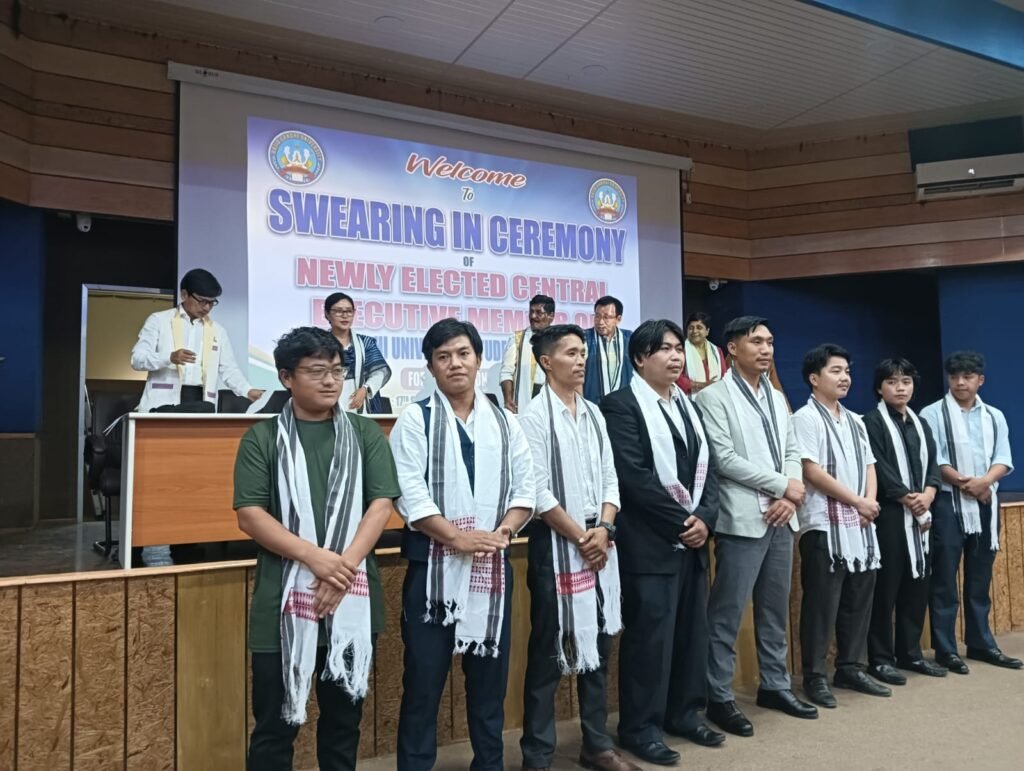
RONO HILLS, SEP 17: Rajiv Gandhi University (RGU) on Thursday conducted the induction-cum-oath-taking ceremony of the newly elected office bearers of the Rajiv Gandhi University Students’ Union (RGUSU) for the 2026–27 academic session at the university’s Mini Auditorium. The ceremony formally inducted the newly elected student representatives who will serve the student community during the academic session. The programme commenced with the University Song and was attended by RGU Vice-Chancellor Prof Shivraj, Registrar Dr N T Rikam, Dean of Students’ Welfare Prof N N Hina, Chief Election Commissioner Dr Anil Mili, Returning Officer Dr N T Jose, senior university officials, members of the RGUSU Election Committee, faculty members, staff, outgoing office bearers and students. In her welcome address, Prof N N Hina highlighted the significance of the occasion. Chief Election Commissioner Dr Anil Mili subsequently announced the newly elected executive members of the RGUSU for 2026–27. Newly elected RGUSU President Logio Tatung Bamang and his team took the oath, pledging to discharge their responsibilities with sincerity and dedication, uphold the dignity and discipline of the university, and work for the welfare of students. The outgoing RGUSU President Daniel John Kholie and his team were acknowledged for their contributions and service to the university and student community during their tenure. Addressing the gathering, Vice-Chancellor Prof Shivraj extended his best wishes to the new team and urged them to work responsibly and constructively for the welfare of students and the university. Registrar Dr N T Rikam also congratulated the newly elected office bearers and encouraged them to bring genuine student issues and concerns before the university administration for consideration and necessary action. The newly elected team expressed its commitment to working collectively for student welfare and contributing positively to the academic and campus life of the university.    

Latest News, Popular News, State News

BMCs trained on Biodiversity Act, access and benefit sharing

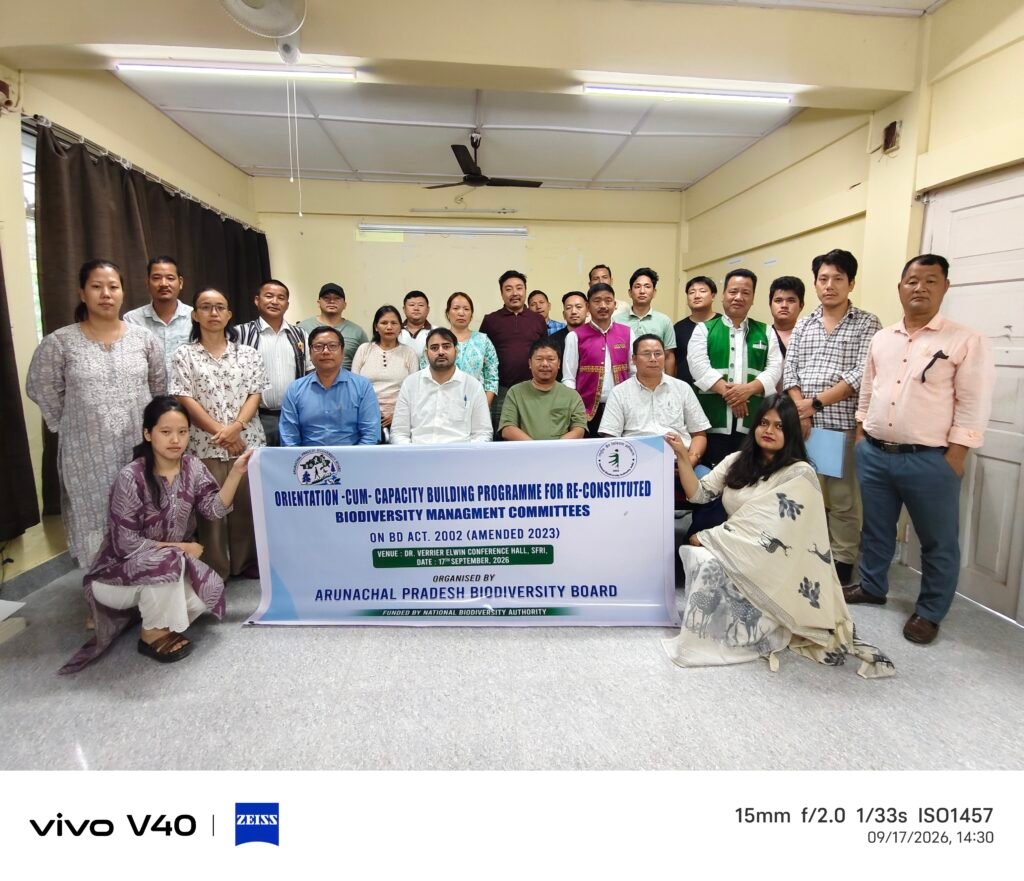
ITANAGAR, SEP 17: The Arunachal Pradesh State Biodiversity Board (APBB) organised a one-day Orientation-cum-Capacity Building Programme for reconstituted Biodiversity Management Committees (BMCs) under the Biological Diversity Act, 2002, as amended in 2023, in Itanagar on Thursday. The programme was inaugurated by APBB Chairman Hawa Bagang in the presence of Member Secretary HB Abo. More than 35 BMC representatives, including chairpersons and members from West Siang, Siang, Kurung Kumey, Papum Pare and West Kameng districts, along with officials and other stakeholders, participated. In his inaugural address, Bagang highlighted the role of BMCs as the foundation of grassroots biodiversity governance and stressed the importance of community participation in conserving forests, rivers, medicinal plants and traditional knowledge. Abo said the Board was committed to strengthening BMCs across the State through continuous capacity building, technical guidance and institutional support. He said the APBB was working towards operationalising key provisions of the amended Act, including Access and Benefit Sharing (ABS) and Certificate of Origin, through the Arunachal Pradesh Biological Diversity Rules. The technical sessions covered the objectives and major amendments of the Biological Diversity Act, ABS, Biodiversity Heritage Sites, traditional knowledge, exemptions, Certificate of Origin and enforcement mechanisms. APBB Research Officer Dr Bamin Yakang delivered a detailed presentation on these provisions. Dr Vikram Delu, Scientist, Zoological Survey of India, Itanagar Regional Centre, explained the roles and responsibilities of BMCs and stressed the importance of structured People’s Biodiversity Registers (PBRs) and proper documentation. He also shared practices followed in other states relating to biodiversity-related activities and necessary clearances. Jaya Kumari of the Biodiversity Samrakshan Internship Programme (BSIP-VI), National Biodiversity Authority, explained the significance of PBRs as community-based records of local biological resources and associated traditional knowledge. APBB Technical Assistant Guchi Sonia demonstrated the ABS End-to-End Portal, explaining digital processes for data integration, BMC registration and management of biodiversity-related information. During an interactive session, BMC members raised queries on ABS, Biodiversity Heritage Sites, Local Biodiversity Funds, Certificate of Origin and implementation of the amended Act in Arunachal Pradesh. APBB officials clarified the provisions and encouraged BMCs to work closely with the Board for effective implementation of biodiversity conservation initiatives. The programme concluded with a vote of thanks by APBB Technical Assistant Dusu Rila, who expressed gratitude to the resource persons, participants and stakeholders and reaffirmed the Board’s commitment to strengthening grassroots biodiversity governance in the State.