ONLINE AGE

(Online version of the Arunachal Age newspaper)

National

Latest News, National, Popular News, State News

Sona pitches Arunachal as North East’s eco-tourism jewel

NEW DELHI : Arunachal Pradesh Tourism Minister PD Sona showcased the state’s tourism potential at the FAITH Tourism Conclave 2026 in New Delhi, describing Arunachal Pradesh as the “unique eco-tourism jewel of India’s North East.” In a social media post on Thursday, Sona said he was honoured to participate in one of the country’s premier tourism forums, which brought together policymakers, industry leaders and tourism stakeholders to deliberate on the future of India’s tourism sector. The Minister said he delivered a keynote address titled “Arunachal Pradesh: The Unique Eco-Tourism Jewel of India’s North East,” highlighting the state’s pristine natural landscapes, rich indigenous heritage and immense potential for sustainable and experience-based tourism. He also outlined the state government’s vision of promoting responsible tourism that empowers local communities while preserving Arunachal Pradesh’s cultural and ecological heritage. According to Sona, the conclave provided an important platform to exchange ideas, build partnerships and explore new opportunities to position Arunachal Pradesh among India’s most sought-after tourism destinations. “Together, we remain committed to unlocking the immense potential of tourism as a driver of economic growth, employment and sustainable development,” Sona said in the post.      

Latest News, National, Popular News, State News

SC voices concern over CBSE’s third language policy from Class 9 onwards

NEW DELHI : The Supreme Court on Thursday voiced concern over the introduction of a third language in Class 9 under the CBSE curriculum, observing it would increase the stress level of students and suggesting it be introduced in Class 5 or Class 6 so that students can cope with it. A bench of Justices BV Nagarathna and R Mahadevan orally asked the Centre to not introduce a third language in Class 9 level. “Union of India please don’t have a third language from Class 9 level. It would unnecessarily increase the stress level of students. If you want to introduce a new language, then please do it at Class 5 or Class 6 level but not at Class 9 level. Class nine is full of stress, it starts from Class 8 onwards,” Justice Nagarathna told the counsel, appearing for the Centre, and asked her to convey the feeling of the court to the government. The remarks were made during the hearing of the Tamil Nadu government’s plea against a Madras High Court directive to facilitate the establishment of Jawahar Navodaya Vidyalayas (JNVs) in every district of the State. The Tamil Nadu government has consistently opposed the setting up of JNVs, over concerns with regard to the three-language policy curriculum followed by the schools. The bench was not directly dealing with the issue of new policy of CBSE but the court made observations on the timing of introduction of third language in schools. Another apex court bench headed by Chief Justice Surya Kant is already examining issues with regard to challenge to the new policy of the CBSE and recently refused to stay the notification. (Source: PTI)    

Latest News, National, Popular News, State News

SC flags concerns over CBSE’s digital marking system, seeks govt’s response

NEW DELHI ; Expressing concern over students’ “frustration” in CBSE’s digital marking system, the Supreme Court on Wednesday sought the assistance of Solicitor General Tushar Mehta in hearing a PIL which sought directions to the Centre and the CBSE to frame regulations to conduct exams through on-screen marking (OSM) system. The CBSE’s OSM evaluation system is a digital grading method where teachers assess scanned copies of physical answer sheets on a computer instead of checking physical paper scripts. “Look at the amount of frustration of young children,” a bench headed by Chief Justice of India Surya Kant said and sought the assistance of the solicitor general in dealing with the case. The bench, also comprising justices Joymalya Bagchi and V Mohana, said there appear to be systemic “creeping problems” in the digital evaluation process. “We are seeking your assistance, not in an adversarial way. There are some problems,” Justice Bagchi told the solicitor general and sought a status report in the case. The top law officer informed the bench that while individual marksheet discrepancies mentioned in the plea have largely been resolved, the government is taking the systemic issues seriously. He said that a one-member commission, led by S Radha Chauhan, has been constituted to review the evaluation system and recommend necessary systemic changes. “We are not taking this adversely,” the SG said. He said the committee is already looking into the grievances. The bench has now asked the solicitor general to apprise it of the steps being taken by the CBSE and listed the matter for further hearing next week. The PIL has been filed by Rakesh Binjola through advocate Laxmikant Matadan Shukla. The petition seeks directions to the Centre and the CBSE to frame regulations for conducting CBSE Board examinations through the OSM evaluation system and to constitute a high-powered committee to supervise and implement such reforms. The petitioner has also sought directions to grant relaxation in minimum qualifying marks for students who have already secured provisional admissions or cleared entrance examinations, as well as exemption from the 75 per cent or other minimum Class 12 marks criteria prescribed for admission to various courses. (Source: PTI)    

Latest News, National, Popular News, State News

Arunachal signs MoU for India’s first river kinetic energy project

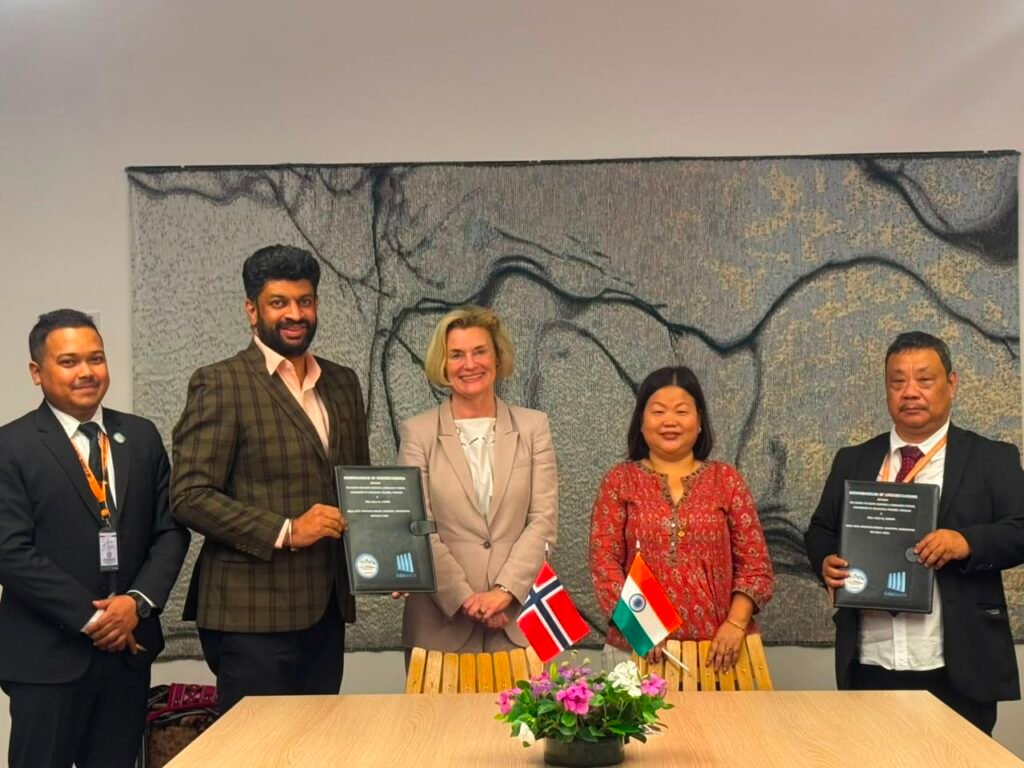
NEW DELHI :  Arunachal Pradesh took a significant step towards clean and sustainable energy on Tuesday with the signing of a Memorandum of Understanding (MoU) between the Centre for Earth Sciences and Himalayan Studies (CES&HS) and Norway-based Tidal Sail AS for the implementation of a 500 kW River Kinetic Energy Demonstration Project in the state. Supported by the Ministry of New and Renewable Energy (MNRE), Government of India, and Innovation Norway under the India-Norway Green Partnership, the project aims to establish India’s first River Kinetic Energy Demonstration Plant in Arunachal Pradesh. The project will demonstrate Norwegian technology capable of generating electricity directly from river currents without requiring major civil infrastructure, offering an environmentally sustainable and cost-effective renewable energy solution. Speaking on the occasion, Arunachal Pradesh Science and Technology Minister Dasanglu Pul described the MoU as a landmark for the state, saying it reflects a shared commitment to innovation, sustainability and international cooperation. She said Arunachal Pradesh’s vast river systems offer immense untapped renewable energy potential and that the project would strengthen the state’s transition to clean energy while ensuring environmentally responsible utilisation of natural resources. The minister also thanked the Ministry of New and Renewable Energy, the Ministry of External Affairs, the Royal Norwegian Embassy, Tidal Sail AS, Innovation Norway and other partner institutions for their continued support. She expressed confidence that the collaboration would contribute to a cleaner, greener and more energy-secure future while deepening renewable energy cooperation between India and Norway. Norwegian Ambassador to India May-Elin Stener said the project represented a practical partnership between the two countries in advancing clean energy technologies. She noted that Arunachal Pradesh’s river systems make the state an ideal location for demonstrating river kinetic energy technology and highlighted the expanding cooperation between Norway and Arunachal Pradesh in geothermal energy, geotechnical engineering and sustainable infrastructure. CES&HS Director Tana Tage said the initiative marks the beginning of a broader effort to diversify Arunachal Pradesh’s renewable energy portfolio and explore decentralised power generation for remote and inaccessible areas. He said successful demonstration of the technology could reduce dependence on fossil fuels, lower carbon emissions, preserve river ecosystems and position the state as a leader in next-generation renewable energy. He also highlighted the growing collaboration between CES&HS and Norwegian institutions, including the Norwegian Geotechnical Institute, in the fields of geothermal energy and sustainable infrastructure, expressing hope that continued technical cooperation would promote environmentally responsible infrastructure development in the state. The MoU marks another milestone in India-Norway cooperation in renewable energy and is expected to facilitate the deployment of advanced river kinetic energy technology in Himalayan river systems, contributing to sustainable development, environmental conservation and long-term energy security in Arunachal Pradesh.  

Latest News, National, Popular News, State News

Jal Shakti Ministry to hold key conference with states on water sector reforms on Monday

NEW DELHI : The Ministry of Jal Shakti will hold a conference of senior water resources secretaries from states and Union Territories on Monday to review key water sector initiatives and strengthen Centre-state coordination on reforms and implementation. The conference, to be convened by the Department of Water Resources, River Development and Ganga Rejuvenation under the Ministry of Jal Shakti at Sushma Swaraj Bhawan here, aims to review the progress of the ministry’s major national programmes and discuss priority initiatives in the water resources sector. Key issues on the agenda include the modernisation of the Command Area Development and Water Management (M-CADWM) scheme, the nationwide ‘Catch the Rain’ campaign, revised project appraisal guidelines, dam safety and state water reforms. Union Jal Shakti Minister C R Patil will chair the conference. Minister of State for Jal Shakti Raj Bhushan Choudhary and Secretary, Department of Water Resources, River Development and Ganga Rejuvenation, V L Kantha Rao, will co-chair it, according to an official statement. The conference will be attended by senior officials from the water resources departments of all states and Union Territories, as well as the Ministry of Jal Shakti, including its organisations, attached and subordinate offices such as the Central Water Commission, National Dam Safety Authority and National Water Mission. Discussions will focus on eight priority agenda items, including the status of the modernisation of the Command Area Development and Water Management (M-CADWM) scheme and the special one-month nationwide ‘Catch the Rain’ campaign aimed at strengthening people’s participation in water conservation. Other issues on the agenda include revised draft project appraisal guidelines for irrigation, multipurpose and flood management projects, rule curves of dam reservoirs and their effective implementation for improved reservoir operations and dam safety, the status of the state water reforms framework, completion of comprehensive dam safety evaluation under the Dam Safety Act, 2021 by December 2026, progress of irrigation censuses in states and Union Territories, and a framework for model state water awards. According to the ministry, the conference will also provide an opportunity for states and Union Territories to share experiences, discuss implementation challenges and evolve coordinated strategies to accelerate reforms in the water sector. The deliberations are expected to facilitate the timely implementation of the ministry’s ongoing programmes. The conference forms part of the Ministry of Jal Shakti’s continued efforts to enhance sustainable water resources management through improved policy coordination, institutional strengthening, efficient project implementation, enhanced dam safety and greater community participation in water conservation, it said. (Source: PTI)    

Latest News, National, Popular News, State News

Will hold PM Modi accountable for ‘betrayal’: Cong ups ante on Ram Temple donation row

NEW DELHI : Stepping up its attack on the government over the Ram temple donation embezzlement case, the Congress on Sunday questioned Prime Minister Narendra Modi’s “silence” and said the country will never forgive the BJP-RSS for their “betrayal of faith”. Pointing out that Congress leaders have held 48 press conferences across the country on the issue, party general secretary in-charge of communications Jairam Ramesh demanded that the prime minister “break his silence” on the “theft scandal”. Prior to this, answers were sought from the prime minister through eight press conferences held at the AICC headquarters in New Delhi between June 26 and July 9, Ramesh said in an X post in Hindi. “No matter how hard Prime Minister Modi, the RSS and the BJP try, the Congress will not rest until it compels Prime Minister Modi to be held accountable for this betrayal: the theft of donations at the Lord Shri Ram temple in Ayodhya, which has struck a blow to the faith of crores of people across the country,” Ramesh said, sharing screenshots from 13 press conferences held by the party on Sunday, including in Manipur, Goa, Madurai and Bhubaneswar. Ramesh accused the BJP-RSS of collecting donations in the name of Lord Ram while running a “racket of theft” behind the scenes. The heinous act of donation theft at the Ram temple in Ayodhya is a massive deception perpetrated against his devotees, Ramesh asserted. “All indications so far suggest that the prime minister and the top leadership of the BJP-RSS utilised the SIT to provide a ‘safe exit’ to their close associates responsible for this theft; furthermore, the actions taken by the Uttar Pradesh Police have proven to be nothing more than an attempt to shield the true masterminds behind this murky affair,” he said. Ramesh reiterated the party’s demands for an independent investigation supervised by the Supreme Court, a forensic audit, a fixation of accountability and strict action against the guilty. In an earlier X post, Ramesh had said, “Donation Theft: A Betrayal of Faith. A month has passed since the theft of donations at the Lord Shri Ram Temple came to light, yet Prime Minister Modi, who is quick to claim credit for everything, remains silent when it comes to accountability.” New facts emerging daily are exposing those who have politicised the Ram temple issue, he said. Even the Special Investigation Team (SIT), constituted ostensibly to resolve the matter, has been forced to acknowledge the daily disappearance of lakhs of rupees in offerings, Ramesh said. “The theft of donations at the Lord Shri Ram Temple cannot be limited to just a few employees; yet, this government — hostile to the cause of Ram — is intent on shielding the real culprits,” he alleged. The Congress has consistently maintained that the SIT, the FIR, and the resignations are merely attempts to hoodwink the nation, Ramesh said. Government efforts to suppress the matter make it evident that Champat Rai and other temple trustees harbour deep secrets; this is why the Modi government is taking no action against them, and their influence remains intact, Ramesh said. “The Congress demands the following: An independent and impartial investigation supervised by the Supreme Court, a forensic audit, fixation of accountability, strict action against the guilty,” he said. “Prime Minister, the nation wants to know: Why this silence? The country will never forgive the BJP and RSS for this planned betrayal of faith, perpetrated under Modi’s patronage,” Ramesh alleged. The Congress on Saturday sought to corner Prime Minister Modi over the alleged embezzlement of donations, questioning his “silence” on the issue and saying it will demand answers from him in the upcoming Parliament session. Under attack from the Congress and others, the BJP has maintained that those found guilty of wrongdoing in the case will not be spared and alleged that the opposition parties, which never supported Ram temple construction, were using the issue to divide Hindus. The alleged embezzlement of Ram temple donations came to light on June 7. An FIR was registered on June 25, following a preliminary report from the SIT constituted by the Uttar Pradesh government. Eight people associated with the temple’s donation and counting process have been arrested so far, while the investigation is continuing. (Source: PTI)    
Latest News, National, Popular News, State News

Centre, Meghalaya to host two-day national conference on NextGen administrative reforms

NEW DELHI :  The Department of Administrative Reforms and Public Grievances (DARPG), in collaboration with the Government of Meghalaya, will organise a two-day National Conference on the theme “NextGen Administrative & e-Gov Reforms” in Shillong on July 13 and 14, bringing together policymakers, administrators, technology experts and governance practitioners from across the country, it was announced on Sunday. Union Minister of State (Independent Charge) for Science and Technology and Earth Sciences, and Minister of State in the Prime Minister’s Office, Personnel, Public Grievances and Pensions, Atomic Energy and Space, Dr. Jitendra Singh, along with Meghalaya Chief Minister Conrad K. Sangma, will address the inaugural session of the conference. The inaugural session will also be addressed by Secretary, DARPG, Department of Pension and Pensioners’ Welfare (DoPPW) and Ministry of Development of North Eastern Region (MDoNER), Nivedita Shukla Verma, and Meghalaya Chief Secretary Dr. Shakil P. Ahammed. More than 300 delegates, including senior officials from the Central and State governments, District Collectors, policymakers, domain experts, representatives from academic institutions and public administration practitioners, are expected to participate in the event. The conference aims to serve as a national platform for deliberating on the future of public administration and digital governance while encouraging the exchange of innovative ideas and best practices among states and Union Territories. During the two-day event, delegates will witness presentations on Prime Minister’s Award-winning initiatives for 2023 and 2024, National Awards for e-Governance-winning projects, best governance practices from the Government of Meghalaya, and DARPG-assisted State Collaborative Initiatives (SCI) from the North Eastern region. The presentations will cover a wide range of themes, including holistic district development, digital governance, cybersecurity, public service delivery, healthcare, education, banking, consumer protection, urban governance, rural development and technology-enabled administration. The conference will begin with a dedicated session showcasing Meghalaya’s governance innovations and citizen-centric reforms aimed at strengthening service delivery and improving administrative efficiency. Another session will highlight Prime Minister’s Award-winning initiatives, featuring successful district-level governance models in areas such as holistic development, education, rural livelihoods and the Aspirational District Programme. Participants will also be introduced to the National Awards for e-Governance 2026-winning projects, demonstrating the use of emerging technologies in urban governance, healthcare, digital banking, pilgrimage management, Panchayati Raj, consumer protection and cybersecurity. These projects are expected to offer scalable governance models for adoption across the country. (Source: IANS)          

Latest News, National, Popular News, State News

APU students become first in country to visit NITI Aayog

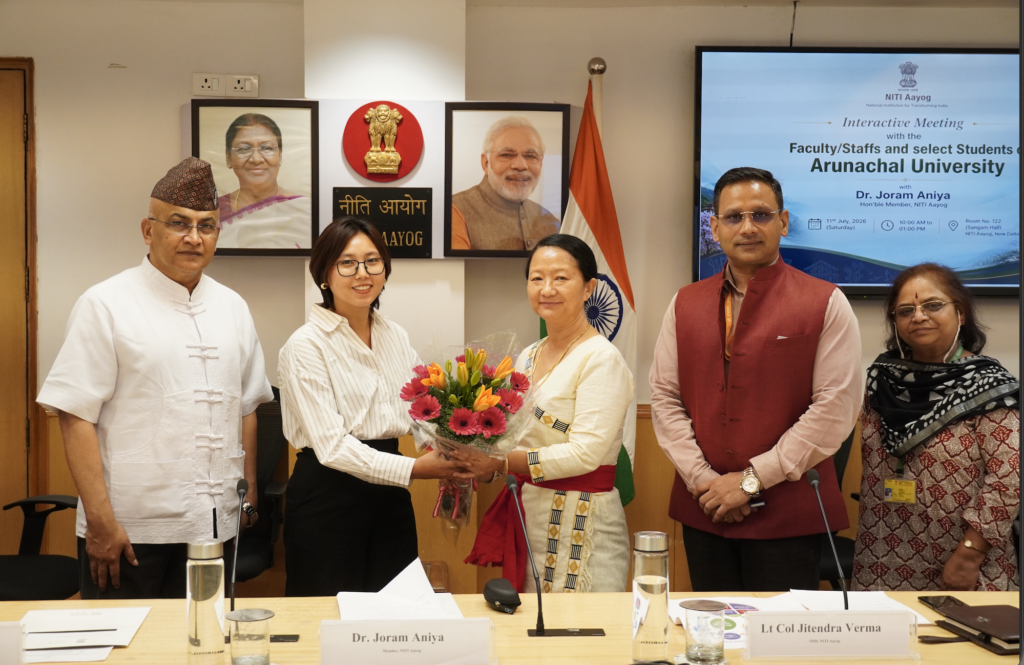
NEW DELHI : A 22-member student delegation from Arunachal Pradesh University (APU), Pasighat, created history on Saturday by becoming the first student group in the country to undertake an official study visit to NITI Aayog, India’s premier public policy think tank, as part of an educational tour to the national capital. The delegation, accompanied by faculty escort Ngurang Mana and staff member Jumkar Nada, participated in an interactive session at the NITI Aayog headquarters. The session was chaired by NITI Aayog Member Dr Joram Aniya, while Maj Gen K Narayanan (AVSM) welcomed the students. NITI Aayog Officer on Special Duty Lt Col Jitendra Verma moderated the session and provided an overview of the institution’s role in policy formulation and governance. In her concluding address, Dr Aniya encouraged the students to become active partners in implementing government welfare schemes after returning to their communities. She said NITI Aayog’s continuous endeavour is to improve the lives of every citizen and stressed that while policymakers formulate welfare programmes, their effective implementation at the grassroots depends on public participation. She noted that the developmental initiatives currently benefiting Arunachal Pradesh were the result of sustained efforts over the years and urged the students to contribute towards ensuring that government schemes reached villages and intended beneficiaries, particularly women and other vulnerable sections of society. The delegation later visited the state-of-the-art Viksit Bharat Strategy Room, where the students explored live digital governance platforms and were briefed on the Lighthouse Model, a framework used to identify, replicate and scale successful governance innovations across states. The visit concluded with an exchange of mementoes between the delegation and NITI Aayog officials, marking what university authorities described as a landmark moment for Arunachal Pradesh University and higher education in the state.    

Latest News, National, Popular News, State News

Health ministry launches monthly webinar to discuss good initiatives by states

NEW DELHI : The Union Health Ministry on Saturday launched a monthly webinar series under the National Health Mission (NHM) so that innovative public health practices across states and Union territories can be replicated where needed. The webinar, launched on the occasion of World Population Day, has been envisaged as a year-round knowledge-sharing platform where states and UTs will present successful innovations, exchange implementation experiences and promote the adoption of scalable healthcare models across the country. Chairing the inaugural session, Additional Secretary in the Union Health Ministry and Mission Director (NHM) Aradhana Patnaik said innovation is central to building responsive and resilient public health systems. She described the webinar series as an institutional mechanism to identify, document and disseminate innovative practices emerging from states and UTs so that solutions developed in one region can be replicated elsewhere. Patnaik urged states and UTs to showcase innovations that go beyond existing programme frameworks and address emerging public health challenges through locally developed solutions. She also appreciated the efforts of state and district teams whose work often remains undocumented despite their contribution to programme implementation. Patnaik said the National Health Systems Resource Centre (NHSRC) will provide technical support for documenting and showcasing such innovations, helping expand the scope and impact of the National Summit on Good and Replicable Innovative Practices. The inaugural webinar focused on “Anaemia, Child and Adolescent Health” and featured presentations by Jharkhand, Chhattisgarh and Madhya Pradesh on interventions that have shown measurable impact in addressing local health challenges, a ministry statement said. Jharkhand showcased the Anaemia Mukt Bharat T4 App and its Integrated Home-Based Newborn Care (HBNC)-Home-Based Young Child Care (HBYC) home visits initiative, it said. Chhattisgarh presented Chirayu Day under the Rashtriya Bal Swasthya Karyakram (RBSK), while Madhya Pradesh shared its initiative on addressing adolescent obesity. According to the statement, the interventions demonstrated how context-specific solutions can be aligned with national health programmes and scaled up to strengthen public health systems. More than 500 officials from the national, state and district levels participated in the inaugural webinar. (Source: PTI)      

Latest News, National, Popular News, State News

Experts discuss ways to integrate Indian languages in legal education

NEW DELHI : Seeking to make the judicial ecosystem more inclusive, top government officials and legal experts on Saturday deliberated on a framework to integrate Indian languages into legal education while maintaining English as a vital link. The proposed model aims to enhance legal comprehension, improve access to justice, and better prepare students for practice in district and subordinate courts. The participants emphasised leveraging emerging technologies, such as AI-enabled translation tools, digital legal repositories, and standardised glossaries to accelerate the integration. All technological tools must undergo rigorous validation by legal and linguistic experts to ensure accuracy. The conference resolved to draft a National Declaration on Indian Languages in Legal Education, finalise a Ten-Year Perspective Action Plan, and establish a National Steering Committee (co-anchored by the Department of Legal Affairs and the Bar Council of India) to monitor implementation. The initiative aligns stakeholders toward a shared commitment to inclusive, accessible, and high-quality legal education, ultimately contributing to equitable justice. Top officials of the Union law ministry, representatives of the Bar Council of India, educationists and domain experts attended the meeting. (Source: PTI)