

ONLINE AGE

(Online version of the Arunachal Age newspaper)

Popular News

Latest News, Popular News, State News

RGU hosts consultative meeting on strengthening mental healthcare

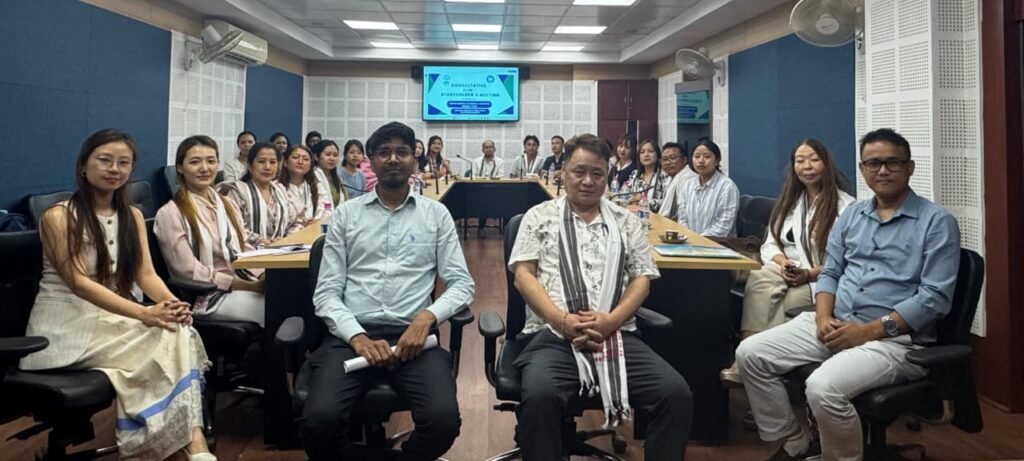
RONO HILLS : In a significant initiative to strengthen mental healthcare systems in Arunachal Pradesh, the Indian Council of Medical Research-Arunachal Indigenous Tribes Study (ICMR-AITS) Project Team of Rajiv Gandhi University (RGU) organised a consultative-cum-stakeholder meeting of mental health professionals and advocates at the university. The meeting brought together around 25 mental health professionals and advocates representing various organisations and service sectors across the state. Participants included counsellors from District Child Protection Units (DCPU), clinical psychologists and counsellors from Tele-MANAS Arunachal Pradesh, professionals from Midpu Mental Hospital, substance abuse counsellors from Kripa Foundation and Opioid Substitution Treatment (OST) Centres, representatives of Tomo Riba Institute of Health and Medical Sciences (TRIHMS), private practitioners, school counsellors and mental health advocates. The deliberations focused on the prevailing mental health scenario in Arunachal Pradesh, covering emerging mental health concerns, contributing factors, help-seeking pathways, barriers to treatment, family and parenting issues, and gaps in mental health infrastructure and service delivery. The consultation was facilitated by ICMR-AITS Project Research Scientist-II Dr Leeyir Ete. During the discussions, participants highlighted the critical role of family environment and parenting practices in shaping mental health outcomes and stressed the need for preventive interventions and stronger emotional support systems within families and communities. Another key recommendation was the development of culturally relevant and context-specific mental health interventions alongside conventional counselling approaches. Participants emphasised the importance of integrating local cultural practices, community resources and indigenous knowledge systems to improve the accessibility and effectiveness of mental healthcare services. Speaking during the meeting, Tele-MANAS Arunachal Pradesh In-charge Dr Hatobin Mai highlighted the programme’s contribution in expanding access to mental healthcare services across the state. He also underscored the role of District Mental Health Programmes (DMHPs) operating in 16 districts in improving outreach and service delivery. ICMR-AITS Project Principal Investigator Dr Tarun Mene described the consultation as an important step towards building a more coordinated and responsive mental healthcare ecosystem in the state. He emphasised that meaningful progress in mental health requires sustained collaboration among professionals, institutions, communities and policymakers. Co-Principal Investigator Dr Amit Kumar highlighted the responsibility of mental health professionals in addressing growing mental health challenges and stressed the need for collective efforts to strengthen support systems and service delivery mechanisms. A major outcome of the meeting was the development of a referral linkage pathway connecting mental health professionals and service providers according to their areas of expertise. The initiative is expected to facilitate timely referrals, improve inter-agency coordination and ensure that individuals receive appropriate care and support. The meeting concluded with a collective commitment from stakeholders to continue collaborative efforts aimed at enhancing mental health awareness, strengthening referral systems and expanding access to quality mental healthcare services across Arunachal Pradesh.    
Latest News, Popular News, State News

East Siang launches month-long campaign against malaria

PASIGHAT : Anti-Malaria Month (AMM) 2026 was formally launched at the Pasighat Municipal Council (PMC) Conference Hall on Monday with a renewed call for collective action to eliminate malaria and strengthen awareness on vector-borne diseases. Organised by the District Vector Borne Disease Control Programme (DVBDCP), East Siang, the month-long campaign is being observed from June 1 to 30 under the theme, “Driven to End Malaria: Now We Can, Now We Must.” Pasighat East MLA Er T Darang attended the inaugural programme as the chief guest, while Pasighat Municipal Council Chief Councillor Tagom Padung was the guest of honour and PMC Deputy Chief Councillor Kamin Lego attended as the special guest. Addressing the gathering, the dignitaries underscored the importance of public participation, environmental sanitation, early diagnosis, timely treatment and community awareness in achieving malaria elimination goals. They urged citizens to actively support preventive measures and maintain cleanliness in their surroundings to curb mosquito breeding. Officials of the DVBDCP delivered a detailed presentation on malaria prevention, control strategies and the current disease scenario in the district. The presentation highlighted the need for sustained vigilance and greater community involvement in combating malaria. Among those present were East Siang District Medical Officer (DMO) Dr YY Pertin, Pasighat Municipal Council (PMC) Municipal Executive Officer J Pertin, programme officers of the Health Department, councillors, officials of the PMC and District Medical Office, healthcare workers and students of Government Upper Primary School, Gumin Nagar. The enthusiastic participation of elected representatives, municipal officials, healthcare personnel and students reflected a shared commitment towards achieving a malaria-free East Siang district. (DIPR)  

Latest News, Popular News, State News

Workshop on Solid Waste Management Rules 2026 held

ANINI : The Department of Panchayati Raj, Dibang Valley, on Tuesday organised a district-level workshop on the implementation of the Solid Waste Management Rules, 2026 at the Circuit House in Anini. Dibang Valley Deputy Commissioner Bekir Nyorak attended the programme as the chief guest. The workshop was attended by Zilla Parishad Members Eta Mihu and Siyo Mihu, Heads of Departments, member secretaries and Panchayati Raj Institution (PRI) members. District Panchayat Development Officer (DPDO) Lijum Ete presented the district’s preparedness and action plan for effective implementation of the Rules. The deliberations focused on strengthening waste management systems in rural areas in compliance with the directions of the Supreme Court, with emphasis on coordinated and sustainable efforts. Addressing the participants, the DPDO directed PRI members to identify and geo-map campsites and other vulnerable locations prone to solid waste accumulation by October 31, 2026. He also urged Panchayats to promote source segregation and responsible waste disposal practices at the community level. Concerned authorities were further instructed to conduct detailed surveys and submit proposals for scientific solid waste management and door-to-door waste collection systems to ensure cleaner and healthier villages across the district. The workshop concluded with a collective commitment from all stakeholders to advance sustainable waste management practices and environmental stewardship throughout Dibang Valley. (DIPR)      

Latest News, Popular News, State News

RGU conducts AIFF D certificate coaching course

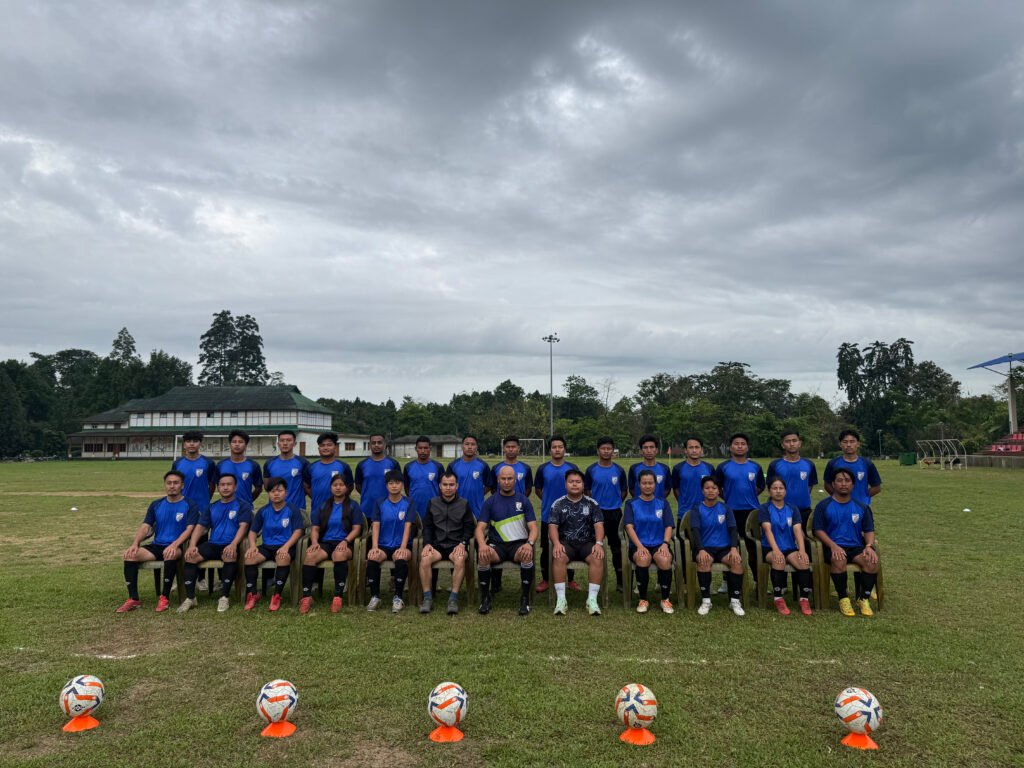
RONO HILLS :  The Department of Physical Education, Rajiv Gandhi University (RGU), successfully conducted the All India Football Federation (AIFF) D Certificate Coaching Course from May 28 to June 2 in collaboration with the Arunachal Pradesh Football Association (APFA). A total of 24 aspiring coaches from Arunachal Pradesh and Assam participated in the six-day programme aimed at enhancing grassroots football coaching skills and practical competencies. The course was conducted by AIFF-certified Coach Educator and RGU Assistant Professor Sangey Tsering, while Dawa Tsering served as Course Coordinator and Tasi Leya provided physiotherapy support. The training combined classroom sessions with extensive field-based instruction, covering coaching methodology, player development, session planning, football teaching principles and grassroots football development. More than 85 young football trainees from various academies across the state took part in practical sessions, enabling participants to gain valuable hands-on coaching experience. A key highlight of the programme was the Grassroots Football Festival, which provided trainee coaches with practical exposure to organising football activities for young players in a fun and development-oriented environment. The course concluded with a theory examination and a valedictory function at the university. Rajiv Gandhi University (RGU) Vice Chancellor Prof Jayadeba Sahoo attended the event as the chief guest, while RGU Registrar Dr NT Rikam was the guest of honour. Also present were Faculty of Physical Education and Sports Sciences Dean Prof Sambhu Prasad, Department of Physical Education Head Dr Tadang Minu, APFA representatives, faculty members and participants. Addressing the gathering, the dignitaries underscored the importance of coach education in strengthening grassroots football and nurturing future sporting talent. They congratulated the participants on successfully completing the course and encouraged them to contribute actively to football development in their respective communities. The programme concluded with a vote of thanks, group photograph and refreshments, marking another significant step towards the promotion of football in Arunachal Pradesh.    

Latest News, Popular News, State News

Nomination process begins for Arunachal’s lone RS seat election

ITANAGAR : The nomination process for polls to the lone Rajya Sabha seat from Arunachal Pradesh commenced on Monday with the issuance of the Election Commission notification, an official said. The last date for filing nominations is June 8, while scrutiny of papers will be taken up on June 9, he said. The last date for withdrawal of candidature is June 11. Sitting MP Nabam Rebia’s term ends on June 23. In the event of a contest, polling will take place on June 18 and counting of votes will be held the same day, the official said. The EC has earlier announced the elections to 27 Rajya Sabha seats, including 24 biennial vacancies in 10 states. A total of 14 candidates have submitted applications, seeking the ruling BJP’s nomination for the lone Rajya Sabha seat from Arunachal Pradesh, state party president Kaling Moyong said. Those in the fray include Environment and Forest Minister Wangki Lowang, incumbent Rajya Sabha MP Nabam Rebia, Pasighat West MLA Ninong Ering, former ministers Taba Tedir and Tage Taki, and former state BJP presidents Tai Tagak and Tangor Tapak. BJP sources, however, said that no candidate has been finalised and the party’s Parliamentary Board is yet to meet to decide on the nominee. With the BJP commanding an overwhelming majority in the 60-member Arunachal Pradesh Legislative Assembly, the party nominee is expected to comfortably win the Rajya Sabha seat. (Source: PTI)      

Latest News, Popular News, State News

Lower Siang reviews monsoon preparedness

LIKABALI  : A preparedness meeting for the ensuing South-West Monsoon 2026 was held at Likabali on Tuesday under the chairmanship of Lower Siang Additional Deputy Commissioner Mokar Riba to review disaster management measures and strengthen emergency response mechanisms across the district. The meeting was attended by administrative officers, Heads of Departments of Central and State government establishments, representatives of the Army, District Police, Indo-Tibetan Border Police (ITBP), Border Roads Task Force/Border Roads Organisation (BRTF/BRO) and other stakeholder agencies. The deliberations focused on formulating strategies to effectively manage and mitigate disaster or disaster-like situations that may arise during the monsoon season. Representatives of various departments and agencies shared updates on preparedness measures undertaken within their respective jurisdictions. Highlighting the vulnerability of the Akajan–Bame road stretch, a vital lifeline connecting several upper districts, ADC Riba advised commuters to avoid night travel and unnecessary journeys during adverse weather conditions. He emphasised that disaster management is a collective responsibility and requires close coordination among all stakeholders for effective response. Lower Siang Superintendent of Police Bomken Basar stressed the need for the District Disaster Control Room to remain operational round the clock throughout the monsoon period. He also underscored the importance of extending preparedness measures beyond the district headquarters and ensuring that all administrative circles remain alert and equipped to respond promptly to emergencies. Earlier, District Disaster Management Officer Tarik Nyitan welcomed the participants and outlined the agenda of the meeting. He urged all departments and agencies to furnish details of preventive and preparedness measures being undertaken to tackle monsoon-related disasters. Following detailed discussions, the participants resolved to strengthen coordination among departments and establish a robust framework for monsoon preparedness and disaster response across the district. (Source: DIPR)

Latest News, Popular News, State News

Sapling distribution drive

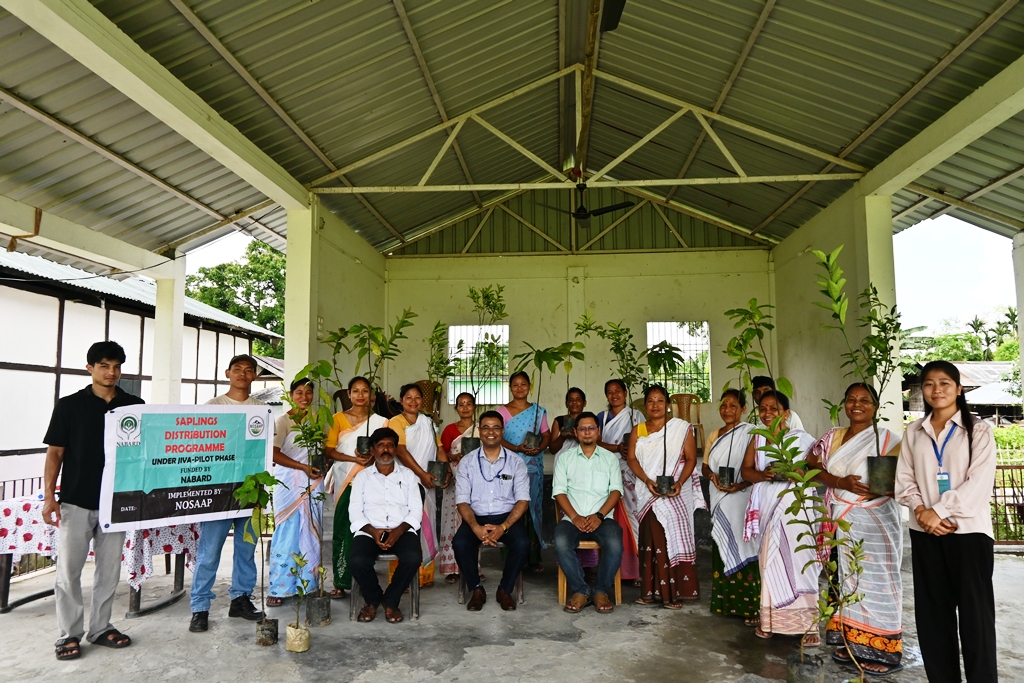
  NAMSAI : A sapling distribution programme was organised at Jona Kochari village in Namsai district on Tuesday under the NABARD-funded JIVA (Natural Farming) Project to promote sustainable and climate-resilient agricultural practices. As part of the initiative, saplings of guava, malta, mousambi, cocoa, lemon and other suitable species were distributed to project farmers for plantation along farm bunds. The programme was conducted under the project component, “Regeneration of Soils and Improving Moisture/Water – Plantation on Farm Bunds”, aimed at improving soil health, conserving moisture, preventing soil erosion, enhancing biodiversity and creating additional sources of nutrition and income for farming households. The JIVA Project, an agroecology-based initiative promoting environmentally sustainable and low-input natural farming practices, is being implemented by Namsai Organic Spices Agricultural Products Producer Company Limited (NOSAAP) as the Project Facilitating Agency. In his opening remarks, NOSAAP Chief Executive Officer Chau Athina Chauhai highlighted the project’s objectives, including restoration of soil health, promotion of natural farming, strengthening nutrition security and improving the livelihoods of tribal farmers. Addressing the gathering, NABARD Assistant General Manager (District Development) Kamal Roy informed farmers about the recently launched nationwide “Khet Bachao Abhiyan”, which will be observed throughout June. He said the campaign focuses on balanced fertiliser use, soil health management, promotion of natural and organic farming, prevention of counterfeit agricultural inputs and saturation of Kisan Credit Cards among eligible farmers. Roy noted that the JIVA Project complements the campaign’s objectives by encouraging the adoption of sustainable and nature-friendly farming practices. He further stated that the project was launched by NABARD following the successful implementation of the TRIBES/Integrated Tribal Development (WADI) Project and reflects the institution’s holistic approach towards sustainable agriculture, natural resource management and livelihood enhancement. The programme was attended by project beneficiaries and Self-Help Group (SHG) members. It concluded with the distribution of saplings and an appeal to farmers to actively participate in natural farming and environmental conservation initiatives. (DIPR)

Latest News, Popular News, State News

AAPSU rejects demand for ILP exemption to Mising community

ITANAGAR : The All Arunachal Pradesh Students’ Union (AAPSU) has firmly rejected the stand taken by the Assam-based Takam Mising Porin Kebang (TMPK) against the application of the Inner Line Permit (ILP) system to the Mising community in Arunachal Pradesh, asserting that the permit regime is a non-negotiable constitutional and legal safeguard applicable to all non-Arunachal Pradesh Scheduled Tribe (non-APST) individuals without exception. Responding to TMPK’s recent statement, AAPSU President Meje Taku said the Union respects the Mising community’s historical association with the region and acknowledges its longstanding cultural and social ties with several tribes of Arunachal Pradesh. However, he maintained that such ties cannot serve as grounds for exemption from a legal framework designed to protect the indigenous peoples of the state. “The Inner Line Permit system is not a matter of sentiment or community preference. It is a constitutional and statutory protection guaranteed to the indigenous peoples of Arunachal Pradesh. No community, regardless of its historical ties or ethnolinguistic affinities, can claim exemption from a rule that applies equally to all non-APST persons entering and residing in this state. AAPSU’s position is unambiguous: ILP is mandatory for all non-APST, and this is final,” Taku said. AAPSU emphasized that the ILP system is rooted in a robust constitutional and statutory framework. The Bengal Eastern Frontier Regulation, 1873, under which the permit system derives its authority, was retained to safeguard the indigenous character of the state. The Union also pointed to Article 371(H) of the Constitution, which grants special responsibilities to the Governor of Arunachal Pradesh in matters relating to law and order, reinforcing the state’s unique constitutional protections. Addressing TMPK’s reference to the Mising community’s ethnolinguistic proximity to tribes such as Nyishi, Adi, Galo, Apatani and Tagin, and its historical presence in districts including East Siang, Lower Siang, Namsai and Papum Pare, Taku drew a distinction between historical association and legal status. “We do not deny the historical and cultural bonds between the Mising people and the tribes of Arunachal Pradesh. These bonds are real and deserve acknowledgement. But historical affinity is not a legal category. The ILP framework is clear: if you are not an APST, you require an Inner Line Permit to enter and reside in this state. This is the law,” he said. The Union cautioned that granting ILP exemptions on the basis of historical or ethnolinguistic links would create a precedent capable of undermining the very purpose of the permit system, noting that many communities across the Northeast share cultural and ethnic ties with tribes of Arunachal Pradesh. “If historical ties become the criterion for ILP exemption, then the entire purpose of the permit system collapses. We cannot allow a precedent that unravels a protection that has stood for over 150 years and that every tribe of this state depends upon,” Taku said. AAPSU also appealed to individuals and organisations in both Arunachal Pradesh and Assam to exercise restraint and responsibility while commenting on the issue, warning that insensitive or inflammatory statements could strain the longstanding harmony shared by different communities. While affirming that its position carries no animosity towards the Mising community, the Union described the Misings as a proud indigenous people with a rich cultural heritage and expressed hope that all stakeholders would engage constructively within the existing legal framework. AAPSU further urged the Arunachal Pradesh government to ensure robust, impartial and uniform enforcement of the ILP system across all districts of the state.      

Latest News, Popular News, State News

BJP lodges FIR against Prag News over report on CM Khandu

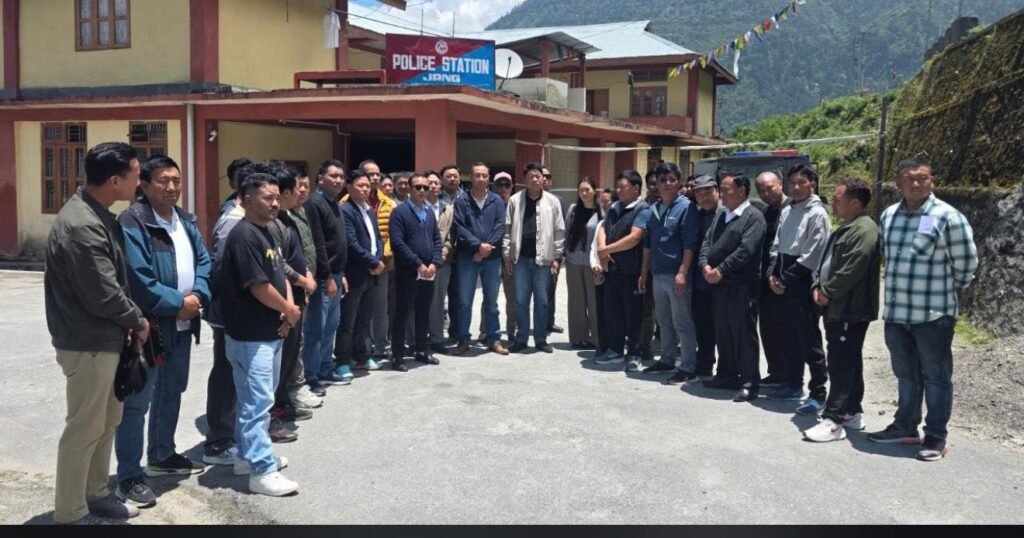
TAWANG : The Bharatiya Janata Party (BJP) Mukto Mandal, along with elected representatives from the Mukto constituency, has lodged a First Information Report (FIR) at Jang Police Station against regional news channel Prag News, alleging that it aired a misleading and defamatory report concerning Chief Minister Pema Khandu. The complaint was submitted by BJP leaders led by Zilla Parishad Chairperson Leki Gombu and Zilla Parishad Member Pema Tsering in the presence of local representatives, including members of Panchayati Raj Institutions (PRIs), who objected to what they described as an attempt to tarnish the image and reputation of the Chief Minister through unverified information. According to the complainants, the report contained allegations that were not supported by facts and had the potential to mislead the public. They maintained that the dissemination of such content could create confusion and undermine public confidence in responsible journalism. Condemning what they termed as baseless and misleading reporting, the BJP leaders asserted that media organisations must adhere to the principles of accuracy, fairness and factual reporting, particularly while reporting on matters concerning public representatives and governance. The delegation urged the police and other concerned authorities to conduct a fair and impartial investigation into the matter and take appropriate legal action against those found responsible for allegedly spreading misinformation. Party workers also reiterated their support for Arunachal Pradesh Chief Minister Pema Khandu, stating that attempts to malign his reputation through unsubstantiated reports would not affect the government’s developmental initiatives across the state. Meanwhile, BJP units in Lumla and Tawang have reportedly lodged separate FIRs at their respective police stations over the same issue, reflecting concern among party members across the district. (Source: Mon Tawang Vigilance)      

Latest News, Popular News, State News

APLS pays tribute to Lummer Dai on 86th birth anniversary

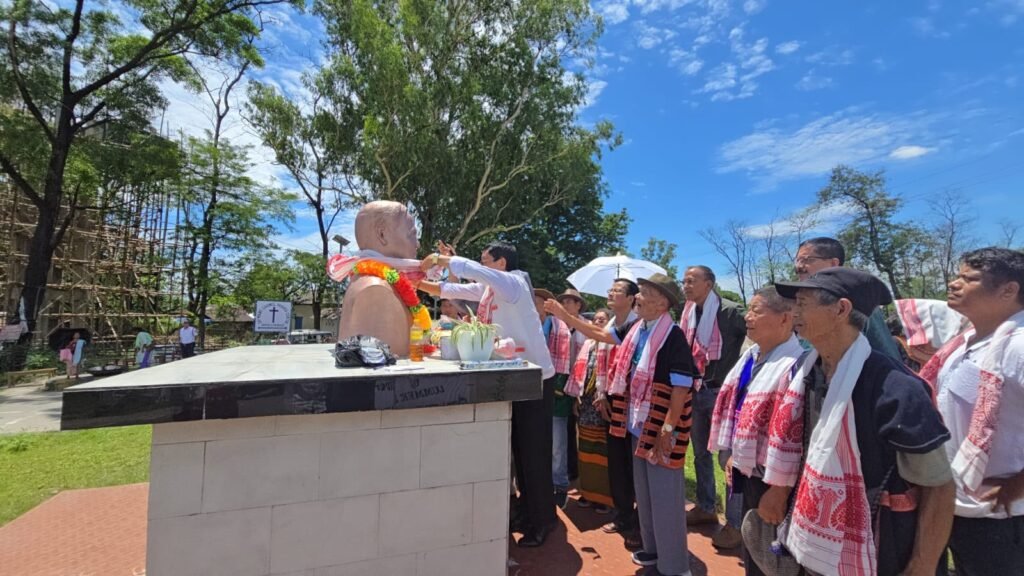
ITANAGAR : The Arunachal Pradesh Literary Society (APLS), led by its president Yeshe Dorjee Thongchi, paid heartfelt tributes to eminent litterateur, veteran journalist and former Editor of Echo of Arunachal, Late Lummer Dai, on the occasion of his 86th birth anniversary on Monday. Members of the APLS, including Tokong Pertin, Nani Kojin and Inumoni Das Thongchi, paid floral tributes at the grave ‘Punya Sthal’ and bust of the late literary icon located within the premises of his residence at Prem Nagar in Naharlagun. The occasion served as a solemn reminder of his immense contributions to literature, journalism and cultural documentation in Arunachal Pradesh. Remembering his remarkable legacy, the society reflected on his enduring influence on generations of writers, readers and literary enthusiasts. The members also reaffirmed their commitment to preserving and promoting the literary heritage left behind by one of the state’s most celebrated literary figures. Following the tribute ceremony, the APLS team met Nanni Dai, wife of the late writer and current Editor of Echo of Arunachal (EoA). The members spent time with her, enquired about her well-being, and shared fond memories of the celebrated author whose works continue to inspire literary circles across the region. Born on June 1, 1940, at Siluk village in East Siang district, Lummer Dai was an Adi by birth and emerged as one of the most prominent voices in Assamese literature. From his student days, he began contributing articles, essays and stories to magazines and newspapers in Assam, highlighting the rich folk traditions, cultures and lifestyles of the people of Arunachal Pradesh. As Editor of EoA, the state’s first newspaper, he penned insightful editorials and articles that helped shape public discourse during the formative years of Arunachal Pradesh. His writings not only documented the socio-cultural realities of the region but also introduced the then little-known frontier state to a wider readership. Widely regarded as the doyen of Arunachal Pradesh’s journalism and literary movement, Late Dai authored several acclaimed works that earned him recognition across the Northeast. Among his notable literary contributions are Udayachalar Sadhu (1959), published by the Assam Sahitya Sabha, Paharor Shile Shile (1960–61), Prithivir Hanhi (1962–63), published by the Assam Publication Board, Mon Aru Mon (1965), Koinar Mulya (1975–76), and Upar Mahal, his last novel published in 2003. Through his creative writings in Assamese, Dai played a significant role in fostering cultural understanding, harmony and brotherhood between the people of Assam and Arunachal Pradesh. His literary works vividly portrayed the traditions, customs and aspirations of the people of the region, helping bring Arunachal Pradesh into the broader literary and cultural consciousness of the country. Though deeply rooted in his native state, Lummer Dai enjoyed immense popularity in Assam, where his contributions to Assamese literature earned him widespread admiration and respect. His life and works continue to inspire generations and stand as a testament to the power of literature in building bridges between communities and preserving cultural heritage. Meanwhile, the 86th birth anniversary of noted writer was also commemorated with reverence at Pasighat. The programme was organised by the Adi Agom Kébang (AAK) in collaboration with literary enthusiasts and admirers of the celebrated literary figure. Members of the AAK led by President Bodong Yirang and Adviser Kaling Borang, along with representatives of the Arunachal Pradesh Literary Society (APLS) Pasighat Unit and the Assam Sahitya Sabha led by Green Tamuli, paid floral tributes to the late litterateur. As a mark of respect, participants garlanded an effigy of Late Lummer Dai, while patriotic and cultural songs in Adi and Assamese were played, creating a nostalgic atmosphere during the commemorative programme. Speakers recalled Dai’s immense contribution to literature and journalism, describing him as one of Arunachal Pradesh’s most distinguished literary personalities. Through his writings in Assamese, they noted, he vividly portrayed the rich cultural heritage, traditions and social realities of the people of the Northeast, leaving behind a literary legacy that continues to inspire generations. More than three dozen people attended the programme and offered floral tributes. Among them were retired IAS officer Tagom Darang, retired District Medical Officer Dr Kaling Dai, noted writer Nini Pertin, literary enthusiasts, intellectuals and members of civil society. The gathering also reaffirmed the need to preserve and promote the literary heritage championed by Late Lummer Dai and remembered his enduring contributions to literature and journalism. (Source: UNI/DIPR)