ONLINE AGE

(Online version of the Arunachal Age newspaper)

State News

Latest News, Popular News, State News

Fire safety demonstration conducted

LIKABALI : The Fire and Emergency Services Department, Likabali, conducted a Fire Safety Awareness and Demonstration Programme at the Deputy Commissioner’s office complex on Monday to educate government officials and staff on fire prevention and emergency response measures. The programme was led by Station Fire Officer Duge Ete and his team in the presence of Likabali Additional Deputy Commissioner Mokar Riba, Assistant Commissioner Jannes Mary Tayeng, District Disaster Management Officer Tarik Nyitan, and officers and officials from various departments. During the programme, the Fire and Emergency Services personnel demonstrated essential fire safety practices, including the proper use of fire extinguishers and techniques for handling fire-related emergencies. Participants also took part in a live demonstration, gaining practical experience in responding effectively to fire incidents. Addressing the gathering, ADC Mokar Riba appreciated the department for organising the programme and emphasised the importance of such awareness initiatives in ensuring safety at workplaces and in everyday life. He urged officials to apply the knowledge gained during the training to enhance preparedness and prevent fire-related accidents. The programme concluded with an interactive session, highlighting the importance of preparedness, vigilance and adherence to fire safety protocols. (DIPR)

Latest News, Popular News, State News

Sub-health centres inaugurated

ROING : Three Sub-Health Centres at Kebali, Balek and Horupahar were inaugurated on Monday by Advisor to Home and Education and Roing MLA Mutchu Mithi in the presence of Lower Dibang Valley Deputy Commissioner Fwwrman Brahma, District Medical Officer Dr Worar Taku, officials of the Health Department and Public Health Engineering and Water Supply Department, Panchayati Raj Institution members and local residents. Speaking on the occasion, Mithi appreciated the Health Department for operationalising the sub-health centres, which were notified by the government on July 31, 2014. He directed the department to ensure the availability of essential medicines and other basic healthcare facilities at the centres. The MLA also urged villagers to cooperate with the Health Department to facilitate effective delivery of healthcare services at their doorsteps. He assured that he would pursue with the government for sanction of funds for infrastructure development of the newly inaugurated centres. Addressing the gathering, DC Fwwrman Brahma appealed to parents to ensure that girls aged between 9 and 14 years receive the Human Papillomavirus (HPV) vaccine to help prevent cervical cancer. (DIPR)

Latest News, National, Popular News, State News

Anna Hazare to launch fast if amendments to Right to Information Rules not revoked

PUNE : Activist Anna Hazare has threatened to launch an indefinite hunger strike from July 5 at Ralegan Siddhi village in Ahilyanagar district if the Maharashtra government does not immediately withdraw the “illegal” amendments made to the Right to Information Rules. In a letter to Chief Minister Devendra Fadnavis, Hazare said the Maharashtra Right to Information Rules, 2026, would “blunt the edge” of the RTI Act and keep citizens away from information. He claimed the amendments made on June 12 violate the spirit of the RTI Act, 2005, and undermine transparency. Hazare objected to the hike in fees, saying no rational explanation or financial analysis was provided. “RTI is not a revenue-generating law. If fees are raised after 20 years, penalties on officers who deny information should also be increased,” he wrote. He opposed making ID proof mandatory, arguing that Section 6(2) of the RTI Act does not require applicants to disclose personal details or reasons for seeking information. Such a condition endangers whistleblowers and activists, he added. The anti-corruption activist also criticised the “one subject, one application” rule, calling it unnecessary and burdensome, and said the provision to summarily close repeat applications would block access to complete or updated information. Other objections included asking applicants for the purpose of seeking information, dismissal of appeals if the applicant remains absent, automatic closure of cases on an applicant’s death, and barring legal assistance during hearings before the Information Commission. Hazare said the rules shift the burden onto citizens instead of fixing systemic failures. He noted that Section 4 of the RTI Act, which mandates proactive disclosure by public authorities, remains poorly implemented, forcing citizens to file applications. “Making the process more technical, costly and administration-centric will reduce transparency,” he said, adding that the amendments were brought without public consultation. Hazare, who led several agitations for RTI in Maharashtra since 1998 and undertook fasts in Mumbai, Ralegan Siddhi and Alandi, said he would not back down. “If the June 12 amendments are not revoked immediately, I will begin my fast on July 5 at Yadav Baba Temple, Ralegan Siddhi, even if it costs my life,” the letter stated. He urged the state to withdraw the rules and strengthen proactive disclosure instead of imposing new restrictions on applicants. (Source: PTI)            

Latest News, Popular News, State News

Arunachal celebrates Yoga Day; Governor, CM highlight wellness benefits

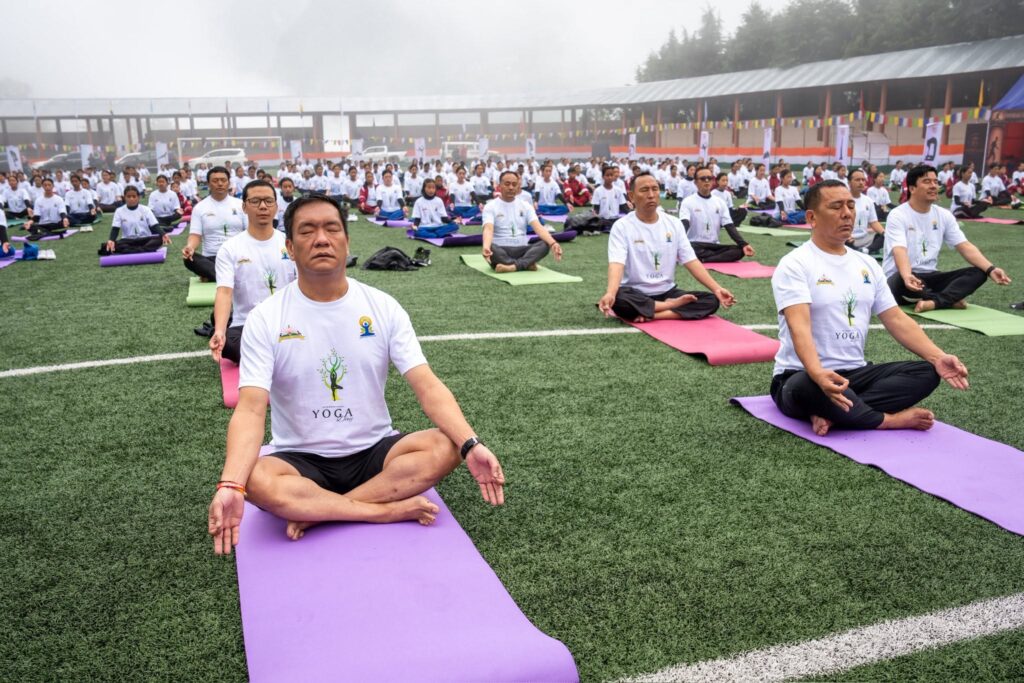
ITANAGAR : Arunachal Pradesh joined the rest of the country in celebrating the International Day of Yoga on Sunday, with Governor Lt Gen KT Parnaik (Retd), Chief Minister Pema Khandu and other dignitaries leading programmes across the state and highlighting yoga’s role in promoting physical, mental and emotional well-being. The Governor, accompanied by State Health Minister Biyuram Wahge, participated in the state-level programme at Lok Bhavan. The event was organised by Indira Gandhi Technological and Medical Sciences University (IGTAMSU), Ziro, in collaboration with the Department of Youth Affairs. Addressing the gathering, the Governor described the International Day of Yoga as a global recognition of India’s timeless civilisational wisdom. He said yoga, once rooted in ancient Indian traditions, has evolved into a universal pathway to holistic health and well-being. Describing yoga as one of India’s greatest gifts to humanity, he noted that in an era marked by stress, anxiety, lifestyle disorders and sedentary habits, yoga offers a simple, cost-effective and sustainable approach to preventive healthcare. Referring to this year’s theme, “Yoga for Healthy Ageing”, he said yoga helps people of all age groups maintain physical fitness, mental alertness, emotional well-being and independence throughout life. The Governor also highlighted Prime Minister Narendra Modi’s role in securing global recognition for yoga through the adoption of the International Day of Yoga by the United Nations in 2014 with the support of 177 countries. He encouraged people, especially youth and senior citizens, to incorporate yoga into their daily lives. As part of the programme, the Governor distributed copies of his booklet, Yoga for Common Health Challenges, which provides practical yoga-based solutions for managing common health concerns and lifestyle-related ailments. He expressed hope that the publication would inspire individuals and families to adopt healthier and more balanced lifestyles. IGTAMSU Vice Chancellor Prof K Satya Lakshmi also spoke on the importance of yoga and the university’s initiatives to promote wellness. Students of the university presented a synchronised yoga demonstration based on the Common Yoga Protocol prescribed by the Ministry of AYUSH. Personnel from the Indo-Tibetan Border Police, Arunachal Pradesh Police, NCC, Scouts and Guides, and officials from Lok Bhavan and the Health Department participated in the programme. Meanwhile, Chief Minister Pema Khandu led the state’s celebrations at Jang in Tawang district, where he joined school children, personnel of the Indian Army, Central Armed Police Forces, Border Roads Organisation, public representatives, officials and local residents in a mass yoga session. “Incredible energy at Jang as we celebrated International Day of Yoga with school children, the Indian Army, CAPF personnel, BRO, public representatives, officials and citizens. Yoga unites us in strength, discipline and wellness,” Khandu said in a social media post. The Chief Minister described yoga as India’s timeless gift to humanity, offering a path to physical well-being, mental clarity and inner peace. He said yoga has grown into a global movement under the leadership of Prime Minister Narendra Modi and urged people to make it a part of their daily routine for a healthier and more harmonious society. Deputy Chief Minister Chowna Mein also participated in a yoga session in Itanagar along with Education Minister Pasang Dorjee Sona and others. In a social media post, Mein said yoga nurtures the body, calms the mind and awakens the soul while promoting balance, resilience and inner peace. He called upon people to embrace the transformative power of yoga and adopt practices that support vitality, well-being and graceful ageing. The Arunachal Pradesh Legislative Assembly also observed the day with a special yoga session at the Assembly Complex. MLA Hayeng Mangfi, Assembly Secretary Tadar Meena, Joint Secretary K. Jugli, officers and staff of the Assembly participated in the programme.   Pasighat: Arunachal Pradesh University (APU), Pasighat, observed the International Day of Yoga with a yoga session on its campus. Registrar Narmi Darang, faculty members, employees, staff and students participated in the programme held under this year’s theme, “Yoga for Healthy Ageing.” The session featured yoga asanas, breathing exercises and meditation under the guidance of instructors. Speaking on the occasion, APU Assistant Registrar (Academics) Likha Rinchin highlighted the importance of yoga in maintaining physical and mental well-being and encouraged the university community to make it a part of their daily routine.   Tawang: The District Administration, Tawang, in collaboration with the 190 Mountain Brigade, celebrated the 12th International Day of Yoga at the Gyalwa Tsangyang Gyatso High Altitude Sports Stadium. Among those present were Arunachal Pradesh Industries, Textile & Handicrafts, Labour & Employment and IPR Minister Nyato Dukam, Tezu MLA Dr Mohesh Chai, Tawang MLA Namgey Tsering, Tawang Deputy Commissioner Namgyal Angmo, Brigadier Bhupal Singh, Zilla Parishad members, Heads of Departments, students and members of the public. Addressing the gathering, Dukam described yoga as a way of life that harmonises physical health, mental well-being and spiritual energy. He urged people to adopt yoga as a daily practice for a healthier and more balanced life. Deputy Commissioner Angmo highlighted yoga’s role in promoting healthy living, reducing stress and fostering social harmony. The programme witnessed enthusiastic participation from government officials, security personnel, students and citizens.   Yingkiong: The District Ayush Society, Upper Siang, celebrated the International Day of Yoga at the Multipurpose Hall, Yingkiong, under the theme “Yoga for Healthy Ageing.” Upper Siang MLA Alo Libang, government officials, public leaders, teachers, students and members of the public participated in the programme. Addressing the gathering, Libang emphasised the importance of incorporating yoga into daily life to promote physical, mental and spiritual well-being. He said this year’s theme underscored the significance of healthy ageing and maintaining an active lifestyle. District Reproductive and Child Health Officer Dr Andeng Sitek highlighted the significance of the International Day of Yoga, while the yoga session was conducted by Netaji Subhas Chandra Bose Awasiya Vidyalaya Headmistress Obul Boli, who guided participants through various yoga asanas and meditation exercises.   Aalo: The 12th International Day of Yoga was observed at Gumin Kinn, Aalo, with enthusiastic participation from government officials, students and members of the public. The programme was organised by the District


Latest News, Popular News, State News

Wangsu calls for wider adoption of natural farming in TCL region

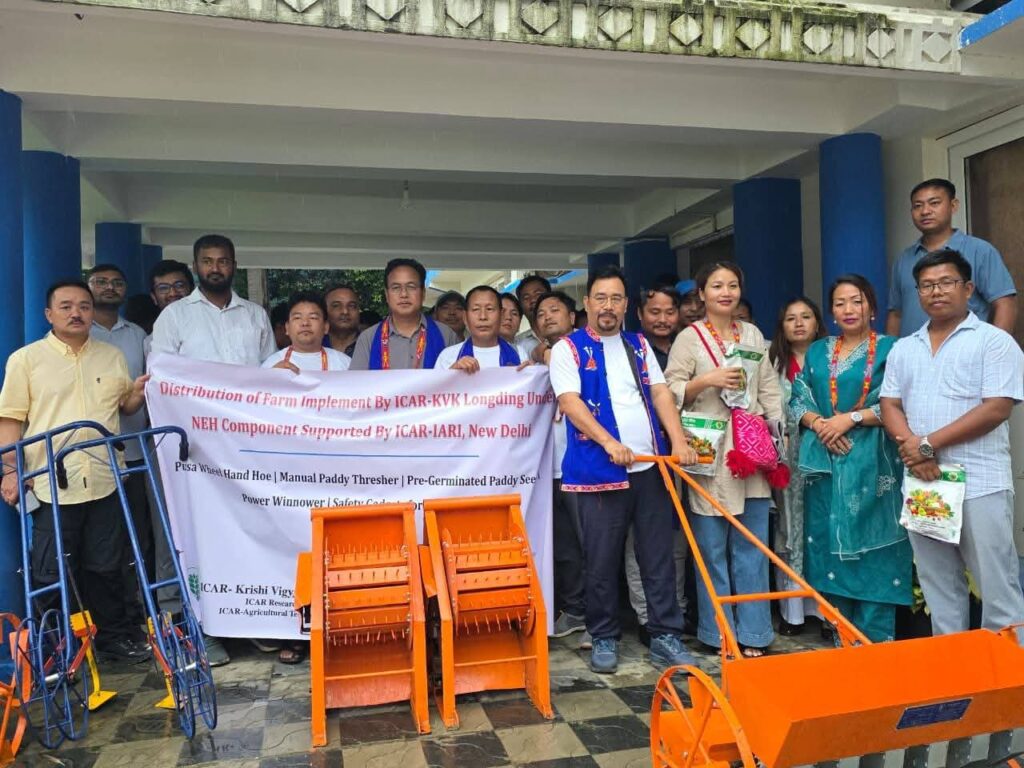
KANUBARI :  Agriculture and Allied Departments Minister Gabriel D Wangsu on Sunday called for the wider adoption of natural farming practices across the Tirap, Changlang and Longding (TCL) region, emphasising their importance for sustainable agriculture, environmental conservation and improved farmer livelihoods. Addressing a Natural Farming Training Programme organised by Krishi Vigyan Kendra (KVK), Longding at the ADC Office Auditorium in Kanubari, Wangsu urged farmers to embrace eco-friendly and climate-resilient farming methods to enhance productivity while preserving natural resources for future generations. More than 200 farmers from the TCL region participated in the programme, which aimed to promote sustainable agricultural practices and provide practical knowledge on natural farming techniques. Delivering the keynote address, KVK Longding Senior Scientist-cum-Head Dr Utpal Kumar Bhattacharya highlighted natural farming as a sustainable approach that relies on locally available resources and biological inputs while reducing dependence on chemical fertilisers and pesticides. He said the practice improves soil health, lowers cultivation costs, enhances environmental sustainability and results in healthier agricultural produce. The Minister and other speakers noted that the TCL region’s abundant natural resources and favourable agro-climatic conditions make it ideally suited for the adoption of natural farming. They also underscored the need for greater awareness and capacity building among farmers to ensure long-term agricultural sustainability. Among those present were Arunachal Pradesh Food Commission Chairman and BJP Vice-President Tarh Tarak, BJP Kisan Morcha President Gumsen Lollen, Zilla Parishad Members and other dignitaries. On the occasion, the Department of Agriculture distributed farm machinery, quality vegetable seeds and certificates of appreciation to farmers from Kanubari and adjoining areas. The Minister commended KVK Longding for its continued contribution to agricultural development and farmer empowerment, and called for stronger collaboration among farmers, extension agencies and government departments to accelerate the adoption of natural farming across the TCL region.      

Latest News, National, Popular News, State News

NEET-UG retest held at over 5,400 centres in India, abroad amid tight security

NEW DELHI : The NEET-UG re-exam was held at centres across the country and overseas on Sunday amid tight security arrangements for the smooth conduct of the examination. The examination was conducted across 5,440 centres in 551 cities in India and 14 centres abroad by the NTA after the cancellation of the earlier May 3 exam amid an ongoing probe into the question paper leak. Over 22 lakh students were to appear in the retest. Union Education Minister Dharmendra Pradhan reviewed arrangements for the smooth conduct of the NEET-UG re-examination at the NTA headquarters in Delhi’s Okhla. “NTA apprises the Minister of the logistical and technical arrangements put in place for the efficient and transparent conduct of the examination,” the Ministry of Education said. The examination was scheduled from 2.00 PM to 5.15 PM. Candidates with disabilities (PwD/PwBD) eligible for compensatory time will be allowed to write the examination till 6.20 pm. In Kolkata, an injured candidate was allowed a separate room at the examination centre, along with medical support and a standby ambulance. The candidate, Shrishti Dubey, suffered severe injuries in a road accident on June 14 and sought assistance from the authorities to make special arrangements. Pradhan personally spoke to the aspirant’s parents, who conveyed their gratitude for the assistance provided by the NTA and the authorities. However, some aspirants and their families flagged commuting difficulties in reaching the examination centres. In Bhopal, two students were denied entry to the centre after arriving late. Amir Qadri, uncle of one of the aspirants, said, “I have come here with my nephew for his examination. While on our way to the examination centre, we met with an accident and got a bit late, since my nephew received first aid. Now that we have reached here, we are being denied entry. The authorities are saying the exam has already begun and that it won’t be possible to permit us entry.” Heavy rains lashed Kolkata and its adjoining areas, triggering severe waterlogging in several parts of the city and disrupting traffic movement. The showers brought respite from humid conditions but caused difficulties for commuters, including NEET aspirants travelling to examination centres for the re-test. In Mumbai, the Brihanmumbai Electric Supply and Transport (BEST) Undertaking arranged special bus services for students appearing in the re-examination amid the ongoing strike by its employees. According to the Brihanmumbai Municipal Corporation, nearly 180 bus trips were planned during the day, with 60 buses deployed on 24 routes to facilitate travel to 63 examination centres across the city. In Delhi, Prime Minister Narendra Modi delayed his travel to his residence after arriving at IGI airport from Kolkata, to ensure NEET re-exam candidates did not face inconvenience due to traffic restrictions. Sources said after arriving at the IGI airport around 1 PM, Modi chose to wait at the airport instead of immediately leaving for his residence at Lok Kalyan Marg. Meanwhile, nearly 79,400 aspirants appeared for the re-examination at 211 centres across Gujarat, which was held amid extensive security arrangements. State police deployed drones and additional personnel at the centres to ensure the smooth and fair conduct of the examination. In some states, including the national capital, free drinking water and refreshments were also arranged for parents and guardians waiting outside examination centres, officials said. A candidate, Kishan, before entering the examination centre in Delhi to take the retest, said security arrangements were tighter this time than during the earlier test. “Security is tighter this time than last time. A lot has happened over the past month. I have revised as much as I could, and now, I just want to write the exam. I only hope the exam is conducted fairly,” he told PTI Videos. “Everyone who took that exam was under immense pressure, especially the students who were on the verge of qualifying,” he added. Another NEET-UG candidate, Sonia, also noted that security was tighter this time. “If such security arrangements had been in place the last time, the chances of a paper leak would have been lower, and students would not have had to face so much trouble,” she said before taking the retest. According to a media report, a NEET aspirant wearing a burqa alleged that she was denied entry to an examination centre in Rajasthan’s Ajmer. The candidate, Kulsum Bano, claimed she had appeared for the earlier exam wearing the same attire. “I have come from Beawar to take the NEET exam. When I took the exam on May 3, I was in the same attire then as I am now, wearing a burqa and a dupatta. Initially, they said I would have to remove the dupatta to enter; then they insisted I had to remove the burqa as well,” she said before the exam started. “If the NTA has permitted us, these people cannot stop us… If I am to take the exam and they don’t allow me in this attire, then I simply won’t take it,” she said. “The exam doesn’t matter to me; what matters is my ‘burqa’ and my identity,” she asserted. The NTA later clarified that the aspirant was allowed entry to the centre. The examination was conducted in English and 12 Indian languages. According to NTA, more than 95,000 examination rooms were equipped with CCTV surveillance. A total of 1,38,560 CCTV cameras were installed, with feeds monitored virtually at the national, state and ministry levels, officials said. To secure the examination against electronic malpractice, 51,311 jammers have been deployed. Ahead of the retest, Union Education Minister Dharmendra Pradhan had urged candidates to appear for it fearlessly and free of anxiety. (Source: PTI)    

Latest News, Popular News, State News

Tasing inaugurates SHG livelihood market shed in Pasighat

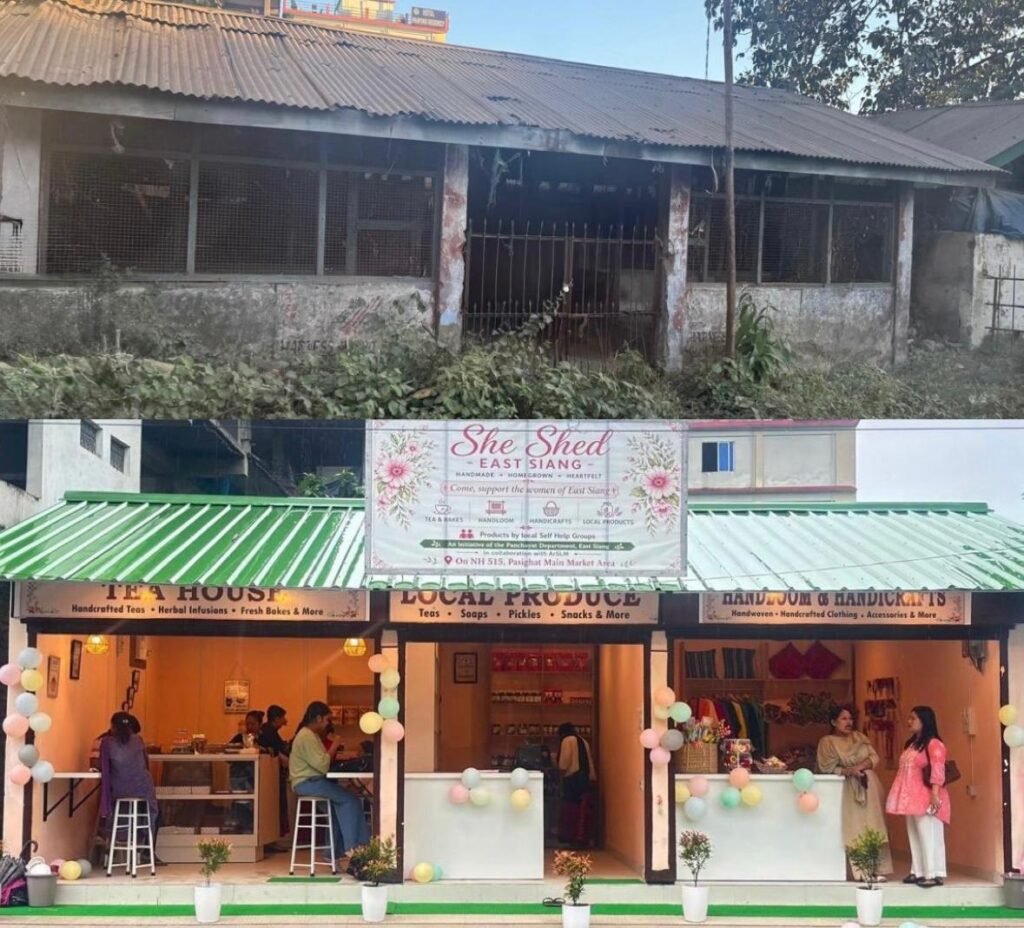
PASIGHAT : A dedicated Livelihood Market Shed for Self-Help Groups (SHGs) was inaugurated in Pasighat on Saturday by Arunachal Pradesh Rural Development, Panchayati Raj, Cooperation and Transport Minister Ojing Tasing. Developed by the Panchayat Department, East Siang, the facility has been created by renovating and repurposing a former Anchal Samiti meat market shed located in the heart of Pasighat town. The structure had remained unused for years, fallen into disrepair and was under encroachment. Recognising the need for a permanent marketing platform for SHGs, the department initiated efforts to reclaim and revitalise the premises. Although SHGs across the district produce a diverse range of products, including handloom and handicrafts, bakery items, processed foods and other local produce, limited access to dedicated sales outlets often constrained their market reach. Following the removal of encroachments, the building was renovated and transformed into a ready-to-use marketplace exclusively for SHGs. Equipped with furnishings and display infrastructure, the facility will enable groups to begin operations with minimal investment. The units have been allotted at nominal rental rates to encourage wider participation. The initiative has been implemented in convergence with the Arunachal State Rural Livelihoods Mission (ArSRLM), which will facilitate the formation of a collective of SHGs from across East Siang for the management and operation of the market shed. The new facility is expected to provide SHGs with a permanent platform to showcase and market their products in a prime commercial location, improving market access, enhancing product visibility and generating sustainable livelihood opportunities for members across the district. The inauguration programme was attended by East Siang Zilla Parishad Chairperson Ruth Tabing Boko, East Siang Additional Deputy Commissioner-cum-District Panchayat Development Officer Pebika Lego, PRI members, SHG representatives and other dignitaries. (DIPR)      

Latest News, National, Popular News, State News

Modi highlights yoga, maritime prowess as drivers of national strength

KOLKATA : Prime Minister Narendra Modi on Sunday used two major public engagements in Kolkata to outline a broader vision for India’s future — one rooted in inner balance and collective well-being through yoga, and the other in national self-reliance and maritime strength. Speaking at the 12th International Day of Yoga celebrations on the city’s iconic Red Road and later at the commissioning of three indigenously built naval vessels in the Syama Prasad Mookerjee Port, Modi highlighted how personal discipline and national capability together shape a stronger, more confident India. While one message centred on harmony, health and peace, the other underscored security, technological advancement and strategic influence. Addressing thousands gathered on Red Road for the International Day of Yoga, Modi advocated the utility of yoga not only in boosting personal health but also as a catalyst for world peace. Against the backdrop of multiple global conflicts and geopolitical tensions, he argued that the ancient Indian practice holds relevance far beyond physical wellness. Quoting the Bhagavad Gita, Modi stressed that a balanced lifestyle involving work, nutrition and sleep is key to overcoming suffering. “That balance is yoga’s basic crucible, just as it is the crucible of our lives,” he said. Observing that modern lifestyles often disrupt this balance, he added, “Yoga teaches us the art of living our lives in a balanced manner; it teaches us dos and don’ts. When we learn to operate our bodies in the right manner, health becomes a habit.” The PM said yoga helps people discover physical fitness through mental well-being and self-awareness. Connecting individual transformation with global harmony, he remarked, “The consciousness of identifying the dos and don’ts not only brings inner peace, it opens up the path to world peace. That’s why yoga is not only required for our personal lifestyles, it is essential for a better future of this world.” His remarks reflected India’s longstanding emphasis on dialogue, coexistence and peaceful resolution of disputes at a time when several regions continue to grapple with wars and diplomatic strains. Urging people to make yoga a lifelong practice, Modi said, “Let us pledge not to restrict yoga to only one particular day or to an event; rather, make it a part of our lives and that of our families and our future generations.” He described yoga as a global movement that transcends national and cultural boundaries. “June 21, which marks the longest day on earth, has now become the largest community celebration day because of yoga. Yoga brings people together. I congratulate the people of the world on this occasion,” he said. Referring to this year’s theme, ‘Yoga for healthy ageing’, Modi emphasised that yoga benefits people of all age groups. “Yoga is not just physical exercise. It is not restricted to any age group. It is an expression of the human spirit,” he said. Highlighting the role of yoga in preserving vitality through the years, Modi said, “When we speak of yoga for healthy ageing, we can work to ensure that age does not reduce human potential.” Invoking the ideas of Rabindranath Tagore and Sri Aurobindo, Modi said human fulfilment lies in connection with society, the world and oneself. “The fundamental idea of yoga is that connectivity. Maharishi Arabinda said yoga is in our life, whether we realise it or not. When yoga becomes part of our living, it becomes the cradle of human unity,” he said. Dressed in a white T-shirt and white pants, Modi joined thousands of participants in a mass yoga demonstration on Red Road. He performed yoga alongside citizens of all ages, walked among participants during the 40-minute session, observed the protocols closely and even helped some participants correct their postures. Governor R N Ravi, Chief Minister Suvendu Adhikari and several ministers of the West Bengal government were among the thousands who also took part in the event. Later, at the Syama Prasad Mookerjee Port, Modi shifted focus from human potential to national capability, asserting that strong maritime power is essential for economic and strategic influence. “Strong maritime capabilities are the deciding factor for a country’s economic and strategic influence,” he said, adding that India understands this reality and is preparing accordingly. Modi commissioned three indigenously built naval vessels — the stealth frigate Dunagiri, survey vessel Sanshodhak and anti-submarine warfare shallow water craft Agray. Designed by the Indian Navy’s Warship Design Bureau and built by Kolkata-based Garden Reach Shipbuilders and Engineers Ltd, the vessels contain over 75 per cent indigenous content and involved the participation of more than 200 MSMEs. Emphasising self-reliance in defence, Modi declared, “The recognition of our capabilities lies in our self-reliance and not in becoming a market for the world.” He added that India does not want to remain merely a buyer in the global defence sector. The PM noted that India had already demonstrated its growing maritime strength through the commissioning of aircraft carrier INS Vikrant. More than 40 warships and submarines have been inducted in recent years, while 45 large naval platforms are currently under construction, he said. “No nation can become a big power without maritime prowess. Development, security and prosperity are tied to the seas,” he said. The events drew the prime minister’s two-day visit to West Bengal to a close which began on Saturday with his attending the state-level ‘Paschimbanga Divas’ celebrations in Tarakeswar in Hooghly district where he declared that the state had “broken free of its shackles” and has embarked on a new journey of development under the BJP government. He invoked the state’s Partition-era history to assert that June 20 was a defining moment that ensured the state remained within India. (Source: PTI)

Latest News, National, Popular News, State News

Cong makes pitch for making right to vote a Fundamental Right in light of ‘partisan EC, SIR’

NEW DELHI :  The Congress on Sunday made a strong pitch for making right to vote a fundamental right, saying it would be a powerful step in putting in place safeguards against voter suppression or arbitrary disqualifications that have taken place in different states in “astronomical numbers” under the SIR process. Congress leader Jairam Ramesh said that with the “blatantly partisan functioning” of the Election Commission of India “working at the behest” of Prime Minister Narendra Modi and Union Home Minister Amit Shah having been brutally exposed, it is now time to elevate the right to vote as a fundamental right that would offer it the highest level of judicial review and protection. Ramesh pointed out that on Friday last a two-judge bench of the Supreme Court declared the right to walk on a footpath as a fundamental right under the Constitution. The Constituent Assembly had set up an Advisory Committee on Fundamental Rights, Minorities and Tribal and Excluded Areas under the Chairmanship of Sardar Patel. In its meeting held on April 21-22 1947, there was an animated discussion on making the right to vote a fundamental right with Dr. Ambedkar and Babu Jagjivan Ram argued strongly in its favour, he recalled. Sardar Patel, C Rajagopalachari, and some others took the position that if the right to vote was made a fundamental right the princely states may be reluctant to join the Indian Union and that it is enough to provide for universal adult franchise in the Constitution, Ramesh said. “Sardar Patel himself took the position that universal adult franchise was, in itself, an implicit fundamental right. This is the background to Article 326 which provides for elections based on universal adult suffrage,” he said. Over the past seven decades there has been a continuing debate on whether the right to vote is a statutory right provided by the Representation of People Act, 1951 or is an explicit fundamental right, he said. “Different views have been expressed. Most recently, Justice Ajay Rastogi in a dissenting opinion in the Anoop Baranwal vs Union of India judgement of March 2023 held that the right to vote is a fundamental right,” Ramesh pointed out. The Supreme Court has itself recognised that voters have a Constitutional and fundamental right to know the criminal antecedents of candidates, their financial interests, and sources of political funding, he said. “It has protected ballot secrecy and recognized the right to reject all candidates through NOTA. It is, therefore, all the more anomalous that the right to vote remains only a statutory right. All surrounding rights have been declared fundamental but the core without which the former cannot exist still remains statutory,” Ramesh argued. “With the blatantly partisan functioning of the Election Commission of India working at the behest of the Prime Minister and the Union Home Minister having been brutally exposed, it is now time to elevate the right to vote as a fundamental right that would offer it the highest level of judicial review and protection,” he said. “It would be a powerful step in putting in place safeguards against voter suppressions or arbitrary disqualifications that have taken place in different states in astronomical numbers under the SIR (special intensive revision) process. It would also mean greater Supreme Court vigilance over the functioning of the Election Commission,” Ramesh said. On Friday, as the Supreme Court ruled that the right to walk on a demarcated footpath is a fundamental right, Ramesh had said how about declaring the Right to Vote also a fundamental right as it is of paramount importance in order to save Indian democracy from its present “death spiral”. In a significant verdict, the top court held that this right shall have priority over motorised vehicles on demarcated paths and it forms part of the right to movement guaranteed under Article 19 (1) (d) and other fundamental rights including Article 21 (right to life and liberty). A bench of justices P S Narasimha and A S Chandurkar held that a citizen’s fundamental right to walk on a demarcated footpath is primary and shall have priority over movement by motorised vehicles. (Source: PTI)

Latest News, Popular News, State News

Jan Kalyan Shivir promotes natural farming

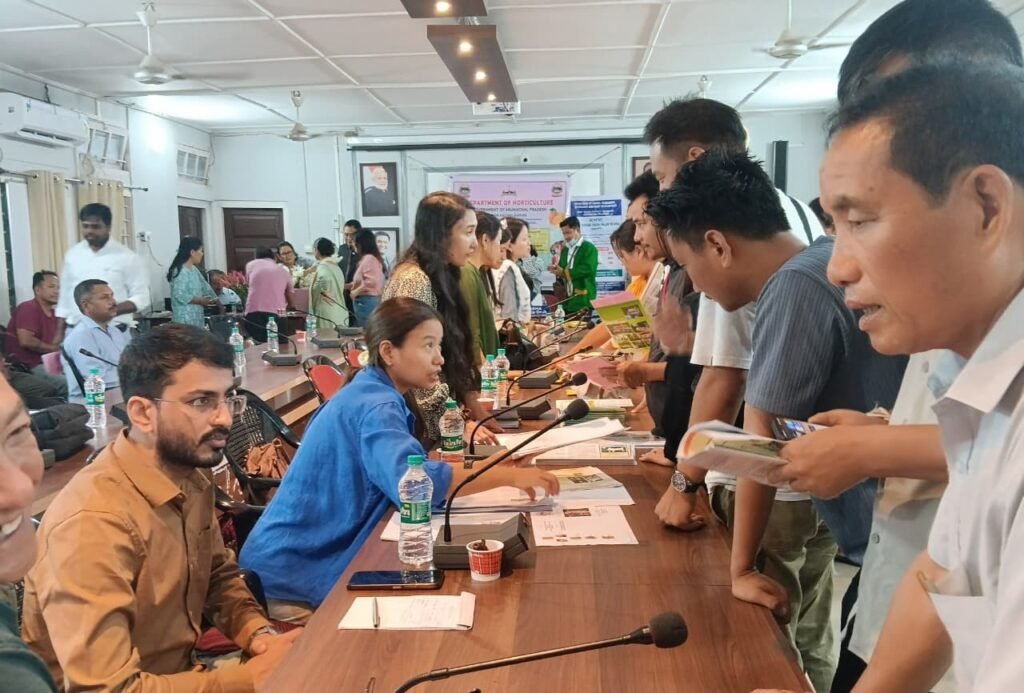
PASIGHAT :  A district-level Jan Kalyan Shivir, themed “12 Years of Trust, Development and Public Welfare,” with a special focus on natural farming, was organised at the Deputy Commissioner’s Conference Hall in Pasighat on Sunday. The programme aimed to create awareness among farmers and the public about the benefits of natural farming, integrated farming systems, soil health management, value addition and livelihood opportunities, while also facilitating access to various government welfare schemes. The shivir served as an interactive platform for farmers, government officials and line departments, promoting sustainable agricultural practices and improving outreach of public services. Various departments set up stalls and help desks to disseminate information, register beneficiaries, address grievances and facilitate the delivery of services under different schemes. Special emphasis was laid on flagship programmes such as Ayushman Bharat, Ayushman Vay Vandana Yojana, PM Surya Ghar, PM SVANidhi, Lakhpati Didi and Viksit Bharat–Guaranteed Employment and Livelihood Mission (Gramin), besides other State and Centrally Sponsored Schemes. Departments including Agriculture, Horticulture, Animal Husbandry and Veterinary, Fisheries, Krishi Vigyan Kendra (KVK), Agricultural Technology Management Agency (ATMA), Soil Conservation, Rural Development, Arunachal State Rural Livelihoods Mission (ArSRLM) and the Ayushman Bharat Health Account (ABHA) team of Bakin Pertin General Hospital (BPGH), along with other allied departments, showcased initiatives and technologies related to natural farming and allied sectors. The participating departments displayed information, education and communication (IEC) materials, posters, banners, pamphlets and demonstration models to educate visitors on government schemes, improved farming practices and livelihood opportunities. Officials remained available at the stalls to provide guidance and assistance to beneficiaries. The programme underscored the Government’s commitment to inclusive development, farmer welfare and environmentally sustainable agriculture through awareness generation, capacity building and effective implementation of welfare schemes. Among those present were East Siang Additional Deputy Commissioner-in-Charge Deputy Commissioner Pebika Lego, Pasighat MLA Ninong Ering, East Siang Zilla Parishad Chairperson Ruth Tabing, Zilla Parishad Members, officials of various departments, farmers and members of the public. (DIPR)