

ONLINE AGE

(Online version of the Arunachal Age newspaper)

State News

Latest News, Popular News, State News

Understanding the PFR: A study, not a decision risk from China’s upstream dam

Atek Miyu The Siang River enters India from Tibet, where it is known as the Yarlung Tsangpo. China has begun building a very large hydropower project on this river in the Nyingchi (Medog) region, close to the Indian border which hashas an estimated installed capacity of 60,000 MW and is reportedly targeted for completion by 2035. The Government of India estimates that the Medog dam will be able to store about 5.5 billion cubic metres (BCM) of water. This water storage gives immense leverage to China over the lives, livelihoods and properties of people of Arunachal Pradesh, especially the Siang region, and ultimately over Assamand even Bangladesh. The Siang River joins the Dibang and Lohit rivers to form the mighty Brahmaputra, which supports millions of people through farming, fishing, inland water transport and drinking water. If water is stored or diverted in winter, both rivers could carry far less water. If the dam traps silt, fertile lands could suffer. There are also concerns that the project could help divert water towards China’s dry northern regions, which has been a strategic ambition and national priority for China over at least the past four decades. How much diversion may take place, and how it would affect water availability downstream, needs detailed scientific study rather than assumptions. Any significant diversion of the Siang’s water could have devastating consequences for downstream areas in India. The risks are not limited to changes in flow. A large dam in an earthquake-prone and geologically sensitive Himalayan region raises concerns about extreme natural events, structural failure or emergency releases of water. Whether deliberate or caused by an accident or earthquake, a sudden release of water could cause flash floods in the Siang valley. There is no guarantee that such risks can always be prevented through diplomatic talks, or that enough advance warning would be available. Past events show how real these dangers are. If a disaster like the floods in Nepal on 26 August 2026 or the flood of 11 June 2000 were to strike the Siang today, we would have no protective measures in place for people and their property. At present, India and China do not have a water-sharing treaty. The Memorandum of Understanding for sharing hydrological data on the Brahmaputra expired on 5 June 2023 and has not been renewed, increasing uncertainty regarding the timely availability of information on upstream river conditions. The need for cooperation on trans-border rivers, including resumption of provision of hydrological data has been highlighted by the Union Government in several high-level interactions with China, but no response has been received. Siang Upper Multipurpose Project The Siang Upper Multipurpose Project (Siang UMP) has been proposed as a response to this risk. Considering its strategic importance for India’s water and national security, the Government of India had declared the SUMP a National Project in 2008. Its proposed storage capacity is about 9.2 BCM, considerably more than the estimated capacity of the Medog dam. A reservoir of this size could absorb sudden surges of water released from upstream and help keep the river flowing in lean periods. It would act as a safeguard for downstream areas while also producing clean electricity and supporting flood control. Whether such a project is feasible, and in what form, must first be established through proper scientific study. What is PFR? The SUMP has become a subject of strong public debate in the Siang region and concerns about the environment, displacement and community rights are valid. However, much of the current opposition is premature and likely stems from an incomplete understanding. The PFR is the stage where facts are gathered. Without it, neither the Government nor the people can know whether the project is safe, what its effects might be, or whether alternatives would be better. A Pre-Feasibility Report is the first technical study carried out for any proposed hydropower project in India. It does not approve of the building of a dam. It is not a construction plan, and it does not transfer any land. Its purpose is to find out whether a project at a given location is possible and, if so, in what broad form. Engineers and scientists study the rocks, soil, slopes, river flows and earthquake risk of the area. From this, they judge whether a site is safe and practical enough to be studied further. If the findings are unfavorable, the project can be changed, moved to a different site or dropped altogether. The name itself is illuminating. It is called a Pre-Feasibility Report, not even a Feasibility Report. The field work under a PFR is limited and temporary. It includes surveys of the terrain, river valley, slopes and geological conditions, along with geophysical investigations to understand sub-surface features. Exploratory boreholes are drilled at selected locations along the proposed dam axis to obtain rock samples from below surface and early information on foundation conditions. No effects on people in the area The PFR does not materially affect the area. No village is relocated, no land is acquired, no reservoir is created and no river is diverted because of a PFR. No large-scale clearing of forests takes place, and the Siang continues to flow as before. The land required for the PFR is very small. Drilling will take place at the Parong, Beging, Ugeng and Komkar sites. At each site, two boreholes will be drilled, with each drilling location requiring an area of about 20 m × 20 m (400 sq m). Together, all eight drilling locations will require only about 3,200 sq m of land, which is less than half the size of a standard football field. These sites are temporary and can be restored once the work is completed. Farming, fishing and daily life in the surrounding villages carry on normally. No dam without the people’s consent The most important takeaway is that the PFR is not the stage at which the project is decided. The Government has made it clear that no dam can and will be built without informed
Latest News, Popular News, State News

550 NCC cadets trek through Poma Hills

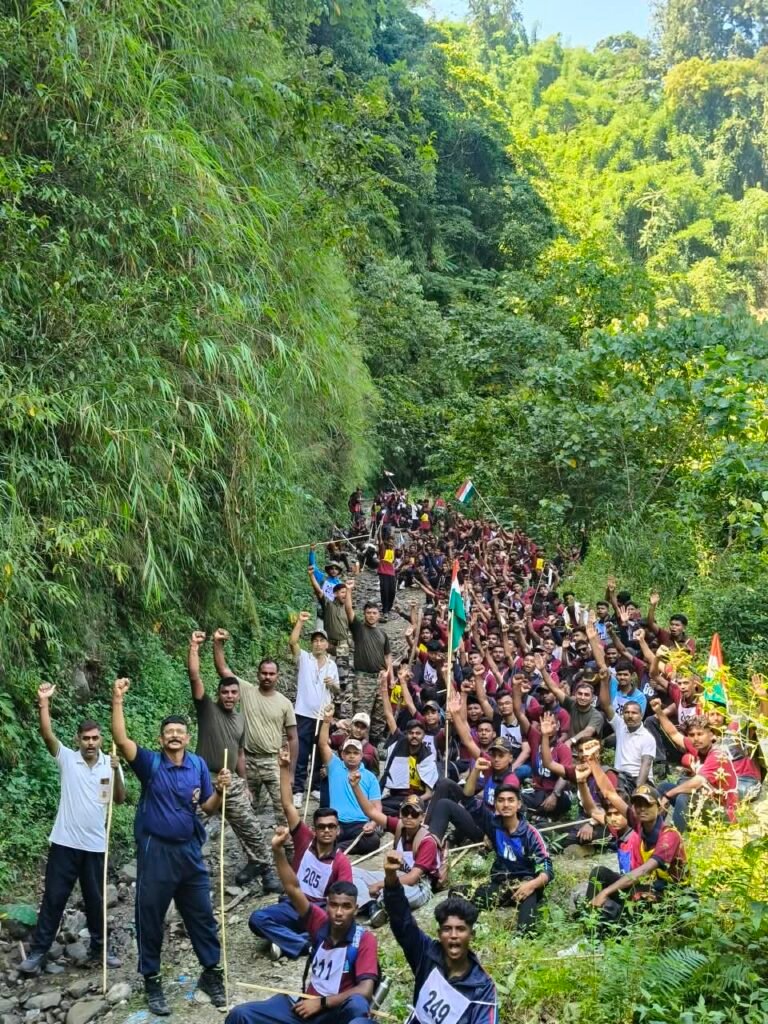
ITANAGAR, OCT 14: The 1 Arunachal Pradesh Battalion of the National Cadet Corps (NCC) conducted the fifth day of its NER Trek-I (Rising Sun Trek) on Tuesday, with 550 cadets exploring the scenic trekking routes of Poma Hills, while some cadets undertook a trek to Chimi Hills. The trek through Poma Hills took the cadets along rugged unpaved tracks, forested trails and picturesque valleys, testing their physical endurance, resilience and adaptability. The expedition also offered them an opportunity to appreciate the region’s natural beauty and ecological diversity. Passing through agricultural fields and rural settlements, the cadets witnessed the daily lives of local communities in Poma village. Interactions with villagers provided insights into local traditions, customs and community life, adding a cultural dimension to the expedition and promoting national integration. Navigating uneven tracks and steep uphill and downhill stretches encouraged the cadets to develop self-discipline, mutual trust, teamwork and perseverance. The trek also reinforced the importance of environmental awareness and responsible engagement with nature. The expedition brings together NCC cadets from diverse regions and cultural backgrounds to promote physical fitness, mental resilience, leadership and camaraderie while fostering national integration and appreciation of India’s cultural and ecological diversity. Beyond adventure and physical challenges, NER Trek-I serves as a platform for building lasting friendships, strengthening mutual understanding and experiencing the warmth and hospitality of local communities, in keeping with the NCC motto, “Unity and Discipline”. (DIPR)    

Latest News, Popular News, State News

Ziro gears up for mega Diocesan Youth Convention

ZIRO, OCT 14: The Lower Subansiri district administration reviewed security, traffic management and logistical arrangements for the first Mega Itanagar Diocesan Youth Convention, scheduled to be held at St. Claret College from October 17 to 20. The meeting, held at the Golden Jubilee Conference Hall in Ziro on Wednesday, was chaired by SDO and in-charge Deputy Commissioner Hage Tarung and attended by district officials, police personnel, including Deputy Superintendent of Police (Headquarters) Lod Jari, and representatives of the organising committee. The discussions focused on traffic routes, designated parking areas, crowd management, medical preparedness, emergency response and coordination among government departments to ensure the safe and smooth conduct of the four-day event. The administration and organisers also appealed to local residents and commuters to cooperate with the authorities and follow traffic advisories to facilitate the movement of participants and minimise inconvenience during the convention. The event is expected to bring together young people from across the region for a gathering centred on faith, culture and fellowship. (DIPR)    

Latest News, Popular News, State News

APPEIRC launches official website

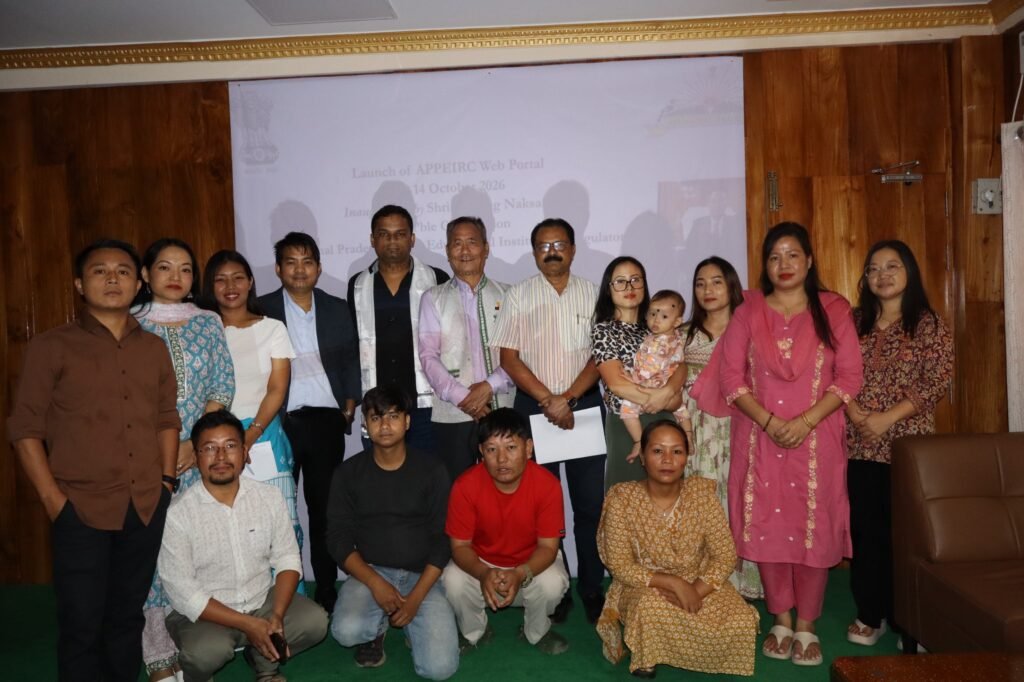
ITANAGAR, OCT 14: The Arunachal Pradesh Private Educational Institutions Regulatory Commission (APPEIRC), a statutory body of the state government, launched its official website on Wednesday to improve transparency and facilitate access to information for educational institutions, students and the general public.   APPEIRC Chairperson Tsering Naksang launched the website, www.appeirc.arunachal.gov.in, at the Commission’s office on the Department of Higher and Technical Education campus in ESS Sector, Itanagar. The Governor of Arunachal Pradesh also conveyed a message on the occasion. Developed by the Department of Information Technology, the website provides information about the Commission, including official notices, circulars, orders and other updates. APPEIRC regulates eight private universities, 20 private colleges and seven nursing institutes in the state. Institutions, students and members of the public have been encouraged to visit the website regularly. The Commission said the portal would be updated periodically and welcomed feedback and suggestions for its improvement.    

Latest News, Popular News, State News

Upper Subansiri steps up digital farmer registration

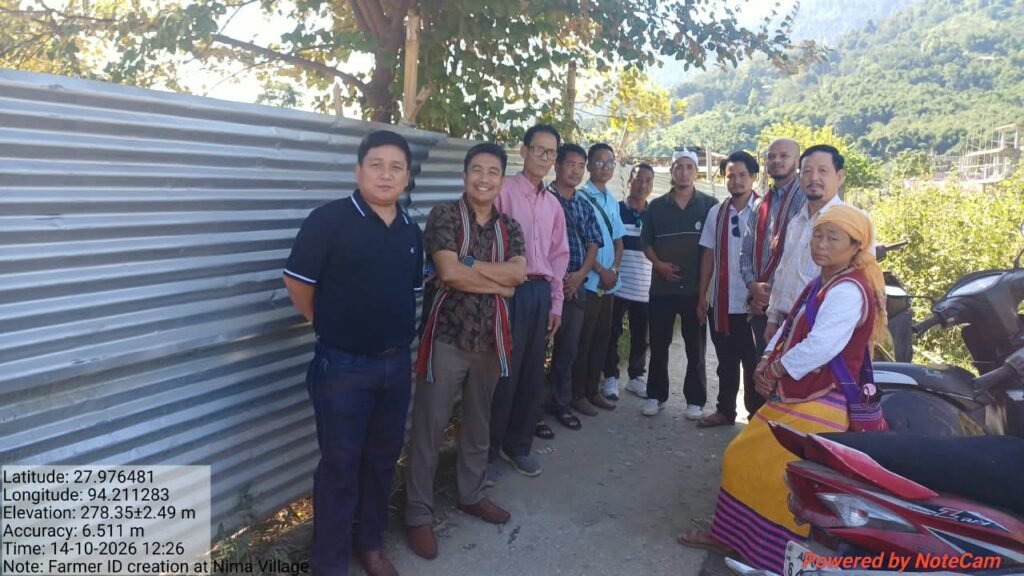
DAPORIJO, OCT 14: The Upper Subansiri district administration has intensified digital farmer registration under the Centre’s AgriStack initiative, with a coordination meeting held at the Mini Secretariat in Daporijo on Wednesday to streamline implementation across the district. The meeting was chaired by Assistant Commissioner and in-charge Deputy Commissioner Goju Sikom and attended by District Agriculture Officer (DAO) Singdhe Hangu, representatives of line departments forming the district AgriStack Task Force, Zilla Parishad Chairperson (ZPC), Zilla Parishad Members (ZPMs) and other stakeholders. The meeting focused on interdepartmental coordination, field-level implementation and timelines for achieving comprehensive farmer registration. Resource persons from IT Solution, Itanagar, conducted a technical orientation on portal navigation, data synchronisation and troubleshooting during field verification. Sikom stressed the need for timely implementation and coordination among departments to achieve 100 per cent registration. The initiative aims to create a digital database of farmers, their cultivated crops and landholdings to facilitate the delivery of government assistance. Hangu explained that registered farmers would receive a unique digital Farmer ID to simplify verification and access to government schemes, including subsidies, agricultural inputs, credit and crop insurance. Officials clarified that the database would serve as an identification and service-delivery mechanism and would not establish or alter legal land ownership claims. The district administration is involving Panchayati Raj Institution representatives and Gaon Burahs to mobilise farmers, particularly in remote areas. Registration teams are expected to facilitate enrolment through local eKYC camps at the circle level. Farmers will need an Aadhaar card linked to an active mobile number for OTP verification, along with relevant land details and crop declarations. The initiative also seeks to ensure the inclusion of eligible sharecroppers and women cultivators in the digital database. The administration said verified farmer profiles could support local agricultural initiatives, including the ongoing Geographical Indication (GI) application process for Upper Subansiri oranges, and improve market access for local growers. The AgriStack Task Force has urged farming households to cooperate with field surveyors and visit their nearest Common Service Centre (CSC) or designated circle-level registration camp to complete the process.  

Latest News, Popular News, State News

Guv extends Chindang greetings

ITANAGAR, OCT 14: Governor Lt Gen KT Parnaik (Retd) has extended greetings to the people of the state, particularly the Sajolang community, on the occasion of Chindang festival, expressing hope that the celebration would strengthen cultural identity and reinforce commitment to preserving the state’s rich heritage. In his message, the Governor said that Arunachal Pradesh’s rich cultural heritage is reflected in its diverse indigenous traditions, festivals, rituals and customary practices, each expressing our deep bond with nature, community and ancestral wisdom. “Chindang magnificently embodies the Sajolang people’s reverence for nature, with prayers and traditional observances seeking blessings for a bountiful harvest, family well-being and protection of people and domestic animals. Such traditions are a precious inheritance that strengthens our cultural identity and community spirit. I appeal to all, particularly our youth, to understand, respect and carry forward our indigenous heritage while protecting the forests, rivers, mountains and natural resources that have sustained our communities for generations”, he said. On this joyous occasion, I join my Sajolang brethren in offering prayers to the Almighty for peace, harmony, good health and prosperity for all, Parnaik added.

Latest News, Popular News, State News

Webinar on ICICI bank careers

PASIGHAT, OCT 14: The Placement Cell of Jawaharlal Nehru College (JNC), Pasighat, in collaboration with ICICI Bank and with the support of the Internal Quality Assurance Cell (IQAC), organised a webinar on career opportunities in the banking sector on Tuesday under the theme “Learn – Grow – Build Your Future”. The webinar aimed to familiarise students with career prospects in banking, particularly recruitment opportunities, training and professional growth avenues at ICICI Bank. The resource persons — ICICI Bank HR Manager Loknath Mondal, HR team member Arijit Chatterjee and Regional Head Projeet Haldar — briefed participants on the role of Relationship Manager (Sales), eligibility criteria, recruitment procedures, training programmes and career progression in the sector. An interactive session followed, during which students raised queries on recruitment and employment opportunities. The resource persons addressed their concerns and offered guidance on the qualifications, skills and requirements for pursuing a career in banking. The webinar provided a platform for students to explore banking careers and gain a better understanding of the recruitment process and professional opportunities in the sector.    

Latest News, Popular News, State News

Eviction drive carried out

KOLORIANG, OCT 14: The Kurung Kumey district administration, in coordination with the Public Works Department’s Koloriang Division, conducted a joint eviction drive to remove illegal structures and encroachments from the right of way (RoW) of the proposed Ring Road in Koloriang. The drive was carried out after due notices were issued to the occupants and in accordance with prescribed legal procedures. Boundary walls, houses and other structures falling within the designated road alignment were removed despite some operational challenges. The exercise marks a step towards the planned development of Koloriang township. Once completed, the Ring Road is expected to improve connectivity, ease movement within the town and strengthen public infrastructure. The district administration has appealed to residents to cooperate with the township’s development initiatives and refrain from fresh encroachments on government land and public road corridors.

Latest News, Popular News, State News

Shergaon farm emerges as centre for scientific fruit cultivation in Arunachal

SHERGAON, OCT 14: The State Horticulture Farm (SHF) at Shergaon in West Kameng district, established in 1977–78, has emerged as an important centre for temperate fruit cultivation, scientific horticultural practices and agricultural innovation in Arunachal Pradesh. Taking advantage of the region’s favourable climatic conditions, the farm cultivates more than 40 varieties of apples, along with other temperate fruits such as plum, peach, pear, cherry, walnut and persimmon. It also produces fresh fruits and planting materials while generating revenue through the sale of fruits, vegetables and other farm produce. The farm received special attention during the visit of Arunachal Pradesh Governor Lt Gen KT Parnaik (Retd) on July 25, 2026. During the visit, the Governor highlighted horticulture’s potential to enhance farmers’ incomes, strengthen food security and contribute to the state’s sustainable development. He encouraged farmers, entrepreneurs and youth to explore opportunities in horticulture and called for the adoption of natural farming practices to improve soil health, protect the environment and enhance agricultural sustainability. He also stressed the need to extend scientific methods, modern technologies and innovative farming practices from research farms to villages. During the visit, the Governor was briefed on orchard management practices, including recommended cultivation methods, plant protection schedules, fruit management and the use of anti-hail nets. A notable demonstration involved top-working, in which a mature Red Delicious apple tree was grafted with eight different apple varieties to showcase varietal diversification and improved orchard management. Drone technology was also demonstrated to highlight its potential for crop monitoring, precision spraying and efficient farm management. Such technologies can help optimise resource use, reduce labour-intensive field inspections and improve worker safety, particularly in difficult terrain. The farm has also undertaken landscaping initiatives, including plantations of plum and peach trees, along with seasonal intercropping of sunflower and cosmos to enhance the premises’ aesthetic appeal. To strengthen its scientific infrastructure, a tissue culture laboratory was constructed under the RE 2021–22 programme. However, it remains non-operational due to a shortage of technical manpower. During 2025–26, tissue-cultured blueberry and apple plants for mother stock, along with apple varieties for rootstocks, were procured from Himachal Pradesh to strengthen the farm’s planting material resources. The farm generated revenue of ₹22,02,900 during the financial year 2025–26, an increase of ₹6,03,090 over the previous financial year. With its diverse collection of temperate fruits and emphasis on scientific cultivation, the Shergaon farm continues to support horticultural development in the state. Addressing technical manpower shortages and strengthening infrastructure could further enhance its role in crop diversification, farmer income generation and youth entrepreneurship.  

Latest News, Popular News, State News

Tawang reviews winter power preparedness, seeks reliable supply

TAWANG, OCT 14: Tawang Deputy Commissioner Namgyal Angmo on Wednesday chaired a coordination meeting with power-related agencies and public representatives to review winter preparedness and discuss measures to minimise power disruptions across the district. The meeting was attended by officials of the Departments of Power and Hydro Power Development, representatives of private hydropower projects, Tawang Zilla Parishad Chairperson Leki Gombu, Zilla Parishad Members (ZPMs), Bazar Secretaries, Additional Deputy Commissioners of Jang and Lumla, and other district officials. Executive Engineer (Electrical), Department of Power, Tawang, Sange Phuntso, presented an assessment of electricity demand and availability, with and without the 33 kV Dukumpani–Tawang power supply. He also outlined possible load-shedding measures to manage shortages during peak winter months. Hydropower project representatives highlighted inadequate grid infrastructure as a major challenge, noting that sudden power disruptions often require synchronisation of hydropower units. The Executive Engineer urged public representatives and Bazar Secretaries to sensitise residents, particularly owners of commercial buildings and hotels, to limit the use of high-power-consuming equipment during shortages. The meeting also discussed the phased installation of smart meters under the Centre’s flagship programmes. ZPMs raised concerns expressed by villagers over higher electricity bills following installation and called for awareness meetings to explain the system’s functioning, benefits and billing mechanism. Bazar Secretaries, meanwhile, reported that shops and commercial establishments in their areas had installed smart meters and were cooperating with the department. Gombu called for stronger coordination among hydropower developers and government departments to ensure a dependable winter power supply. He urged authorities to expedite commissioning of the Shyaro Hydropower Project and develop a stronger transmission grid between Dirang and Tawang. He also highlighted frequent winter damage to power lines due to heavy snowfall and stressed timely clearance of tree branches obstructing transmission lines. Angmo called for proactive planning and timely action to address winter power shortages. She directed the department to issue advance notices about anticipated power cuts and load-shedding schedules to keep the public informed. The DC said recurring disruptions were largely linked to grid constraints, while right-of-way issues and other infrastructure-related challenges had delayed solutions. She urged public representatives to sensitise villagers about the difficulties and encourage cooperation with the department. Highlighting Tawang’s importance as a tourist destination, Angmo said frequent power cuts during winter and the tourist season remained a concern. She called on all stakeholders to work together towards a sustainable solution and minimise disruptions. The meeting concluded with a renewed emphasis on coordination among power-generating agencies, distribution authorities, public representatives and the district administration to improve winter preparedness and ensure a more reliable electricity supply.