ONLINE AGE

(Online version of the Arunachal Age newspaper)

State News

Latest News, Popular News, State News

Rising Sun Trek: Cadets explore Itanagar, promote national integration

ITANAGAR, OCT 15: National Cadet Corps (NCC) cadets from 13 states, representing five NCC directorates, explored Itanagar on the sixth day of the Rising Sun Trek, combining sightseeing with cultural learning and promoting national integration. The itinerary included Ganga Lake, Itanagar Zoo, the State Museum and the local Gompa, offering the cadets insights into Arunachal Pradesh’s natural beauty, history and spiritual traditions. The tour also included visits to local markets, where the cadets interacted with shopkeepers and experienced the everyday life and cultural diversity of the state. The interactions helped participants, particularly those from outside the Northeast, identify shared experiences and values despite differences in language, customs and geographical backgrounds. The day concluded with presentations by cadets from the participating directorates on the heritage, culture and landmarks of their respective home states. The exchange encouraged mutual understanding and strengthened bonds among cadets from different parts of the country. The programme underscored the role of the Rising Sun Trek in fostering national integration, promoting cultural awareness and strengthening a shared sense of identity among India’s youth while celebrating the country’s diversity.    

Latest News, Popular News, State News

Lower Subansiri celebrates Mahila Kisan Diwas to champion women farmers

ZIRO, OCT 15: Mahila Kisan Diwas was celebrated at Kalung Panchayat Hall in Lower Subansiri district on Thursday, bringing together 125 women farmers to recognise their contributions to agriculture and rural livelihoods. The programme was organised by the District Agriculture Office, Ziro, under the leadership of District Agriculture Officer Leegang Ania through the Agricultural Technology Management Agency (ATMA) for 2026–27. Lower Subansiri Zilla Parishad Chairperson Hibu Dumi attended the programme as the chief guest, while Zilla Parishad Members Kago Kampu, Takhe Omang, Tasso Bune, Subu Yaring and Tanyang Yajo were present as special invitees. Addressing the gathering, Dumi encouraged women farmers to pursue economic independence and contribute to the development of their families and the district. She assured them of her support and urged heads of departments in agriculture and allied sectors to prioritise women farmers while implementing government-sponsored schemes. Officials from various agriculture and allied departments interacted with the participants, explaining ongoing government welfare schemes and providing practical guidance on available support. The programme highlighted the role of women in agriculture and aimed to improve their access to technical knowledge, government schemes and institutional assistance. (DIPR)  

Latest News, Popular News, State News

RBS marks 3rd foundation day, announces Pertin Group’s return to Dameng clan

Maksam Tayeng PASIGHAT, OCT 15: The Ringgong Banggo Society (RBS), Mebo Block, celebrated its third foundation day at Namsing village under Mebo subdivision of East Siang district on Thursday, announcing the return of the Pertin (Jomut-Mutling) group to its ancestral Dameng clan identity. Gaon burahs, public representatives and community members attended the programme. Anjaw District Fisheries Development Officer Olik Jomang Libang was the chief guest, while Arunachal Pradesh Rural Bank (APRB) Mebo Branch Manager Mum Pertin Langkam attended as guest of honour. Namsing Circle Officer Toimi Tagi represented the Additional Deputy Commissioner, Mebo. The celebration was held under the supervision of RBS apex president Baling Gamnoh, Mebo Block president Orik Osik and general secretary Anthony Gamnoh. Addressing the gathering, Libang emphasised community cohesion and collective development, urging members of the constituent clans to work together for a prosperous future. Gamnoh thanked members and stakeholders for their support and called for greater participation in community-building initiatives and mutual assistance. Welcoming the group’s return to the Dameng clan identity, RBS office-bearers and senior members recounted its ancestral history. According to their account, a young Dameng boy left Milang village in the Mariyang region of present-day Upper Siang district centuries ago after accidentally killing his mother with an arrow while testing his bow and arrow for Kiruk—a community hunting drive to chase away or kill wild boars that damaged crops. The boy was later found hunting near Moyang Kulek river, locally known as Sitong, along the Yamne river near Damroh village. He was subsequently adopted by a man from the Pertin clan named Mutling, giving rise to the Pertin (Jomut-Mutling) group, the society members said. RBS office-bearers confirmed that the official procedures for the change in clan identity had been completed. The foundation day celebration highlighted the society’s commitment to unity, progress and fraternity. The programme concluded with traditional music and dance performances showcasing the cultural heritage of the Ringgong Banggo clans.  

Latest News, Popular News, State News

Ledum thrash Mirem 5–1 to win Odam Ering Memorial Football Tournament

Mingkeng Osik PASIGHAT, OCT 15: Ledum defeated Mirem 5–1 in the final of the 24th Odam Ering Memorial Football Tournament 2026, organised by the Odam Ering Memorial Football Tournament Committee (OEMFTC). The tournament featured 18 teams and provided a platform for local players to display their footballing skills, teamwork and competitive spirit. Former footballer Tachong Boko attended the final as the chief guest. Chief patron and tournament sponsor MLA Ninong Ering, Kalen Saroh and other invitees were also present. Addressing the gathering, Boko stressed the importance of sportsmanship, discipline and a healthy lifestyle. Drawing on his experience as a footballer, he said he had continued contributing to the sport as a referee after retiring from active play. He urged young players to respect the game, maintain discipline and avoid harmful habits such as tobacco consumption and alcohol use. Emphasising the role of sports in shaping young people, he encouraged them to follow the message “Yes to Sports, No to Drugs” and participate in physical activities to stay fit and develop positive habits. Organising chairman Pirtem Panggeng said the participation of 18 teams reflected the enthusiasm for football in the area. He highlighted the importance of village-level sporting events in nurturing local talent and noted that organising a tournament of this scale required considerable effort, coordination, resources and community support. He said the committee remained committed to providing players with opportunities to showcase their abilities and encouraging young people to engage in sports and other constructive activities. The tournament also served to strengthen community bonds, promote healthy competition and keep alive the memory of Odam Ering. The organising committee is headed by Pirtem Panggeng as chairman, with Jack Pangu as secretary. The technical team comprises Tutu Jerang, Tapai Saroh, Tajing Messar, Anand Mize and Talen Padung. Gemin Modi is the publicity secretary, Issac Messar the convenor, while Anand Dupak and Obang Mize serve as chief auditors. As per the announced prize structure, the champion team will receive ₹2 lakh, while the runner-up will get ₹1 lakh.  

Latest News, Popular News, State News

TWS mourns demise of veteran priest Jiko Leriak Tamin

DAPORIJO, OCT 15: The Tamin Welfare Society (TWS) has expressed deep sorrow over the demise of Jiko Leriak Tamin, a respected priest, community orator and traditional figure, who passed away at his residence in Leriak village under Giba Circle in Upper Subansiri district on Thursday following a prolonged illness. In a condolence message, the society said the late Tamin had made significant contributions to the spiritual and cultural life of the people of the undivided Giba, Chetam and Nilling circles under the 24-Daporijo Assembly Constituency. Members of the society also visited the bereaved family to offer condolences and pay their last respects. One of his notable contributions to the preservation of indigenous faith and cultural heritage was his role as priest of SI-DONYI HILO at Daporijo in 2001, with Kochu Natam Maying serving as assistant priest. The festival was conducted under the chairmanship of late Tadak Dulom, former minister, with Er. Taanu Tamin, Chief Engineer in the Rural Works Department, serving as secretary. The society stated that the late Tamin became the first priest from the Tagin community to perform the SI-DONYI HILO rituals under the SETU-JOLWK system, replacing the traditional Flag System. It described the transition as a significant milestone in the history of the festival and the preservation of indigenous religious practices. Remembered for his knowledge of traditional rituals, spiritual guidance and community service, the late Tamin devoted much of his life to upholding indigenous beliefs and customs. His wisdom and dedication, the society said, would continue to inspire generations. He is survived by two wives, four sons and four daughters. One of his sons, Advocate Tambo Tamin, served as secretary general of the Indigenous Faith and Cultural Society of Arunachal Pradesh. His mortal remains will be laid to rest at his native village, Leriak, in accordance with traditional customs and rituals. The Tamin Welfare Society described his demise as an irreparable loss to the Tamin Society and the Tagin community. It expressed solidarity with the bereaved family and prayed to Goddess Anv Donyi to grant eternal peace to the departed soul and strength to the family to bear the loss. “May his departed soul rest in eternal peace,” the society said.  

Latest News, Popular News, State News

SUMP sparks hopes of jobs, roads amid land and environment concerns

ITANAGAR, OCT 14: Arunachal Pradesh’s mega Siang hydropower project, which has been facing protests over land-related issues and environmental concerns, has nonetheless kindled hopes of better road connectivity, jobs for the youth and improved access to social services for people living along the river. For a region where difficult terrain and limited connectivity have long posed challenges to development, the 11,200-MW Siang Upper Multipurpose Project (SUMP) has opened up a wider debate on whether the potential benefits of a major infrastructure initiative can be realised, while protecting the interests of locals and the environment. “People are naturally worried when they hear about a project of this scale. But, we also have to think about what opportunities it could bring. The youth need jobs, better connectivity and more opportunities to stay and build their lives here,” said Oyin, a young girl from Boleng town in the district. The Siang River has shaped the lives, culture and landscape of communities along its banks for generations, she said. The project is currently at the Pre-Feasibility Report (PFR) stage, which is intended to assess the technical viability. The state government has maintained that the ongoing exercise does not tantamount to a decision to construct the project. Protesters have been demanding an immediate stop to the ongoing PFR activities and survey work for the proposed project. They have also sought withdrawal of security forces deployed in areas likely to be affected by the project. The Arunachal Pradesh government has maintained that the mega project would drive economic and social growth, generate employment opportunities for the youth, and strengthen water and energy security for the state and the nation. M Tame, a resident of Parong village in Siang district, said development work and the preservation of local identity should not be viewed as conflicting objectives. “We should not assume that development means losing everything. If there is proper planning and local people are included, development can also mean better schools, healthcare, roads, communication and opportunities for our children,” he said. Several people living in areas that could be affected by the project’s construction said they want clear information on land, rehabilitation, livelihoods, environmental consequences and the long-term impact on their communities. Siang Deputy Commissioner Tayi Taggu said the project would be a boon for people of the Siang belt, and that they “should support government-backed initiatives”. At a review meeting in Yingkiong last month, State Panchayati Raj and Rural Development Minister Ojing Tasing, who also heads the Empowered High-Level Committee on SUMP, called for continuous public engagement, transparency, and systematic documentation of feedback from local communities. Environmental activist Bhanu Tatak said people’s consent was crucial even at the pre-feasibility stage. She also alleged that the deployment of paramilitary personnel, and FIRs and legal proceedings against those protesting against the project had created a trust deficit among people. “It is hard to trust the state government now due to its lack of sensibility,” Tatak said. Aluk, who identified herself by her first name, said the debate should not turn into a division between people seeking development and those worried about its consequences. “We want our children to have a future here. If a project can contribute to that future, people will want to understand it. The important thing is that development should happen with people, not simply around them,” she said. (Source: PTI)    

Latest News, Popular News, State News

Assam, Arunachal hold second regional meet to resolve border dispute

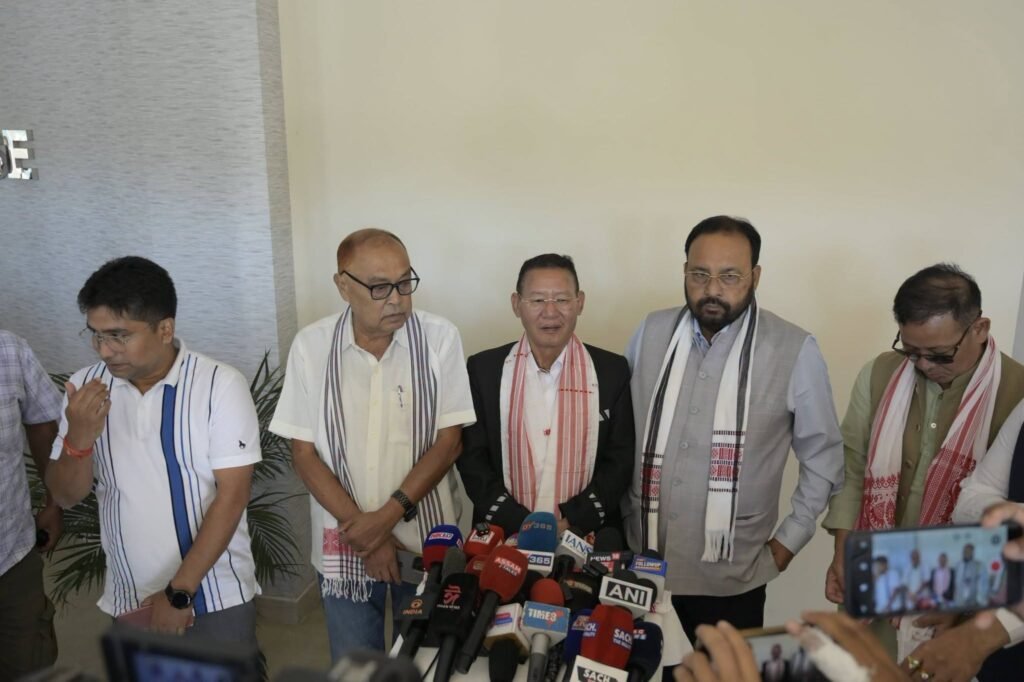
ITANAGAR, OCT 14: Assam and Arunachal Pradesh have held the second regional committee meeting to resolve the decades-old boundary dispute involving Papum Pare district of Arunachal Pradesh and Biswanath and Lakhimpur districts of Assam, an official report said on Wednesday. The Arunachal Pradesh delegation was led by Urban Affairs Minister Balo Raja and included Doimukh MLA Nabam Vivek and Papum Pare Deputy Commissioner Mamu Hage. The Assam delegation was headed by Revenue Minister Keshab Mahanta and included Education Minister Ranoj Pegu and MP Ranjit Dutta. During the meeting, the respective deputy commissioners presented details of progress made and joint field inspections conducted since the first session on January 9, 2023. Officials said the disputed border villages had been classified into three categories to facilitate resolution. Category I comprises nine disputed villages, Category II includes 22 villages with minor localised disputes, and Category III covers two complex villages where consensus is yet to be reached, the report added. To ensure a peaceful and lasting settlement, both state governments agreed to maintain the status quo as per the agreed cut-off dates, prevent fresh encroachments and tree felling, and initiate due procedures to withdraw FIRs registered against officials from either side. The committee also called for the immediate installation of boundary pillars in Category I villages. Disputes involving Category II villages will be resolved at the district administration level. The district administrations have been asked to engage the Survey of India to begin formal boundary demarcation within two months, the report said. For the two unresolved Category III villages, a roadmap will be prepared through consultations involving local MLAs, district officials and residents before the next regional committee meeting, scheduled for late December 2026. The Assam-Arunachal dispute dates back to 1951 when over 3,600 sq km of plain areas were transferred from the North-East Frontier Agency (NEFA) to Assam following the recommendations of the Gopinath Bordoloi committee. Arunachal Pradesh subsequently contested these transfers after gaining Union Territory status in 1972 and full statehood in 1987. Although a High-Powered Tripartite Committee recommended using the 1951 line in 1980, disputes persisted over settlements extending past the notified boundary. The current momentum follows the landmark Namsai Declaration signed on July 15, 2022, by Assam Chief Minister Himanta Biswa Sarma and Arunachal Pradesh Chief Minister Pema Khandu, which rationalised the list of disputed villages from 123 to 86 and established 12 Regional Committees to finalise ground-level demarcation. PTI  

Latest News, Popular News, State News

Khandu urges youth to preserve roots, embrace new opportunities

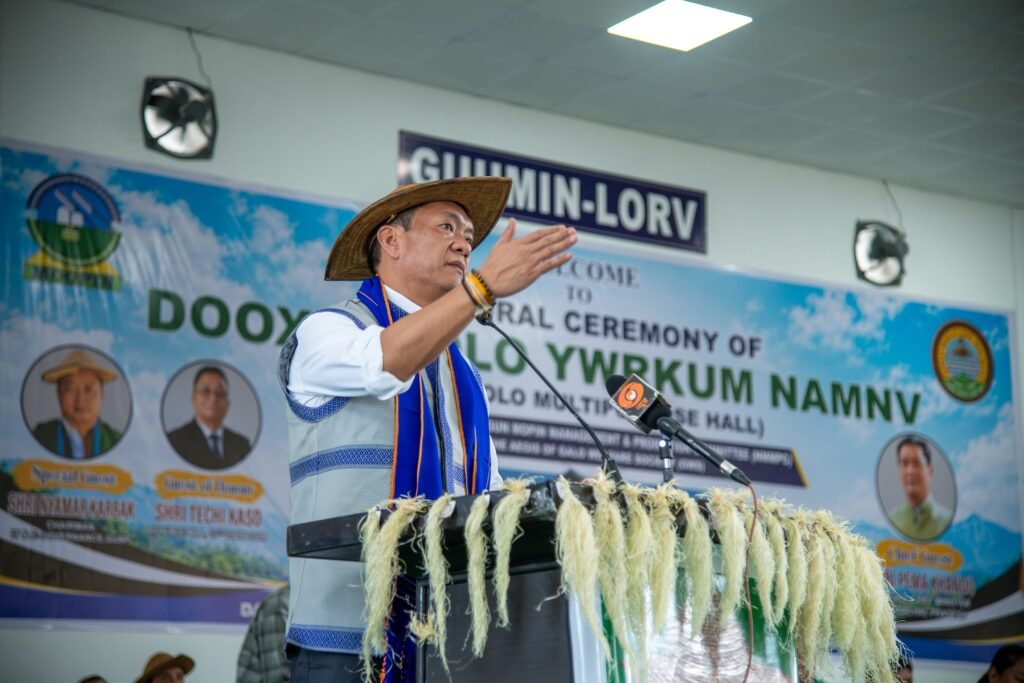
NAHARLAGUN, OCT 14: Chief Minister Pema Khandu on Wednesday urged the youth to remain rooted in their cultural identity while embracing new opportunities in a rapidly changing world, as he inaugurated the Donyi Polo Multipurpose Hall at the Galo Heritage Centre in Tarajuli, near Naharlagun. Describing the hall as a landmark of community participation and cultural commitment, Khandu said it would serve as a permanent venue for Mopin celebrations and a centre for passing on traditional songs, dances, crafts and indigenous knowledge to younger generations. The programme was organised by the Naharlagun Mopin Management and Promotion Committee, which looks after the Heritage Centre, in coordination with the Galo Welfare Society and clan-based organisations. Highlighting the community’s contribution, Khandu said the Galo community had voluntarily handed over the Mopin ground at Naharlagun, which had been in use since 1976, to facilitate the establishment of the state’s first medical college, the Tomo Riba Institute of Health and Medical Sciences (TRIHMS). The community subsequently purchased around 11,217 square metres of land at Tarajuli through its own contributions. Clan organisations constructed boundary walls and traditional gates, while more than 430 individuals contributed funds towards the initiative. Sanctioned under the Centre’s Special Assistance to States for Capital Investment following an assurance by the Chief Minister in 2022, the hall was completed in about a year. Khandu credited the community’s collective effort and ownership for the timely completion, saying the initiative could inspire other tribes across the state. He announced that approval for the drainage system required at the Heritage Centre would be accorded within the current year. A shed would also be constructed at the Itanagar Mopin and Solung ground for use by the Galo and Adi communities. The demands for a Galo Secretariat and heritage infrastructure would be pursued, he added. Emphasising the need to preserve indigenous identity, Khandu cautioned that the state’s tribal populations were small in the national context and that the loss of language and traditions could threaten cultural continuity. While the government could extend support through policies, communities themselves had the responsibility to protect their heritage and pass it on to future generations. Referring to artificial intelligence and machine learning, he urged people to use technology as a tool rather than become subservient to it. He also called for preparations to address its impact on employment without compromising age-old cultural traditions. Stressing the dignity of labour, Khandu urged Arunachal Pradesh to cultivate a work culture that values all forms of work. He called for local youth to be trained in construction, electrical and plumbing trades to reduce dependence on skilled workers from outside the state. Citing an example, he said a batch of 50 youths trained at the National Skill Centre in Hyderabad had subsequently completed a project in Pasighat for Rs 10 lakh, against an outside team’s quotation of Rs 18 lakh. The Chief Minister also encouraged young people to explore entrepreneurship, including through the micro, small and medium enterprises (MSME) sector and the Arunachal Pradesh Entrepreneurship Development Programme. He said the programme’s capacity had been doubled, with 100 entrepreneurs in its latest cohort. Under the Arunachal Academic Excellence initiative, the state government bears scholarship costs for students admitted to universities ranked among the top 150 in the QS rankings, he added. Highlighting development initiatives over the past decade, Khandu said more than 1.5 lakh women were organised into over 16,000 self-help groups, while nearly 46 per cent of startups were women-led. More than Rs 3,000 crore had been invested under Mission Shikshit Arunachal Phase I, with another Rs 1,500 crore approved for Phase II. Enrolment in government schools had risen by over 13 per cent, he said. He also cited the Vibrant Villages Programme, which covers 455 border villages under Phase I and another 122 under Phase II, along with support for indigenous Gurukul schools, 20 geographical indication-tagged products from the state and measures to strengthen legal protection for indigenous faiths. Khandu said high-powered committees were examining safeguards for Arunachal Pradesh Scheduled Tribes (APST), the Inner Line Permit framework and illegal infiltration, adding that these issues would be addressed through dialogue and consensus. Responding to a memorandum of demands submitted at the event, he said major road projects would take time. He reiterated that the Centre’s support for a two-lane road between Ruksin and Kimin was conditional on land being provided free of cost along the surveyed alignment, adding that the state government would proceed once the communities concerned submitted written consent. On the Assam-Arunachal Pradesh boundary issue, Khandu said disputes involving 123 villages had been largely resolved and that 31 of the 32 contested areas in Papum Pare district had been settled following recent joint field visits by regional committees. Progress was also being made on other long-pending issues, including the Chakma question, he said. As Arunachal Pradesh prepares to complete 40 years of statehood on February 20, 2027, Khandu urged every community to reflect on the state’s journey towards 2047 and called upon young people to remain proud of their roots while moving forward with confidence.    

Latest News, Popular News, State News

BJP defends SUMP, highlights strategic importance of hydropower projects

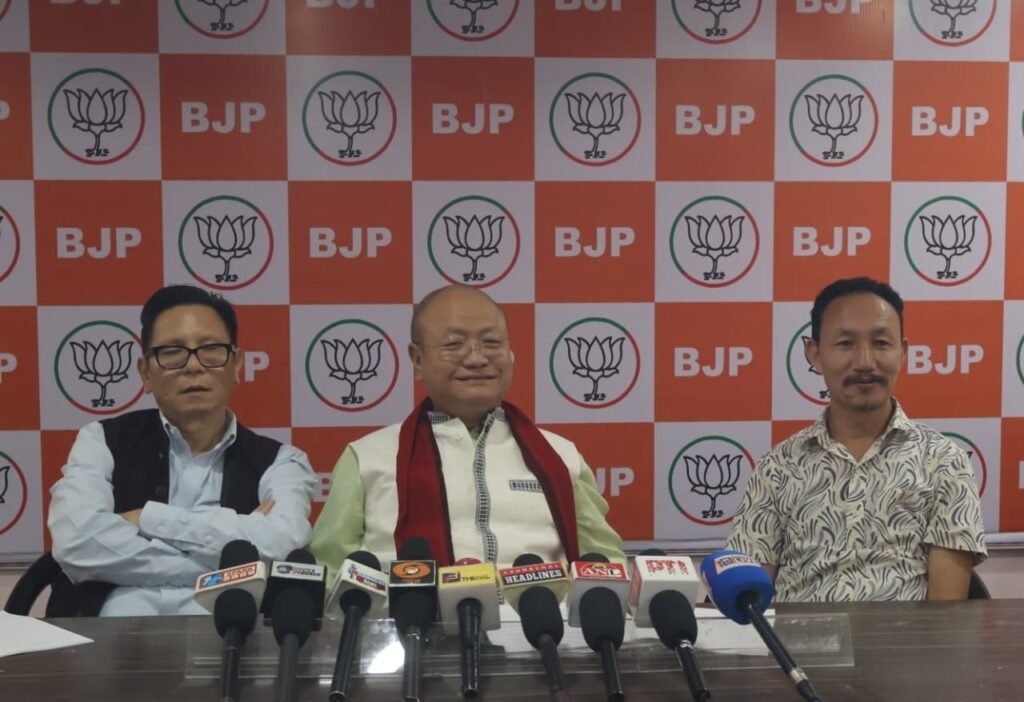
ITANAGAR, OCT 14: The Bharatiya Janata Party (BJP), Arunachal Pradesh, on Wednesday defended the Siang Upper Multipurpose Project (SUMP), highlighting its strategic significance for national security, water resource management and the state’s long-term development while responding to allegations by Congress leaders. Addressing a press conference at the BJP state office here, Rajya Sabha MP Tai Tagak and state Information and Public Relations Minister Nyato Dokum urged the opposition to examine the project’s history and strategic implications before making public statements. Tagak said SUMP was initiated in 1983 under the Brahmaputra Board and accorded National Project status in 2008 during the Congress-led United Progressive Alliance (UPA) government. He said the project’s strategic importance had gained renewed attention in 2019 amid reports of a proposed large-scale hydropower project on the Yarlung Tsangpo river in Tibet under Chinese control. Referring to reports of a proposed 60,000-megawatt project, he said developments across the border had reinforced the need to examine water resource management and strategic preparedness in the region. Tagak maintained that SUMP should not be viewed solely as a hydropower project but also in the context of national security, water management and the long-term interests of Arunachal Pradesh and the Northeast. Appealing to the Congress to adopt a responsible approach, he said discussions on projects of such significance should be guided by facts and informed debate rather than politically motivated allegations that could create confusion and apprehension among the public. He said India possessed the technology and technical expertise required to undertake major hydropower projects, adding that national agencies were prepared to conduct the necessary surveys and assessments. However, he expressed concern that even preliminary procedures, including the preparation of the Pre-Feasibility Report (PFR), were facing obstacles. Tagak stressed that a PFR is an initial stage of project assessment that examines feasibility and potential locations, and should not be mistaken for an immediate decision to begin construction. He called for preliminary surveys and technical studies to proceed so that the project could be assessed on its merits. Highlighting Arunachal Pradesh’s geographical and strategic position, he said the state’s proximity to the international border and its Himalayan river systems made scientific water resource management and strategic infrastructure development particularly important. He also referred to flood-related disasters in the Himalayan region and cited the Kosi Barrage as an example of water infrastructure intended to help manage river flows. He said transboundary river management required long-term planning, scientific assessment and strategic foresight. Dokum reiterated that hydropower projects could contribute to Arunachal Pradesh’s economic growth by strengthening infrastructure, generating employment, promoting local development and supporting the country’s energy security. The BJP said the development of SUMP and other hydropower projects should be assessed objectively, with due consideration for environmental safeguards, technical assessments and public consultation. The party made an appeal to political parties, public representatives and other stakeholders to engage in constructive dialogue on major development projects, taking into account their historical background, strategic implications and potential contribution to the future of Arunachal Pradesh and the country.    

Latest News, Popular News, State News

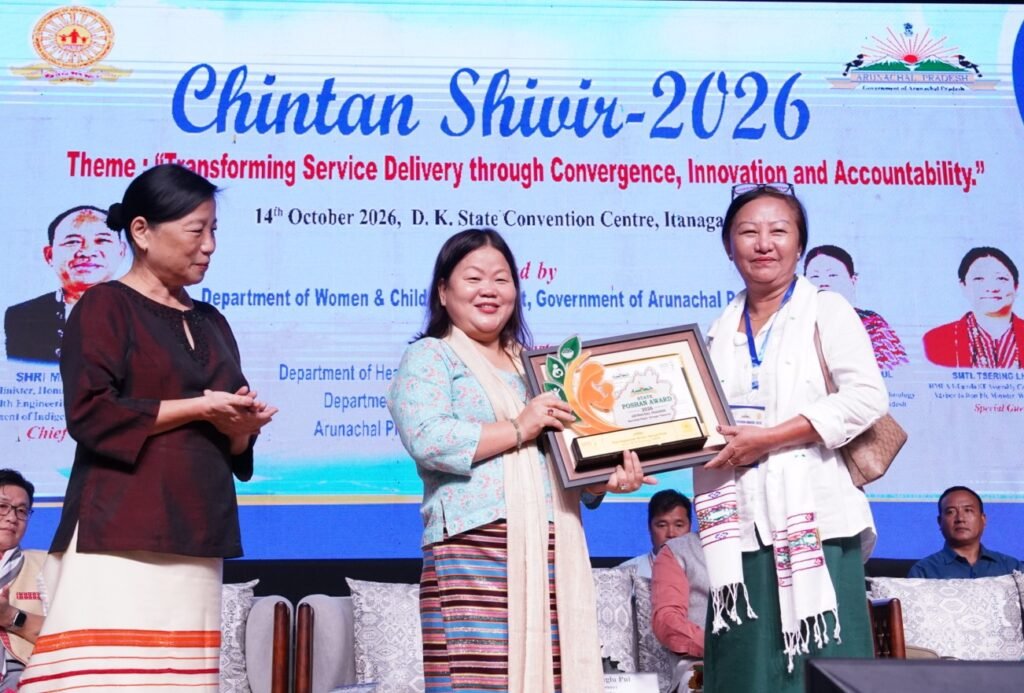
Natung, Pul stress coordinated efforts to strengthen women, child welfare

ITANAGAR, OCT 14: Home Minister Mama Natung and Women and Child Development minister Dasanglu Pul on Wednesday stressed the need for coordinated planning, innovation and accountability to strengthen welfare programmes and ensure effective delivery of services to women and children across the state. Addressing the Chintan Shivir 2026, organised by the Department of Women and Child Development (WCD) at the D K State Convention Centre here, the ministers called for greater convergence among government departments to translate policies into meaningful outcomes, particularly for vulnerable communities in remote areas. The programme, held under the theme “Transforming Service Delivery Through Convergence, Innovation and Accountability”, brought together commissioners, secretaries and officials from the departments of health, education, home and skill development, besides other stakeholders. Natung emphasised that sound planning, constructive dialogue and coordinated implementation were essential to ensuring that government policies translated into tangible benefits for the people. He underscored the importance of cooperation among departments in addressing challenges related to women and child welfare and improving the effectiveness of government initiatives. The home minister also congratulated the recipients of the State Poshan Awards, recognising their contributions towards improving nutrition and the well-being of women and children. Addressing the gathering, Pul said the safety, nutrition, education, dignity and empowerment of women and children must remain central to the government’s development agenda. She identified convergence, innovation and accountability as three key priorities for strengthening service delivery and ensuring that welfare initiatives reach intended beneficiaries. Pul reiterated the state government’s commitment to strengthening the implementation of flagship schemes, including Mission Shakti, Mission Vatsalya, Mission Saksham Anganwadi and Poshan 2.0, under the leadership of Prime Minister Narendra Modi and Chief Minister Pema Khandu. She said the success of welfare programmes should not be measured merely by the number of schemes implemented or funds sanctioned, but by the positive changes they bring to people’s lives. The programme featured deliberations on child protection, foster care, women’s empowerment and nutrition, highlighting the need for a comprehensive and coordinated approach to social welfare. An animated awareness video on the Protection of Children from Sexual Offences (POCSO) Act was also launched during the event to promote awareness about child protection. The State Poshan Awards were also presented in various categories to recognise contributions towards improving nutritional outcomes and community welfare. Pul also acknowledged the contributions of Anganwadi workers, helpers and other frontline functionaries, particularly those serving in remote and difficult areas of Arunachal Pradesh. Calling for collective responsibility, the minister said government departments and stakeholders must work together to ensure that no woman is deprived of support, no child is denied care and protection, and no vulnerable family remains beyond the reach of welfare services. She reiterated the government’s commitment to building a healthier, safer and more inclusive Arunachal Pradesh through effective implementation of welfare programmes.