

ONLINE AGE

(Online version of the Arunachal Age newspaper)

State News

Latest News, Popular News, State News

Tasing distributes appointment letters to DDU-GKY 2.0 trained rural youth

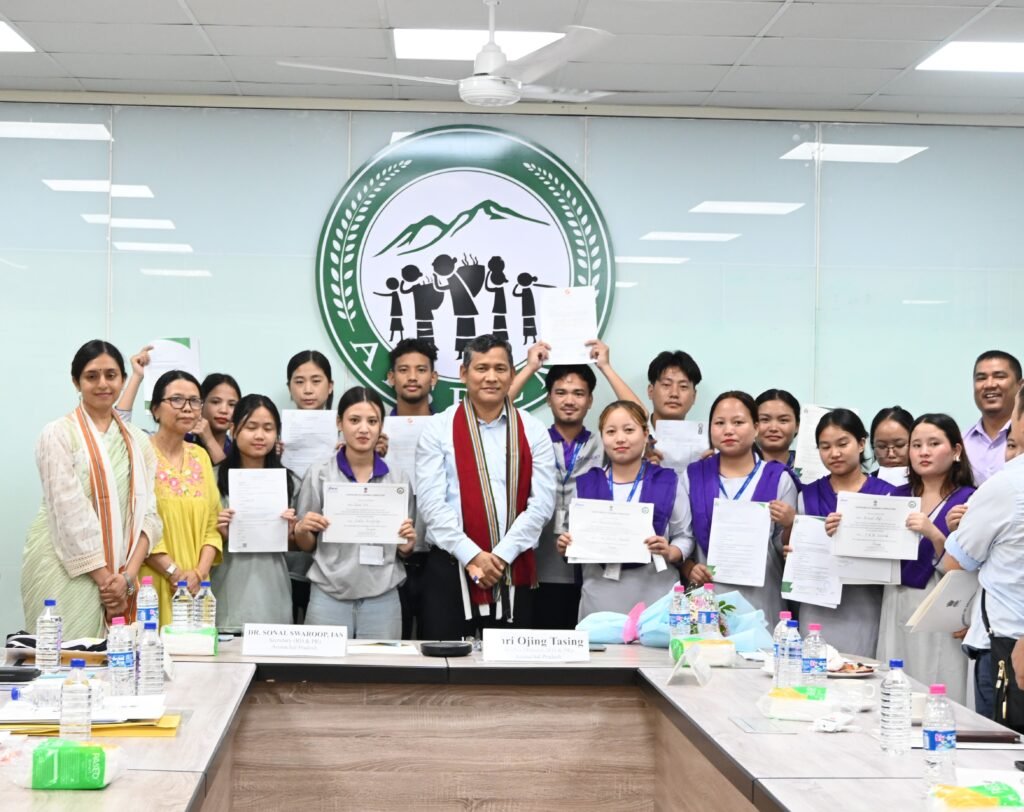
ITANAGAR : Rural Development & Panchayati Raj Minister Ojing Tasing on Tuesday distributed appointment letters to candidates who successfully completed skill training under the Deen Dayal Upadhyaya Grameen Kaushalya Yojana (DDU-GKY) 2.0, marking another step towards enhancing employment opportunities for rural youth in the state. The candidates underwent a three-month skill development programme implemented by the Arunachal State Rural Livelihoods Mission (ArSRLM) under the Department of Rural Development. The training was conducted by empanelled Project Implementing Agencies (PIAs) in various trades, including Airport Terminal Operations, Tourism and Hospitality, Food and Beverage, and Fashion Designing. The participating agencies included Flywing Simulator Training Center Limited, SHEEP Society, Youth Education Development Society, Spurthi Rural Development, Nurture Employability and Economic Development Society, and Topu Bui Multipurpose Welfare Society. Following successful completion of the programme, all the trainees secured employment and received appointment letters. They are expected to join their respective employers at locations across the country, including Itanagar, Naharlagun, Karnataka, Ahmedabad, Chennai, Pune, Goa and Jaipur. The selected candidates will receive annual cost-to-company (CTC) packages ranging from ₹1.5 lakh to ₹3.36 lakh, depending on their job profiles and employers. Congratulating the candidates, Minister Tasing urged them to discharge their responsibilities with sincerity, dedication and professionalism. He also appreciated the efforts of ArSRLM, the Project Implementing Agencies, training partners and employers for facilitating skill development and employment opportunities for rural youth. Expressing their gratitude, the candidates thanked ArSRLM for providing quality training and placement support, stating that the initiative had enabled them to secure meaningful employment and build a better future. DDU-GKY 2.0 is a flagship skill development programme of the Ministry of Rural Development, Government of India, aimed at providing demand-driven training and assured placement opportunities to rural youth.    
Latest News, Popular News, State News

APWWS submits governance reform proposals to APARC

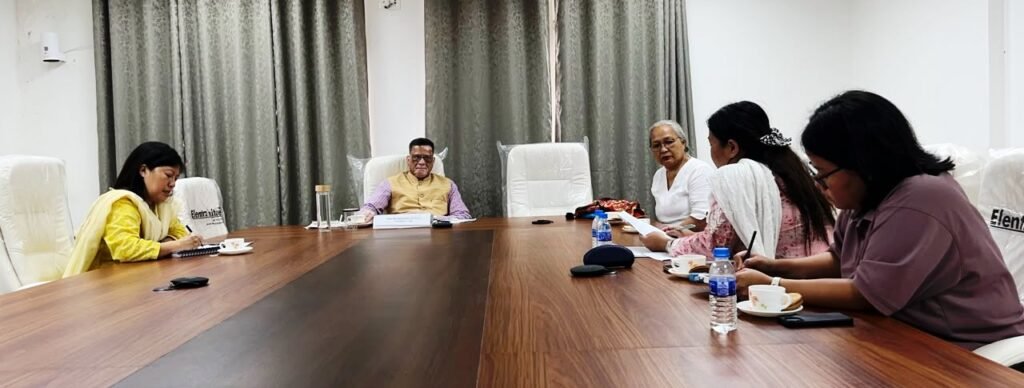
ITANAGAR : The All Arunachal Pradesh Women’s Welfare Society (APWWS) on Tuesday submitted a comprehensive set of recommendations to the Arunachal Pradesh Administrative Reforms Commission (APARC), advocating measures to strengthen governance, improve public service delivery and modernise the state’s administrative system. The memorandum was submitted to APARC Chairman Pramod Jain during a meeting held in Itanagar. Among its major recommendations, APWWS called for a transparent, merit-based and professionally managed recruitment system. It observed that recruitment is a specialised function requiring expertise in talent assessment, competency mapping and behavioural evaluation, and recommended greater involvement of trained human resource professionals in the selection process. The organisation also proposed a mandatory district immersion programme for newly recruited Group ‘A’ and Group ‘B’ officers, under which they would spend 30 to 60 days living and working in remote villages and border areas before taking up regular assignments to better understand local realities and developmental challenges. To improve workforce management, APWWS recommended replacing the traditional post-based staffing system with workload-based manpower planning. It also suggested constituting departmental committees, including women representatives, to periodically review staffing requirements. Among other proposals was the creation of a real-time digital human resource dashboard covering sanctioned posts, vacancies, promotions, transfers and training, cross-functional training for officers to address manpower shortages, and the introduction of outcome-based Key Performance Indicators (KPIs) linked to service delivery, grievance redressal, innovation and citizen satisfaction. The organisation further recommended establishing a structured leadership and mentorship programme involving retired and experienced civil servants, introducing a digital ‘Competency Passport’ for every government employee, institutionalising a comprehensive review of personnel administration every five years, and adopting a ‘One Government, One Citizen Interface’ model to provide multiple public services through a single integrated digital platform. APWWS also urged the government to shift from expenditure-based assessment to outcome-based governance by requiring departments to publish annual targets and measurable performance indicators while promoting proactive disclosure of information to strengthen transparency and reduce dependence on applications under the Right to Information (RTI) Act. During the interaction, APWWS President Jarjum Ete also raised concerns over disparities in school education following the closure of several government schools, stating that many students in rural areas are now compelled to travel long distances to attend classes. She also highlighted the need for effective implementation of the Central Civil Services (Conduct) Rules, stating that proper enforcement could serve as a deterrent against polygamy among government employees. Responding to the memorandum, APARC Chairman Pramod Jain assured the delegation that the Commission would examine the recommendations and take up the matter with the government. The meeting was attended by APARC Under Secretary Omey Apang. The APWWS delegation included General Secretary Samnem Ngemu Lego, Assistant General Secretary Dojum Mara and Health Coordinator Dagrik Gara.  

Latest News, Popular News, State News

Man found hanging from tree near DC office complex in Aalo

ITANAGAR : A 21-year-old man was found hanging from a banyan tree near the deputy commissioner’s office complex at Aalo in Arunachal Pradesh’s West Siang district on Tuesday, police said. The deceased was identified as Nitish Kumar Ram, West Siang Superintendent of Police Kardak Riba said. Ram was found hanging from a banyan tree near the DC office complex here at around 7.50 am this morning. The SP said a suicide note, a handset, and a Bluetooth device were recovered from his body. Police said the deceased was suffering from depression and anxiety. In his suicide note, Ram expressed sorry to his family for not being a good son. He also wrote to his parents to ask them to pardon him for not being good at his studies. The SP said a magisterial inquest has been done and the body has been kept in the mortuary. As the CCTV footage from the nearby government establishment is clear that the deceased died by suicide, no case has been registered, and no foul play is suspected, the SP said. (Source: PTI)    

Latest News, Popular News, State News

Genome study charts roadmap to safeguard Arunachal’s iconic Siangmi mithun

ITANAGAR : In a first for one of Northeast India’s most culturally treasured animals, scientists from ICAR–National Research Centre on Mithun have completed the first whole-genome study of Arunachal Pradesh’s semi-domesticated mithun, providing a scientific foundation for the conservation and genetic improvement of the iconic bovine. The researchers sequenced the complete genomes of 11 mithuns from five villages in East Siang and Lepa Rada districts, identifying nearly five million high-quality genetic markers. The findings have been published in the high impact factor scientific journal, International Journal of Molecular Sciences. Scientists are now working toward a fuller characterisation of this distinct regional population, known as the Siangmi mithun (estimated at 15,000-20,000 animals), whose genetic signature reflects the long history and geographic isolation of the Siang communities that have reared these animals for centuries. The breed registration of this mithun population is pending after the team has characterized and registered world’s first mithun breed Nagami with ICAR – NBAGR, Karnal. Researchers found that the Siang mithun retains moderate genetic diversity with no evidence of recent inbreeding, but ancient inbreeding with moderation, indicating healthy genetic status despite centuries of geographical isolation. Scientists said the genome data would support conservation planning, selective breeding, pedigree management and the exchange of breeding bulls among villages to further strengthen the population. India has around 3.84 lakh mithuns, nearly 70 per cent of them in Arunachal Pradesh, where the animal holds immense cultural, economic and social significance for indigenous communities. (Source: UNI)      

Latest News, Popular News, State News

Community plantation drive

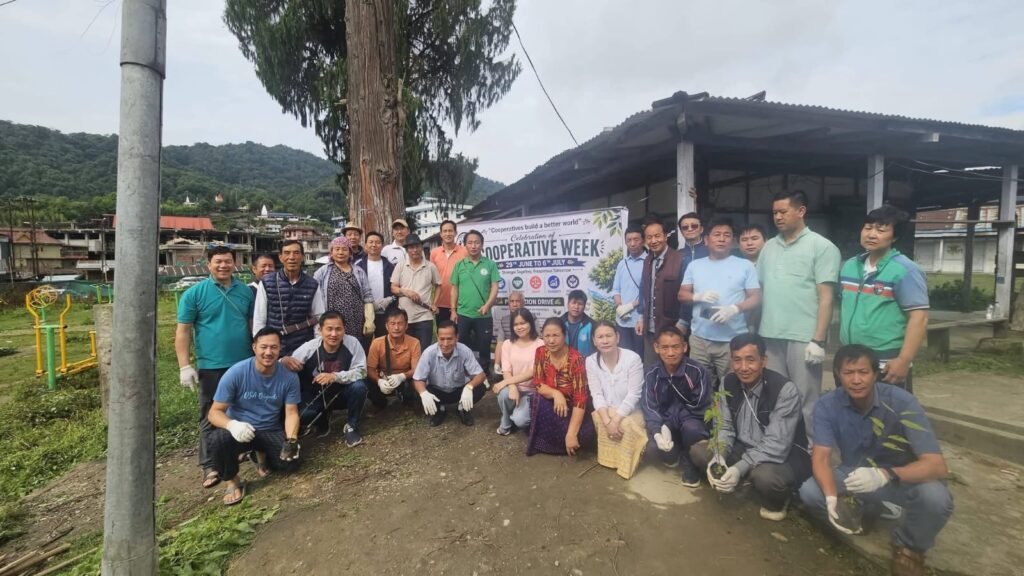
ZIRO : The Office of the Deputy Registrar of Cooperative Societies (DRCS) organised a community plantation drive in Ziro Valley to mark the conclusion of Cooperative Week, observed from June 29 to July 6, and to welcome the forthcoming Sahakarita Utsav. Held under the theme ‘Roots of Cooperation: Green Action for a Sustainable Future’, the initiative brought together cooperative members, local residents and volunteers to plant native tree saplings, highlighting the importance of environmental conservation through collective action. The programme was led by Lower Subansiri Deputy Registrar of Cooperative Societies Hage Komo and Assistant Registrar of Cooperative Societies Dani Yamang. Addressing the participants, they emphasised that the long-term ecological benefits of the plantation drive reflected the cooperative movement’s vision of steady, sustainable growth and community development. The event concluded with a ‘Cooperative Green Pledge’, under which participants committed themselves to nurturing the saplings and promoting environmental stewardship beyond the plantation drive. The office also announced that attention will now shift to the upcoming Sahakarita Utsav, which will showcase the achievements of local cooperatives and the region’s cultural heritage through a series of community-focused programmes and forums. (DIPR)

Latest News, Popular News, State News

Drive against SUPs

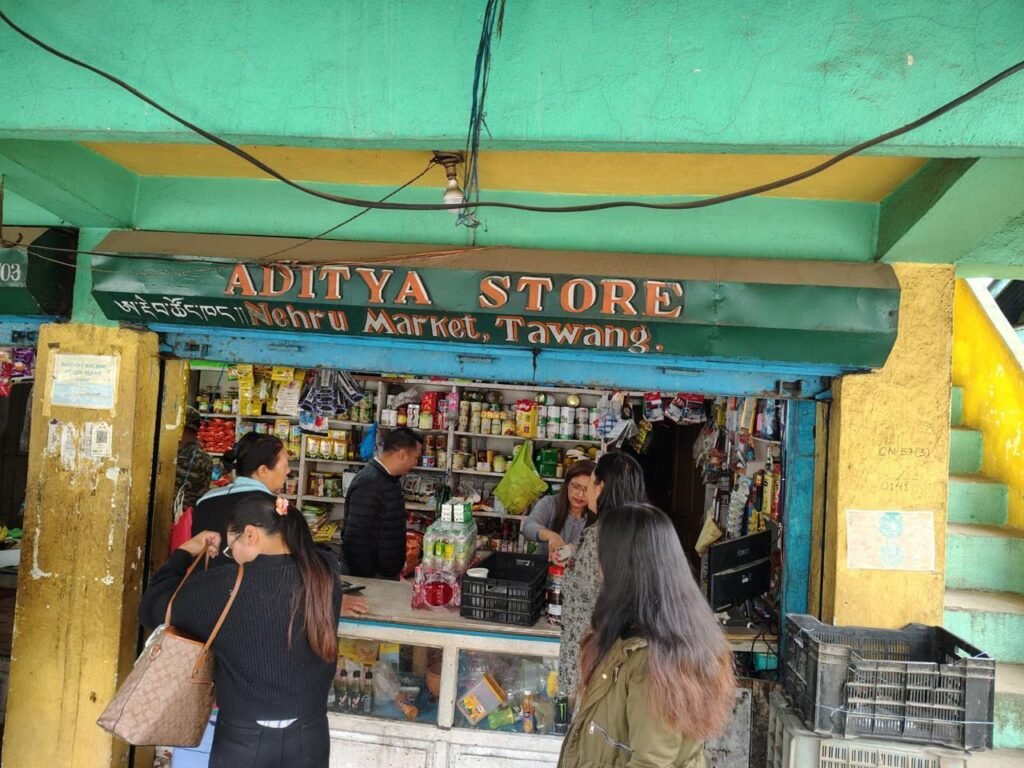
TAWANG : In a sustained effort to make Tawang cleaner, greener and plastic-free, the district administration on Tuesday conducted a surprise inspection at Nehru Market, New Market and Medical Colony to enforce the ban on single-use plastics and plastic drinking water bottles with a capacity of less than two litres. The inspection was led by Tawang Assistant Commissioner-cum-Town Magistrate Nawang Thutan, accompanied by Er Phurpa Lamu and officials of the Department of Urban Affairs. During the drive, shops and commercial establishments were inspected to verify compliance with the district administration’s order prohibiting the sale, storage and use of banned plastic items. The inspection team also sensitised shopkeepers and other stakeholders about the harmful environmental impact of single-use plastics, particularly in the fragile Himalayan ecosystem, and urged them to switch to sustainable and eco-friendly alternatives. Officials reiterated that strict compliance with the ban is mandatory and warned that violations would attract action under the relevant rules and regulations. The drive also served as an awareness campaign, encouraging traders and residents to actively support the district’s efforts to reduce plastic pollution. Reaffirming its commitment to environmental protection, the district administration said such surprise inspections would continue regularly across the district to ensure effective implementation of the ban. It appealed to citizens, traders and visitors to cooperate by avoiding single-use plastics and adopting environmentally sustainable alternatives. The administration expressed confidence that sustained public participation and collective responsibility would help transform Tawang into a model district for environmental conservation and responsible waste management. (DIPR)

Latest News, Popular News, State News

Rain batters eastern Arunachal, heat wave hits ICR

ITANAGAR : While monsoon rain continues to lash several parts of Arunachal Pradesh, the state capital is witnessing a contrasting spell of scorching heat, prompting the Itanagar Capital Region (ICR) administration to issue a heat wave advisory. The India Meteorological Department (IMD) forecast intensified rain in parts of eastern Arunachal Pradesh for Tuesday and issued an ‘orange’ alert asking all to be prepared, as it warned of heavy to very heavy showers accompanied by thunderstorms and lightning for Namsai and Lohit districts. The ICR administration, on the other hand, has issued a heat wave advisory, asking residents to remain cautious following the IMD’s forecast of above-normal temperatures. According to the district-wise forecast issued by the Meteorological Centre here on Monday, widespread rainfall is likely to occur across the state on July 7, with heavy rain and thunderstorms expected in Namsai and Lohit. Thunderstorms accompanied by lightning and moderate to heavy rainfall are also likely in several adjoining districts placed under yellow alert. The weather is expected to remain unsettled on Wednesday, with the orange alert continuing for Namsai. Tirap district has also been placed under an orange alert, while yellow alerts remain in force for most central and eastern districts, indicating the possibility of thunderstorms, lightning and heavy rainfall at isolated places. On Thursday, rainfall activity is likely to ease slightly. But the IMD has retained yellow alerts for a large part of the state, indicating the likelihood of thunderstorms, lightning and moderate to heavy rain at isolated locations. The forecast for Friday suggests a further reduction in adverse weather conditions. Most districts in western, central and northern Arunachal are expected to remain free from any warning, although yellow alerts continue for parts of the eastern and southern districts where isolated spells of rain and thunderstorms may persist. Meanwhile, the ICR administration has advised people to avoid prolonged exposure to the sun, particularly between noon and 3 pm, drink plenty of water, wear light-coloured cotton clothing and avoid strenuous outdoor activities during the hottest part of the day. People travelling outdoors have been asked to carry sufficient drinking water, avoid alcohol and caffeinated or carbonated beverages, and consume oral rehydration solution (ORS) or homemade drinks such as lemon water, buttermilk and rice water to prevent dehydration. Residents have also been advised to seek immediate medical attention if they experience symptoms such as dizziness, weakness or fainting. The advisory further cautioned against leaving children or pets inside parked vehicles and recommended keeping homes well-ventilated to reduce indoor heat. Various departments have been directed to implement preventive measures with immediate effect. The health department has been asked to maintain adequate stocks of ORS, essential medicines, intravenous fluids and ice packs at hospitals and Anganwadi centres while strengthening surveillance of heat-related illnesses. The education department has been instructed to adjust school timings to avoid peak afternoon heat, ensure the availability of safe drinking water on campuses and suspend outdoor physical activities during heat wave conditions. The power department has been directed to ensure an uninterrupted electricity supply to essential institutions, particularly hospitals and schools. (Source: PTI)      

Latest News, Popular News, State News

Former AAPSU leaders join BJP

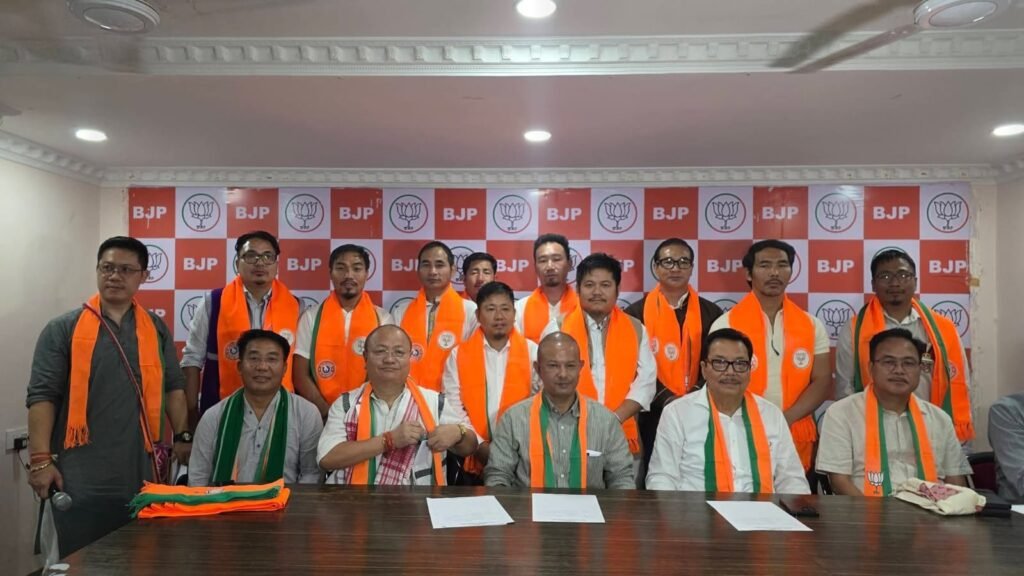
ITANAGAR : The Bharatiya Janata Party (BJP), Arunachal Pradesh unit, inducted several prominent youth leaders into the party during a mass joining programme held at its state headquarters here on Monday. The new entrants were led by former All Arunachal Pradesh Students’ Union (AAPSU) president Tana Dozi Tara and former AAPSU general secretary Ritum Tali, along with several other youth leaders from across the state. The programme was attended by Deputy Chief Minister Chowna Mein, State BJP president Kaling Moyong, Agriculture, Horticulture, Animal Husbandry and Veterinary Minister Gabriel D Wangsu, BJP state vice-president Chow Zingnu Namchoom, Rajya Sabha MP Tai Tagak, BJP state general secretary Tadar Niglar and other party leaders. Welcoming the new members, Mein stressed the importance of understanding the BJP’s ideology and participating actively in the party’s organisational activities with a spirit of voluntary service. He said that while student organisations primarily work for the welfare of the state, joining a political party carries a greater responsibility of serving both the state and the nation. Highlighting the state’s development, Mein said Arunachal Pradesh has witnessed significant progress under the leadership of Chief Minister Pema Khandu, particularly in infrastructure and social sectors. He also acknowledged the contributions of earlier leaders in shaping the state’s growth while stating that development has gained new momentum under the present government. Addressing the gathering, Moyong urged the new members to work closely with party workers and strengthen the organisation from the Booth Level Committees (BLCs) to the mandal and district levels. He also advised them to coordinate with their respective mandal presidents and district units to maintain organisational discipline and cohesion. Reiterating the BJP’s guiding philosophy of “Nation First, Party Second, Self Last”, Moyong called upon the new entrants to dedicate themselves to the service of the nation and the state. The newly inducted leaders include Tana Dozi Tara (Balijan), Ritum Tali (Liromoba), Suraj Tayem (West Seppa), Sonam Tenzing (Tawang), Karma Tsering (Dirang), Pakmik Taipodia (Likabali), Sohalo Ngadong (Anjaw), Tsangpa Tashi (Tawang), Marto Nyodu (Basar) and Pangngam Wangnaw (Pangchou-Wakka). The party said the induction of the youth leaders is expected to further strengthen its grassroots organisational network across Arunachal Pradesh.  

Latest News, Popular News, State News

Wangsu calls for united action to prevent zoonotic diseases

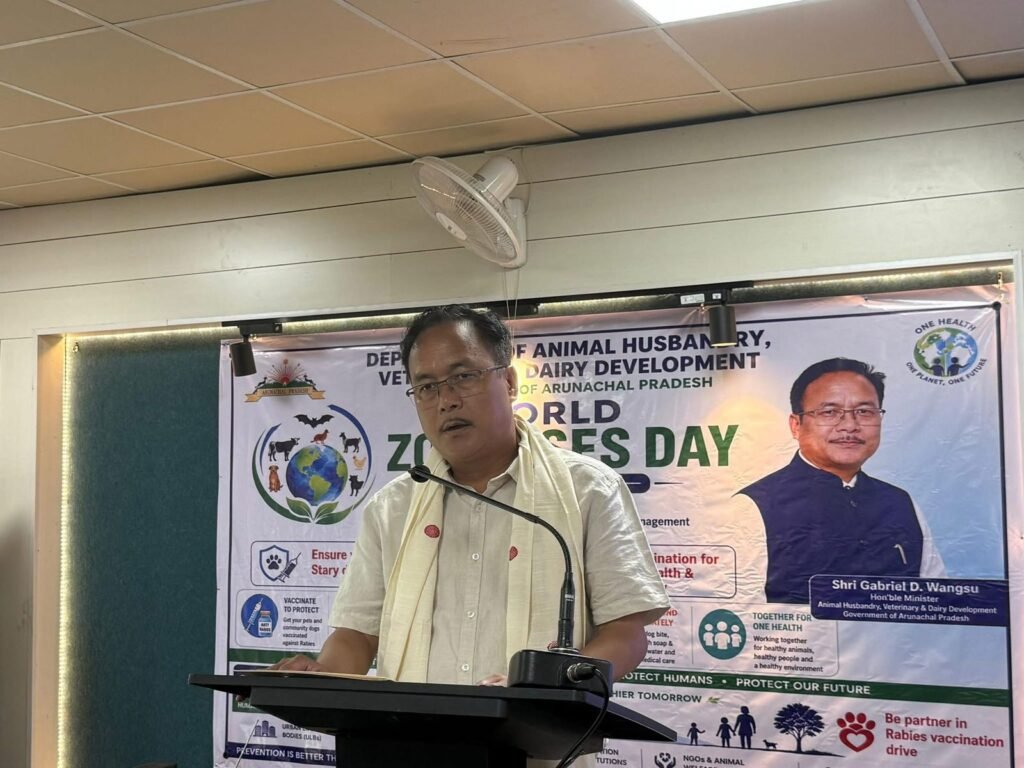
ITANAGAR : Animal Husbandry, Veterinary & Dairy Development Minister Gabriel D Wangsu on Monday called for a coordinated effort involving government departments, healthcare professionals, local bodies and the public to strengthen the ‘One Health’ approach for preventing zoonotic diseases. Stressing that animal and human health are closely linked, he urged citizens to ensure regular vaccination of pets, support scientific management of stray animals and actively contribute towards building rabies-free communities. Addressing the state-level World Zoonoses Day here, Wangsu said nearly 60 per cent of infectious diseases affecting humans originate from animals, while around 75 per cent of emerging infectious diseases have an animal source, an official statement said. He said the COVID-19 pandemic highlighted the need for stronger coordination among veterinarians, doctors, environmental experts, civic bodies and communities to prevent future health emergencies. “Good health does not begin in hospitals alone. It begins in our homes, farms, villages and forests, where people, animals and the environment coexist. Protecting animal health is protecting human health,” the minister said. Earlier in the day, Wangsu inaugurated the Animal Birth Control (ABC) Centre at Ganga here, aimed at scientific management of stray animals, rabies prevention and promotion of animal welfare in the capital region. He also virtually inaugurated a similar centre at Namsai to extend the facility to eastern Arunachal Pradesh. The minister also released Information, Education and Communication (IEC) materials and launched a week-long Anti-Rabies Vaccination and Animal Birth Control Awareness campaign across the state. He administered a public pledge on responsible pet ownership, urging people to vaccinate their pets regularly, avoid abandoning animals and help create rabies-free communities. Highlighting the significance of World Zoonoses Day, Wangsu said the day commemorates the successful administration of the world’s first rabies vaccine by Louis Pasteur on July 6, 1885, marking a milestone in disease prevention. He praised the contribution of veterinarians, para-veterinary personnel and field workers, saying their work in vaccination, disease surveillance, food safety, emergency response and livestock healthcare plays a vital role in protecting public health. “Every time a veterinarian vaccinates a dog against rabies, an entire neighbourhood becomes safer. Their work goes beyond treating animals as they also protect human lives, strengthen food security and support the livelihoods of farmers,” he said. Appealing to the public to become partners in disease prevention, Wangsu urged pet owners to vaccinate their dogs and cats every year, never abandon pets and seek immediate medical attention in case of animal bites. He also asked livestock farmers to report unusual illnesses in animals promptly and encouraged communities to support humane stray animal management through scientific Animal Birth Control and anti-rabies vaccination programmes. The minister added that government efforts alone would not be enough to eliminate rabies and other zoonotic diseases and stressed that public participation was equally important. (Source: PTI)      

Latest News, Popular News, State News

Mein calls for balancing development with environmental sustainability

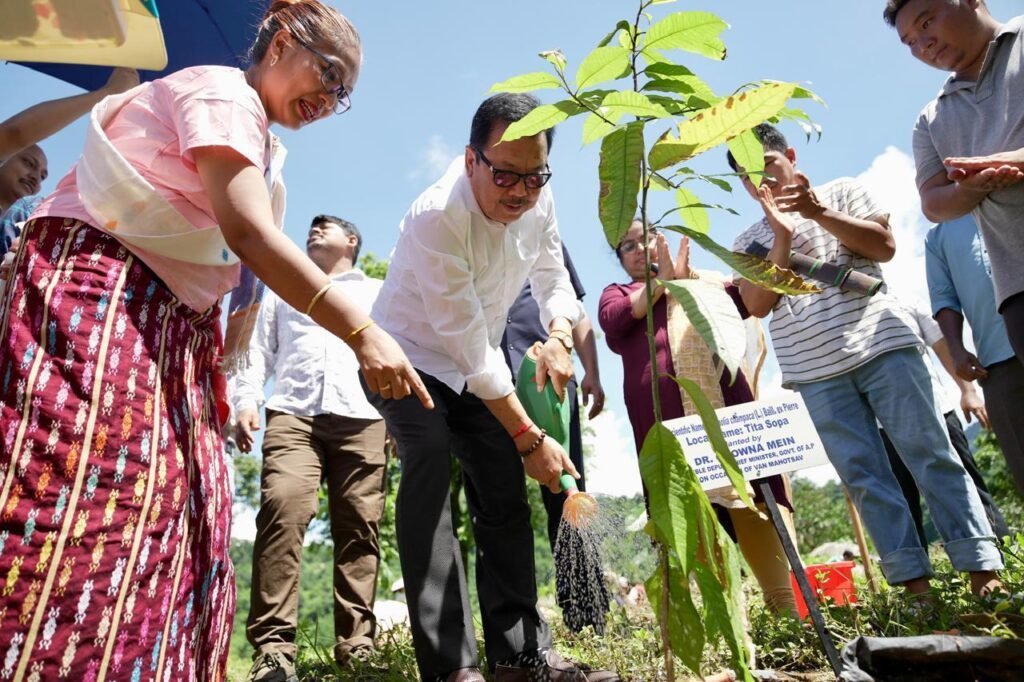
ITANAGAR : Deputy Chief Minister Chowna Mein on Monday called for balancing development with environmental sustainability. Speaking at the ‘Van Mahotsav’ celebrations here, he urged the youth to preserve the state’s rich biodiversity, indigenous knowledge and cultural heritage. Mein said biodiversity, cultural diversity and sustainable development are closely linked and must be protected together. Emphasising that true progress lies in embracing modernity without losing cultural roots, the deputy chief minister urged the youth to preserve and promote Arunachal Pradesh’s indigenous traditions, saying these practices have enabled communities to live in harmony with nature for generations. He said tree plantation drives should not end with planting saplings but success should be measured by the number of trees that survive. Expressing concern over the high mortality of saplings planted along roadsides and in public institutions, Mein appealed to schools, government departments, community organisations and citizens to take collective responsibility for nurturing every tree planted. He said Arunachal Pradesh is part of one of the world’s 12 biodiversity hotspots and is home to diverse ecosystems ranging from tropical evergreen forests to alpine regions. Researchers, he said, continue to discover new species of plants, insects, amphibians, fish and wildlife in the state, highlighting its ecological importance. Calling for greater efforts to protect rare and endangered plant species, Mein said taxonomy and ethnobotanical research play a vital role in documenting and conserving the region’s unique biodiversity. He encouraged students and researchers to develop scientific curiosity and contribute to conservation efforts. The deputy chief minister said environmental conservation and sustainable development must go hand in hand, adding that protecting forests, rivers and watersheds not only conserves biodiversity but also strengthens livelihoods, improves water security and supports rural development. He also expressed concern over indiscriminate hunting and the declining population of birds and wildlife, urging communities to promote responsible eco-tourism, bird-watching, trekking and other nature-based activities that generate sustainable livelihoods while protecting the environment. Highlighting the close spiritual and cultural relationship between Arunachal Pradesh’s indigenous communities and nature, Mein said traditional respect for forests, rivers and mountains offers valuable lessons for sustainable living and should continue to guide future development. Referring to climate change, global warming, floods, landslides and soil erosion, he said these challenges underscore the need to maintain ecological balance. “Development must always be planned with environmental sustainability at its core,” he said. Mein also praised Prime Minister Narendra Modi’s vision of the Northeast as ‘Ashtalakshmi’, saying the goal of ‘Viksit Bharat’ can be achieved only through the inclusive development of the region while preserving its biodiversity and cultural heritage. During the programme, the deputy chief minister was presented with Ophiorrhiza chownaii, a newly described plant species named in his honour for his contributions to environmental conservation, biodiversity protection and sustainable development. Accepting the recognition, he dedicated the honour to the people of Arunachal Pradesh and reaffirmed his commitment to protecting the state’s natural heritage. The event was organised by the state regional centre of Botanical Survey of India (BSI) in collaboration with the G B Pant National Institute of Himalayan Environment (GBPNIHE), North East Regional Centre, here. The event began with a plantation drive at the BSI campus where Mein, along with scientists, academicians, researchers, NCC cadets and students, planted saplings as a mark of commitment towards environmental conservation. (Source: PTI)