


ONLINE AGE

(Online version of the Arunachal Age newspaper)

State News

Latest News, Popular News, State News

NABARD celebrates 45th Foundation Day, highlights four decades of rural development in Arunachal

ITANAGAR : The National Bank for Agriculture and Rural Development (NABARD) on Sunday celebrated its 45th Foundation Day, commemorating more than four decades of service to rural India while reaffirming its commitment to inclusive, resilient and sustainable rural development in Arunachal Pradesh. Established on July 12, 1982, NABARD has evolved from a rural credit institution into the country’s apex development financial institution for agriculture and rural development, combining finance, institution building, supervision, innovation and development interventions. In Arunachal Pradesh, NABARD has worked closely with the State Government, banks, cooperative institutions, civil society organisations and rural communities to strengthen infrastructure, agriculture, livelihoods and financial inclusion. Its interventions span rural roads and bridges, irrigation, drinking water, health and education infrastructure, tribal orchard development, farmer collectives, spring rejuvenation, women empowerment through Self-Help Groups (SHGs), promotion of indigenous products and market linkages. One of NABARD’s most significant contributions in the State has been through the Rural Infrastructure Development Fund (RIDF). Under the scheme, NABARD has sanctioned 534 projects involving cumulative assistance of ₹5,116.46 crore for the Government of Arunachal Pradesh. The projects cover rural roads and bridges, irrigation, drinking water, flood protection, soil conservation, healthcare, educational institutions and other public infrastructure aimed at improving connectivity and enhancing the quality of life in remote areas. To strengthen rural credit, NABARD has extended refinance support to Arunachal Pradesh Rural Bank, sanctioning ₹109.56 crore for short-term agricultural loans and ₹86.05 crore for long-term agricultural credit. It also plays a key supervisory role over Regional Rural Banks and cooperative banks while preparing district-level Potential Linked Credit Plans and the State Focus Paper to guide rural credit planning. Financial inclusion remains a core focus of the institution. Through the SHG-Bank Linkage Programme, Joint Liability Groups, financial literacy initiatives, capacity building and digital financial inclusion, NABARD has supported wider access to formal banking services. It has extended ₹2,890.22 lakh for various financial inclusion initiatives in Arunachal Pradesh. Recognising the importance of collective farming, NABARD has promoted 17 Farmer Producer Organisations (FPOs) in the State, enabling farmers to aggregate produce, improve value addition, access institutional finance and strengthen market linkages. The institution has also expanded livelihood opportunities through its Tribal Development Fund, popularly known as WADI (TRIBES) projects. These initiatives support orchard-based livelihood development, intercropping, soil and water conservation, livestock development and community institution building, helping tribal households establish sustainable long-term income sources. To promote climate-resilient agriculture, NABARD is implementing the JIVA programme, encouraging natural farming practices through the use of Jeevamrit, Beejamrit, Ghanjeevamrit, biomass recycling and diversified cropping systems. The initiative seeks to improve soil health, reduce dependence on chemical inputs and enhance the resilience of farming systems. In the farm sector, NABARD has sanctioned assistance of ₹2,853.27 lakh for various development initiatives, including the adoption of digital technologies and Internet of Things (IoT)-based solutions to improve farm productivity and resource management. Addressing climate change and ecological challenges, NABARD is supporting springshed development, watershed management, biodiversity conservation, efficient water use and climate-resilient agriculture to strengthen water security and natural resource management across the Himalayan State. The institution has also played a significant role in promoting Geographical Indication (GI) products. With NABARD’s support, 18 products from Arunachal Pradesh have secured GI registration, while another 18 products are in the pipeline. Beyond registration, the institution is assisting producer groups in branding, quality assurance, packaging and market access to ensure greater economic benefits for farmers and artisans. To improve rural marketing, NABARD has supported Rural Haats, Rural Marts, exhibitions, buyer-seller meets and other marketing platforms that enable farmers, artisans, SHGs and producer groups to access wider markets. Recognising the growing importance of rural entrepreneurship, NABARD has sanctioned ₹963.78 lakh for off-farm sector development and ₹245.95 lakh for skill development and capacity-building programmes. These initiatives support rural youth and women in establishing enterprises in food processing, tailoring, handicrafts, bakery and other locally viable sectors. The institution has also strengthened the cooperative sector by supporting the computerisation of 14 Large-sized Multipurpose Cooperative Societies (LAMPS) in Arunachal Pradesh, alongside capacity building and governance reforms. Throughout its development initiatives, NABARD has placed women at the centre of rural transformation by promoting SHGs, financial literacy, entrepreneurship, livelihood programmes and market access, enabling greater financial independence and community participation. Highlighting its collaborative approach, NABARD said its work in Arunachal Pradesh has been anchored in partnerships with the State Government, banks, cooperative institutions, universities, research organisations, non-governmental organisations, FPOs, SHGs and community-based organisations to deliver locally relevant development solutions. As NABARD enters its 45th year, it reaffirmed its commitment to supporting Arunachal Pradesh’s rural economy through investments in high-value agriculture, horticulture, natural farming, GI products, food processing, bamboo, handloom and handicrafts, renewable energy, eco-tourism, rural enterprises and technology-driven agriculture. The institution said it would continue working alongside rural communities to strengthen infrastructure, build sustainable livelihoods, protect natural resources and promote inclusive economic growth across the State.      

Latest News, National, Popular News, State News

Jal Shakti Ministry to hold key conference with states on water sector reforms on Monday

NEW DELHI : The Ministry of Jal Shakti will hold a conference of senior water resources secretaries from states and Union Territories on Monday to review key water sector initiatives and strengthen Centre-state coordination on reforms and implementation. The conference, to be convened by the Department of Water Resources, River Development and Ganga Rejuvenation under the Ministry of Jal Shakti at Sushma Swaraj Bhawan here, aims to review the progress of the ministry’s major national programmes and discuss priority initiatives in the water resources sector. Key issues on the agenda include the modernisation of the Command Area Development and Water Management (M-CADWM) scheme, the nationwide ‘Catch the Rain’ campaign, revised project appraisal guidelines, dam safety and state water reforms. Union Jal Shakti Minister C R Patil will chair the conference. Minister of State for Jal Shakti Raj Bhushan Choudhary and Secretary, Department of Water Resources, River Development and Ganga Rejuvenation, V L Kantha Rao, will co-chair it, according to an official statement. The conference will be attended by senior officials from the water resources departments of all states and Union Territories, as well as the Ministry of Jal Shakti, including its organisations, attached and subordinate offices such as the Central Water Commission, National Dam Safety Authority and National Water Mission. Discussions will focus on eight priority agenda items, including the status of the modernisation of the Command Area Development and Water Management (M-CADWM) scheme and the special one-month nationwide ‘Catch the Rain’ campaign aimed at strengthening people’s participation in water conservation. Other issues on the agenda include revised draft project appraisal guidelines for irrigation, multipurpose and flood management projects, rule curves of dam reservoirs and their effective implementation for improved reservoir operations and dam safety, the status of the state water reforms framework, completion of comprehensive dam safety evaluation under the Dam Safety Act, 2021 by December 2026, progress of irrigation censuses in states and Union Territories, and a framework for model state water awards. According to the ministry, the conference will also provide an opportunity for states and Union Territories to share experiences, discuss implementation challenges and evolve coordinated strategies to accelerate reforms in the water sector. The deliberations are expected to facilitate the timely implementation of the ministry’s ongoing programmes. The conference forms part of the Ministry of Jal Shakti’s continued efforts to enhance sustainable water resources management through improved policy coordination, institutional strengthening, efficient project implementation, enhanced dam safety and greater community participation in water conservation, it said. (Source: PTI)    

Latest News, National, Popular News, State News

Will hold PM Modi accountable for ‘betrayal’: Cong ups ante on Ram Temple donation row

NEW DELHI : Stepping up its attack on the government over the Ram temple donation embezzlement case, the Congress on Sunday questioned Prime Minister Narendra Modi’s “silence” and said the country will never forgive the BJP-RSS for their “betrayal of faith”. Pointing out that Congress leaders have held 48 press conferences across the country on the issue, party general secretary in-charge of communications Jairam Ramesh demanded that the prime minister “break his silence” on the “theft scandal”. Prior to this, answers were sought from the prime minister through eight press conferences held at the AICC headquarters in New Delhi between June 26 and July 9, Ramesh said in an X post in Hindi. “No matter how hard Prime Minister Modi, the RSS and the BJP try, the Congress will not rest until it compels Prime Minister Modi to be held accountable for this betrayal: the theft of donations at the Lord Shri Ram temple in Ayodhya, which has struck a blow to the faith of crores of people across the country,” Ramesh said, sharing screenshots from 13 press conferences held by the party on Sunday, including in Manipur, Goa, Madurai and Bhubaneswar. Ramesh accused the BJP-RSS of collecting donations in the name of Lord Ram while running a “racket of theft” behind the scenes. The heinous act of donation theft at the Ram temple in Ayodhya is a massive deception perpetrated against his devotees, Ramesh asserted. “All indications so far suggest that the prime minister and the top leadership of the BJP-RSS utilised the SIT to provide a ‘safe exit’ to their close associates responsible for this theft; furthermore, the actions taken by the Uttar Pradesh Police have proven to be nothing more than an attempt to shield the true masterminds behind this murky affair,” he said. Ramesh reiterated the party’s demands for an independent investigation supervised by the Supreme Court, a forensic audit, a fixation of accountability and strict action against the guilty. In an earlier X post, Ramesh had said, “Donation Theft: A Betrayal of Faith. A month has passed since the theft of donations at the Lord Shri Ram Temple came to light, yet Prime Minister Modi, who is quick to claim credit for everything, remains silent when it comes to accountability.” New facts emerging daily are exposing those who have politicised the Ram temple issue, he said. Even the Special Investigation Team (SIT), constituted ostensibly to resolve the matter, has been forced to acknowledge the daily disappearance of lakhs of rupees in offerings, Ramesh said. “The theft of donations at the Lord Shri Ram Temple cannot be limited to just a few employees; yet, this government — hostile to the cause of Ram — is intent on shielding the real culprits,” he alleged. The Congress has consistently maintained that the SIT, the FIR, and the resignations are merely attempts to hoodwink the nation, Ramesh said. Government efforts to suppress the matter make it evident that Champat Rai and other temple trustees harbour deep secrets; this is why the Modi government is taking no action against them, and their influence remains intact, Ramesh said. “The Congress demands the following: An independent and impartial investigation supervised by the Supreme Court, a forensic audit, fixation of accountability, strict action against the guilty,” he said. “Prime Minister, the nation wants to know: Why this silence? The country will never forgive the BJP and RSS for this planned betrayal of faith, perpetrated under Modi’s patronage,” Ramesh alleged. The Congress on Saturday sought to corner Prime Minister Modi over the alleged embezzlement of donations, questioning his “silence” on the issue and saying it will demand answers from him in the upcoming Parliament session. Under attack from the Congress and others, the BJP has maintained that those found guilty of wrongdoing in the case will not be spared and alleged that the opposition parties, which never supported Ram temple construction, were using the issue to divide Hindus. The alleged embezzlement of Ram temple donations came to light on June 7. An FIR was registered on June 25, following a preliminary report from the SIT constituted by the Uttar Pradesh government. Eight people associated with the temple’s donation and counting process have been arrested so far, while the investigation is continuing. (Source: PTI)    

Latest News, Popular News, State News

Head of apex research body urges youth to focus on continued learning to meet future challenges

GUWAHATI : The CEO of Anusandhan National Research Foundation (ANRF), Shivkumar Kalyanaraman, on Sunday said that interdisciplinary collaboration and entrepreneurial mindset would be needed to meet the challenges of the future. He exhorted youth to continue in the process of learning as deep knowledge, sound judgement and ability to evolve solutions will be key in the age of AI. Delivering the Convocation address at IIT-Guwahati, Kalyanaraman said, “Congratulations to the graduating students. I wish you a successful career, but I also suggest you to build capabilities for the country. Use your knowledge to create a meaningful impact on society.” Urging the students to continue their learning graph, he added, “In the age of AI, the true differentiator will be deep knowledge, sound judgment, and the ability to define meaningful problems rather than merely generate answers.” The CEO of the country’s apex body established by the Central government to seed, grow and promote research and development across universities, colleges and research laboratories emphasised that the challenges of the future will demand interdisciplinary collaboration and an entrepreneurial mindset that takes ownership of solving problems that matter. “India needs innovators who can translate research into technology, build impactful solutions and contribute to national development. Through ANRF, we are strengthening India’s research and innovation ecosystem by fostering frontier research and academia-industry collaboration,” Kalyanaraman added. A total of 2,265 students received their degrees in various disciplines during the 28th Convocation ceremony, which was presided over by Prahlada Rama Rao, acting chairman, Board of Governors, IIT-Guwahati, while Devendra Jalihal, Director of the institution, presented the Convocation report. Saptarshi Mukherjee, BTech in Data Science and Artificial Intelligence, achieved the top score in the Undergraduate batch and was awarded the President of India Gold Medal. Atri Chattopadhyay, BTech in Electronics and Electrical Engineering, received the Dr Shankar Dayal Sharma Gold Medal. Moreover, Praneel Bhattacharya, M Tech in Chemical Engineering, was awarded the Governor of Assam PG Gold Medal, while Sarthak Kapoor, BTech in Computer Science and Engineering, was awarded the Governor of Assam UG Gold Medal. The Institute also awarded 18 students with Institute Silver medals for their remarkable academic performance. During his address, Jalihal said, “As our graduating students embark on diverse career paths, I extend my heartiest congratulations and best wishes to each one of them. I am confident that with their knowledge, hard work and dedication, they will excel in their chosen professions and make meaningful contributions to society and the nation.” He added that with 2,478 research papers published in the past year, IIT-Guwahati has continued to strengthen its position as a leading centre for research and innovation. “We are actively expanding our campus infrastructure with state-of-the-art research facilities while enhancing our incubation ecosystem. Further, we are advancing on multiple fronts to create a vibrant and future-ready ecosystem that nurtures talent and innovation,” he said. The director further said that the Institute is undertaking a comprehensive review of its undergraduate curriculum with a stronger emphasis on experiential learning and industry engagement. “Additionally, we are strengthening student support systems by improving access to mental health, yoga and well-being facilities, alongside investing in sustainable campus infrastructure to enhance the quality of campus life,” he added. Rama Rao, in his address, highlighted IIT-Guwahati’s contributions to research, innovation and nation-building initiatives. The Manekshaw Centre of Excellence for National Security Studies and Research is one such example of the Institute’s commitment to developing indigenous solutions for the country’s defence and strategic needs, he said. “The Institute’s partnerships with leading Japanese universities is contributing meaningfully to the vision of a Viksit Bharat and position India as a global leader,” he added. (Source: PTI)    

Latest News, Popular News, State News

AEDMA Foundation Day Sports Tournament concludes with thrilling finals

ITANAGAR :  The 14th AEDMA Foundation Day Sports Tournament 2026 concluded on a high note on Saturday with thrilling football and volleyball finals, showcasing sportsmanship and healthy competition among members of the media fraternity. In the men’s football final, PSC-B defeated PSC-A 6-5 in a closely contested match at the Champions Pro 9 Futsal Ground in Lekhi to emerge champions. Speaking at the inaugural football match, Arunachal Press Club President Amar Sangno underscored the importance of balancing professional commitments with physical fitness. He encouraged media professionals to actively participate in sports to maintain a healthy and balanced lifestyle. The men’s volleyball final, held at the Pansa Multipurpose Indoor Hall in Chimpu, saw Team AEDMA defeat Team Media Warriors to lift the championship trophy. Addressing the inaugural volleyball match, Arunachal Motorsports Association Chairman Likha Tacho assured continued support for AEDMA’s sporting initiatives. He urged media professionals to incorporate sports into their daily routine to remain physically fit and mentally healthy. AEDMA President JT Tagam thanked all participating teams, officials and volunteers for contributing to the success of the tournament. He also emphasised the need for greater participation of women in future sporting events organised by media bodies. AEDMA expressed gratitude to the Arunachal Motorsports Association, Green Adventure Park, Kameng Aahsi, MCube Events and Soge Restro for their support in making the tournament a success.    

Latest News, Popular News, State News

Justice delivery system must evolve with changing nature of litigation: CJI

GURUGRAM : Chief Justice of India Surya Kant on Sunday inaugurated the ‘Tower of Justice’ judicial complex in Gurugram, emphasising that the justice delivery system must evolve with the changing nature of litigation. According to an official statement, the event was attended by Haryana Chief Minister Nayab Singh Saini, Union Power Minister Manohar Lal Khattar, and Union Law Minister Arjun Ram Meghwal. The CJI also advocated establishing integrated district court complexes across Haryana on the lines of Uttar Pradesh, saying that more courts will enhance judicial capacity, particularly in commercial disputes and cases under the Negotiable Instruments Act. The new facility houses 55 modern courtrooms compared to 45 in the earlier one, and the complex has been equipped with facilities such as video-conferencing and a judicial record room with a proposed International Arbitration Centre, functioning under the supervision of the high court, the statement said. Justice Kant said that the construction of the ‘Tower of Justice’ creates an environment for the administration of justice. At the same event, he also virtually laid the foundation stone of the Tauru and Punhana Judicial Complexes in Nuh district. He also recalled his privilege of performing the groundbreaking ceremony of this judicial complex while serving as a Judge of the Punjab and Haryana High Court in January 2017. The courts in Gurugram city, which has regional offices of more than half of the Fortune 500 companies, are dealing with more than 24,000 civil disputes, nearly 1,000 commercial disputes and over one lakh cases under the Negotiable Instruments Act. He expressed confidence that the Tower of Justice, built on seven acres of land, would emerge as a symbol of justice for every citizen. Saini said that the judicial complex is a symbol of the Constitution’s dignity and the unwavering faith of citizens in the justice delivery system. “The establishment of a modern judicial complex in such a city will further strengthen and improve the justice delivery system,” he said. Coincidentally, he said, the building, whose foundation was laid in 2017 by Kant, who was Judge of the Punjab and Haryana High Court, was inaugurated by him on Sunday. Referring to Prime Minister Narendra Modi’s vision of a Viksit Bharat by 2047, he said that along with ease of doing business, equal importance must be given to ease of justice. He said that this judicial complex, developed in two towers — on the land of Guru Dronacharya and Mata Sheetla Devi — is among North India’s largest judicial complexes. Saini also announced that a portion of the old judicial complex will be earmarked for the construction of modern chambers for advocates. Khattar said, “With the increasing number of cases in a rapidly developing district like Gurugram, there was a pressing need for a modern judicial complex equipped with world-class facilities.” Meghwal called it an important milestone in the collective commitment to making the justice delivery system more accessible, effective and citizen-centric. Referring to the PM’s mantra of “Reform, Perform and Transform”, he said that a modern, transparent and robust justice system is indispensable for building a developed India. “The central government is continuously strengthening the infrastructure of subordinate courts to accelerate judicial reforms. Through initiatives such as e-Courts, e-Filing, e-Prosecution, e-Prisons, e-Forensics, e-Seva Kendras, digital payments and national judicial digital systems, the justice delivery process is becoming simpler, safer and faster,” he said in the statement. Union Minister of State Rao Inderjit Singh, who was also present during the occasion, said that the PM’s vision of Ease of Doing Business and Ease of Living can be realised only when every citizen has access to timely and affordable justice. According to Singh, since 2014, more than 1,500 obsolete laws have been repealed, and via reforms, including the Jan Vishwas Act, the Bharatiya Nyaya Sanhita, National Judicial Data Grid, e-Filing, AI-based case management, and the expansion of commercial courts are playing a significant role in reducing pendency. “As Gurugram rapidly emerges as the country’s economic capital, the city has now received judicial infrastructure befitting its growing stature and requirements”, added Singh. Acting Chief Justice of the Punjab and Haryana High Court Justice Ashwani Kumar Mishra paid his gratitude to the thousands of construction workers, masons, engineers and support staff for their role in this project. (Source: PTI)  

Latest News, Popular News, State News

AAPWWS extends aid to flood victims

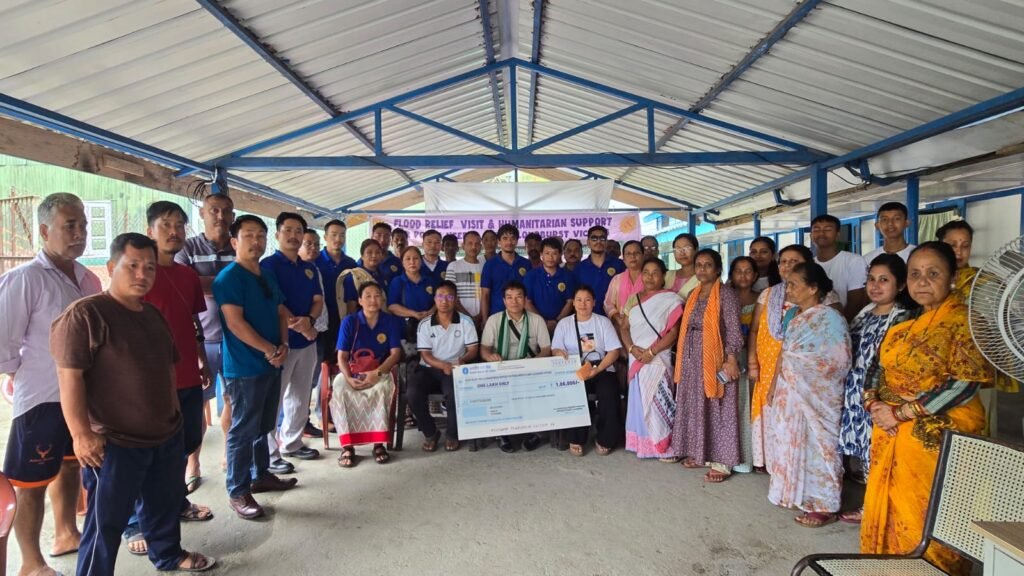
ITANAGAR : The All Arunachal Pradesh Workers Welfare Society (AAPWWS) extended financial assistance of ₹1 lakh to families affected by the recent floods in Possa during a visit to the flood relief camp on Saturday. The AAPWWS team, led by its president Jalley Sonam and general secretary Karbia Sonam Tara, met the affected families, expressed solidarity with them and assured continued support during their recovery. Speaking to the media, Jalley Sonam said it was deeply distressing to witness the loss of lives and the widespread devastation caused by the floods. He prayed that such a tragedy would never recur and conveyed heartfelt condolences to the bereaved families. He said that although AAPWWS is a newly formed organisation, it remains committed to serving the people, particularly workers and labourers, and would continue to extend support to those in need during times of crisis.

Latest News, Popular News, State News

APLS holds 153rd monthly sitting

ITANAGAR : The Arunachal Pradesh Literary Society (APLS) on Sunday held its 153rd monthly sitting at the society’s office hall under the chairmanship of Rajiv Gandhi University Assistant Professor Dr Doyir Ete Taipodia. The session featured recitations of self-composed poems, short stories, articles and translated literary works, followed by interactive discussions on the presentations. Dr Bompi Riba, Dr Moge Basar, Takhe Yasa, Takhe Yebyang, Yagyaj and Tarh Susana presented their original poems in English and Hindi. Inumoni Das Thongchi recited the Assamese translation of Dr Doyir Ete Taipodia’s acclaimed poem Lost Word, which she translated. Yagyaj also presented a short story titled ‘The Prize of the Faith’, highlighting issues arising from religious conversion in India. Wango Socia presented an article titled ‘The Preservation of Literature’ through the Prism of the Poetry Book of Dr Tunung Tabing, emphasising the importance of preserving indigenous languages and cultural heritage through literature. The monthly sitting concluded with members reaffirming their commitment to promoting literary creativity and preserving the rich linguistic and cultural traditions of Arunachal Pradesh.

Latest News, National, Popular News, State News

Centre, Meghalaya to host two-day national conference on NextGen administrative reforms

NEW DELHI :  The Department of Administrative Reforms and Public Grievances (DARPG), in collaboration with the Government of Meghalaya, will organise a two-day National Conference on the theme “NextGen Administrative & e-Gov Reforms” in Shillong on July 13 and 14, bringing together policymakers, administrators, technology experts and governance practitioners from across the country, it was announced on Sunday. Union Minister of State (Independent Charge) for Science and Technology and Earth Sciences, and Minister of State in the Prime Minister’s Office, Personnel, Public Grievances and Pensions, Atomic Energy and Space, Dr. Jitendra Singh, along with Meghalaya Chief Minister Conrad K. Sangma, will address the inaugural session of the conference. The inaugural session will also be addressed by Secretary, DARPG, Department of Pension and Pensioners’ Welfare (DoPPW) and Ministry of Development of North Eastern Region (MDoNER), Nivedita Shukla Verma, and Meghalaya Chief Secretary Dr. Shakil P. Ahammed. More than 300 delegates, including senior officials from the Central and State governments, District Collectors, policymakers, domain experts, representatives from academic institutions and public administration practitioners, are expected to participate in the event. The conference aims to serve as a national platform for deliberating on the future of public administration and digital governance while encouraging the exchange of innovative ideas and best practices among states and Union Territories. During the two-day event, delegates will witness presentations on Prime Minister’s Award-winning initiatives for 2023 and 2024, National Awards for e-Governance-winning projects, best governance practices from the Government of Meghalaya, and DARPG-assisted State Collaborative Initiatives (SCI) from the North Eastern region. The presentations will cover a wide range of themes, including holistic district development, digital governance, cybersecurity, public service delivery, healthcare, education, banking, consumer protection, urban governance, rural development and technology-enabled administration. The conference will begin with a dedicated session showcasing Meghalaya’s governance innovations and citizen-centric reforms aimed at strengthening service delivery and improving administrative efficiency. Another session will highlight Prime Minister’s Award-winning initiatives, featuring successful district-level governance models in areas such as holistic development, education, rural livelihoods and the Aspirational District Programme. Participants will also be introduced to the National Awards for e-Governance 2026-winning projects, demonstrating the use of emerging technologies in urban governance, healthcare, digital banking, pilgrimage management, Panchayati Raj, consumer protection and cybersecurity. These projects are expected to offer scalable governance models for adoption across the country. (Source: IANS)          

Latest News, Popular News, State News

AAPSU opposes Kachari ST proposal; govt cancels consultation

Staff Reporter ITANAGAR : The All Arunachal Pradesh Students’ Union (AAPSU) on Saturday strongly opposed the proposed consultative meeting on the inclusion of the Kachari community of Namsai and Changlang districts as a Scheduled Tribe (ST), sub-tribe or plains tribe in the National Population Census, prompting the state government to cancel the exercise. The consultative meeting, convened by the Department of Social Justice, Empowerment and Tribal Affairs (SJETA), was scheduled to be held at the Civil Secretariat on July 13 under the chairmanship of the state’s Chief Secretary. Addressing a press conference at the Arunachal Press Club here, AAPSU president Meje Taku said the apex students’ body was firmly against any move to extend Scheduled Tribe status to communities that are not indigenous to Arunachal Pradesh. He warned that the union would intensify its democratic agitation if the proposal was pursued. “Arunachal Pradesh is a 100 per cent tribal state protected by the Inner Line Permit (ILP) regime under the Bengal Eastern Frontier Regulation, 1873. Any move to extend ST status to non-indigenous communities will weaken the constitutional and legal safeguards protecting the state’s indigenous population,” Taku said. Questioning the basis of the proposal, he pointed out that the Sonowal Kachari community already enjoys Scheduled Tribe (Plains) status in neighbouring Assam. He cautioned that relaxing the existing criteria for ST recognition in Arunachal Pradesh could encourage similar demands from other communities with historical or ethnolinguistic links to the state, thereby affecting its demographic and political balance. Taku also warned that proceeding with the proposal could disturb peace and social harmony in the state and held the government responsible for any consequences arising from the process. Following AAPSU’s strong opposition, the SJETA later issued a circular on Saturday announcing that the consultative meeting “stands cancelled.” Meanwhile, AAPSU reiterated its demand that no recruitment advertisement be issued by the Arunachal Pradesh Public Service Commission (APPSC) or the Arunachal Pradesh Staff Selection Board (APSSB) until the high-level committee reviewing the existing 80:20 recruitment ratio submits its final report. Taku informed that the state government had constituted a high-level committee, headed by Industries, Skill Development and Labour & Employment Minister Nyato Dukam, to examine the feasibility of abolishing the 80:20 reservation ratio in state government recruitment and making Permanent Resident Certificate (PRC) and APST certificates mandatory in all competitive recruitment processes. The committee was constituted through an order issued by the Department of Administrative Reforms and Training (AR&T) on July 6. The AAPSU president also recalled that the union had earlier submitted a 13-point memorandum to Chief Minister Pema Khandu seeking urgent government intervention on issues concerning indigenous rights, employment, education and constitutional safeguards. Among its key demands, the union sought the abolition of the 80:20 recruitment ratio, mandatory verification of PRC and APST certificates in all recruitment processes, and strict action against candidates found using forged documents to obtain government jobs and benefits. The memorandum also called for the introduction of a single-window scholarship disbursement system, effective implementation of the Chief Minister’s Research Fellowship for APST scholars, and the establishment of Common University Entrance Test (CUET) centres within Arunachal Pradesh to reduce the burden on students travelling outside the state for examinations. Additionally, AAPSU reiterated its demands for strengthening constitutional safeguards for indigenous communities, resolving the Chakma-Hajong issue, curbing illegal immigration, and addressing racial discrimination against people from the Northeast. Taku said Chief Minister Pema Khandu had received the memorandum positively and assured the union that the issues raised would be examined at the earliest.