

RAGA, SEP 2:
The Kamala Hydro Electric Power Project Local Implementation Committee (KHEPPLIC) has opposed what it termed the “arbitrary, selective and discriminatory” implementation of Compensation Oriented Structures (COS) for project-affected families of the 1,720 MW Kamala Hydroelectric Project.
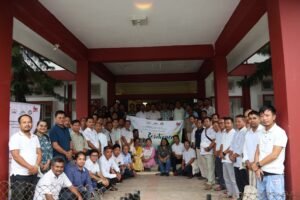
KHEPPLIC submitted a representation to the Deputy Commissioner Kamle on Tuesday, along with the minutes of its Central Executive Members’ Meeting held on August 31 at the Tamen Inspection Bungalow under the chairmanship of Yukar Teki.
The meeting was attended by presidents and general secretaries of various community-based organisations, panchayat leaders and Tar Yapu Rakhe ZPM Kamporijo Block-I, representing the project-affected area.
After detailed deliberations on the compensation process, the meeting unanimously resolved that COS should not be implemented selectively and that the provisions of the Right to Fair Compensation and Transparency in Land Acquisition, Rehabilitation and Resettlement Act, 2013 (RFCTLARR Act), along with applicable rules, should be followed uniformly for all eligible project-affected families.
KHEPPLIC said it would oppose any practice resulting in unequal treatment of affected families. It further warned that if the alleged discriminatory implementation continued despite representations from project-affected families, CBOs and panchayat leaders, the committee would oppose implementation of the project in the affected areas through “peaceful, democratic and lawful means” to safeguard ancestral land and the legitimate rights of the community.
The development follows a Kamle district administration circular issued on August 28 convening a coordination meeting on matters pertaining to COS in the Kamala HEP.
At the coordination meeting held at the Deputy Commissioner’s conference hall on September 1, KHEPPLIC representatives reiterated their opposition to the implementation and declaration of COS in the project-affected areas.
The committee has urged the competent authorities to take immediate corrective measures and ensure fair, transparent and equal compensation for all eligible project-affected families.