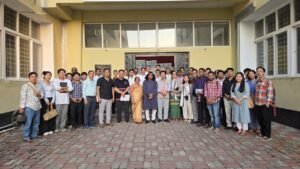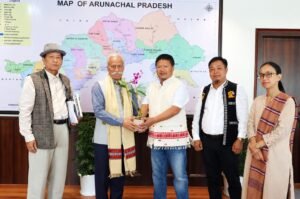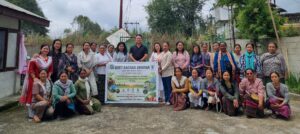


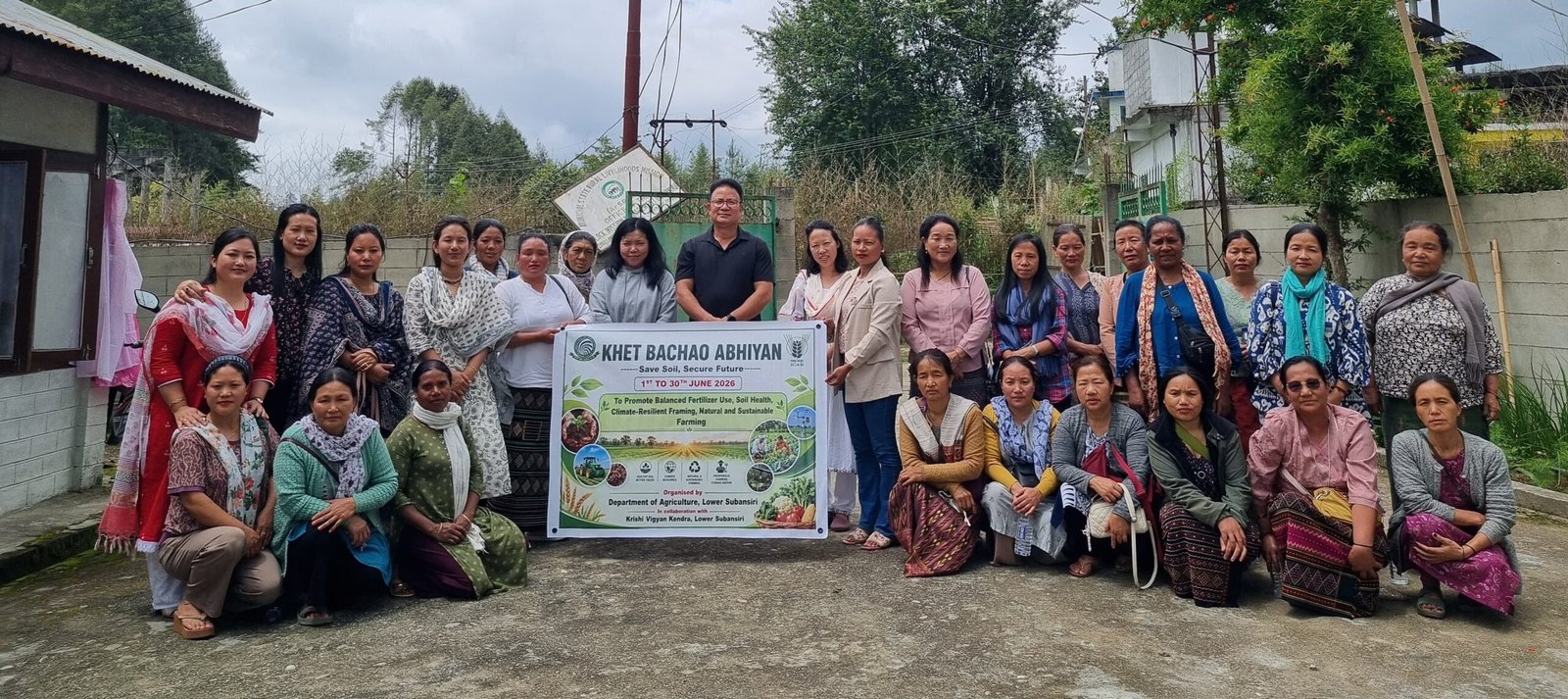
ZIRO : The Lower Subansiri district administration successfully concluded a month-long Khet Bachao Abhiyan (Save the Fields Campaign) during June, promoting sustainable farming practices, soil conservation and reduced dependence on chemical inputs across the district.
Launched under the guidance of Lower Subansiri Deputy Commissioner Oli Perme, the campaign aimed to encourage natural farming while creating awareness on environmentally sustainable agricultural practices to safeguard soil health and improve farmers’ livelihoods.
The campaign covered 17 villages, where teams led by Lower Subansiri District Agriculture Officer Tasso Butung, along with experts from the Krishi Vigyan Kendra (KVK), Yachuli, conducted field visits and interacted directly with farmers.
The teams assessed soil health and promoted organic alternatives to chemical fertilisers and pesticides through practical demonstrations and farmer interactions.
More than 600 farmers received hands-on training in vermicomposting, green manuring and water conservation techniques. The Agriculture Department also encouraged farmers to adopt sustainable cultivation practices under the Government of India’s National Mission on Natural Farming, highlighting its potential to restore soil fertility while reducing cultivation costs.
The campaign witnessed active participation from Panchayati Raj Institution (PRI) members and Farmer Producer Organisations (FPOs), strengthening community involvement in promoting sustainable agriculture.
To enhance farmers’ financial awareness and access to government support, officials from the National Bank for Agriculture and Rural Development (NABARD), the State Bank of India and the Lead District Manager’s office also joined the outreach programme.
They educated farmers on improved seed varieties, water-efficient farming practices and welfare schemes, including Pradhan Mantri Kisan Samman Nidhi (PM-KISAN) and the Kisan Credit Card (KCC) scheme.
The successful completion of the campaign marked another step towards promoting sustainable agriculture in Lower Subansiri by integrating traditional farming practices with scientific techniques to ensure long-term agricultural and environmental sustainability. (DIPR)