

YINGKIONG, NOV 24:
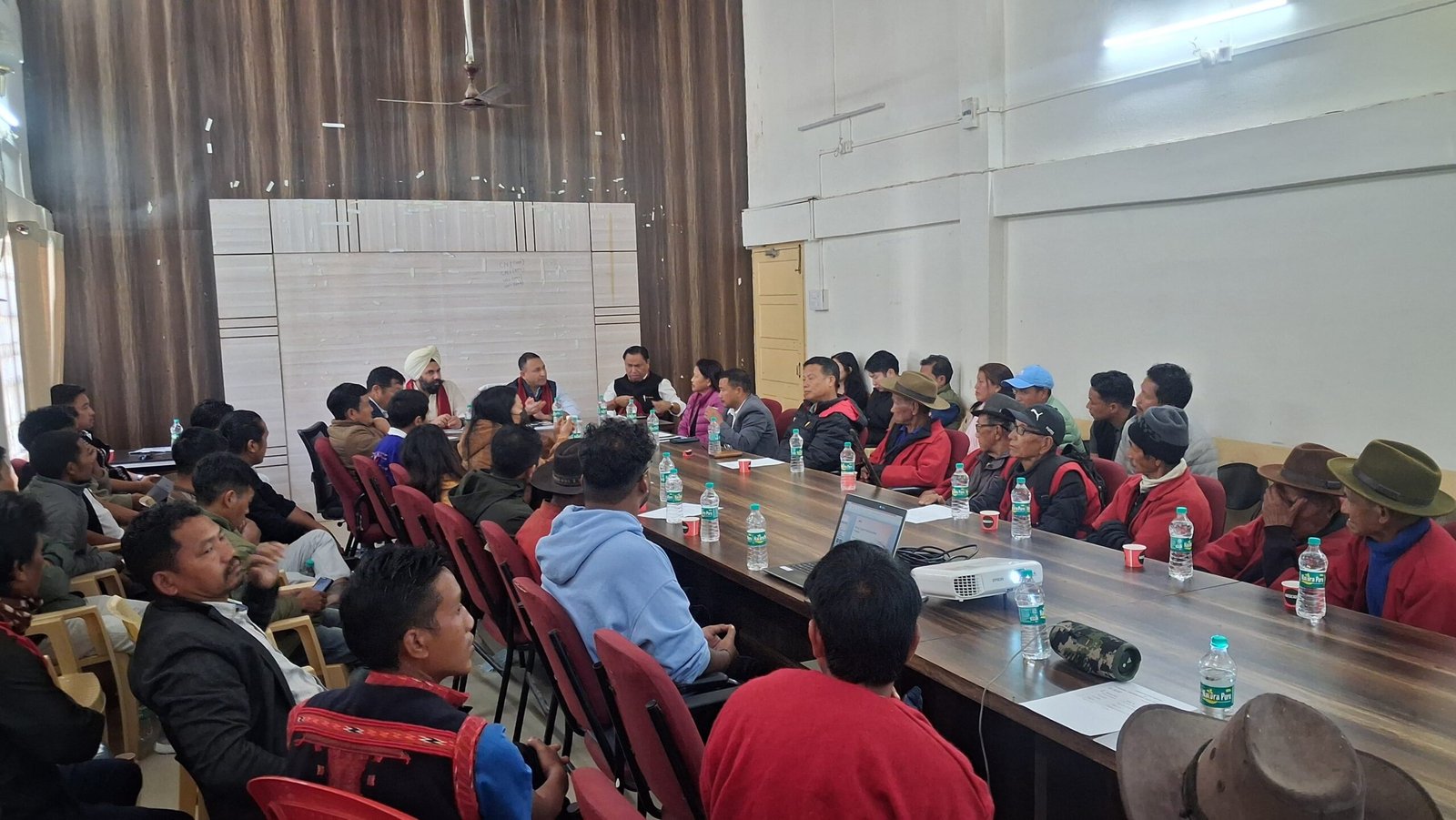
A consultative and interactive session on the proposed Siang Upper Multipurpose Project (SUMP) was held at the Deputy Commissioner’s Conference Hall in Yingkiong on Tuesday under the chairmanship of East Divisional Commissioner Amjad Tak.
The meeting was attended by Upper Siang Deputy Commissioner Ashok Tajo, Ministry of Power Director Sagar Singh Kalsi, Upper Siang Zilla Parishad Chairperson Api Kombo, Jengging Zilla Parishad Member Orik Tali, representatives of the Siang Affected Area Youth Association (SAAYA), administrative officers, Gram Panchayat Chairpersons of Yingkiong and Jengging areas, Gaon Burahs and other stakeholders.
The session provided a platform for discussions and clarification on various aspects of the proposed project, particularly its objectives, scope and technical dimensions outlined in the Pre-Feasibility Report (PFR).
A detailed presentation highlighted the potential advantages and disadvantages of the proposed dam, its developmental prospects and concerns associated with its implementation.
The deliberations also covered environmental and disaster-related issues, including the potential role of dams and barrages in flood moderation, water management and reducing downstream flood risks, particularly in flood-prone areas of Nepal and Bihar. The need for a comprehensive assessment of environmental and geological vulnerabilities was also emphasised.
Other issues discussed included infrastructure development in the affected areas, rehabilitation, livelihood security and the broader socio-economic implications of the proposed project.
During the meeting, the government reiterated its commitment to the assurance given by the Union Home Minister that local residents would be taken into confidence throughout the process. It was also assured that no project-related activities would be undertaken without the consent of the people.
The meeting concluded with an emphasis on sustained public consultation, transparency and constructive engagement with all stakeholders to ensure that local concerns and aspirations are duly considered. (DIPR)