

PARO, SEP 1:
Arunachal Pradesh MLA Toko Tatung, representing the 16-Yachuli Assembly Constituency in Keyi Panyor district, on Tuesday presented the emerging development vision of one of India’s youngest districts at the inaugural Global Conscious Food Systems Summit 2026 in Paro, Bhutan.
The summit, jointly hosted by the Royal Government of Bhutan, the Conscious Food Systems Alliance (CoFSA) and the United Nations Development Programme (UNDP), brought together leaders, Indigenous representatives, scientists and development practitioners from 65 countries.
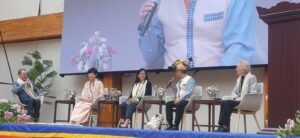
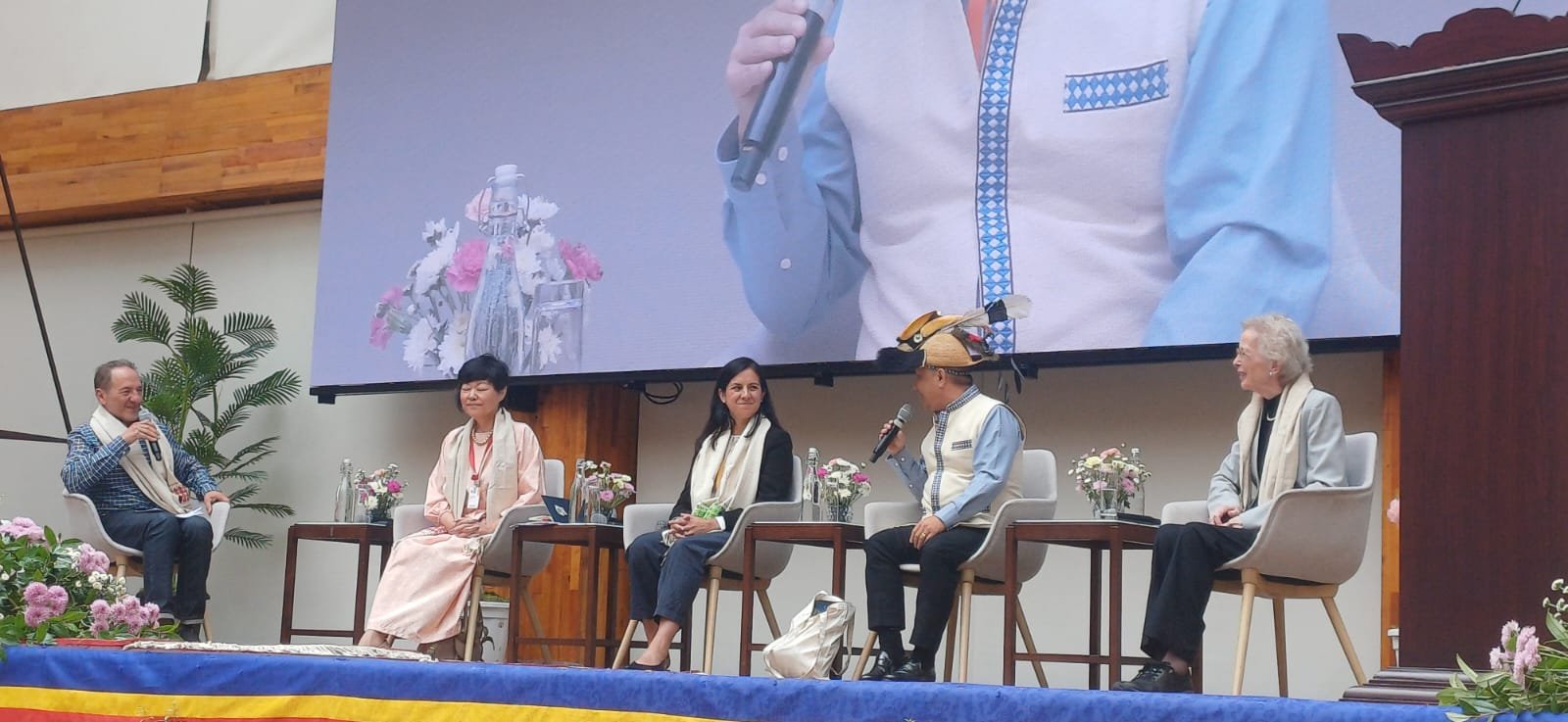
Tatung became the first legislator from Arunachal Pradesh to participate in the summit. He was a panellist at the high-level session “Rising to the Moment: Igniting Consciousness to Address the Polycrisis”, alongside former Ireland President and former UN High Commissioner for Human Rights Mary Robinson, Mara Lisa Arizaga of the UN Human Rights Office and Chizuru Aoki of the Global Environment Facility. Spiritual leader Mata Amritanandamayi also addressed the session through a video message.
The larger high-level segment featured former United Nations Secretary-General Ban Ki-moon, Bhutan Prime Minister Tshering Tobgay and Sri Lanka Prime Minister Dr Harini Amarasuriya.
Tatung used the global platform to present the Keyi Panyor Mission Plan 2040 (KPMP 2040), a long-term district development framework designed to move beyond annual schemes and five-year political cycles. Formally launched on August 15, the plan covers 20 priority areas, including education, health, agriculture and agroecology, biodiversity, forests and water, livelihoods, women and youth, culture, renewable energy, tourism, infrastructure and local institutions.
Speaking from his experience as a member of the Nyishi community, Tatung placed Indigenous knowledge at the centre of his intervention.
“Wisdom comes from listening: to the people, and to the traditional ecological wisdom of Indigenous communities,” he said, stressing the need to bring scientific and community knowledge together.
“Our scientists have knowledge. Our farmers also have knowledge. Our universities have knowledge. Our grandmothers also have knowledge. The future has to be built when these forms of knowledge sit at the same table,” Tatung said.
Linking Indigenous ecological knowledge with food systems and climate justice, he said food was intrinsically connected with soil, water, forests, biodiversity, nutrition, livelihoods and culture.
“When a flood enters a village, climate change is no longer an international negotiation. It is somebody’s field, somebody’s house, somebody’s livestock, somebody’s stored seed, somebody’s entire year of work,” he said, highlighting the disproportionate impact of climate change on communities that contribute least to global warming.
A key component of the Keyi Panyor development model is the concept of Biohappiness, associated with the vision of Dr M.S. Swaminathan. Keyi Panyor is being developed as India’s first Bio-Happy District, with the M.S. Swaminathan Research Foundation (MSSRF) and other partners working to link biodiversity conservation with nutrition, livelihoods and human well-being.
“Conservation must also produce dignity. Agroecology must also produce livelihoods. Local food must also produce good nutrition. Forests must remain standing, but communities who protect those forests must also prosper,” Tatung said.
“Not biodiversity protected from people, but biodiversity protected with people, and working for their wellbeing,” he added.
The Mission Plan is already being translated into programmes on the ground. Under the Comprehensive Action Plan for Education (CAPE), more than 90 per cent of government-school teachers have participated in district-wide cluster workshops, alongside initiatives with Anganwadi workers on early childhood education and nutrition.
In agriculture and ecology, Keyi Panyor is working with MSSRF and the Participatory Action Research Coalition of India (PARCI) on natural agriculture, agro-biodiversity conservation, ecological livelihoods and community-based planning.
Tatung said the ultimate measure of KPMP 2040 would be what future generations inherit. Recalling an elderly farmer who asked him, “What are you going to leave for our grandchildren?” he said the question remains central to the Mission Plan.
“An MLA gets five years. A child born today may live for eighty or ninety years. A forest may take hundreds of years to become what it is. So why should our idea of development have a five-year horizon?” he asked.
“I may or may not be in politics in 2040. That is irrelevant. KPMP cannot belong to Toko Tatung. It has to belong to Keyi Panyor,” he said.
Concluding his intervention, Tatung said the district should pursue a development path rooted in its own identity rather than imitate other cities or regions.
“I do not want Keyi Panyor to become a smaller copy of Delhi, Singapore or anywhere else. I want Keyi Panyor to become the best possible Keyi Panyor,” he said.