

KOHIMA : Nagaland Social Welfare Secretary Liawabang Jamir on Tuesday stressed the need to implement the Juvenile Justice (Care and Protection of Children) Act and Adoption Regulations in a manner that is “legally airtight, yet distinctively Naga”, while respecting the state’s customary laws and traditional systems of care.
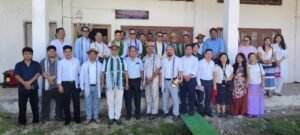
He was speaking at the State Consultative Meet on the Juvenile Justice (Care and Protection of Children) Act, 2015, Juvenile Justice Model Rules, 2016, and Adoption Regulations, 2022 organised by Mission Vatsalya under the Department of Social Welfare in Kohima.
The programme was attended by Child Welfare Committees (CWCs), Juvenile Justice Boards (JJBs), Child Care Institutions run by government and NGOs, police, media, district administrations, Health and Family Welfare officials, and the Nagaland State Commission for Protection of Child Rights.
In his address, Jamir said that while the Juvenile Justice Act and Adoption Regulations constitute a progressive legal framework, their success depends on how effectively they adapt to Nagaland’s realities, including customary laws, community governance, and geographical challenges.
He pointed out that the formal legal framework assumed seamless digital connectivity, standardised police systems, and institutional care structures, whereas Nagaland’s realities included customary adoption practices rooted in clan and village traditions, along with deep digital divides in remote districts.
“What makes Nagaland unique within the Indian Union is the constitutional recognition granted under Article 371A, which safeguards Naga customary laws, social practices, and traditional institutions,” he said.
Jamir said Nagaland’s traditional support systems through families, clans, village councils, churches, and tribal institutions had protected vulnerable children for generations and remained one of the strongest pillars of Naga society.
However, he cautioned that customary adoptions carried out informally often left children legally vulnerable in matters relating to identity, inheritance, education, welfare entitlements, and long-term security.
“Our task is not to dilute the law, nor to disregard our customs, but to implement these provisions in a manner that is practical, culturally sensitive, and responsive to the realities of Nagaland,” he said.
Calling for stronger interdepartmental coordination, he urged the Social Welfare Department, judiciary, police, medical fraternity, district administrations, and traditional tribal institutions to work together rather than in silos.
Jamir also urged stakeholders to provide “structural, localised and actionable suggestions” to bridge the gap between statutory mandates and ground realities.
Quoting officials of the State Adoption Resource Agency (SARA), he said, “Adoption is an act of love, but the process must come from law.” Director of Social Welfare Tosheli Zhimomi said the consultation aimed to strengthen child protection systems and improve coordination among departments and stakeholders.
Senior Consultant, Ministry of Women and Child Development, Government of India, Junaid Ul Islam said that Nagaland was the first state to begin consultations on proposed amendments to the Juvenile Justice Act and related rules and regulations.
He said the Centre was seeking suggestions from states for reforms to the Juvenile Justice Act, Model Rules, and Adoption Regulations to make the system more effective and responsive. (Source: PTI)