

ONLINE AGE

(Online version of the Arunachal Age newspaper)

Author name: OnlineAge

Latest News, Popular News, State News

Sapling distribution drive

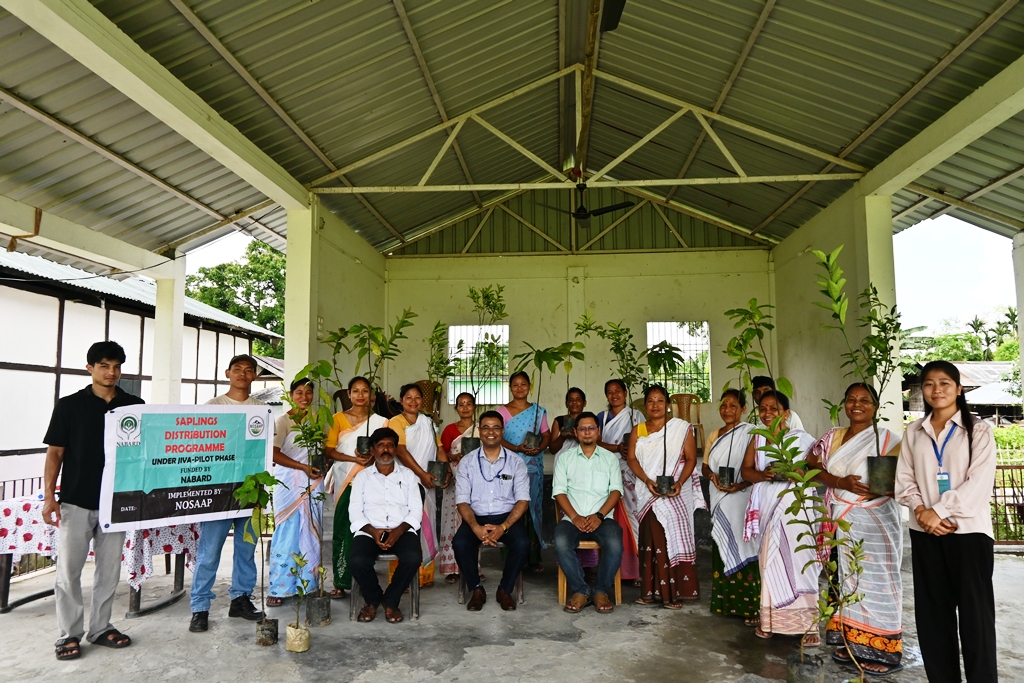
  NAMSAI : A sapling distribution programme was organised at Jona Kochari village in Namsai district on Tuesday under the NABARD-funded JIVA (Natural Farming) Project to promote sustainable and climate-resilient agricultural practices. As part of the initiative, saplings of guava, malta, mousambi, cocoa, lemon and other suitable species were distributed to project farmers for plantation along farm bunds. The programme was conducted under the project component, “Regeneration of Soils and Improving Moisture/Water – Plantation on Farm Bunds”, aimed at improving soil health, conserving moisture, preventing soil erosion, enhancing biodiversity and creating additional sources of nutrition and income for farming households. The JIVA Project, an agroecology-based initiative promoting environmentally sustainable and low-input natural farming practices, is being implemented by Namsai Organic Spices Agricultural Products Producer Company Limited (NOSAAP) as the Project Facilitating Agency. In his opening remarks, NOSAAP Chief Executive Officer Chau Athina Chauhai highlighted the project’s objectives, including restoration of soil health, promotion of natural farming, strengthening nutrition security and improving the livelihoods of tribal farmers. Addressing the gathering, NABARD Assistant General Manager (District Development) Kamal Roy informed farmers about the recently launched nationwide “Khet Bachao Abhiyan”, which will be observed throughout June. He said the campaign focuses on balanced fertiliser use, soil health management, promotion of natural and organic farming, prevention of counterfeit agricultural inputs and saturation of Kisan Credit Cards among eligible farmers. Roy noted that the JIVA Project complements the campaign’s objectives by encouraging the adoption of sustainable and nature-friendly farming practices. He further stated that the project was launched by NABARD following the successful implementation of the TRIBES/Integrated Tribal Development (WADI) Project and reflects the institution’s holistic approach towards sustainable agriculture, natural resource management and livelihood enhancement. The programme was attended by project beneficiaries and Self-Help Group (SHG) members. It concluded with the distribution of saplings and an appeal to farmers to actively participate in natural farming and environmental conservation initiatives. (DIPR)
Editorial

Paper leaks, blotched valuation, broken trust

After the fiasco of a paper leak in the National Eligibility-cum-Entrance Test (NEET) examination conducted by the National Testing Agency, the large-scale bungling of the evaluation of answer sheets of the Central Board of Secondary Education (CBSE) Class 12 exam has raised serious questions about the ability of educational authorities to conduct examinations. The On-Screen Marking (OSM) system, which was introduced with fanfare as a high-tech system, more efficient and transparent than the earlier one, turned out to be a flop, and has created anxiety and uncertainty for about 1.8 million students. The pass percentage was the lowest in recent years, and when students sought re-evaluation of their papers, it was found that the evaluation was done badly. Poor scanning left the answer scripts blurred. Some were mixed up and left unmarked. Some answer sheets were missing, and correct answers were not marked. The CBSE first tried to cover up the bungling. The student who first made the problem public faced online hostility and abuse. The Class 12 examination is very important, and the results define the careers of many students. Lakhs of students are now unsure of their results and marks. According to reports, four lakh students applied for the revaluation of their papers. It has now come to be known that the agency which was entrusted with implementing the system did not have the right credentials, and has been involved in controversies earlier. Adequate preparations were not made, and teachers were not trained before rolling out the system. The CBSE ignored warnings from teachers and others against its hasty deployment. It is now trying to defend the system. Its offices have sent unsigned messages to school principals telling them to make social media posts defending the system. IIT Madras has been asked to correct the technical problems in the OSM. There are demands for an independent investigation, and there is a case for it. On Saturday, another national examination, the Common University Entrance Test (CUET) UG 2026, faced disruption at many centres because of a technical glitch. Mismanagement of so many consequential exams has affected the students’ faith in the examination system. Hearing a petition on the NEET paper leakage, the Supreme Court said that responsibility for it must be fixed. The government told the court that the prime minister was himself monitoring the matter. Does that mean there was a lack of effective monitoring till now? It is unfortunate that the person at the top of the examination system, Union Education Minister Dharmendra Pradhan, continues to be at its helm, even though he has said that he accepted responsibility for the failures. Democracy demands accountability in deeds, not in words. (Source: DH)

Latest News, Popular News, State News

AAPSU rejects demand for ILP exemption to Mising community

ITANAGAR : The All Arunachal Pradesh Students’ Union (AAPSU) has firmly rejected the stand taken by the Assam-based Takam Mising Porin Kebang (TMPK) against the application of the Inner Line Permit (ILP) system to the Mising community in Arunachal Pradesh, asserting that the permit regime is a non-negotiable constitutional and legal safeguard applicable to all non-Arunachal Pradesh Scheduled Tribe (non-APST) individuals without exception. Responding to TMPK’s recent statement, AAPSU President Meje Taku said the Union respects the Mising community’s historical association with the region and acknowledges its longstanding cultural and social ties with several tribes of Arunachal Pradesh. However, he maintained that such ties cannot serve as grounds for exemption from a legal framework designed to protect the indigenous peoples of the state. “The Inner Line Permit system is not a matter of sentiment or community preference. It is a constitutional and statutory protection guaranteed to the indigenous peoples of Arunachal Pradesh. No community, regardless of its historical ties or ethnolinguistic affinities, can claim exemption from a rule that applies equally to all non-APST persons entering and residing in this state. AAPSU’s position is unambiguous: ILP is mandatory for all non-APST, and this is final,” Taku said. AAPSU emphasized that the ILP system is rooted in a robust constitutional and statutory framework. The Bengal Eastern Frontier Regulation, 1873, under which the permit system derives its authority, was retained to safeguard the indigenous character of the state. The Union also pointed to Article 371(H) of the Constitution, which grants special responsibilities to the Governor of Arunachal Pradesh in matters relating to law and order, reinforcing the state’s unique constitutional protections. Addressing TMPK’s reference to the Mising community’s ethnolinguistic proximity to tribes such as Nyishi, Adi, Galo, Apatani and Tagin, and its historical presence in districts including East Siang, Lower Siang, Namsai and Papum Pare, Taku drew a distinction between historical association and legal status. “We do not deny the historical and cultural bonds between the Mising people and the tribes of Arunachal Pradesh. These bonds are real and deserve acknowledgement. But historical affinity is not a legal category. The ILP framework is clear: if you are not an APST, you require an Inner Line Permit to enter and reside in this state. This is the law,” he said. The Union cautioned that granting ILP exemptions on the basis of historical or ethnolinguistic links would create a precedent capable of undermining the very purpose of the permit system, noting that many communities across the Northeast share cultural and ethnic ties with tribes of Arunachal Pradesh. “If historical ties become the criterion for ILP exemption, then the entire purpose of the permit system collapses. We cannot allow a precedent that unravels a protection that has stood for over 150 years and that every tribe of this state depends upon,” Taku said. AAPSU also appealed to individuals and organisations in both Arunachal Pradesh and Assam to exercise restraint and responsibility while commenting on the issue, warning that insensitive or inflammatory statements could strain the longstanding harmony shared by different communities. While affirming that its position carries no animosity towards the Mising community, the Union described the Misings as a proud indigenous people with a rich cultural heritage and expressed hope that all stakeholders would engage constructively within the existing legal framework. AAPSU further urged the Arunachal Pradesh government to ensure robust, impartial and uniform enforcement of the ILP system across all districts of the state.      

Latest News, Popular News, State News

BJP lodges FIR against Prag News over report on CM Khandu

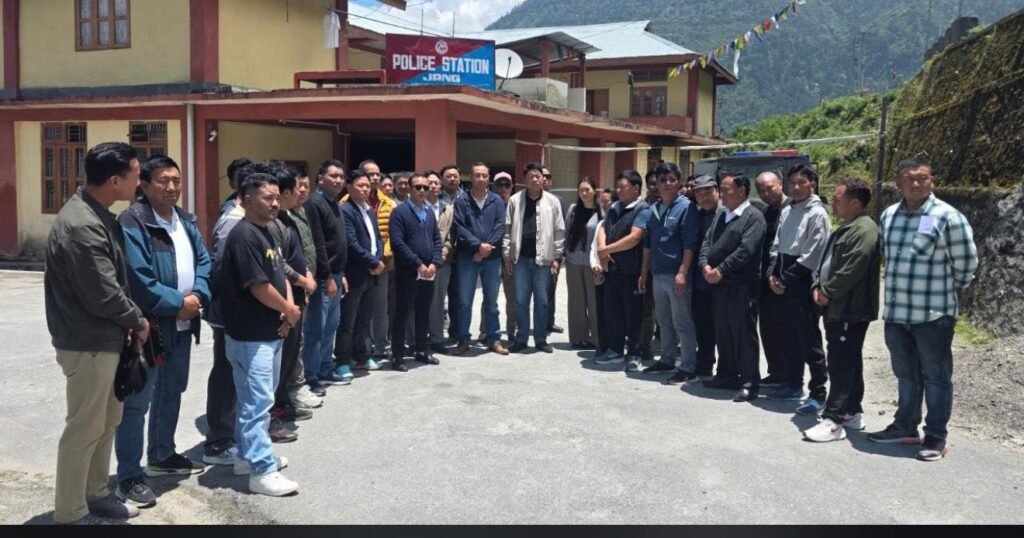
TAWANG : The Bharatiya Janata Party (BJP) Mukto Mandal, along with elected representatives from the Mukto constituency, has lodged a First Information Report (FIR) at Jang Police Station against regional news channel Prag News, alleging that it aired a misleading and defamatory report concerning Chief Minister Pema Khandu. The complaint was submitted by BJP leaders led by Zilla Parishad Chairperson Leki Gombu and Zilla Parishad Member Pema Tsering in the presence of local representatives, including members of Panchayati Raj Institutions (PRIs), who objected to what they described as an attempt to tarnish the image and reputation of the Chief Minister through unverified information. According to the complainants, the report contained allegations that were not supported by facts and had the potential to mislead the public. They maintained that the dissemination of such content could create confusion and undermine public confidence in responsible journalism. Condemning what they termed as baseless and misleading reporting, the BJP leaders asserted that media organisations must adhere to the principles of accuracy, fairness and factual reporting, particularly while reporting on matters concerning public representatives and governance. The delegation urged the police and other concerned authorities to conduct a fair and impartial investigation into the matter and take appropriate legal action against those found responsible for allegedly spreading misinformation. Party workers also reiterated their support for Arunachal Pradesh Chief Minister Pema Khandu, stating that attempts to malign his reputation through unsubstantiated reports would not affect the government’s developmental initiatives across the state. Meanwhile, BJP units in Lumla and Tawang have reportedly lodged separate FIRs at their respective police stations over the same issue, reflecting concern among party members across the district. (Source: Mon Tawang Vigilance)      

Latest News, Popular News, State News

APLS pays tribute to Lummer Dai on 86th birth anniversary

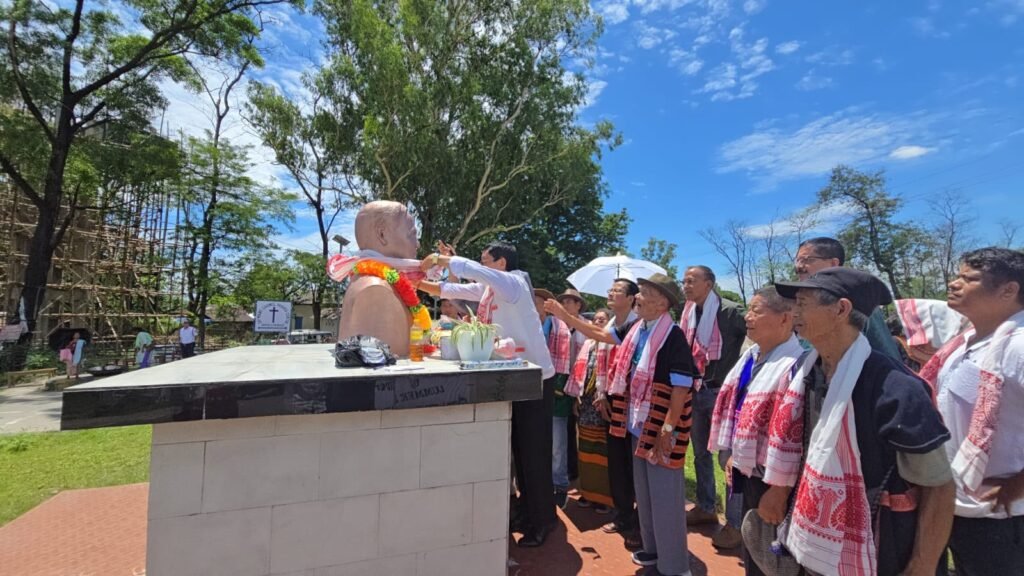
ITANAGAR : The Arunachal Pradesh Literary Society (APLS), led by its president Yeshe Dorjee Thongchi, paid heartfelt tributes to eminent litterateur, veteran journalist and former Editor of Echo of Arunachal, Late Lummer Dai, on the occasion of his 86th birth anniversary on Monday. Members of the APLS, including Tokong Pertin, Nani Kojin and Inumoni Das Thongchi, paid floral tributes at the grave ‘Punya Sthal’ and bust of the late literary icon located within the premises of his residence at Prem Nagar in Naharlagun. The occasion served as a solemn reminder of his immense contributions to literature, journalism and cultural documentation in Arunachal Pradesh. Remembering his remarkable legacy, the society reflected on his enduring influence on generations of writers, readers and literary enthusiasts. The members also reaffirmed their commitment to preserving and promoting the literary heritage left behind by one of the state’s most celebrated literary figures. Following the tribute ceremony, the APLS team met Nanni Dai, wife of the late writer and current Editor of Echo of Arunachal (EoA). The members spent time with her, enquired about her well-being, and shared fond memories of the celebrated author whose works continue to inspire literary circles across the region. Born on June 1, 1940, at Siluk village in East Siang district, Lummer Dai was an Adi by birth and emerged as one of the most prominent voices in Assamese literature. From his student days, he began contributing articles, essays and stories to magazines and newspapers in Assam, highlighting the rich folk traditions, cultures and lifestyles of the people of Arunachal Pradesh. As Editor of EoA, the state’s first newspaper, he penned insightful editorials and articles that helped shape public discourse during the formative years of Arunachal Pradesh. His writings not only documented the socio-cultural realities of the region but also introduced the then little-known frontier state to a wider readership. Widely regarded as the doyen of Arunachal Pradesh’s journalism and literary movement, Late Dai authored several acclaimed works that earned him recognition across the Northeast. Among his notable literary contributions are Udayachalar Sadhu (1959), published by the Assam Sahitya Sabha, Paharor Shile Shile (1960–61), Prithivir Hanhi (1962–63), published by the Assam Publication Board, Mon Aru Mon (1965), Koinar Mulya (1975–76), and Upar Mahal, his last novel published in 2003. Through his creative writings in Assamese, Dai played a significant role in fostering cultural understanding, harmony and brotherhood between the people of Assam and Arunachal Pradesh. His literary works vividly portrayed the traditions, customs and aspirations of the people of the region, helping bring Arunachal Pradesh into the broader literary and cultural consciousness of the country. Though deeply rooted in his native state, Lummer Dai enjoyed immense popularity in Assam, where his contributions to Assamese literature earned him widespread admiration and respect. His life and works continue to inspire generations and stand as a testament to the power of literature in building bridges between communities and preserving cultural heritage. Meanwhile, the 86th birth anniversary of noted writer was also commemorated with reverence at Pasighat. The programme was organised by the Adi Agom Kébang (AAK) in collaboration with literary enthusiasts and admirers of the celebrated literary figure. Members of the AAK led by President Bodong Yirang and Adviser Kaling Borang, along with representatives of the Arunachal Pradesh Literary Society (APLS) Pasighat Unit and the Assam Sahitya Sabha led by Green Tamuli, paid floral tributes to the late litterateur. As a mark of respect, participants garlanded an effigy of Late Lummer Dai, while patriotic and cultural songs in Adi and Assamese were played, creating a nostalgic atmosphere during the commemorative programme. Speakers recalled Dai’s immense contribution to literature and journalism, describing him as one of Arunachal Pradesh’s most distinguished literary personalities. Through his writings in Assamese, they noted, he vividly portrayed the rich cultural heritage, traditions and social realities of the people of the Northeast, leaving behind a literary legacy that continues to inspire generations. More than three dozen people attended the programme and offered floral tributes. Among them were retired IAS officer Tagom Darang, retired District Medical Officer Dr Kaling Dai, noted writer Nini Pertin, literary enthusiasts, intellectuals and members of civil society. The gathering also reaffirmed the need to preserve and promote the literary heritage championed by Late Lummer Dai and remembered his enduring contributions to literature and journalism. (Source: UNI/DIPR)      

Latest News, Popular News, State News

SAYA seeks high-level probe into education sector, submits memo to CM

Staff Reporter ITANAGAR :  The Save Arunachal Youth Association (SAYA) has submitted a memorandum to the Chief Minister’s Office (CMO), expressing concern over the condition of the state’s education sector and urging the government to take immediate corrective measures to address what it described as administrative lapses and declining educational standards. Addressing a press conference here on Monday, SAYA president Likha Rajnik alleged that negligence among certain officials and teaching staff has adversely affected the quality of education, particularly in rural and remote areas. He claimed that inadequate monitoring, teacher absenteeism and weak administrative oversight have contributed to declining enrolment and the growing number of defunct government schools. Emphasising the importance of quality education, Rajnik said every child has the right to proper schooling under the Right to Education (RTE) Act and urged the government to ensure continued access to educational facilities, especially for students from economically weaker sections who depend on government schools. Expressing concern over the reported closure of a large number of schools, Rajnik alleged that educational administrators at various levels have failed to effectively monitor institutions and address issues affecting the teaching-learning process. He claimed that around 1,238 schools in the state have become defunct and alleged that several teachers posted in such institutions continue to draw salaries without being redeployed. He urged the government to conduct a thorough investigation into the matter and take appropriate action wherever required. According to Rajnik, the memorandum also raised concerns regarding the functioning of District Deputy Directors of School Education (DDSEs), Cluster Resource Centre Coordinators (CRCCs), Block Resource Centre Coordinators (BRCCs), Block Education Officers (BEOs) and teaching staff. The association alleged that lapses in supervision and accountability have contributed to the deterioration of educational standards in several districts. SAYA has sought the constitution of an independent high-level inquiry committee comprising senior judicial officers, Indian Administrative Service (IAS) officers, Indian Police Service (IPS) officers and other competent authorities to investigate the alleged irregularities and identify shortcomings within the Education Department. The association further called for reforms in teacher deployment, stronger monitoring mechanisms, transparent transfer and posting policies, and strict enforcement of service rules to ensure teachers report to their assigned places of duty on time. It also urged the government to review decisions relating to school closures and explore measures to strengthen educational institutions, particularly in rural and remote areas. Rajnik expressed hope that the government would take serious note of the issues raised and initiate appropriate measures to improve the education sector, restore public confidence in government schools and safeguard the future of students across the state. During the press conference, Rajnik also urged the state government to hand over the alleged mismanagement of Rs 183 crore under the Fisheries Department in Kra-Daadi district to the Enforcement Directorate (ED) and the Central Bureau of Investigation (CBI) for an impartial investigation. He further demanded the resignation of Chief Minister Pema Khandu, alleging that complaints related to government tenders worth over Rs 1,200 crore purportedly linked to the Chief Minister warrant a comprehensive investigation by the CBI without external influence or interference.    

Latest News, Popular News, State News

Tirap Police felicitates retiring officers

KHONA : Tirap Police on Monday accorded a warm farewell to Station Officer (Mechanic) Varghese MD and Sub-Inspector (SG) Driver TD Pillai on their superannuation from service on May 31. Varghese joined the Fire and Emergency Services, Arunachal Pradesh, as a Head Constable Mechanic on November 18, 1988. Through dedication, professionalism and commitment to duty, he rose through the ranks and was promoted to Station Officer (Mechanic) on January 1 this year. He retired after rendering more than 37 years of distinguished service. Pillai joined Arunachal Pradesh Police as a Constable Driver on March 1, 1996. In recognition of his disciplined and dedicated service, he was promoted to the rank of Sub-Inspector (SG) Driver on January 1, 2026. He retired after serving the department for more than three decades. During the farewell programme, Tirap Superintendent of Police Aditya, presented mementos to the retiring officers in appreciation of their valuable contributions to the department and their long years of dedicated service. Tirap Police acknowledged the exemplary service rendered by both officers, stating that their professionalism, commitment and devotion to duty have left a lasting legacy that will continue to inspire future generations of police personnel. The department expressed gratitude for their contributions and wished them good health, happiness and a fulfilling retired life.    

Latest News, Popular News, State News

NRSA urges Education Ministry to reconsider NERIST director’s resignation

ITANAGAR : The NERIST Researchers’ Association (NRSA) has appealed to the Ministry of Education, Government of India, to reconsider the resignation of the Director of North Eastern Regional Institute of Science and Technology (NERIST), Prof Narendranath S, citing concerns over the circumstances leading to his departure and its potential impact on the Institute’s academic environment. In a letter addressed to the Secretary of the Ministry of Education, the Association stated that the Director tendered his resignation on May 29 following an incident in which, it alleged, a group of individuals and organizations entered his office chamber and created a highly disturbing situation on the campus. According to the NRSA, the incident involved protests, intimidation, and disturbances that disrupted the otherwise peaceful academic atmosphere of the Institute. The association claimed that the situation escalated to such an extent that security personnel, including CRPF jawans, had to be deployed on the campus and a magistrate was required to facilitate the director’s safe movement from office to his official residence. “The sequence of events suggests that the Director was placed under immense pressure and ultimately compelled to tender his resignation on the same day. The resignation was subsequently forwarded to the Ministry of Education and the Board of Management for their approval,” the letter stated. The Association noted that the incident occurred during the Institute’s vacation period when research and academic activities were continuing with limited campus occupancy. It expressed concern that the developments had adversely affected the morale of students, researchers, faculty members and staff. NRSA further claimed that many campus residents, particularly those from outside Arunachal Pradesh, have expressed concerns regarding their safety and security. It warned that the prevailing atmosphere of fear and uncertainty could negatively impact ongoing research and academic activities. Highlighting Prof Narendranath’s contributions during his tenure, the Association urged the Education Ministry to reconsider the Director’s resignation. “At a time when several institutional activities had remained dormant, his leadership brought renewed momentum to campus development. Student engagement and academic activities witnessed noticeable improvement. Research output, publications, and scholarly activities also progressed significantly under his guidance. His efforts helped create a more vibrant academic atmosphere and strengthened the Institute’s commitment to research and innovation,” it said. The NRSA also stated that NERIST has previously faced considerable delays in its overall development due to prolonged vacancies in the position of Director. The Institute cannot afford to return to such uncertainty. “We further submit that appointing a temporary or acting Director may not adequately address the institute’s long-term needs, as such arrangements often have limited administrative authority and decision-making powers. For the sustained growth and development of NERIST, the institute requires stable and permanent leadership,” the letter further said. (Source: UNI)    

Latest News, Popular News, State News

Longding bans pork transport, purchase after ASF outbreak in Assam’s Tinsukia

ITANAGAR : Arunachal Pradesh’s Longding district has imposed an immediate ban on the transport and purchase of live pigs and pork products following a confirmed outbreak of African Swine Fever (ASF) in the neighbouring Tinsukia region of Assam, an official said on Monday. In an advisory, Longding district animal husbandry and veterinary officer O Moyong said the emergency restrictions will remain in force for one month to prevent the entry of the deadly virus into the district. “All pig farmers, livestock traders, and the general public must strictly adhere to these preventive guidelines. Non-compliance will be viewed seriously and may invite punitive action under the Prevention and Control of Infectious and Contagious Diseases in Animals Act, 2009,” the official said. In the advisory, a complete ban on the purchase of live pigs, piglets, pork, and pork-based products from Assam or any other affected neighbouring zones has been implemented. Farmers have also been cautioned against swill feeding — the practice of feeding kitchen waste to pigs — which has been identified as a primary driver of ASF virus transmission. The veterinary department has also issued comprehensive farm-level biosecurity protocols. These include the mandatory installation of disinfectant foot dips at the entrance of every pigsty, the use of dedicated farm footwear and clothing, and a strict restriction on unnecessary visitors, external vehicles, and personnel within farm perimeters. Farmers have also been directed to clean and chemically disinfect pig housing units and feeding utensils daily. The official urged livestock owners to maintain a close watch for symptoms such as high fever, weakness, loss of appetite, haemorrhages or purple patches on the skin, and sudden deaths. “Any pig showing symptoms must be isolated from the healthy herd immediately to prevent internal farm spread. Suspected cases or unusual pig deaths must be reported instantly to the nearest veterinary dispensary or the office of the District Veterinary Officer,” he said. The advisory further prohibited the open dumping of carcasses in fields, roadsides, or water bodies to prevent rapid environmental contamination. Farmers must instead follow strict containment disposal methods through deep burial with a heavy layer of lime, or incineration, as directly guided by veterinary staff, the official added. (Source: PTI)      

Latest News, Popular News, State News

State govt launches 5th edition of entrepreneurship development program

ITANAGAR : Chief Minister Pema Khandu on Monday announced the launch of the fifth edition of the entrepreneurship development programme for 2026-27, aimed at strengthening the state’s startup ecosystem by providing seed funding support and nurturing promising ideas. Khandu said the Arunachal Pradesh Entrepreneurship Development Programme (APEDP) 5.0 seeks to create employment opportunities and boost the local economy through innovation and enterprise development. “The Arunachal Pradesh Entrepreneurship Development Programme (APEDP) 5.0 (2026-27) has been launched to support and nurture the startup ecosystem of our state. “With seed funding support for 100 innovative startups, including substantial assistance for the top-performing ventures, this initiative aims to transform ideas into successful enterprises, generate employment, and strengthen our local economy,” the CM said in a post on X. Khandu urged the youth, entrepreneurs, self-help groups, professionals and innovators “to seize this opportunity and submit their applications before July 20”. The chief minister asserted that the initiative reflects the government’s commitment to fostering innovation, encouraging self-employment and building a vibrant startup ecosystem capable of generating jobs and contributing to Arunachal Pradesh’s long-term economic development. Officials said the top 20 startups will receive financial assistance of Rs 10 lakh each, while the remaining 80 will be provided Rs 8 lakh each to help scale their ventures and accelerate business growth. The programme will focus on key areas, including entrepreneurship development, pre-incubation and incubation support, livelihood acceleration and seed funding assistance, creating a “comprehensive support system” for startups at different stages of development, they said. (Source: PTI)