

ONLINE AGE

(Online version of the Arunachal Age newspaper)

Author name: OnlineAge

National, REGIONAL

Opposition asks govt to discuss Ram temple donation ‘theft’, ethanol, Manipur in Parliament

NEW DELHI : Congress leader Gaurav Gogoi on Sunday said the opposition has sought discussions during the upcoming Monsoon Session of Parliament on the “theft” of donations at Ram Temple, ethanol blending, student issues and the situation in Manipur, at the all-party meeting convened by the government. Speaking after attending the meeting, chaired by Defence Minister Rajnath Singh and attended by several Union ministers and opposition leaders, Gogoi said the government has listed several bills for the session, but other more important issues need to be discussed in the House. “We raised these issues and demanded a discussion on them in Parliament. The most important being the theft of donations at the Ram temple in Ayodhya. The government should express its sensitivity to it. We are also seeing protests by students, but none from the government is taking moral responsibility,” he told reporters at the Parliament House complex. While the opposition is raising people’s issues, the government is ignoring them, Gogoi said. He stressed that the government needs to be more sensitive. “Be it ethanol, students’ issues, ‘Sadan ki Chori’, Manipur issue, temple theft… If the government runs away from these issues, then it will suffer,” he said. Samajwadi Party MP Dharmendra Yadav, who also attended the meeting, said he wanted discussions on the alleged theft of Ram temple donations and activist Sonam Wangchuk’s hunger strike. He said the government can’t evade responsibility over the alleged theft of Ram temple donations. Yadav also alleged that the BJP wanted to “bring dictatorship” through any proposed delimitation exercise and asserted that the SP would oppose it in all forms. (Source: PTI)    
REGIONAL

Ancient sculptures, inscriptions found in Karbi Anglong shed new light on Assam’s heritage

DIPHU : Recent excavations in Assam’s Karbi Anglong district have revealed a remarkable collection of ancient stone sculptures and inscriptions, shedding new light on the state’s rich archaeological heritage. The diggers and excavators found the rare items at Sarthe Rongphar village, located in Phuloni area of the central Assam district, showcasing the area’s importance in unearthing the past legacy. Archaeologists and local villagers working around two centuries-old ponds have uncovered an array of artefacts, including intricately carved images of dancing figures, deities, Shiva lingams, temple fragments and a striking depiction of Lord Ganesha etched onto a large rock. “During a recent visit to Sarthe Rongphar village, I had the opportunity to witness a remarkable yet little-known chapter of Assam’s archaeological heritage. Excavations around two ancient village ponds have unearthed an impressive collection of stone sculptures and inscriptions,” Karbi Anglong District Commissioner Aranyak Saikia told PTI. Experts believe many of these artefacts date back to the 10th-12th centuries, though local traditions link them to the era of the Mahabharata and the fabled Ashwamedha Yajna, he added. “Although locals link them to the period of the Mahabharata, historically it appears more likely that they were constructed during the Ahom period. However, clear records are lacking,” he added. What intrigued most was the villagers’ observation that the water level of the pond remains constant, regardless of season, he said. “Several of these priceless finds have been preserved at the Hojai Archaeological Museum and the district museum in Diphu,” Saikia said. He, however, has acknowledged that most of these relics have been in a dilapidated state, but the administration has now taken necessary steps to preserve them. “Several remnants are still scattered around the village. We have noticed that some items have even found their way into everyday household use of the locals,” Saikia said. These discoveries are not isolated as the broader Phuloni-Dokmoka-Howraghat region is home to numerous similar archaeological sites, a testament to its historical significance during the rule of the Kachari and Dabok dynasties. “Among the most notable landmarks is the Mahamaya Hill in Dokmoka, where the remnants of an 11th-12th century stone temple still stand, despite suffering damage during the devastating earthquakes of 1897 and 1950,” the DC said. He further said that other significant sites include Buragohain Than, which has yielded ancient idols of Shiva and Parvati; and Bargonga, where rare Gupta-era Shiva sculptures and rock inscriptions have been discovered. “Together, these monuments reveal a flourishing religious and artistic tradition that once shaped the cultural landscape of Karbi Anglong,” Saikia stressed. Heritage experts and locals alike are calling for greater documentation, conservation and public awareness of these sites to ensure that this unique chapter of Assam’s history is preserved for future generations. The DC said, “These are the kinds of discoveries that make field visits so rewarding. Beneath its hills and villages lie stories, traditions and remnants of a past that often receive little attention.” “It is important that we learn about these places, document them and preserve them, because they represent a history that extends far beyond the narratives we commonly discuss,” he said. Last month, the Karbi Anglong district administration said it was considering contacting experts from the Institute of Tai Studies and Research (ITSAR) to decode two rare Tai manuscripts as well as including the treasure in the central government’s ‘Gyan Bharatam’ scheme. A trove of rare manuscripts in the district, believed to hold unknown secrets from the medieval-period, is likely to provide an understanding of the region’s history, culture and indigenous knowledge once the scripts are decoded. The fragile folios, preserved in two museums in Karbi Anglong, have survived the ravages of time but remain unread, drawing interest from historians and linguists eager to unlock the mysteries inked on palm leaves and copper plates. Out of these, the two Tai manuscripts, containing 67 and 158 folios of palm leaves, are preserved at the district museum in Diphu, the headquarters of Karbi Anglong. These have been engraved by stone, not inked. The copper manuscript, which has three folios, one ring and an elephant symbol, is kept at Nothengpi Karbi Heritage Museum. It is in the Sanskrit language, but the script is in Assamese. (Source: PTI)              

Editorial

Welcome verdict, unsettled argument

The Supreme Court’s ruling on Monday, affirming that the status of an individual’s citizenship must rest on a “fair, lawful, and reasoned process”, is a welcome intervention at a time when the criteria and methods used to determine citizenship remain unclear and contentious. It set aside verdicts by the Gauhati High Court that upheld foreigners tribunals’ rulings branding 27 Assam residents as foreign nationals. A bench of Justices Vikram Nath and Sandeep Mehta observed that decisions on citizenship and foreigner status hold significant constitutional weight, and that the state’s objective of preventing illegal immigration must not come at the cost of procedural fairness. The apex court rejected the High Court’s reasoning that the tribunals were right to rule against the appellants simply because they failed to appear despite being served notices. The High Court had relied on Section 9 of the Foreigners Act, which places the onus of proving citizenship on the individual concerned. How does a person prove her citizenship when the concept is not clearly defined, and the required documents are unspecified? The petitioners argued that they were unaware of the tribunal’s proceedings, which relied on an Enquiry Officer’s hearsay rather than substantive proof. This raises a critical question: can individuals be declared foreigners and stripped of their fundamental rights through ex parte proceedings solely due to their absence from court, especially when they possess official documents that support their claim to Indian citizenship? Foreigners’ tribunals have been criticised earlier for arbitrariness and bias, stripping individuals of their citizenship over issues such as minor spelling discrepancies or brief memory lapses. Even a war veteran who served the nation for decades has been declared a foreigner. The Citizenship Act defines national identity, but its practical execution remains obscure to the public. Notably, the Election Commission of India (ECI)’s Special Intensive Revision (SIR) of electoral rolls employs a similarly exclusionary mechanism. By shifting the burden of proof onto the individual, the Commission now requires new voters to produce documents proving their parents were part of the previous SIR before they are allowed to enrol as voters. In both voter registration and citizenship determination, the state’s focus has shifted from inclusion to exclusion, making bureaucratic processes more protracted. The Supreme Court, regrettably, allowed the ECI to proceed with this undemocratic exercise. Given the procedural barriers and complexities, it is unlikely that there will be consensus on what constitutes a truly “fair, lawful, and reasoned” process to resolve citizenship issues. (Source: DH)  

Latest News, Popular News, State News

Fresh floods, landslides hit two districts; IMD warns of heavy rain on Jul 19

ITANAGAR : Fresh floods and landslides have been reported from East Siang and Kamle districts of Arunachal Pradesh, with the IMD forecasting heavy to very heavy rainfall on Sunday in parts of the state, officials said. According to the State Disaster Management Department’s daily report on Saturday evening, East Siang and Kamle witnessed fresh rain-triggered floods and landslides during the past 24 hours. In Lower Dibang Valley district, some workers were reportedly stranded at Diphu Nallah under Koronu circle on Saturday, after the water level rose, it said. Rescue teams from the district police and the SDRF attempted to reach them, but were forced to suspend the operation due to strong currents. The rescue operation is scheduled to resume on Sunday, the report said. The ongoing spell of floods and landslides has so far claimed seven lives in the northeastern state, injured 29 people and affected 1,49,257 others, officials said. A total of 26 districts, 328 circles and 576 villages have been affected by the monsoon fury, they said. In East Siang district, flash floods affected five circles, covering 25 villages in the last 24 hours, while in Kamle, floods and landslides lashed Raga and Dollungmukh circles, impacting five villages, according to the report. Upper Siang continues to be the worst-affected district with 49,523 people impacted so far, followed by East Siang (35,500), Siang (25,365), Kra Daadi (13,731), Upper Subansiri (9,550), East Kameng (6,786), Namsai (2,657) and Anjaw (1,011), it said. Around 806 houses have been damaged across the state in the ongoing monsoon deluge, the officials said. The cumulative loss to agriculture and horticulture has risen to 733.36 hectares, comprising 312.86 hectares of agricultural land and 420.5 hectares of horticulture plantations, they said. Impact to infrastructure also remained extensive, with 192 roads, 32 bridges, 30 culverts, 265 water supply facilities, 156 power lines and 224 electric poles damaged. Government buildings, schools, hostels, hospitals, retaining walls, flood protection structures, drainage systems and other public assets have also suffered damage, the report added. Meanwhile, the IMD forecast heavy to very heavy rainfall accompanied by thunderstorms and lightning at isolated places across Arunachal Pradesh on Sunday. An alert has been issued for Papum Pare and East Kameng districts, where very heavy rainfall of 12-20 cm is likely at some places, while Anjaw is expected to receive heavy rainfall of 6-11 cm. The weather office has warned that the continuing rain may trigger localised flooding, waterlogging, landslides, traffic disruptions and damage to vulnerable infrastructure. It also cautioned against overflowing rivers and streams, inundation of agricultural fields, and accidents caused by slippery roads and submerged stretches. Authorities have intensified preparedness measures, with round-the-clock monitoring, coordination and emergency response, the officials said. Public advisories have been issued, urging residents to remain vigilant, avoid non-essential travel and strictly follow instructions issued by the district administration, they added. (Source: PTI)      

Latest News, Popular News, State News

Arunachal govt committed to modernising state’s power network: Mein

ITANAGAR : Deputy Chief Minister Chowna Mein on Saturday said his government was committed to expanding and modernising the state’s power network. Mein, who also holds the Power and Hydropower portfolios, said 90 of the 239 project elements under the comprehensive scheme have been successfully commissioned with the charging of two 33 KV transmission lines and a substation. “A key milestone under the Comprehensive Scheme has been achieved with the successful charging of the 33 kV Khonsa-Khonsa Line, 33 kV Basar-Tirbin Line, and 33 kV Basar Substation,” he said in a social media post, describing the development as another significant step towards improving electricity transmission and distribution across Arunachal Pradesh. The deputy chief minister credited the achievement to the efforts of engineers, executing agencies and the power department. Mein said the government’s focus remains on ensuring dependable electricity supply to people across the state. (Source: PTI)      

Latest News, Popular News, State News

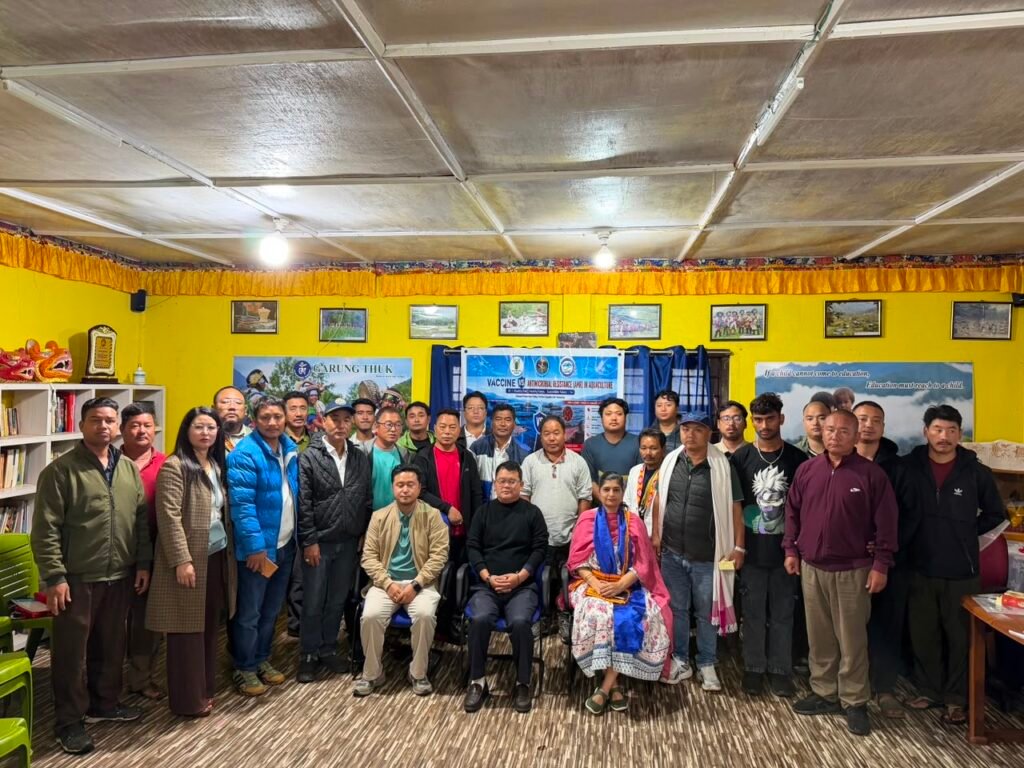
Vaccine awareness prog for farmers

SHERGAON : In a first for Arunachal Pradesh, the Indian Council of Agricultural Research-Central Institute of Coldwater Fisheries Research (ICAR-CICFR), Bhimtal, Uttarakhand, organised a one-day training-cum-awareness programme on the use of vaccines in rainbow trout farming at Shergaon in West Kameng district on Saturday. Organised in collaboration with the District Fisheries Development Office (DFDO), Bomdila, under the Department of Fisheries, the programme focused on promoting vaccination as a sustainable alternative to antibiotics for disease management in aquaculture. It was conducted under the institute’s North Eastern Region (NER) Activity 2026-27. Around 25 rainbow trout farmers from West Kameng and Bichom districts participated in the programme and interacted with experts on fish health management, disease prevention and sustainable trout farming practices. District Fisheries Development Officer (DFDO) Pema Khandu Thungon welcomed the chief guest, Shergaon Zilla Parishad Member Chong Khandu Lama, ICAR-National Fellow Dr Neetu Shahi of ICAR-CICFR, who developed the rainbow trout vaccine against Lactococcus garvieae, and the participating farmers. During the technical session, Dr Shahi highlighted the advantages of vaccination over routine antibiotic use, stating that vaccines provide long-term protection against bacterial diseases, improve fish survival and productivity, and significantly reduce dependence on antibiotics. She also cautioned that indiscriminate use of antibiotics in aquaculture contributes to antimicrobial resistance (AMR), posing risks to aquatic animal health, food safety, environmental sustainability and public health. She encouraged farmers to adopt vaccination and other preventive health management practices for sustainable aquaculture. Speaking on the occasion, Chong Khandu Lama lauded ICAR-CICFR and Dr Shahi for developing the rainbow trout vaccine and for bringing scientific knowledge directly to farmers in the remote trout-farming region of Shergaon. He said such interventions would strengthen sustainable coldwater aquaculture in Arunachal Pradesh. As part of the programme, ICAR-CICFR distributed five deep freezers to selected rainbow trout farmers under the NER Activity 2026-27. The equipment will help maintain the cold chain, improve fish storage, reduce post-harvest losses and support value addition and marketing of rainbow trout products. The programme concluded with an interactive session, field trials of the vaccine and collection of clinical samples from selected trout farms. Farmers expressed keen interest in adopting scientific fish health management practices and appreciated the institute’s efforts to bring advanced technologies to the farming community. The vote of thanks was delivered by District Fisheries Development Officer Pema Khandu Thungon, who also coordinated the programme and acknowledged the support extended by ICAR-CICFR towards the development of rainbow trout farming in the state. (DIPR)

Latest News, Popular News, State News

AITF mourns demise of Hiya HGB

ITANAGAR : The Arunachal Indigenous Tribes Forum (AITF) has expressed deep sorrow over the demise of Tarh Tarang, Head Gaon Burah of Hiya village in Kurung Kumey district and father of AITF President Tarh Tabin. In a condolence message issued on Saturday, the forum said Tarang passed away at his native village on Saturday morning. He was 90. AITF stated that Tarang had served as the Head Gaon Burah of Hiya village from 1969 to 2026 and was widely respected for his active role in resolving community disputes and promoting harmony in the village. The forum recalled his dedicated service to society and said his contributions would continue to inspire future generations. Expressing solidarity with the bereaved family, AITF and its apex federating community-based organisations conveyed their heartfelt condolences to Tarh Tabin and other family members. The forum prayed for eternal peace of the departed soul and for strength and courage to the bereaved family to bear the irreparable loss.

Latest News, Popular News, State News

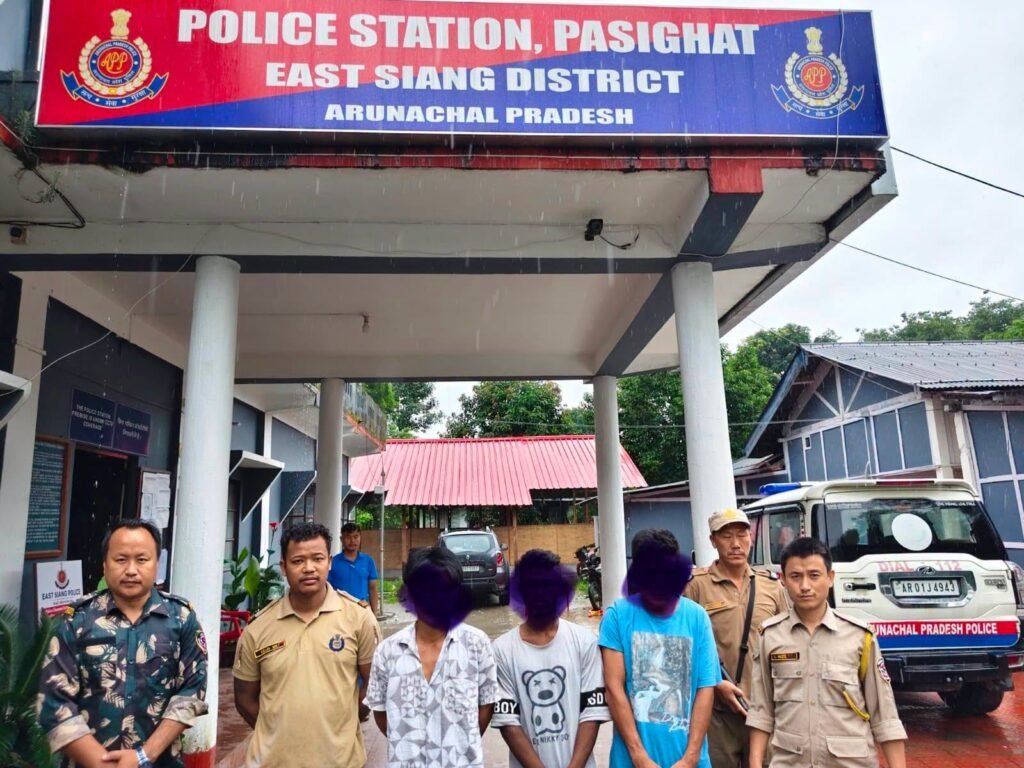
Three arrested for mithun theft; stolen animal recovered in joint operation

MEBO : In a successful joint operation, the Mebo Police and Pasighat Police, with active support from the Mithun Owners Association, arrested three persons allegedly involved in the theft and illegal transportation of a mithun (Bos frontalis, a semi-domesticated bovine species native to the Eastern Himalayan region) and recovered the stolen animal, the official sources on Saturday said. The operation was carried out on Friday after police received specific information that a mithun stolen from the Partung area of Mebo sub-division in East Siang district was being transported towards the Itanagar Capital Region. Acting swiftly, the police intercepted the vehicle carrying the stolen mithun at the Gumto Police Check Gate in Papum Pare district, leading to the recovery of the animal and the arrest of all three accused. The arrested persons have been identified as Philip Lego (28) and Kanggong Tayeng (19), both from Ayeng village under Mebo Police Station, and Nandu Nath (22), a resident of Chumoni village in Assam’s Lakhimpur district, who was driving the vehicle. A case has been registered at Pasighat Police Station under Sections 303(2) and 3(5) of the Bharatiya Nyaya Sanhita (BNS), 2023. The accused have been produced before the Judicial Magistrate, Pasighat, with police seeking their remand to facilitate further investigation. East Siang Police reaffirmed their commitment to protecting the property and livelihoods of citizens and said stringent action would continue against theft and organised criminal activities, a senior officer said. (Source: UNI)      

Latest News, Popular News, State News

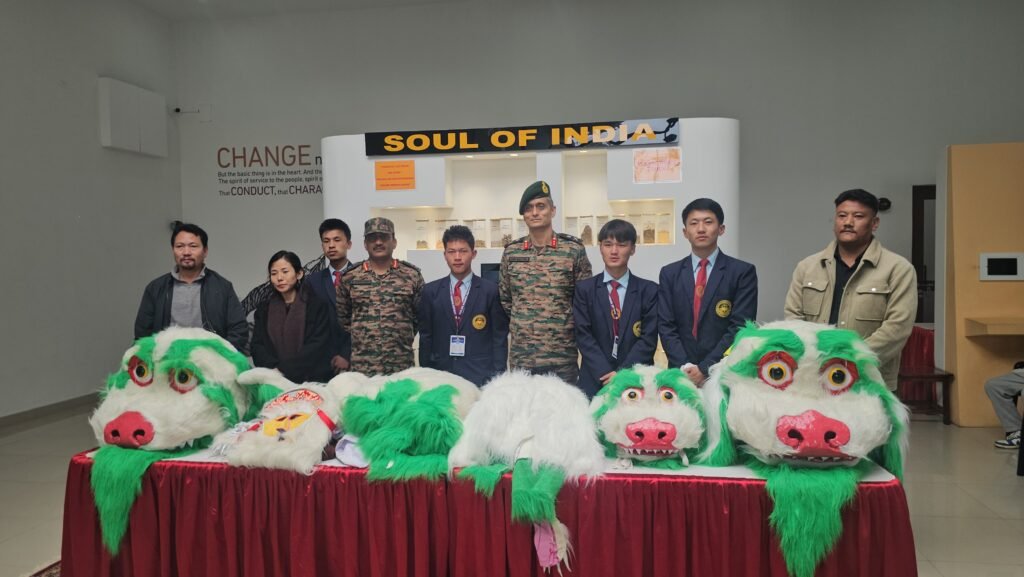
Army distributes computers, cultural kits to schools in Tawang

ITANAGAR : The Indian Army on Saturday distributed computer sets and traditional dance costumes to schools and NGOs in Tawang district of Arunachal Pradesh under its civic action programme, officials said. The items were handed over by General Officer Commanding (GOC) of 5 Mountain Division, Major General Amit Nautiyal, during a function held at the Major Bob Khathing memorial museum. Addressing the occasion, Maj Gen Nautiyal said the Army’s role in border areas extends beyond protecting the country’s frontiers, and includes supporting the education, cultural preservation and overall welfare of local communities. The computer sets are expected to improve digital learning facilities in schools, while the traditional dance costumes will help educational institutions and cultural groups preserve and promote the rich cultural heritage of the Monpa community, according to an official release. The initiative reflects the Army’s continued efforts to support the holistic development of border areas, while fostering closer ties with the people of Tawang, it said. Maj Gen Nautiyal was also briefed on the development initiatives being implemented in the district under ‘Operation Sadbhavana’, and he later interacted with NCC cadets and monks, appreciating their contribution to nation-building and strengthening civil-military relations, the release said. (Source: DIPR/PTI)        

Latest News, Popular News, State News

Khandu hails India’s first private orbital rocket launch

ITANAGAR : Chief Minister Pema Khandu on Saturday hailed the successful launch of Vikram-1 Test Flight-1, India’s first privately developed orbital rocket, saying the landmark achievement marks the dawn of a new era for the country’s space sector and reflects the growing strength of Indian science, technology and entrepreneurship. In a social media post, Khandu said that with the landmark mission, India becomes only the third nation to achieve a successful private orbital launch capability. “Vikram-1 Test Flight-1, the country’s first privately developed orbital rocket, has successfully reached orbit and deployed its payloads into a 450 km orbit,” the chief minister said in a post on X. Describing the mission as a defining moment for the country’s space programme, he said the achievement showcased India’s rapidly expanding capabilities in advanced technology and innovation. “A proud milestone for Indian science, technology, and entrepreneurship. The future of India’s space sector has truly lifted off,” Khandu added. The Vikram-1 rocket, developed by Hyderabad-based private space startup Skyroot Aerospace, lifted off from the Satish Dhawan Space Centre at Sriharikota under its maiden orbital mission, Mission Aagaman, and successfully placed multiple payloads into a 450-km low-Earth orbit, marking India’s first successful privately developed orbital launch. The mission is being seen as a major milestone for India’s commercial space programme, made possible by reforms that opened the country’s space sector to private participation. The successful launch is expected to strengthen India’s position in the global commercial launch market and accelerate the growth of the country’s private space ecosystem, which has expanded rapidly following policy reforms in recent years. (Source: PTI)