ONLINE AGE

(Online version of the Arunachal Age newspaper)

Author name: OnlineAge

REGIONAL

Gogoi urges for impartial, transparent investigation into killing of 6 Naga civilians in Manipur

GUWAHATI : Deputy Leader of Opposition in Lok Sabha Gaurav Gogoi on Thursday urged for a swift, impartial and transparent investigation into the killing of six Naga civilians in Manipur and said those responsible must be identified and brought to justice without delay. Manipur continues to endure the effects of prolonged conflict, with peace and normalcy still remaining elusive more than three years later, Gogoi said in a post on X. ”The brutal killing of six Naga civilians in Manipur is a deeply distressing tragedy. My heartfelt condolences to the families of the victims as they cope with this immense loss”, Gogoi, also the Assam state Congress president, said. “Innocent lives continue to be lost, while communities across the state remain burdened by fear and uncertainty,” he said. This tragic incident underscores the urgent need for lasting peace and accountability, he added. ”There must be a swift, impartial and transparent investigation into this heinous crime, and those responsible must be identified and brought to justice without delay.” Gogoi asserted. The Manipur Police on Wednesday said they found the mortal remains of six people, suspected to be of missing Naga men, who had been held hostage by armed groups in Kangpokpi district. The recovery took place a day after 14 Kuki individuals who were abducted by armed groups in Manipur’s Senapati district nearly a month ago were released. (Source: PTI)      

REGIONAL

PM emphasises attempt to solve issues in Northeast, claims TMP founder Pradyot Debbarma

AGARTALA : The Tipra Motha Party (TMP), an ally of the ruling BJP in Tripura, on Thursday asserted that Prime Minister Narendra Modi emphasised ending all pending issues in the Northeast region. TMP founder Pradyot Kishore Manikya Debbarma also claimed that Delhi understood that the Tiprasa, or indigenous, people in the state have genuine issues following his party’s recent victory in the Tripura Tribal Areas Autonomous District Council (TTAADC) elections. The TMP registered a massive win in the April polls in tribal council elections by bagging 24 out of 28 seats, while the BJP, which fought separately, secured four seats. “The Prime Minister has talked to me (during the celebration of 12th years of Narendra Modi in office at Bharat Mandapam) and enquired about the health of my mother (Maharani Bibhu Kumari Devi). He emphasised making attempts to resolve all the pending issues in the Northeast,” Debbarma said in a video. “I, along with MLA Ranjit Debbarma, met the Director of the Intelligence Bureau (IB) and the new interlocutor at the Ministry of Home Affairs in Delhi today. There will be advancement in the Tiprasa Accord,” he said without throwing much light on the outcome of the meeting. The TMP signed an agreement with the Centre and the state government in the presence of Union Home Minister Amit Shah in March 2024 for the overall development of the Tiprasa people. Asserting that he is on the ‘right track’ in negotiating the accord with the Centre, Debbarma claimed that the Tiprasa people who voted for various political parties such as the Congress, CPI(M), BJP, Tripura Upajati Yuba Samity (TUJS) have gained nothing in the past 75 years. “We must focus on the rights of indigenous people rather than politics. Too much politics weakens us. If the PM and Union home minister could bring solutions to problems like those of the Naga, Mizo, Bodoland and Dimasa, why do our issues remain unresolved? We will continue to engage in discussions with those in power in Delhi,” he said. The TMP, which used to be the main opposition party of Tripura, joined the BJP-led government ahead of the Lok Sabha elections in 2024. (Source: PTI)      

REGIONAL

Manipur govt will not remain mute spectator to atrocities: CM on ‘killing’ of Naga hostages

IMPHAL : The Manipur government will not remain as a mute spectator to atrocities, Manipur Chief Minister Y Khemchand Singh said on Thursday, after police found the mortal remains of six people suspected to be of missing Naga men, who had been held hostage by armed groups in Kangpokpi district. Six persons of the Naga community were abducted from Leilon Vaiphei village in Kangpokpi district on May 13. In an official statement, the CM said the state government won’t tolerate such violence, and “will not remain a mute spectator to these atrocities”. “Culprits responsible for the murder will be arrested and punished as per law,” Singh said. The bodies were recovered a day after 14 Kuki individuals who were abducted by armed groups in Manipur’s Senapati district nearly a month ago, were released on June 9. “After nearly 24 hours of sustained search operations involving around 450 personnel of the Manipur Police, CRPF, and Assam Rifles, assisted by sniffer dogs and forensic expert teams, the mortal remains of six persons were recovered this afternoon. The deceased are believed to be among those taken hostage from Leilon Vaiphei on May 13, 2026,” the police said in a post on X on Wednesday. These 14 Kuki people and the six Nagas were among others who were abducted following the killing of three church leaders in Kangpokpi district on May 13. In a post on X, the chief minister later said: “Deeply anguished by the brutal murder of six innocent Naga villagers abducted from Leilon Vaiphei village, Kangpokpi district. My heartfelt condolences to the bereaved families.” “The Government of Manipur strongly condemns this heinous act and is committed to ensuring that the perpetrators are brought to justice. The case is being investigated by the NIA. Violence has no place in our society. We remain steadfast in our commitment to peace, security, and the rule of law in Manipur,” Singh said. An NIA team visited the JNIMS mortuary in Imphal, after the bodies of the six men were brought to the hospital around 2 am, as part of its investigation into the killing. Meanwhile, protesters allegedly vandalised the Naga Peoples’ Front Manipur unit office at Liangmai Taphou in Senapati district late on Wednesday, after the bodies were recovered by the police. Furniture and other office property were set afire by the agitators, officials said. Miscreants also torched two trucks near a school in Karong area on Wednesday evening, they said. The United Naga Council, the apex body of Nagas in Manipur, has imposed a 24-hour shutdown in parts of the state from 6 am on Thursday to protest againt the killing. (Source: PTI)    

REGIONAL

Guwahati researchers find science behind Zubeen Garg’s immortal humming

GUWAHATI : Legendary musician Zubeen Garg mesmerised his innumerable fans for decades with his signature humming, but the real science behind it was acoustic properties carrying warmth and expressivity, according to a study by two researchers of Handique Girls’ College. Kishore Dutta and Jyotshna Saikia, both Assistant Professors of Physics, in their research paper ‘Quantitative Acoustic Profiling of Zubeen Garg’s Humming: Temporal Patterning and Spectral Balance’ tried to look at the uniqueness of Garg’s voice. “Zubeen Garg’s vocal style is known for its distinctive use of humming. His humming often functions as a musical signature that transcends linguistic boundaries and has been described in journalistic and listener accounts as ‘soothing, soulful or magnetic’,” the study said. Its appeal arises not from linguistic meaning but from its underlying acoustic organisation and timbral expressivity, it added. The article, published in ‘Journal of Voice’ — the peer-reviewed official medical journal of the Voice Foundation and the International Association of Phonosurgery, said that vocal humming occupies a distinctive position in Indian popular music as an emotive bridge linking melody, memory and mood. “Zubeen Garg’s characteristic humming style, noted for its fluidity and expressive warmth, invites systematic investigation of what acoustically defines its appeal,” the researchers said in the paper. The study presented a quantitative acoustic profiling of Garg’s humming, focusing on how measurable voice parameters contribute to its distinct sonic character, they added. Explaining the methodology, the duo said: “A detailed set of temporal, spectral and timbral features was extracted, including jitter, shimmer, harmonic-to-noise ratio, spectral centroid, rolloff, tilt, roughness and Mel-frequency cepstral coefficients (MFCCs).” The analyses revealed characteristic temporal patterns and the statistical comparisons showed highly significant differences in fundamental frequency between Garg’s humming and singing, and in jitter between his and other singers’ humming. “Multiple MFCCs also showed significant distinctions, indicating limited timbral differentiation in harmonic structure. Spectral features showed non-significant trends toward lower centroid and elevated roughness,” it added. These results indicated that a subset of temporal and timbral features contributes to an acoustic profile associated with Garg’s humming, the paper said. “While no perceptual testing was undertaken, interpretations are grounded in established psychoacoustic literature linking acoustic measures to perceived attributes such as tonal warmth and vocal steadiness,” it added. Within this interpretive framework, the findings suggested that Garg’s humming exhibits an acoustically measurable combination of selected temporal and spectral characteristics that may be associated with its perceived resonant quality. The celebrated singer died under mysterious circumstances in Singapore on September 19 last year while swimming in the sea. He had gone to the South Asian nation to attend the 4th edition of the North East India Festival (NEIF). The research paper stated that Garg’s humming exemplified how micro-acoustic precision and spectral balance may contribute to a listener’s impression of tonal warmth and vocal presence. “The present analyses show that this perceived quality is associated with a tendency toward distinct temporal patterning combined with spectral balance and harmonic cohesion,” it added. These acoustic properties together may contribute to the perceived warmth and expressivity of his humming. Its appeal arises not from linguistic meaning but from its underlying acoustic organisation and timbral expressivity, it added. “Despite its artistic and cultural significance, the acoustic structure of such humming has rarely been examined through a quantitative lens,” the researchers said. The study investigated the acoustic expressibility of humming, examining how measurable voice parameters jointly shape its perpetual distinctiveness, they added. Dutta and Saikia in their research found that Garg’s humming combines precise pitch centering with smooth spectral shaping and balanced harmonic richness, producing perceptually warm and resonant timbre. “The study thereby establishes a reproducible, data-driven framework for interpreting artistic humming through measurable acoustic evidence. By profiling a singular voice, it connects acoustic analysis with broader musical context, showing how controlled temporal variability and spectral balance contribute to the expressive identity of humming in Indian popular music,” they added. The duo, however, acknowledged that the dataset in the research was limited in size and focused on a single artiste’s humming style. “As a case study, these findings are not intended for population generalisation but rather to demonstrate a replicable analytical framework for quantifying stylistic individuality in expressive humming. Future studies with larger, controlled corpora are needed to validate and extend those observations,” they added. (Source: PTI)      

REGIONAL

Two shot dead, houses burnt by militants in Manipur’s Kamjong

IMPHAL : Suspected militants attacked a village in Manipur’s Kamjong district on Thursday, gunning down two persons and burning several houses, police said. The incident took place a day after the bodies of six Naga civilians were recovered in Kangpokpi district. It is suspected that the mortal remains belonged to those held hostage by armed groups. Kultuh Kuki, a small village, was attacked by suspected militants at around 4.55 am, during which two persons were killed, police said. Some 30 households near the border area with Myanmar were also burnt, the official said. Security forces have reached the remote village, but the identity of the perpetrators is yet to be known. Kuki Baptist Convention condemned the killings and urged the authorities to take “decisive and comprehensive measures” to ensure protection of civilians. On the killing, Congress leader Dr Lamtinthang Haokip claimed that “the Head Deacon of the Kultuh Church and Chairman of the Youth Dept were brutally murdered.” He alleged that the government’s failure to control the situation is “beyond tolerance”. (Source: PTI)          

Editorial

Choice, coercion, and an essential distinction

At the core of the Supreme Court’s recent judgment on human trafficking and sex work is an important distinction. India’s legal and law enforcement systems have continued to approach cases in both areas with a largely similar set of responses. The apex court’s ruling can positively reshape these responses of the State, making it accountable for protecting the rights of women in either situation. A bench of Justices J B Pardiwala and R Mahadevan noted that the Immoral Traffic [Prevention] Act (ITPA) has failed to recognise the rights of voluntary adult sex workers and ensure their protection. It noted that the statute’s silence on the matter deepened the social stigma they face, resulting in their marginalisation and exploitation. The Court made an important observation when it said, “…the rights of sex workers can exist without there being a right to sex work.” The ITPA follows uniform processes to rescue and rehabilitate women, irrespective of their circumstances. Under its provisions, trafficking victims and voluntary sex workers are placed in protective custody before rehabilitation measures are initiated. The Court said there should be an initial inquiry before placing adults in protective custody. It stipulated that in cases of sex work, recognition of consent should inform rehabilitation decisions. Welfare measures cannot override individual choice. The central principle is that a person who identifies herself as a sex worker by choice has the right to practise her profession; the State cannot take that right away. Since the ITPA treats all sex work within the ambit of trafficking, it also leads to harassment of the very victims the law is meant to protect. The Court has sought from the government a re-examination of the legislative framework that conflates sex trafficking with sex work. Significantly, it prescribed to the State a new approach to trafficking. The Court emphasised rehabilitation, reintegration, and long-term protection of trafficked women. It directed that a victim protection plan be formulated, aimed at setting minimum standards for shelter homes and offering mental health support, legal aid, education, vocational training, and safeguards against re-trafficking. Trafficking of women is a multi-billion-dollar business within and outside the country, operated through organised networks supported by powerful interests. While dismantling these criminal networks will take strong, coordinated action, the Court’s directives are aimed at addressing legal gaps through the lens of rights and dignity. These guidelines need to be followed up with political will and administrative capacity-building. Their impact will also hinge on a responsive and sensitised society. (Source: DH)  

Latest News, Popular News, State News

APIYO rejects govt’s joint committee proposal, demands immediate action on illegal structures

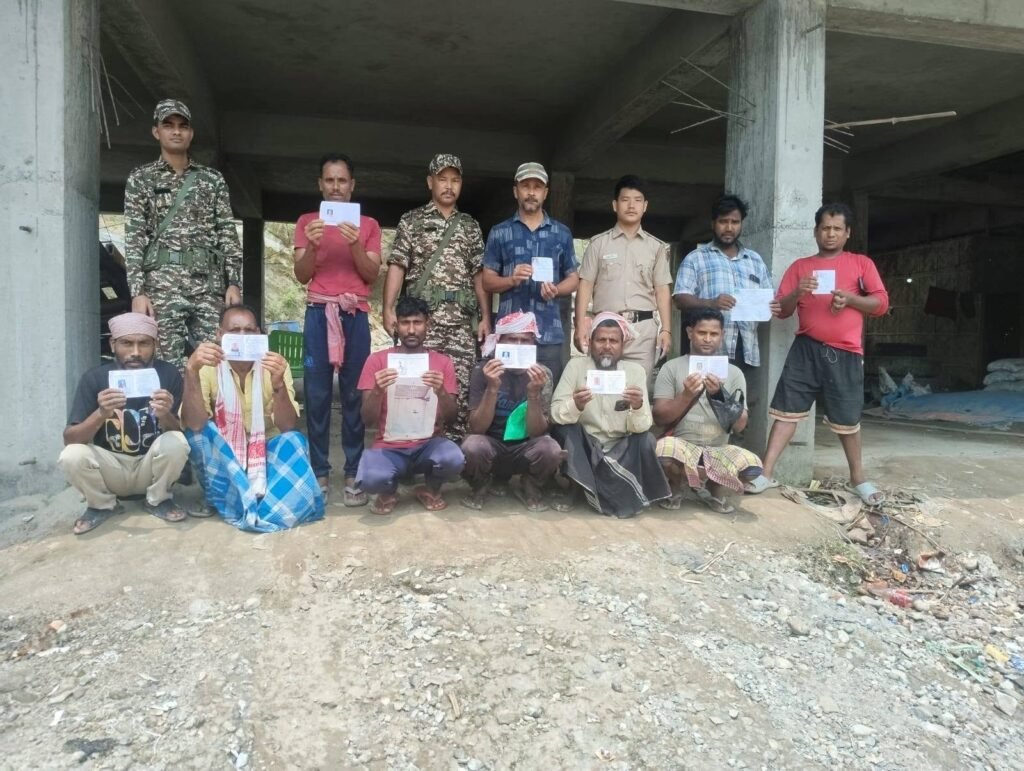
Staff Reporter ITANAGAR : The Arunachal Pradesh Indigenous Youth Organisation (APIYO) on Wednesday rejected the state government’s proposal to constitute a Joint High-Power Committee to examine issues related to alleged illegal structures and illegal immigration, insisting that immediate action be taken instead of forming another committee. Addressing a press conference in Itanagar, APIYO president Taro Sonam Liyak said the organisation was not interested in participating in any committee-based mechanism and urged the government to directly implement measures to address the concerns raised by the organisation. “We do not want a Joint High-Power Committee, nor do we require assurances from the government. If the government is serious about resolving the issue, it should take direct action and dismantle the alleged illegal structures,” Liyak said. He stated APIYO had deliberately stayed away from a government-convened meeting in order to remain focused on its demands. Liyak alleged that despite repeatedly highlighting concerns regarding illegal immigration and seeking filtration of undocumented individuals, it was not included in the proposed committee. He maintained that merely shutting down the establishments in question would not be sufficient and reiterated the organization’s demand for the lawful dismantling of what it described as illegal constructions. The organisation also called for a comprehensive verification drive, claiming that some individuals associated with the establishments could be illegal immigrants, including Bangladeshi and Rohingya nationals, Liyak informed, while questioning whether the government could guarantee that all persons residing in and around the establishments were Indian citizens Further, he informed that the organisation sought scrutiny of the Inner Line Permit (ILP) system, labour and employment records, commercial activities and other sectors where it alleged irregularities may exist. Claiming to possess documentary evidence supporting its concerns, Liyak stated that the materials had already been submitted to the Chief Minister’s Office during a meeting held on January 17. He urged the government to examine the documents and act on the information without further delay.  

Latest News, Popular News, State News

Margherita reviews development projects in Lower Siang

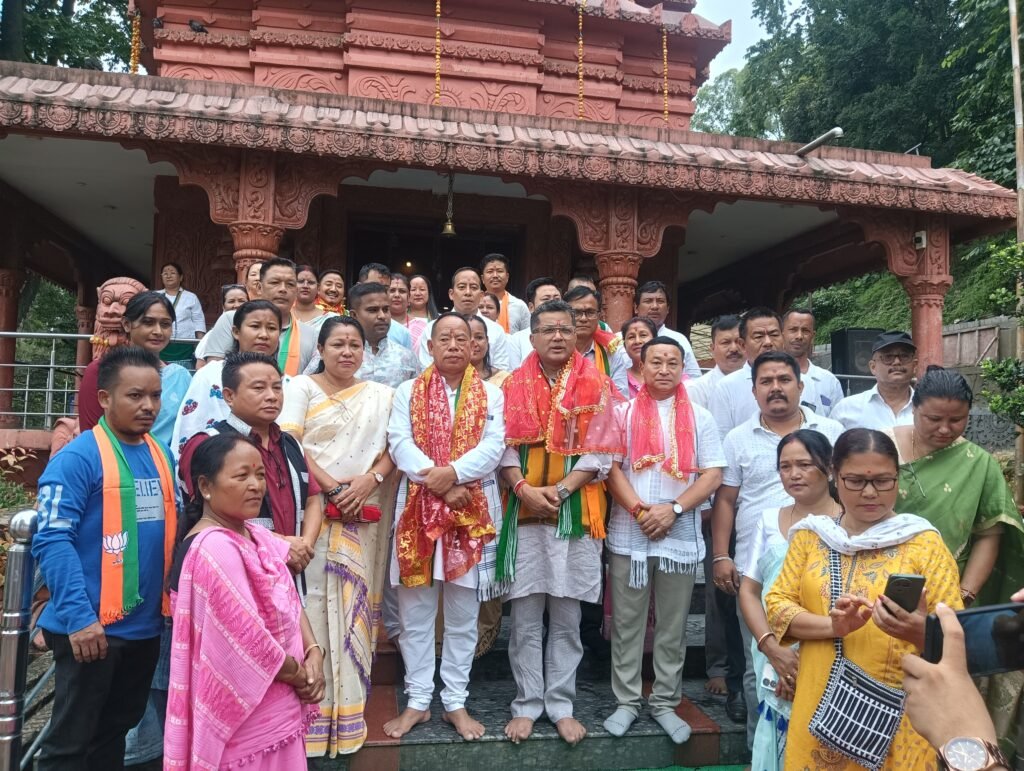
LIKABALI : Union Minister of State (MoS) for External Affairs and Textiles Pabitra Margherita on Wednesday reviewed the progress of various Central and State government schemes and developmental projects in Lower Siang district during a review meeting held at Likabali. The Minister underscored the importance of regular assessment and evaluation of development projects, stating that such initiatives are key to shaping the State’s future and ensuring sustained growth. Expressing concern over school dropouts, Margherita said every child leaving the education system is a matter of concern and stressed the need to ensure quality education and student retention. The meeting reviewed the achievements, challenges and implementation status of flagship programmes. Departmental officials presented suggestions and discussed strategies to improve the delivery of developmental schemes across sectors. Arunachal Pradesh Legislative Assembly Deputy Speaker Kardo Nyigyor highlighted the persistent road connectivity issues in the district, particularly along the Akajan-Likabali-Bame road, and sought early intervention from the Centre to address recurring monsoon-related disruptions. He also pointed to poor soil stability as a major factor behind the deterioration of roads in the region and advocated adopting engineering designs suited to local terrain and geological conditions. Likabali MLA Nari Koyu and Yachuli MLA Tojir Kadu urged the Centre to enhance per-unit allocations under rural housing schemes, stating that existing provisions are inadequate given the difficult terrain and high transportation and construction costs in the State. Lower Siang Deputy Commissioner Gobi Nyicyor, Additional Deputy Commissioners Ainstein Koyu and Mokar Riba, along with heads of departments, apprised the Minister of key achievements, challenges and requirements related to infrastructure development and public welfare. Departmental heads also made detailed presentations on projects being implemented in their respective sectors. Earlier, Margherita, accompanied by the district’s legislators, visited the historic Malinithan temple and offered prayers for the well-being of the people of Arunachal Pradesh and Assam. The Minister was accorded a warm reception by district officials, panchayat leaders and members of the public on his arrival in the district.  

Latest News, Popular News, State News

Capital Police intensify drive against ILP violators

ITANAGAR : The Itanagar Capital Police have intensified enforcement against Inner Line Permit (ILP) violators across the Capital Region as part of a routine exercise conducted under the provisions of the Bengal Eastern Frontier Regulation (BEFR), 1873. The drive is being carried out under the supervision of Capital Superintendent of Police Jummar Basar, with police teams conducting regular verification and inspection exercises to ensure compliance with ILP regulations. According to police, a significant number of violations are detected during such drives, following which appropriate action, including externment and other legal measures, is taken as per the law. Police officials stated that ILP verification drives are conducted regularly across the Capital Complex, although such enforcement activities may not always be publicised. Residents and visitors have been urged to comply with all provisions relating to the Inner Line Permit and cooperate with authorities during verification exercises.    

Latest News, Popular News, State News

Three killed in landslide-triggered road accident on Migging-Tuting road

ITANAGAR : Three persons, including two women, lost their lives and two others sustained serious injuries after the vehicle they were traveling in plunged into a deep gorge following a suspected landslide on the Migging–Tuting Road in Upper Siang district on Wednesday morning. According to official reports, the accident occurred at around 7:30 am, approximately 3 km from Migging towards Tuting. A Tata Nexon carrying five occupants reportedly skidded off the road after being affected by a landslide and plunged nearly 200 metres down a steep slope. The deceased were identified as Ottu Nitik, his wife Bami Nitik, and Olek Tali. Two other persons, Jesek Jongkey and Ponung Nitik, sustained serious injuries. However, due to road blockades in the area, they could not be immediately evacuated to the District Hospital at Yingkiong for treatment. Rescue and recovery operations were launched immediately under the supervision of Additional Deputy Commissioner of Tuting, Pandov Perme, and the Circle Officer of Migging. A joint team comprising personnel from the Indian Army, ITBP and local administration successfully retrieved the bodies of the deceased from the accident site. The operation involved troops from the Indian Army’s 5 DOGRA, 117 Engineer Regiment, 18 Sikh, 11 Sikh, 1811 Medium Regiment and 17 Mahar Regiment, along with personnel of the 61 Battalion ITBP and local authorities. ADC Pandov Perme informed that the rescue operation was successfully concluded and the mortal remains were handed over to the families for the last rites. District Disaster Management Officer (DDMO) Anie Yangfo stated that, following official verification and as per State Disaster Response Fund (SDRF) norms, an ex-gratia assistance of Rs 4 lakh each will be provided to the next of kin of the deceased. Financial assistance for the treatment of the injured will also be extended as per admissible norms. In a statement, the Indian Army said Quick Reaction Teams from Migging and Tuting, equipped with rescue, medical and mountaineering gear, responded immediately and undertook a challenging operation through dense forests and hazardous terrain amid continuous rainfall. After more than nine hours of relentless effort, troops led by Subedar Major and Honorary Lieutenant MD Nasir Hussain successfully recovered two bodies and transported them to the road head before handing them over to civil authorities. Another rescue team led by Sub Arjun Singh of 5 DOGRA continued search operations in the slushy and difficult terrain. The Army said the operation highlighted its unwavering commitment to humanitarian assistance and its capability to conduct rescue missions in some of the most challenging terrains of Arunachal Pradesh. (Source: UNI)