

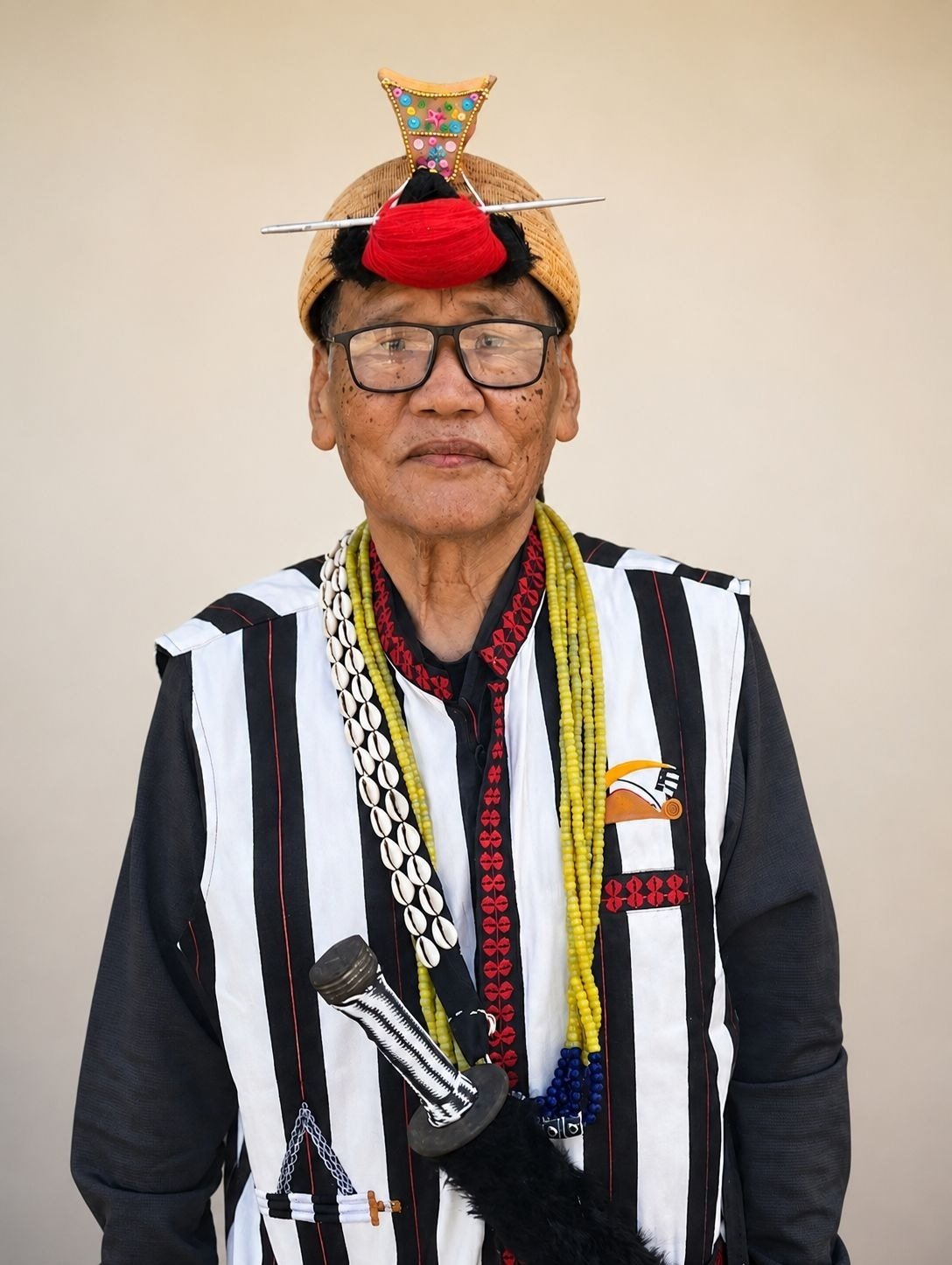
ITANAGAR : Bengia Tolum is widely known for his social work—some recognize him as the NES President, others as the AITF President. However, he never needed or waited for any position to serve society. His zeal for public service was always evident in his actions.
Back in the early 1970s, when rice was the most valued grain yet scarce due to climatic factors, pests, and animal attacks, he opened a fair price shop in Yazali—the first in the entire Keyi Panyor district. Through this initiative, rice became accessible not only to the people of Keyi Panyor but also to those from the neighboring Mengio block of Papum Pare.
In 1987, he established the first photo studio in Yazali, enabling people to get photographs for official purposes and to preserve personal memories. At that time, traveling to places like Ziro or Lakhimpur for such basic needs was extremely difficult due to poor transportation, with almost no private vehicles and only a few government buses and trucks operating.
During the 1980s, when Yazali Higher Secondary School was overwhelmed with students from Keyi Panyor, Kurung Kumey, and Kra Daadi, many were deprived of quality education due to limited capacity. While a few privileged families sent their children to Shillong, the majority had no access to good education nearby. Recognizing this gap, Bengia Tolum envisioned providing quality education within the community.
This vision materialized with the establishment of Abotani Academy on 14th July 1993. The institution has since produced numerous civil servants, police officers, doctors, engineers, teachers, administrators, politicians, and social leaders.
His mission was never profit-driven. Fees were minimal, and in many cases waived entirely for students from economically weaker backgrounds. He firmly believed that education should be accessible to all.
He had a special compassion for orphans, providing them free education and even sheltering them in his own home when guardians were unable to pick them up during vacations.
In the 1980s, due to the absence of medical stores, people struggled to access medicines. To address this, he brought a pharmacist from Assam and helped establish a pharmacy in Yazali.
Understanding that people still needed to travel to Ziro and Itanagar for many services, he started daily bus services to these towns, greatly improving connectivity. He also established a vehicle repair workshop and tyre resoling centers—Miranda Motorworks and Monalisa Trade and Tyres.
Despite owning multiple establishments, his efforts were never profit-oriented. Charges were minimal, just enough to sustain operations. While he appeared prosperous from the outside, he and his wife often struggled financially.
Among all his passions, his love for tradition and culture stood foremost. In 1996, he organized a Nyishi language workshop, bearing all expenses including travel, accommodation, and food. Following this, he published books on Nyishi literature, including Nyishi Kitab Akin, Nyishi Kitab Enyi, and Nyishi Kitab Oum—the result of years of dedicated research.
In 1997, he introduced Nyishi as a third language for Classes V, VI, and VII and personally taught the students. He also trained students in Nyishi songs and encouraged them to use the language in daily conversations within school and hostel premises.
He extended his efforts beyond his institution by collaborating with the principal of VKV Sher, where he personally taught Nyishi songs alongside students of Abotani Academy. He also contributed to Nyedar Namlo, Yazali, teaching devotional songs composed by him.
He deeply supported artists—both by providing platforms and financial assistance. Many artists he supported early in their careers have since achieved great success.
His compassion extended beyond his district. During the 1980s and 1990s, when students from Kurung Kumey and Kra Daadi faced difficulties securing admission in Yazali, he acted as their local guardian. Today, many of them are serving the state in various capacities. Without his intervention, the course of their lives might have been very different.
A proud Nyishi and a true patriot, he demonstrated remarkable courage during the Nyishi-Apatani conflict. At a time when administration and law enforcement were largely paralyzed, he coordinated with authorities and personally ensured the safe escort of Apatani civilians to Hapoli, Ziro.
When a Chief Minister made the controversial remark that “Nyishis are only in quantity, not in quality,” Bengia Tolum led a strong protest, uniting community leaders and politicians. The movement was so impactful that the Chief Minister personally visited his residence, offering him the post of EAC along with official perks. Tolum firmly rejected the offer, stating that a leader holding such views had no moral authority to govern. This stand contributed to the eventual fall of that government.
He also played a crucial role in opposing the proposed dam project by NEEPCO, which would have submerged Yazali town, displacing thousands. Despite being offered a position as Liaison Officer to withdraw his protest, he stood firm. Ultimately, NEEPCO abandoned the plan, preserving Yazali’s land, heritage, and future.