

ONLINE AGE

(Online version of the Arunachal Age newspaper)

Popular News

Latest News, Popular News, State News

Arunachal seeks stronger convergence among departments for ‘Lakhpati Didi’ mission

ITANAGAR : The Arunachal Pradesh government on Friday stressed the need for greater convergence among departments and directed that identified potential ‘Lakhpati Didis’ be given priority under relevant state and centrally sponsored schemes to help rural women achieve sustainable annual incomes of Rs 1 lakh or more. The directive was issued during a meeting of the state-level steering committee on the ‘Lakhpati Didi’ initiative, chaired by rural development and panchayati raj secretary Sonal Swaroop at the Arunachal State Rural Livelihoods Mission (ArSRLM) office here. Swaroop also asked all departments to submit reports on benefits extended to self-help group (SHG) members under various ‘Atmanirbhar’ schemes during the last two financial years. The reports will help assess the contribution of these schemes towards achieving the objectives of the ‘Lakhpati Didi’ initiative, she said. Swaroop emphasised the need to strengthen inter-departmental coordination to maximise livelihood opportunities and enhance the incomes of SHG members. The meeting was attended by representatives of various departments and key stakeholders, including officials from the agriculture, skill development and horticulture departments, Arunachal Pradesh Agriculture Marketing Board (APAMB), ArSRLM and the veterinary department, officials said. ‘Lakhpati Didi’ is a flagship initiative of the Centre and the state government aimed at enabling women associated with SHGs under the National Rural Livelihoods Mission (NRLM) to achieve a sustainable annual household income of Rs 1 lakh or more. The programme promotes livelihood diversification, entrepreneurship development, skill enhancement, financial inclusion and convergence with government schemes to improve the socio-economic condition of rural households. During the meeting, representatives of various departments outlined schemes and interventions that could benefit identified potential ‘Lakhpati Didis’. The committee also deliberated on assessing the skill requirements of beneficiaries to facilitate targeted capacity-building programmes. Departments were asked to compile and share relevant data during upcoming district-level steering committee meetings to be chaired by the respective deputy commissioners. Chief executive officer of APAMB highlighted several market linkage initiatives being implemented by the board, including Mission Arun Himveer, and informed the committee about opportunities available under the programme. He also requested ArSRLM to facilitate the engagement of potential ‘Lakhpati Didis’ to strengthen market access and income-generation opportunities for SHG members. The meeting concluded with all departments reaffirming their commitment to work in close coordination to achieve the goals of the ‘Lakhpati Didi’ initiative and accelerate the socio-economic empowerment of rural women across the state. (Source: PTI)  

Latest News, Popular News, State News

India emerged as global leader under Modi’s leadership: Khandu

ITANAGAR : Chief Minister Pema Khandu on Friday said India has undergone a remarkable transformation under Prime Minister Narendra Modi’s leadership over the past 12 years, emerging as a global leader in technology, innovation, diplomacy and humanitarian outreach. In a series of posts on X, he highlighted the country’s achievements under the Modi government. “Over the past 12 years, under the visionary leadership of Prime Minister Narendra Modi, India has transformed from a technology importer to a nation building its own chips, drones, and advanced defence systems,” the chief minister said. He said the ‘Made in India’ initiative has evolved into a symbol of national confidence and self-reliance. “Made in India is no longer just a label, it is a symbol of national pride and the confidence of a New India,” the chief minister remarked. Khandu further asserted that India’s growing technological capabilities, manufacturing strength and innovation-driven development have helped position the country among the world’s emerging economic and strategic powers. He also highlighted India’s expanding global influence and diplomatic stature. “India has emerged as a trusted global partner, championing the Global South, driving green energy and semiconductor growth, and delivering solutions that matter to the world,” the chief minister said. “A stronger India is contributing to a stronger world.” Khandu observed that India’s leadership role has become increasingly visible through its initiatives in clean energy, digital transformation, infrastructure development and international cooperation. He said the country’s efforts to represent the concerns of developing nations have further strengthened its standing in global forums. Referring to India’s growing international recognition, Khandu said, “Over the past 12 years, India has earned global respect through decisive leadership, humanitarian outreach, and a steadfast commitment to national interest.” Citing examples of India’s expanding global footprint, Khandu pointed to the country’s successful G20 Presidency, global rescue operations and the Vaccine Maitri initiative. “From the G20 Presidency to global rescue missions and Vaccine Maitri, India continues to lead with responsibility and confidence,” the chief minister added. (Source: PTI)    

Latest News, Popular News, State News

National Reading Month launched at Nari

NARI : A National Library Awareness Programme was organised at Nari on Friday to mark National Reading Day and launch National Reading Month 2026, which will be observed from June 19 to July 18. The programme was organised by the North East Foundation for Health Education and Livelihood Skills (NE-HEALS) with support from the Nari sub-divisional administration. It aimed to promote a reading culture, strengthen library usage among students and encourage lifelong learning through books and knowledge resources. Padma Shri awardee Sathyanarayanan Mundayoor, popularly known as Uncle Moosa, attended the event as the chief guest. Addressing the gathering, he underscored the transformative power of reading in shaping character, broadening perspectives and nurturing responsible citizens. He encouraged students to develop a daily reading habit and make libraries an integral part of their learning journey. Namsai District Library Librarian Saumyen Mukhopadhyay, who attended as the guest of honour, highlighted the role of libraries in supporting education and urged students to visit libraries regularly to enhance their knowledge and critical thinking abilities. Nari Circle Officer Tage Asha emphasised the importance of reading for academic success and personality development and encouraged students to make effective use of available library resources. Alumnus of Nari Higher Secondary School Marge Sora shared his personal experiences and motivated students to embrace reading as a tool for self-improvement and future success. As part of the programme, students took a reading oath, pledging to read regularly and promote the habit among their peers. Volunteers from Uncle Moosa’s team also presented dramatic storytelling sessions, poem recitations and other literary performances that engaged the audience. The organisers announced a month-long series of literary activities during National Reading Month, including reading clubs, story-writing and poetry competitions, dramatic presentations, creative writing workshops and library orientation sessions. Students participating in intra-school and inter-school literary events will be felicitated on July 19. More than 200 students, teachers and community members participated in the programme, marking the beginning of a month-long campaign to promote reading and literary engagement in the region. (DIPR)  

Latest News, Popular News, State News

Lowang inspects flood-hit roads, bridges in Deomali

DEOMALI : Environment and Forest and Tirap, Changlang and Longding Affairs (DoTCL) Minister Wangki Lowang on Friday conducted an extensive inspection of roads and bridges damaged by recent flash floods in Deomali subdivision. Accompanied by Deomali Additional Deputy Commissioner B. Tawsik, the minister visited several affected locations to assess the extent of damage caused by the floods, which have severely impacted road infrastructure, bridges and communication links across a number of villages and localities. During the inspection, Lowang reviewed the ground situation with officials of the concerned departments and stressed the need for immediate restoration of connectivity and essential public services. He noted that the widespread damage had disrupted transportation and affected the daily lives of residents in the affected areas. Directing the departments concerned to initiate urgent restoration measures, the minister emphasised coordinated efforts among all line departments to expedite repair works and restore normalcy at the earliest. Reaffirming the government’s commitment to public welfare, Lowang assured that all possible assistance would be extended to affected communities to mitigate hardships and strengthen infrastructure resilience against future natural calamities. Meanwhile, the district administration and line departments have begun preliminary damage assessments and are working towards the early restoration of roads, bridges and other essential public infrastructure damaged by the flash floods.  

Latest News, Popular News, State News

CCPS Itanagar restores cyber fraud losses through new recovery mechanism

ITANAGAR :  The Cyber Crime Police Station (CCPS), Itanagar, has successfully facilitated the restoration of ₹30,000 to two cyber fraud victims through the newly introduced Money Restoration Module (MRM), marking a significant milestone in cybercrime redressal in the Northeast. According to a statement issued by Police Headquarters (PHQ) Crime Superintendent of Police Achin Garg, the recovery was made possible through the MRM, a digital platform launched earlier this year by the Indian Cyber Crime Coordination Centre (I4C) under the Ministry of Home Affairs to enable quicker restoration of money lost in cyber fraud cases. The MRM allows victims to seek the return of fraudulently transferred funds without requiring a First Information Report (FIR) or court order, provided the disputed amount does not exceed ₹50,000 and remains frozen in the fraudster’s account. The process is conducted online, reducing procedural delays and simplifying fund recovery for victims. Police said the initiative is particularly significant for victims of small-value cyber frauds, who often face lengthy legal procedures to recover relatively modest amounts. However, authorities clarified that the module can facilitate restoration only when the defrauded amount remains frozen in the recipient account. Funds that have already been withdrawn or transferred further cannot be recovered through the system. To avail of the facility, victims must first report the cybercrime through the National Cyber Crime Reporting Portal or by calling the national cybercrime helpline 1930. Using the complaint acknowledgement number, applicants can then submit a refund request through the Money Restoration Module portal, complete the verification process and track the status of their application online. Highlighting the importance of timely reporting, police stressed that swift action significantly improves the chances of freezing fraudulent transactions and recovering funds before they are moved by scammers. The police also urged citizens to follow basic cyber safety practices, including never sharing one-time passwords (OTPs), personal identification numbers (PINs) or banking credentials with anyone. Citizens were advised to remain cautious of emerging cyber frauds, including so-called “digital arrest” scams, and to verify suspicious communications through official channels before taking any action. Authorities reiterated that anyone suspecting cyber fraud should immediately contact the cybercrime helpline 1930 or lodge a complaint through the National Cyber Crime Reporting Portal to maximise the possibility of fund recovery.    

Latest News, Popular News, State News

Awareness workshop on Udyam, FSSAI registration held

LIKABALI : A workshop-cum-awareness programme on Udyam Registration and Food Safety and Standards Authority of India (FSSAI) registration was organised by the Block Mission Management Unit (BMMU), Likabali, at the Circuit House Conference Hall here to create awareness among entrepreneurs, Self-Help Groups (SHGs), business owners and aspiring entrepreneurs on business registration and food safety compliance. The programme was attended by Likabali Block Mission Manager Techi Yagar, Block Cluster Level Federation–National Rural Livelihoods Mission (BCLF-NRLM) representative Mipa Taduk, members of the Arunachal State Rural Livelihoods Mission (ArSRLM), SHG presidents and office-bearers. Lower Siang Deputy Director of Industries Tarik Nyitan, who attended as a resource person, highlighted the importance of Udyam Registration for Micro, Small and Medium Enterprises (MSMEs). He elaborated on the government schemes, financial assistance and other benefits available to registered enterprises and encouraged SHGs and individual entrepreneurs to avail themselves of these opportunities. He also assured participants of guidance and support from the Department of Industries. Lower Siang Food Safety Officer Lokam Chaje conducted a session on FSSAI registration, explaining food safety standards, statutory requirements and the advantages of certification for food business operators. He urged SHGs and food entrepreneurs to maintain quality standards to improve marketability and consumer confidence. An interactive session was also held, allowing participants to seek clarification on registration procedures and related issues. The workshop served as a platform to promote awareness about the benefits of Udyam and FSSAI registration and encouraged local entrepreneurs and business establishments to adopt formal registration and food safety standards to strengthen entrepreneurship in the district. (DIPR)    

Latest News, Popular News, State News

Capacity building prog on GI, livelihood promotion concludes

NAMSAI :  A three-day capacity building programme on Geographical Indications (GI) and post-GI livelihood initiatives concluded at Hotel Namlau here on Friday, equipping stakeholders with practical knowledge on GI registration, value addition, branding, marketing and livelihood promotion. The programme was organised by the Bankers Institute of Rural Development (BIRD), Kolkata, the apex training institute of the National Bank for Agriculture and Rural Development (NABARD). Participants included representatives of non-governmental organisations, Farmer Producer Organisations (FPOs), Organic Farmer Producer Organisations (OFPOs), government departments and other stakeholders from Arunachal Pradesh and Assam. During the technical sessions, BIRD Kolkata Faculty Member and Programme Director Dr Bhawana Pal explained the provisions of the Geographical Indications of Goods (Registration and Protection) Act, 1999, the registration process and the role of stakeholders in promoting GI products. NABARD Deputy General Manager Vivek Anand highlighted the vast potential of GI products in the Northeast for generating sustainable livelihoods and strengthening rural enterprises. In an online session, Padma Shri awardee Dr Rajni Kant, popularly known as the “GI Man of India”, shared practical insights into the importance and process of GI registration. As part of the programme, participants undertook an exposure-cum-field visit to successful GI initiatives in Namsai and Changlang districts. They visited the Khaw Tai (Khamti Rice) Processing Unit of NOSAAP at Lathao, where they observed scientific processing, grading, packaging and value addition practices. The delegation also visited the Tangsa Textile Handloom Cluster at Nongtham and the Choeping Tibetan Cooperative Society at Miao to gain first-hand knowledge of traditional weaving and GI-tagged handmade carpet production. The participants further toured NABARD-supported NAVI Rural Mart at Miao and the NOSAAP Rural Mart at Namsai to understand how rural marts facilitate branding, marketing and sale of GI products. On the concluding day, Arunachal University of Studies Professor Dr Sajjan Choudhuri delivered a session on branding and marketing strategies for GI products. Dr Bhawana Pal discussed post-registration challenges and opportunities, while NOSAAP Chief Executive Officer Chau Athina Chauhai shared the success story of promoting GI-tagged Khaw Tai rice through collective farmer initiatives. Department of Textiles and Handloom Craft Superintendent Dusu Tatu highlighted government schemes supporting traditional textiles and handloom products. The organisers said the programme would contribute to strengthening GI-based entrepreneurship, preserving traditional knowledge, improving market access and creating sustainable livelihood opportunities across the region. The programme was coordinated by NABARD Namsai Assistant General Manager and District Development Manager Kamal Roy. Delivering the vote of thanks, he acknowledged the contributions of BIRD Kolkata, resource persons, partner institutions and participants, and stressed the importance of collaboration among government agencies, producer organisations and local communities to unlock the full potential of GI products for rural prosperity and inclusive economic growth.  

Latest News, Popular News, State News

Lower Siang registers significant improvement in CBSE exam results

LIKABALI : A district-level coordination meeting of heads of schools, block and district education functionaries was held at the Deputy Commissioner’s conference hall in Likabali on Friday under the chairmanship of Lower Siang ADC (HQ) Mokar Riba. The meeting was attended by Lower Siang District Deputy School Education Officer Tage Kakki. Presenting the district’s academic performance, Block Education Officer (Academic) Dajo Ngomle highlighted the progress achieved during the academic session and stressed the need for collective efforts to further improve learning outcomes across schools in the district. The meeting noted a significant improvement in the Class X Central Board of Secondary Education (CBSE) examination results, with the district’s pass percentage rising from 41.44 per cent in 2024-25 to 66.89 per cent in 2025-26. Among the top-performing schools were Government Secondary School (GSS) Kangku with a 100 per cent pass rate, GSS Lipu (87.50 per cent) and GSS Dipa (82.35 per cent). In the Class XII CBSE examinations, the district recorded an overall pass percentage of 71.81 per cent. Notable performances were registered by Kasturba Gandhi Balika Vidyalaya (KGBV) Seren with a 100 per cent pass rate, Government Higher Secondary School (GHSS) Gensi (93.75 per cent), GHSS Likabali (76.85 per cent) and GHSS Telam (75.86 per cent). Addressing the gathering, Lower Siang DDSE Tage Kakki called upon principals, headmasters and block-level functionaries to strengthen coordination and continue efforts towards raising educational standards across the district. Several key resolutions were adopted during the meeting, including strict adherence to the academic calendar, fixation of school-wise board examination targets, strengthening of Foundational Literacy and Numeracy (FLN), ensuring 100 per cent Aadhaar enrolment and student bank account coverage, timely submission of infrastructure proposals, and enhanced academic monitoring and data management. In his concluding remarks, Lower Siang ADC (HQ) Mokar Riba congratulated heads of schools, teachers and education officials for the marked improvement in board examination results and urged them to maintain the momentum. He also assured continued support from the district administration for initiatives aimed at improving the quality of education in the district. (DIPR)  

Latest News, National, Popular News, State News

Four of five glacial lakes in Arunachal basin expanded between 2016 and 2026: Study

NEW DELHI : Four out of five potentially dangerous glacial lakes located at Mago Chu Basin in Arunachal Pradesh’s Tawang district expanded in size between 2016 and 2026, according to a satellite-based assessment released on Thursday. Glacial lakes result by melting glaciers. Sudden releases of water from these lakes can trigger floods in downstream areas, a phenomenon known as glacial lake outburst (GLOFs) While GLOFs have occurred since the ice age, scientists say the risk has increased significantly due to rising global temperatures and accelerated glacier melt. The assessment, conducted by Noida-based geospatial intelligence firm Suhora Technologies, found that one of the lakes –” Sanhapo Lake — showed particularly notable expansion during the study period. According to the analysis, the lake’s area increased from 55.87 hectares (ha) in 2016 to 87.02 ha in 2026, before expanding further to 88.81 ha by June 15, 2026. The report noted that the expansion of glacial lakes does not, by itself, indicate an imminent flood event. However, it reflects a general trend of glacial retreat and increasing meltwater accumulation. As glacier lakes grow larger, they can become more dangerous because they are mostly dammed by unstable ice or sediment composed of loose rock and debris. The boundary around a glacier lake can break due to several triggers, including large landslides or ice avalanches entering the lake, which can result in a GLOF. In a statement, Amit Kumar, co-founder and COO of Suhora Technologies, said, “With the monsoon season approaching, continuous observation of glacial lakes becomes increasingly important and satellite-based observations can complement field investigations by providing timely information on lake expansion, glacier retreat and broader landscape changes across remote high-altitude environments. “Such assessments help build long-term datasets that can support scientific research, planning, and informed decision-making,” he added. (Source: PTI)      

Latest News, Popular News, State News

Govt committed to resolve forest, land management issues: Mein

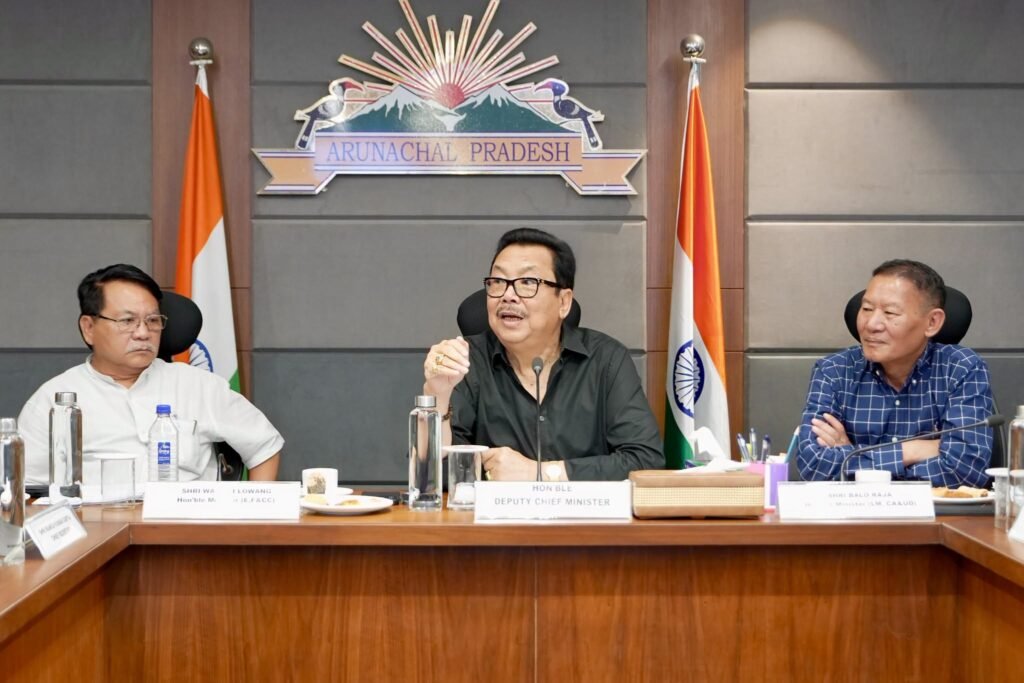
ITANAGAR : Deputy Chief Minister Chowna Mein on Thursday said the state government is committed to resolving long-pending forest area and land management issues through collaborative decision-making and improved inter-departmental coordination. Mein made the remarks after chairing a high-power committee (HPC) meeting, which deliberated on measures for addressing forest-related concerns and associated land management issues. The meeting was attended by Environment and Forest Minister Wangki Lowang, Urban Development & Land Management Minister Balo Raja, and Chief Secretary Manish Kumar Gupta. The meeting focused on identifying practical solutions to long-standing challenges, strengthening coordination among departments, and ensuring that developmental needs are addressed without compromising environmental priorities, officials said. Mein said the deliberations centred on identifying practical solutions, strengthening inter-departmental coordination and ensuring a balanced approach towards conservation and developmental needs. Reaffirming the government’s commitment to finding lasting solutions, he said efforts would continue to resolve pending issues through consensus-based decisions and effective governance. (Source: PTI)