

ONLINE AGE

(Online version of the Arunachal Age newspaper)

Popular News

Latest News, Popular News, State News

AP QueerStation highlights emerging Queer Movement at Himalayan Gender Dialogue

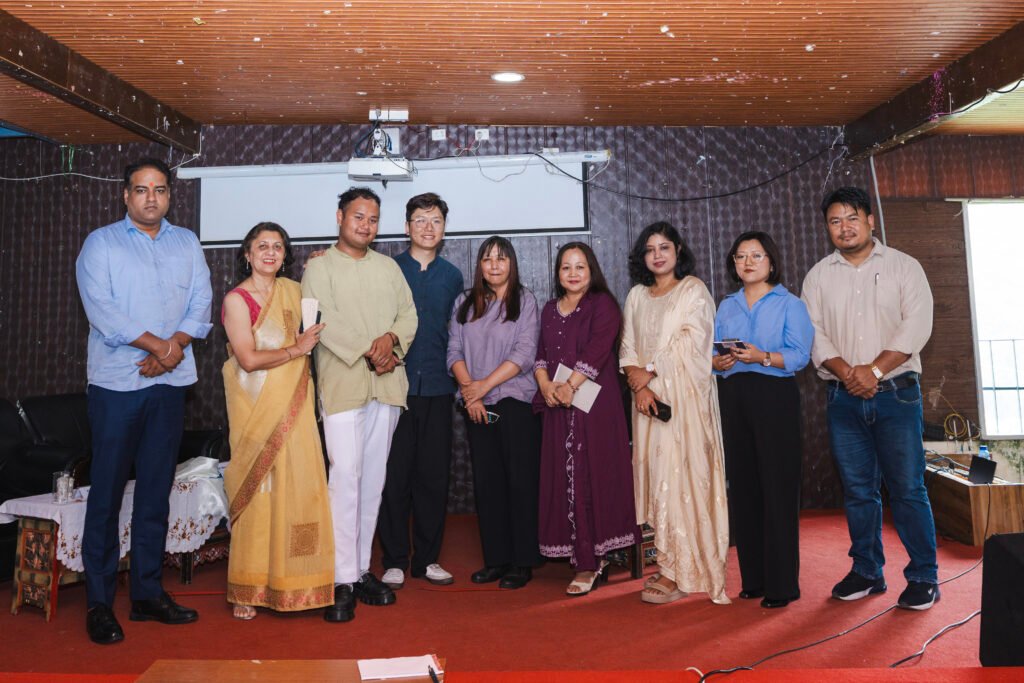
GANGTOK : The Foundation for Indian Contemporary Art (FICA), in collaboration with Royal Enfield and the Department of English, Sikkim University, organised Gender Dialogues in the Himalayas: The Role of Institutions, Society and the Arts on July 31, bringing together scholars, artists, researchers and practitioners from across the Himalayan region to discuss gender, identity, culture, institutions and the arts. Held in a hybrid format, the programme served as an interdisciplinary platform for dialogue on gender, artistic practices and community engagement, with participants from different parts of the country. The event commenced with a welcome address by Dr Abrona L Aden, followed by an introduction to the Himalayan Fellowship by lead consultant Mary Therese Kurkalang, who outlined the fellowship’s objective of promoting research and creative practices across the Himalayan region. Representing Arunachal Pradesh, AP QueerStation founder Sawang Wangchha shared the organisation’s efforts to build safer and more inclusive spaces for LGBTQIA+ communities in the state. He highlighted the increasing visibility of LGBTQIA+ individuals in Arunachal Pradesh while drawing attention to the challenges of loneliness, isolation and the lack of safe spaces faced by many indigenous queer persons. Drawing from AP QueerStation’s work in advocacy, mental health, storytelling, cultural engagement, research and public sensitisation, Wangchha spoke about the emerging queer movement in Arunachal Pradesh and stressed the need for community-led initiatives rooted in dignity, inclusion, dialogue and indigenous realities. The panel also featured Avinam Manger, Prof Rosy Chamling, Davidson Kumam and Shiva Pathak, with the session moderated by Lobsang Norbu. Discussions focused on the role of institutions, communities, literature, visual arts and cultural traditions in shaping conversations on gender and identity across the Himalayan region. Speakers collectively underscored the importance of strengthening dialogue, promoting inclusive cultural spaces and ensuring meaningful representation of diverse Himalayan communities, including indigenous and LGBTQIA+ groups, in academic, artistic and public discourse. The programme concluded with an interactive session between the speakers and participants, followed by a vote of thanks delivered by Dr Saswati Saha, Assistant Professor, Department of English, Sikkim University. AP QueerStation expressed gratitude to FICA, Royal Enfield and the Department of English, Sikkim University for providing a platform that brought together diverse voices from across the Himalayan region to engage in meaningful discussions on gender, identity and inclusion.    
Latest News, Popular News, State News

PHED officials assesses damage to water supply infra at Tene camp

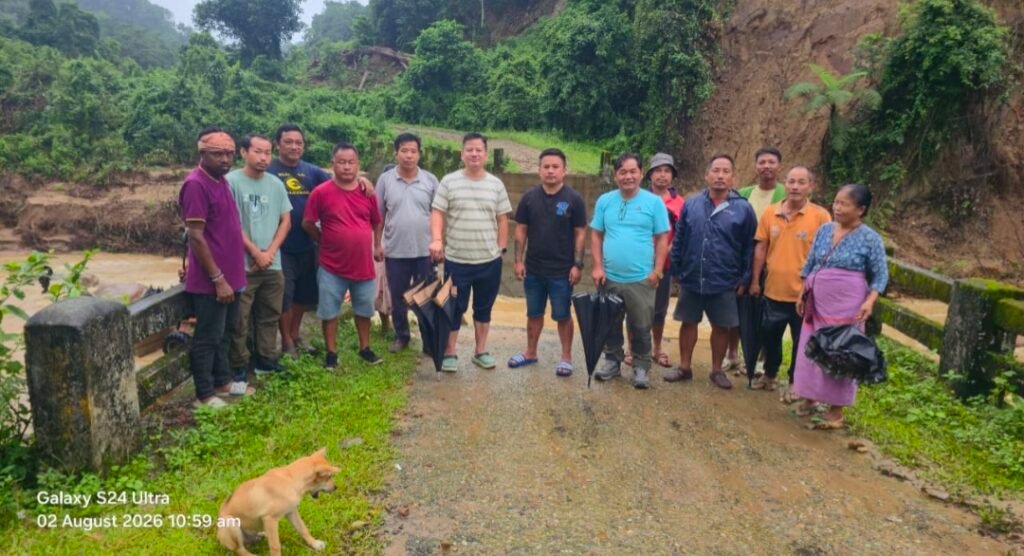
LIKABALI : A team from the Public Health Engineering and Water Supply (PHE&WS) Department on Sunday inspected flood-damaged water supply systems at Tene Camp and Tene village in Lower Siang district following the recent cloudburst at Upper Ramle Banggo. The inspection team, led by Likabali Executive Engineer Binga Gara, accompanied by Koyu Junior Engineer Mikshep Kadu and field staff, was initially scheduled to assess the damaged water supply infrastructure at Koyu Headquarters. However, the team could not reach the area due to a road blockade between Tene Camp and Kakki Village. The officials subsequently visited Tene Camp and Tene Village, where they inspected the damaged water supply systems and interacted with affected residents to assess the extent of the damage and understand their immediate requirements. During the visit, the team also distributed grocery items to flood-affected families as a gesture of support. The field inspection enabled the department to assess the impact of the recent natural calamity on water supply infrastructure and the difficulties being faced by the affected communities. The department is expected to carry out a detailed assessment and initiate restoration measures once road connectivity to the affected areas is restored. (DIPR)      

Latest News, Popular News, State News

Teachers urged to lead fight against substance abuse at APU

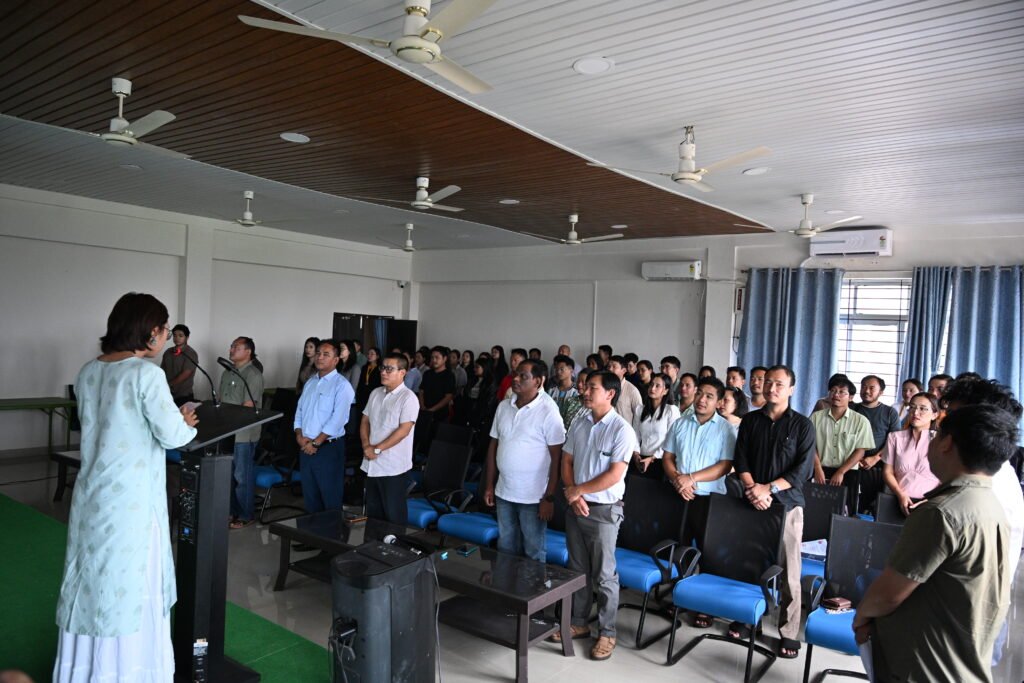
PASIGHAT : Arunachal Pradesh University (APU), Pasighat, on Sunday observed Nasha Mukt Bharat with a special programme on campus, emphasising the role of educational institutions and teachers in building a drug-free society. Welcoming the gathering, Assistant Registrar (Academics) Likha Rinchin outlined the objectives of the campaign and stressed that a drug-free nation begins with drug-free campuses. He said universities have a vital responsibility to guide young minds away from substance abuse and called for coordinated efforts involving the administration, faculty, students and the wider community to combat the menace of drugs. Dean of Academic Affairs Prof Jena said the campaign was more than an administrative initiative and represented a collective vision for an addiction-free society. Stressing the influential role of teachers, he urged the teaching community to actively sensitise students to the harmful effects of substance abuse both inside and outside the classroom. He said teachers should consider themselves active stakeholders in creating a substance-abuse-free campus and added that self-awareness and self-discipline among individuals were essential for the success of the campaign. He also reaffirmed the university’s commitment to safeguarding the younger generation and contributing to a healthier society. Anti-Tobacco Cell chairperson and Assistant Professor of Social Work Ngurang Mana administered the Nasha Mukt Bharat pledge to students, faculty and staff, who vowed to remain free from drugs and tobacco and discourage their use on campus. Addressing the gathering, Mana reiterated that APU is a tobacco-free campus and urged students to refrain from using tobacco or other substances anywhere on the university premises. She warned that violations of the university’s tobacco-free and drug-free policies would invite strict disciplinary action while encouraging students to act as peer motivators in spreading awareness. Assistant Professor of Commerce Dr Yab Rajiv Camdir encouraged students to channel their energy into academics, sports and healthy pursuits. He said discipline was the key to both academic success and avoiding harmful habits, urging students to remain focused on constructive goals. The programme also featured the live telecast of Prime Minister Narendra Modi launching the Nasha Mukt Yuva for Viksit Bharat Sankalp Abhiyan through video conferencing. The campaign, spearheaded by MY Bharat under the Ministry of Youth Affairs and Sports, marks the launch of a 100-week nationwide Jan Bhagidari initiative against substance abuse, with weekly awareness activities to be organised every Sunday across the country. In his address, the Prime Minister described the campaign as a movement for individuals, families and society, reaffirming the government’s commitment to building a developed India with a healthy, mentally strong and addiction-free younger generation. Among those present were Registrar Narmi Darang, Dean of Student Welfare Dr Eli Doye, Assistant Registrar (Finance) Anil Nangkar, heads of departments, faculty members, staff, students and research scholars.    

Latest News, National, Popular News, State News

More dialogue with youth needed amid AI-driven job fears: Former NITI VC

NEW DELHI : Calling for sustained dialogue between policymakers and the young generation, former NITI Aayog Vice Chairman Rajiv Kumar said that the rise of Artificial Intelligence has created uncertainty and frustration among Indian youth regarding future job opportunities and employability. In an interview with PTI Videos, Kumar said that India’s youth is very uncertain and very unclear about the future because of Artificial Intelligence (AI). “This is generating fears of both employability and employment generation,” he said while replying to a question about youth’s anger and recent NEET-related protests. Kumar said the recent periodic labour force survey (PLFS) data has shown that the youth unemployment rate in India for the 1529 age group has stood at around 20 per cent. “Now, if you are faced with their circumstances, then of course you will be frustrated. And, I think this is why we need to have an on-going dialogue with the youth,” he said. According to the Periodic Labour Force Survey (PLFS) Monthly Bulletin June 2026, Unemployment Rate among females aged 15- 29 years was 20.7 per cent and 14.6 per cent for males in the age group in the month. Kumar also suggested that Infosys co-founder Nandan Nilekani, who is heading a task force to reform India’s examination system, should engage with the youth to find out what is bothering them and to somehow give an assurance to the young people of this country that the future is good for them. Last month, a nationwide protest movement by youth, led by the Cockroach Janta Party (CJP), led to the resignation of Union education minister Dharmendra Pradhan. India needs to grow higher than 8% to become an upper middle-income nation by 2047 Asked what India needs to do to achieve its ambitious target of becoming an upper-middle-income country by 2047, Kumar said India must now target to grow at higher than 8 per cent. “In-fact, the target should be to grow in double digits. That, it can do this is proven by many states, which have grown at double digits for the last few years,” he said, adding that the process should be replicated across other states, and India should not be treated as one homogeneous economy because it is not so. According to Kumar, what India needs is a development strategy for each state to grow in double digits, to be able to reach the aspiration of becoming an upper-middle-income country by 2047. “Some years you will grow at less than eight, and some times more than 10. But China has shown that the whole economy could grow at 10 per cent for 30 years,” he observed. Kumar also noted that strengthening the domestic economy will also be India’s best foreign policy. Recently, four Asian countries, Vietnam, Philippines, Sri Lanka, and Jordan, were upgraded from lower middle-income countries to upper middle-income countries by the World Bank. India, despite its strengths, missed the mark. Asked why the share of manufacturing in GDP remained stuck around 16-17 per cent for around two decades, Kumar said, “We were not able to achieve the ease of doing business to promote the private enterprise as much as we should have done.” He lamented that it is quite shocking to know that India’s share of global exports has remained less than 2 per cent for the last three decades, and the manufacturing sector is actually only employing 10- 11 per cent of the labour force. “India has been an export pessimist for a long time. “Our manufacturing sector should target the world market and not focus only on the domestic market,” Kumar said, adding that change has not happened, as a result of which our manufacturing sector has not been able to grow. The eminent economist emphasised that the government has to work with the private sector to identify a few sectors in which all the relevant stakeholders should be focused on raising India’s share in the world market. “But I think a major problem today is that India has one export policy for the whole country. Now this is impossible. What is good for export promotion for Punjab can hardly be relevant for Tamil Nadu. So what we need today is state-specific export promotion policies, and each state must work to design and implement such a policy,” Kumar suggested. He said the Department for Promotion of Industry and Internal Trade (DPIIT), a central government department under the Ministry of Commerce and Industry, which is looking after export promotion, should work with each state to identify its comparative and competitive advantage, and then create the conditions for sharply ramping up exports from each State. “It is absolutely necessary for India to increase its export share in the world market because if we do not do that, we will not be able to expand our manufacturing capacity, and if we do not expand our manufacturing capacity, we will not be able to generate the employment opportunities that are desperately required,” Kumar said. (Source: PTI)  

Latest News, Popular News, REGIONAL, State News

Cong targets Assam govt over flood relief, seeks SC-monitored probe

GUWAHATI : The Assam unit of the Congress on Sunday alleged that the state government was unable to utilise flood relief funds released by the Centre due to lack of budgetary provisions and demanded a Supreme Court-monitored probe into what it termed “man-made” floods. Addressing a press conference here, former minister Nilamoni Sen Deka claimed that despite the Centre releasing funds from the State Disaster Response Fund (SDRF), the Assam government is unable to utilise it without fresh allocation in the Assembly. “At a time when people are suffering, the government has no money to spend because it did not allocate funds in the state budget. A new bill must be passed to declare floods a ‘State Problem’ so money can be spent directly from state revenue,” he added. The Congress criticised the Centre for giving Assam just Rs 379.35 crore, while states like Odisha, Gujarat and Maharashtra with less flood impact received Rs 500 crore each. Union Home Minister Amit Shah on Saturday approved the advance release of Rs 2,117.85 crore from the central share of the SDRF to support the states affected by floods during the ongoing southwest monsoon. Deka also accused the government of insensitivity and evading responsibility by blaming cloudbursts and water flow from neighbouring states. Assam Congress media department chairman Bedabrat Bora alleged that illegal open-cast coal mining and syndicates along Assam’s borders with Meghalaya, Nagaland and Arunachal have created pits that burst during rains, triggering flash floods in Upper Assam. “Around 40 to 60 illegal coal trucks enter Assam daily from Nagaland and Rs 1.5-2 lakh is extorted per truck. This is a Rs 3,000 crore syndicate,” he claimed. Bora said that no task force was formed despite NGT and High Court orders in 2022, and announced the Congress will file a PIL and contempt petition. The Congress also submitted a 24-point charter to the Governor and Chief Minister, seeking farm aid, GST waiver on rebuilding materials, business loss compensation and free food for victims. The flood situation in Assam improved slightly on Sunday, with the number of affected people coming down to 1.78 lakh. The toll remained unchanged at 82 as no fresh fatalities were reported in the state in the last 24 hours. (Source: PTI)        

Latest News, Popular News, State News

Assam flood situation improves

GUWAHATI : The flood situation in Assam improved slightly, with the number of affected people coming down to 178,000 even though the count of districts hit by the deluge increased to seven, officials said on Sunday. The toll remained unchanged at 82 as no fresh fatalities were reported in the state in the last 24 hours, they said. Chief Minister Himanta Biswa Sarma will be visiting the worst-hit areas from Sunday, even as the Centre sanctioned over Rs 370 crore under the State Disaster Response Fund (SDRF), the officials said. A total of 349 villages in Golaghat, Sivasagar, Charaideo, Bajali, Dhemaji, Sonitpur and Jorhat districts remained affected by the deluge. Charaideo was the worst-hit, with 75,199 people affected, followed by 58,824 in Sivasagar. Forty-four relief camps were operational in the state, providing shelter to around 15,000 displaced people. Another 17 relief distribution centres were also working, catering to 5,569 people. A crop area of 15,060 hectares remained submerged, while 1,543 animals were washed away and another 6,765 were affected. Sarma expressed his gratitude to Prime Minister Narendra Modi and Union Home Minister Amit Shah for extending all assistance to the flood-hit state. “The approval of ₹379.35 cr under the SDRF and the timely deputation of Inter-Ministerial Central Teams to Assam reflect the Centre’s unwavering commitment to standing with our people,” Sarma said in a post on social media. The CM will be touring the affected districts to oversee the relief work and ensure that proper damage assessment is done. “In a short while from now, I will be reaching Dibrugarh and thereafter to the flood-affected areas to meet the people, oversee ongoing relief efforts and lay the groundwork for a full proof assessment exercise to ensure appropriate compensation to the affected,” he said. Sarma had reviewed the relief and rehabilitation work in the worst-hit four districts in a virtual meeting from Guwahati on Saturday. “HCM Dr. @himantabiswa today reviewed the ongoing relief and rehabilitation efforts in the flood-affected districts of Sivasagar, Charaideo, Jorhat and Golaghat with the respective District Commissioners,” the chief minister’s office (CMO) said in a social media post. The chief minister directed the DCs to expedite the submission of the list of affected families to enable the release of financial assistance from August 3, ensure uninterrupted distribution of relief kits, complete damage assessment of educational institutions ahead of the reopening of schools on August 10 and submit the list of damaged ‘Namghars’ (Vaishnavite centres of prayer) for early restoration support. “HCM also informed that the comprehensive flood damage assessment will begin on August 9,” the CMO added. (Source: PTI)

Latest News, National, Popular News, State News

NEET-UG counselling to begin on Aug 4

NEW DELHI : The first round of counselling for admission to MBBS and other undergraduate medical courses under the All India Quota (AIQ) will begin on August 4 and the academic session for the 2026-27 batch will commence on September 8, according to the Medical Counselling Committee. According to the counselling schedule released by the committee, the first round of AIQ counselling for deemed and central universities will be held from August 4 to August 17. The last date for joining will be August 22. The second round of AIQ counselling will take place from August 24 to September 2, followed by the third round from September 10 to September 18. The stray vacancy round is scheduled from September 28 to October 3. The last date for joining after the stray vacancy round is October 10. For state quota seats, the first round of counselling will be conducted from August 13 to August 22, with candidates required to join by August 28. The second round will be held from August 31 to September 8 and the third round from September 16 to September 26. The stray vacancy round for state quota seats will be conducted from October 3 to October 5. Gen Z, memes, political protest, political expression, dissent, social media, Instagram, Jantar Mantar, Dharmendra Pradhan, political communication, protest culture, Habib Jalib, Javed Akhtar, Arjun film, youth politics, digital activism, India opini The schedule also provides timelines for verification of joined candidates by the Medical Counselling Committee (MCC) and state counselling authorities after each round to facilitate seat processing and subsequent allotments. According to the schedule shared by the MCC, the academic session for undergraduate medical courses will begin on September 8, even as counselling for the subsequent rounds continues for vacant seats. The MCC has directed all participating institutions, state counselling authorities and designated agencies to strictly adhere to the schedule. It has also asked institutions to treat all Saturdays, Sundays and gazetted holidays as working days to ensure timely completion of the counselling process. The MCC, which comes under the Union health ministry, has introduced a series of improvements in the Neet-UG 2026 counselling process, including doing away with mandatory physical reporting for candidates opting for seat upgrade and allowing online resignation from allotted seats, in an effort to make the admission process “more transparent and student-friendly”. Among the major changes, candidates who have been allotted a seat and have opted for upgrade in subsequent rounds will no longer have to physically report to the allotted college merely to complete admission formalities. Their admission shall remain valid in the counselling system while participating in subsequent rounds, subject to the applicable counselling rules. The MCC has also introduced an online resignation facility. Candidates may now submit resignation from their allotted seat through the MCC counselling portal, wherever permissible under the counselling rules and within the prescribed timelines, without the need for physical submission at the allotted institution, the letter stated. Candidates seeking NRI reservation in deemed universities “will be able to upload their documents online on the counselling portal”. (Source: PTI)

Latest News, Popular News, State News

Centre releases Rs 1,476 cr to Arunachal as advance tax devolution

ITANAGAR : Chief Minister Pema Khandu on Saturday said the Centre’s advance tax devolution of Rs 1,476 crore to Arunachal Pradesh will strengthen the frontier state’s finances, enabling faster implementation of capital projects, infrastructure development and public welfare initiatives. The Union Government on Saturday released tax devolution of Rs 1,09,019 crore to state governments, as one advance instalment to accelerate their capital and developmental expenditure. Khandu expressed gratitude to Prime Minister Narendra Modi and Union Finance Minister Nirmala Sitharaman for the advance release, describing it as a reflection of the Centre’s commitment to cooperative federalism. “Heartfelt gratitude to Hon’ble Prime Minister Shri Narendra Modi Ji and Hon’ble Union Finance Minister Smt Nirmala Sitharaman Ji for releasing an advance instalment of tax devolution to the states, reinforcing the spirit of cooperative federalism,” Khandu said in a post on X. The chief minister said the allocation is particularly significant for Arunachal Pradesh, given its strategic location and challenging geographical conditions. “Arunachal Pradesh has been allocated Rs 1,476 crore as part of this advance release, an amount that is particularly significant for a small, strategically important, and geographically challenging frontier state,” he said. Khandu further observed that on a per capita basis, Arunachal Pradesh continues to receive one of the highest shares among Indian states, reflecting the Finance Commission’s recognition of our vast terrain, sparse population, infrastructure needs, and strategic importance. He said the timely release would further strengthen the state’s finances and speed up the execution of key development projects. “This timely release will strengthen the state’s finances, enabling faster implementation of capital projects, infrastructure development, and public welfare initiatives that directly benefit our people,” the chief minister added. (Source: PTI)      

Latest News, Popular News, State News

Arunachal Congress urges Rahul Gandhi to raise state’s issues in Parliament

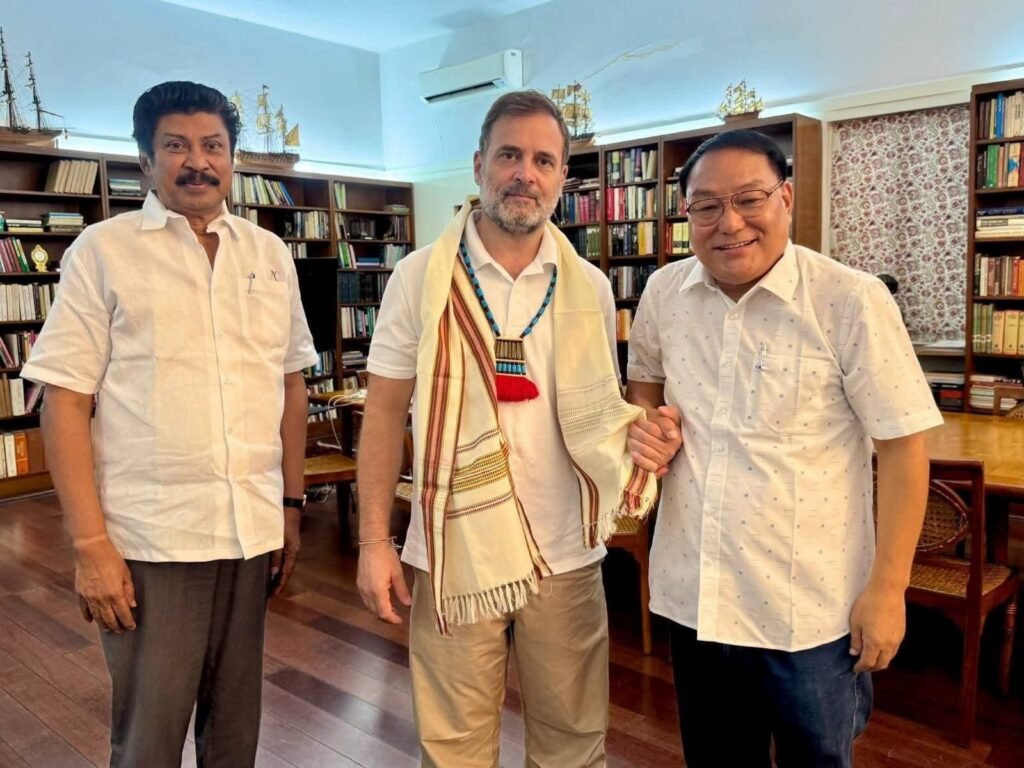
ITANAGAR : The Arunachal Pradesh Congress urged Leader of Opposition in the Lok Sabha Rahul Gandhi to take up four issues concerning the state in Parliament, alleging that the BJP-led governments at the Centre and in the state have failed to address them. The demands were made in a memorandum submitted by state Congress president Bosiram Siram to the party leadership during an All India Congress Committee (AICC) review meeting in New Delhi, a statement said on Saturday. The state Congress sought an amendment to Article 371(H) to bring it on a par with Article 371(A) applicable to Nagaland and Article 371(G) applicable to Mizoram, arguing that the existing provisions do not adequately protect the state’s land, customary laws and natural resources. The state unit said stronger constitutional safeguards, on the lines of the Sixth Schedule, were needed to strengthen tribal self-governance and protect indigenous communities. The state Congress also reiterated its opposition to the proposed Siang Upper Multipurpose Project (SUMP), alleging that the mega dam in the seismically sensitive region could trigger large-scale ecological damage. Claiming that the project could affect more than 2 lakh people and submerge ancestral land and heritage sites such as Kekar Monying, the state Congress said national security concerns over China’s upstream activities should not override the principle of free, prior and informed consent of local tribal communities. The memorandum also raised concerns over Chinese activities along the international border, accusing the BJP of “selective nationalism” and demanding a White Paper from the Centre on the border situation. The state Congress also demanded the restoration of the Old Pension Scheme (OPS), criticising the National Pension System (NPS) and alleging that it leaves government employees financially insecure. Siram urged Gandhi to strongly raise these issues in Parliament, asserting that Arunachal Pradesh should not be treated merely as a resource-rich region but as the homeland of indigenous communities. (Source: PTI)    

Latest News, Popular News, State News

North East states resolve to strengthen child protection

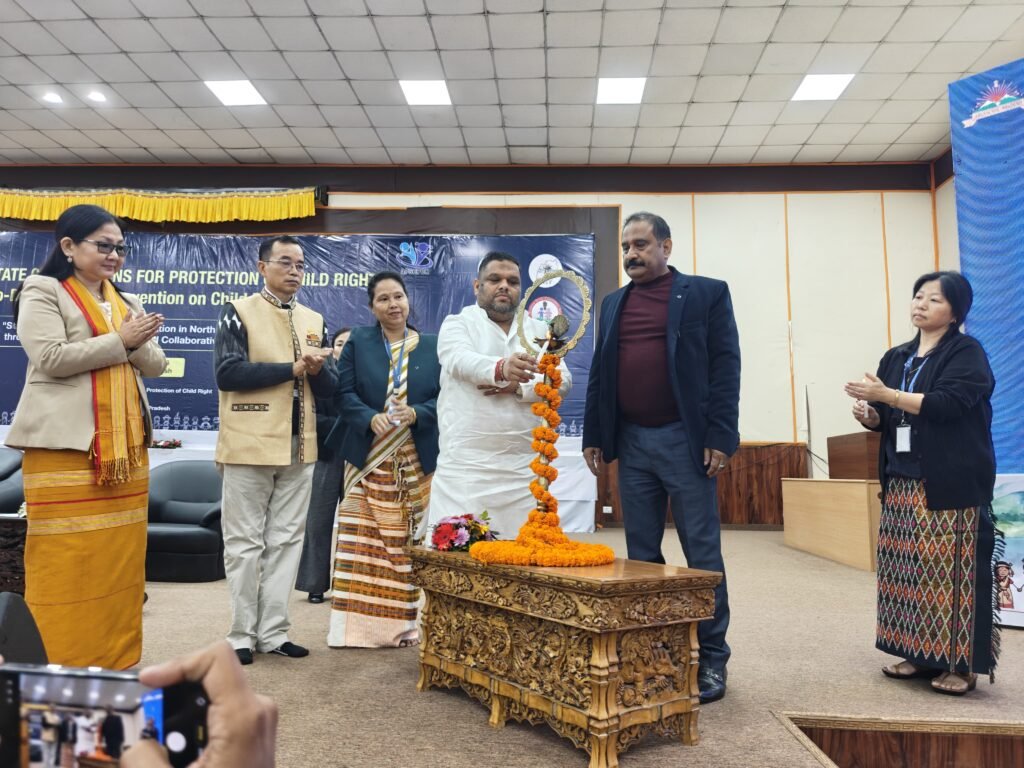
TAWANG : The two-day Regional Convention of the State Commissions for Protection of Child Rights (SCPCRs) of the North Eastern States concluded at the Kalawangpo Convention Hall here on Saturday with National Human Rights Commission (NHRC) Member Priyank Kanoongo attending the valedictory session as the chief guest. Organised by the Arunachal Pradesh State Commission for Protection of Child Rights (APSCPCR), the convention brought together chairpersons, members and officials of the SCPCRs from across the Northeast to deliberate on strengthening child rights through regional cooperation, knowledge sharing and collaborative action. In his keynote address, Kanoongo said the recommendations and deliberations emerging from the convention would help shape child rights policies and strengthen institutional mechanisms over the next two decades. He expressed confidence that these collective efforts would contribute to nurturing responsible and empowered citizens in line with the vision of Viksit Bharat 2047. He congratulated the APSCPCR for successfully organising the convention and lauded its initiative in bringing all the North Eastern States onto a common platform to deliberate on issues concerning child welfare and protection. He expressed hope that the outcomes of the convention would serve as a benchmark for future child rights initiatives across the country. The concluding technical session featured presentations by chairpersons and representatives of the participating State Commissions, who shared best practices, innovative initiatives and suggestions for strengthening child protection systems. The discussions emphasised the need for greater inter-state cooperation, institutional convergence, community participation and the exchange of successful models to address emerging challenges affecting children. The convention concluded with a collective resolve to strengthen the protection, education, care and overall well-being of children through sustained collaboration and coordinated action among all stakeholders, reaffirming the North Eastern States’ shared commitment to building a safe, inclusive and child-friendly society.