ONLINE AGE

(Online version of the Arunachal Age newspaper)

Popular News

Latest News, Popular News, State News

Tasing speaks to Union Minister about achieving ODF-Plus status for state

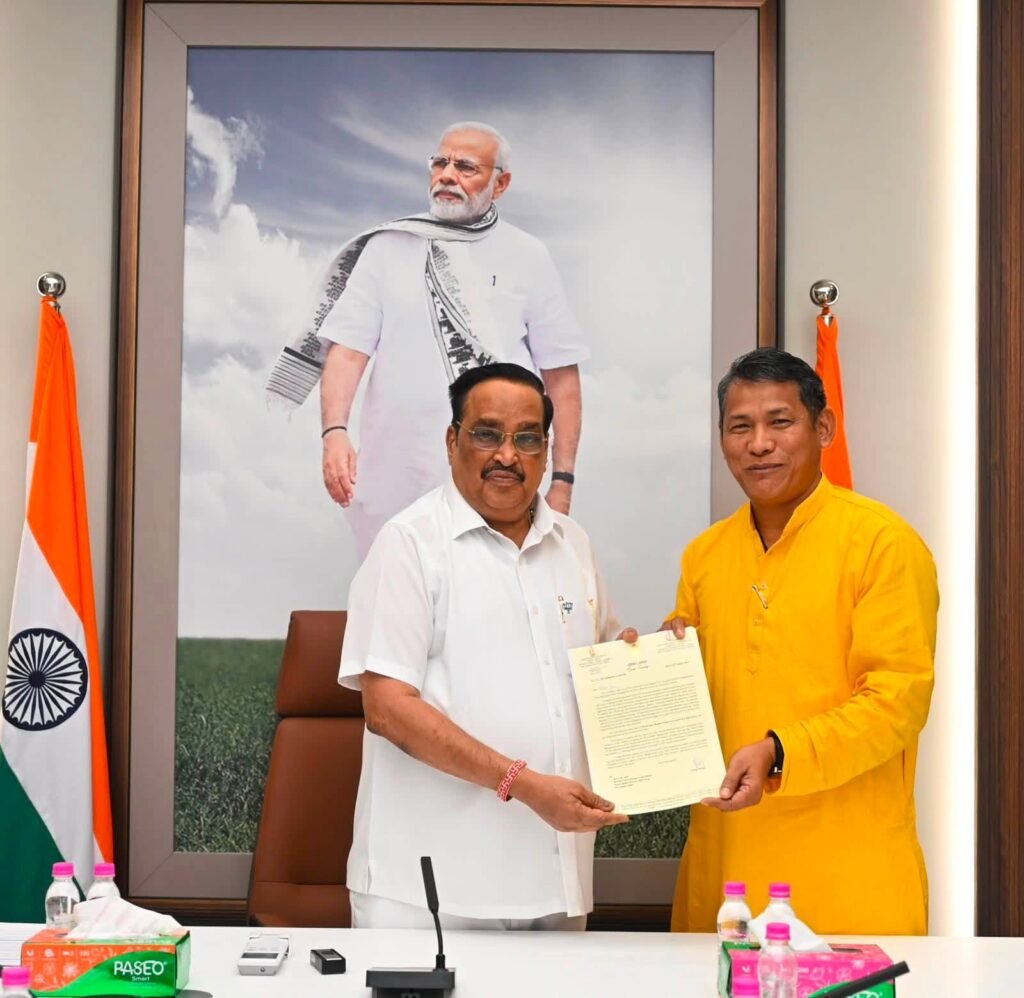
ITANAGAR, AUG 22: Arunachal Pradesh Minister Ojing Tasing has met Union Jal Shakti Minister C R Paatil and informed him about the state’s initiative to achieve ODF Plus status—free of open defecation, proper management of solid and liquid waste, and keeping public spaces clean. The two ministers also reviewed the implementation and progress of the Centre’s Swachh Bharat Mission (Grameen) project at the meeting in Nee Delhi on Friday. Later, in a post on X, the Panchayati Raj and Rural Development minister of Arunachal Pradesh said he briefed Paatil on the state’s ongoing initiatives to achieve ODF-Plus status. The state had attained the ODF milestone in December 2017 and is now advancing to the next phase of the mission, focusing on sustained sanitation outcomes, robust rural waste management, and the creation of cleaner, healthier villages, he said. Tasing reaffirmed the state’s ongoing efforts to strengthen rural sanitation infrastructure under sustained administrative collaboration. During the interaction, Paatil assured Tasing of full cooperation and support from the Centre for Arunachal Pradesh’s endeavours to realise the aim of ODF Plus and build a sustainable rural landscape. (Source: PTI)      

Latest News, Popular News, State News

Man gets 20-yr rigorous imprisonment for sexually assaulting minor

BASAR, AUG 22: The Special Judge (POCSO)-cum-Additional District & Sessions Court Basar in Leparada district has convicted Deepak Debnath, 24, and sentenced him to 20 years of rigorous imprisonment for kidnapping and repeatedly sexually assaulting a minor girl. The judgment was pronounced on August 21 by Basar Special Judge (POCSO) Jaweplu Chai in POCSO Case No. 02/2024, arising from Daporijo Police Station Case No. 22/2024. Debnath was convicted under Section 363 of the Indian Penal Code (IPC) and Section 6 of the Protection of Children from Sexual Offences (POCSO) Act 2012. According to the case records, Debnath, who was working as a cook at a restaurant in Daporijo, kidnapped a 13-year-and-eight-month-old girl from New Market Daporijo on March 19, 2024. He subsequently took her to Dumporijo and confined her at different locations, including a local hotel and rented accommodation at Fishery Colony, where she was repeatedly sexually assaulted. The incident came to light after the victim’s mother lodged an FIR at Daporijo Police Station on March 25, 2024. A police team led by Sub-Inspector T Kaye traced and rescued the minor and apprehended the accused. After examining the evidence presented during the trial, the Special Court found the prosecution had established the offences and held Debnath guilty. For the offence under Section 363 IPC, the Court awarded five years’ imprisonment and a fine of Rs 3,000, with an additional six months’ imprisonment in default of payment. For the offence under Section 6 of the POCSO Act, he was sentenced to 20 years’ imprisonment and a fine of Rs 20,000, with an additional one year’s imprisonment in default. Both sentences will run concurrently. The Court also directed that the fine amount, upon realisation, be disbursed directly to the minor victim for her rehabilitation in accordance with Section 6(2) of the POCSO Act. The period already spent in detention during investigation and trial will be set off against the sentence as per law. Special Public Prosecutor (POCSO) Karken Angu represented the State during the proceedings. The convict was informed of his right to appeal before the higher court and his entitlement to legal aid for pursuing such proceedings. The judgment underscores the stringent legal consequences for offences against children and highlights the importance of timely reporting, effective investigation and coordinated law-enforcement action in ensuring justice and protection for vulnerable children.  

Latest News, Popular News, State News

60-km river stretch searched for five missing Army personnel

MIPI, AUG 22: A major joint search and rescue operation continues in Mipi Circle of Dibang Valley district following the catastrophic cloudburst and flash flood of August 14 that swept away two shelters at an Army camp in the Pasu Pani area and left five Army personnel missing. Seven Army personnel were caught in the sudden floodwaters, of whom two were rescued and evacuated for medical care, while five remain untraced. The incident and subsequent search operations have been reported by officials and multiple media outlets. Specialised teams of the Indian Army, assisted by the district administration and other agencies, are continuing the search under extremely difficult terrain and weather conditions. Search teams have expanded operations across a wide and treacherous area, using both machinery and manual methods to clear heavy debris around the affected site. According to the latest operational update, Army teams have searched an extensive 60-km stretch of the river from the incident site towards Etalin, deploying specialised assets to access otherwise difficult areas along the river. The search is being supported by Army helicopters, the District Disaster Management Authority (DDMA), State Disaster Response Force (SDRF), drones, Army divers, trained sniffer dogs and Ground-Penetrating Radar (GPR), besides ground-based search teams. Earlier reports had also confirmed the involvement of the Army, Indo-Tibetan Border Police (ITBP), civil administration, police and other agencies in the continuing operation amid extremely challenging terrain and weather conditions. The authorities are continuing efforts to locate the five missing personnel, with search operations being maintained across the affected area and downstream stretches. Further updates will be issued as the operation progresses. (Source: DIPR)      

Latest News, National, Popular News, State News

Arunachal presents home-grown AgriStack model at National Conference

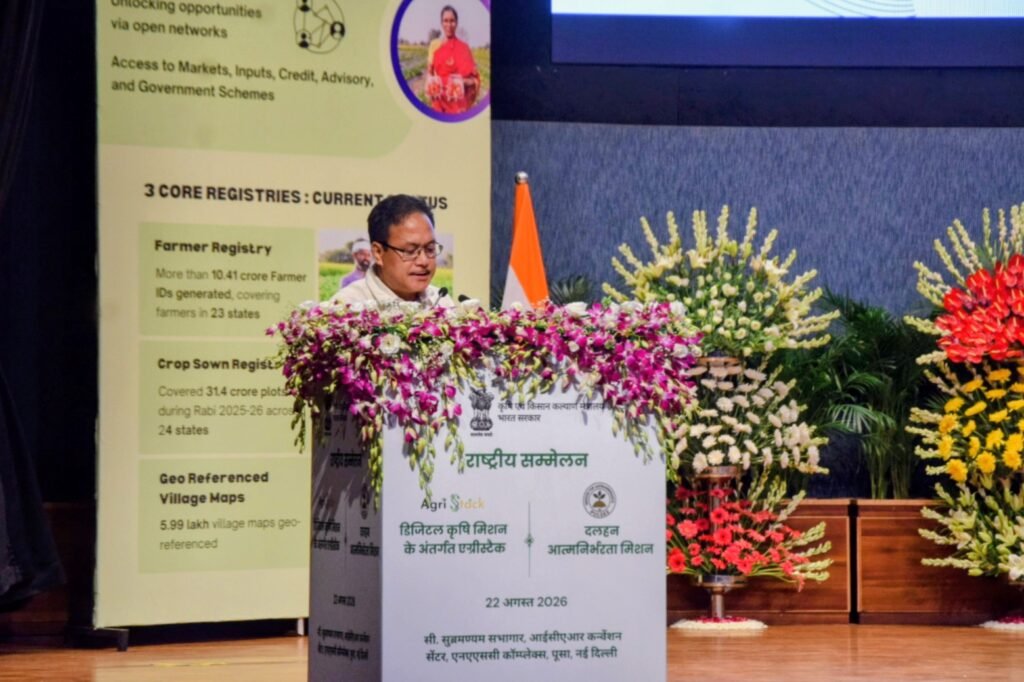
NEW DELHI, AUG 22: Arunachal Pradesh has showcased its experience of developing a digital agricultural ecosystem in the absence of conventional land records at the National Conference on AgriStack under the Digital Agriculture Mission and Mission for Aatmanirbharta in Pulses at the ICAR Convention Centre Pusa here. Representing the State, Agriculture Minister Gabriel D Wangsu highlighted the challenges posed by the State’s Non-Record of Rights (Non-RoR) land environment and called for greater methodological flexibility in implementing AgriStack in geographically and administratively diverse regions. Wangsu said the absence of conventional digitised land records posed a fundamental challenge to the standard AgriStack architecture, particularly in establishing a reliable link between farmers and agricultural land parcels. Instead of treating the limitation as an obstacle, the State developed a customised Non-RoR methodology and Standard Operating Procedure for identifying and validating farm plots and the farmers cultivating them. The methodology was developed by the Department of Agriculture in technical partnership with the Arunachal Pradesh Space Application Centre (APSAC). The AgriStack pilot has so far been undertaken in six districts—Tawang, Namsai, Pakke Kessang, Lower Dibang Valley, Lower Subansiri and East Siang—covering diverse geographical conditions. Around 25,000 geo-referenced farm plots have undergone technical and field-level validation, while the first batch of 8,502 Farm IDs has been generated in coordination with the Central Project Management Unit. Farmer ID generation has also been initiated. Wangsu said the Ministry’s Proof of Concept had been successfully completed, demonstrating that the State’s Non-RoR methodology was technically viable and adaptable to Arunachal Pradesh’s varied terrain. With the pilot successfully completed, the State has begun scaling up AgriStack to the remaining 21 districts with the objective of bringing the entire State under the digital agriculture framework in mission mode, in continued partnership with APSAC. The Agriculture Minister urged the Union Ministry to allow Arunachal Pradesh to continue and expand its State-developed methodology through the Department of Agriculture and APSAC rather than adopt implementation arrangements designed for conventional land-record systems. He clarified that the State was not seeking any relaxation in AgriStack’s objectives, quality standards or validation requirements, but methodological flexibility to account for its distinct land-record environment. “The absence of conventional RoR need not become a barrier to building a digital agricultural ecosystem,” Wangsu said, highlighting the use of satellite technology, remote sensing, Geographic Information System (GIS), Artificial Intelligence/Machine Learning (AI/ML) and field verification to establish digital identities for farms and farmers. The Minister also raised two issues under Part-VII of the Scheme for Agriculture and Rural Development (SASCI), relating to the Geo-referenced Village Maps Registry and mapping of satellite plot segments to owner plots. He said Arunachal Pradesh did not possess conventional geo-referenced village maps as envisaged under the standard framework, but had developed geo-referenced farm-boundary maps through its AgriStack pilot. He requested the Ministry to examine whether the farm-boundary mapping could serve as an alternative or functional equivalent under Component C, subject to technical examination and validation. A similar consideration was sought under Component D, where the State’s existing farm-level geospatial framework could be supplemented with satellite-based plot-segment mapping and technical validation. Wangsu also highlighted the logistical challenges of conducting Farmer ID generation camps in Arunachal Pradesh, citing dispersed settlements, difficult mountainous terrain, remote villages and connectivity constraints. He sought enhanced financial assistance for such camps, taking into account the higher costs involved in reaching farmers in remote areas. The Minister expressed confidence that with continued support from the Centre, Arunachal Pradesh could emerge as a practical model for AgriStack implementation in Non-RoR, mountainous and geographically challenging regions, while contributing to the national vision of a farmer-centric digital agricultural ecosystem and greater self-reliance in agriculture.    

Latest News, Popular News, State News

Guv urges Ziro Festival team to promote culture, youth, local economy

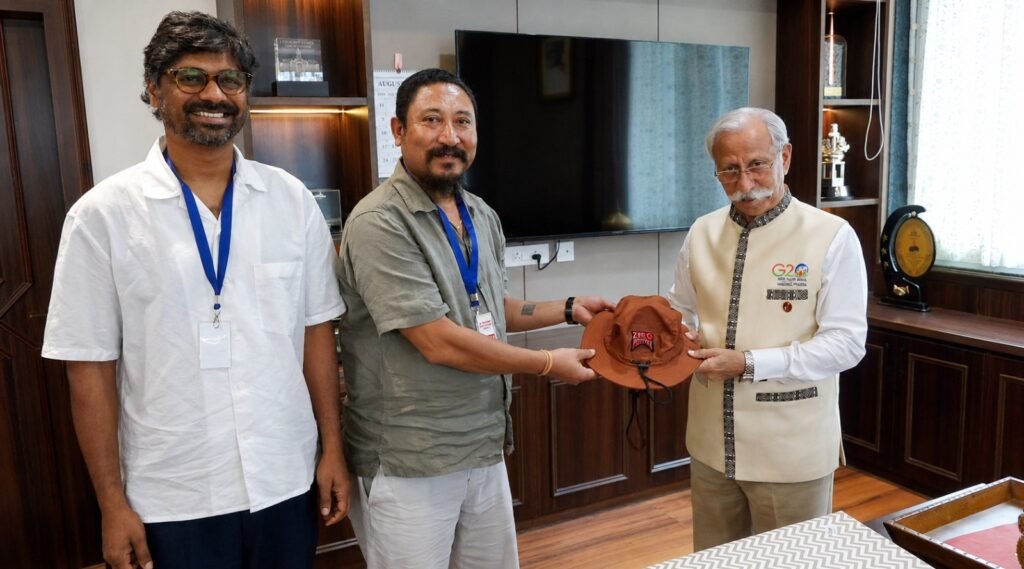
ITANAGAR, AUG 22: Governor Lt Gen KT Parnaik (Retd) has urged the organisers of the Ziro Festival to preserve its authenticity, protect the environment and create greater opportunities for local youth, saying the festival must continue to inspire visitors while bringing pride and prosperity to Arunachal Pradesh. Team Ziro Festival Co-Founders Bobby Hano and Anup Kutty called on the Governor at Lok Bhavan here on Saturday and briefed him on the festival and its outreach initiative, ‘Ziro On Tour – Valley Vibe, City Tribe’, which seeks to take the music, culture, artists and creative communities of Arunachal Pradesh and the wider Northeast to audiences across India and abroad. Appreciating the organisers for successfully conducting the festival over the years, Parnaik said the Ziro Festival was more than a celebration of music and should serve as a platform for cultural preservation, environmental responsibility, youth empowerment and local economic growth. He emphasised that the festival and its outreach programmes should remain rooted in the cultural traditions of the tribal communities and indigenous heritage of Arunachal Pradesh. While contemporary music and international participation add to its appeal, he said equal importance should be given to traditional music, folk arts, local cuisine, handicrafts and indigenous knowledge systems. The Governor also encouraged the organisers to use the festival as a catalyst for youth empowerment and rural economic development by creating opportunities for local youth in event management, hospitality, content creation, cultural performances and tourism services. He suggested dedicated platforms for farmers, artisans, weavers and local entrepreneurs, saying such initiatives would strengthen livelihoods and support the vision of ‘Vocal for Local’, ‘Ek Bharat Shreshtha Bharat’ and Viksit Bharat@2047. Team Ziro Festival informed the Governor of its proposal to take the festival to Hyderabad, Puducherry and Chandigarh. Parnaik advised the organisers to take up the proposal with the State Government so that coordination with the concerned States and sponsorship opportunities could be explored. He assured the team of all possible assistance at his level. Hano and Kutty thanked the Governor for his guidance and assured their continued commitment to promoting Arunachal Pradesh’s culture, tourism and creative economy through the Ziro Festival and ‘Ziro On Tour’ initiatives.    

Latest News, Popular News, State News

Workshop on child rights, protection held

TEZU, AUG 22: A one-day workshop on the “Child Rights and Protection Framework” was held at Amik Rangy Hall here on Saturday to raise awareness on child rights, legal safeguards and protection mechanisms. The workshop was organised by the Indian Council for Child Welfare-Arunachal Pradesh (ICCW-AP) in collaboration with the District Legal Services Authority (DLSA) Tezu, District Administration and All Mishmi Women Welfare Society. The programme was attended by Tezu District & Sessions Judge Gote Mega, Lohit Deputy Commissioner Kesang Ngurup Damo, Lohit Superintendent of Police Thutan Jamba, DLSA Secretary Rido Pina and Deputy Director WCD Solel Longling. ICCW Life Patron Jarjum Ete delivered the keynote address, while Rido Pina proposed the vote of thanks. The technical sessions covered a range of issues concerning child rights and protection. Advocate Geyir Potom introduced participants to child rights and the United Nations Convention on the Rights of the Child (UNCRC), while Advocate Maya Maga discussed the Protection of Children from Sexual Offences (POCSO) Act, its legal framework, school protocols and available legal remedies. Psychologist Tantu Karap addressed child mental health, academic stress, depression and coping mechanisms. Soben Karap spoke on bodily autonomy, consent and personal boundaries, while Sub-Inspector H Jugli highlighted digital and cyber safety. Padma Shri Sathyanarayan Mundayoor, popularly known as Uncle Moosa, along with Nishanlu Kri of Bamboosa Library Tezu and Banika Kri of Medo Library, highlighted reading techniques and different approaches to reading. They also presented a skit based on a book written by a Lohit Youth Library Network volunteer and discussed the importance of creating safe spaces for children through libraries and reading spaces, including at home. The final session, on substance abuse among children and its prediction, protection and prevention, was conducted by Rise Again Foundation Coordinator Leaveso Ama. The workshop was highly interactive, with participants engaging in discussions and sharing views on strengthening child protection mechanisms and creating safer and more supportive environments for children.

Latest News, Popular News, State News

Legal awareness prog held

TAWANG, AUG 22: A two-day legal awareness programme organised by the District Legal Services Authority (DLSA), Tawang in collaboration with District Police Tawang concluded at Mago village on Saturday, focusing on strengthening legal literacy, improving police-judiciary coordination and taking legal services to people at the grassroots. The first day focused on legal aid provisions, victim support mechanisms and procedural requirements under key criminal laws. Tawang CJM-cum-Secretary DLSA Christina Mum Norbu explained provisions of the National Legal Services Authority (NALSA) relating to free legal aid for arrested persons and the mechanisms available to crime victims for obtaining compensation, legal assistance and rehabilitation support. Special Public Prosecutor Khamo Desisow conducted a session on the Narcotic Drugs and Psychotropic Substances (NDPS) Act, covering procedures for search, seizure and arrest in drug-related cases, judicial precedents and the importance of strict procedural compliance during investigation. Special Public Prosecutor Atum Lamnio spoke on the Protection of Children from Sexual Offences (POCSO) Act, with emphasis on child-friendly investigation, victim protection and the responsibilities of investigating officers in cases involving children. Advocate Lawang Norbu highlighted common procedural lapses in police investigations and, through practical case studies, stressed the importance of proper documentation and maintaining the chain of custody. Tawang Superintendent of Police Tasi Darang emphasised close coordination among the police, prosecution and judiciary for effective administration of criminal justice. Tawang AD&SJ-cum-Chairman DLSA Ito Basar also underscored the need for cooperation among stakeholders to make justice accessible, efficient and responsive. The day concluded with an interactive discussion on operational and procedural challenges faced by police personnel. On the second day, the programme was taken to Mago village to directly engage the rural community on legal rights and available services. Tawang District & Sessions Judge Ito Basar explained the fundamentals of the Arunachal Pradesh Civil Courts Act, the functioning of civil courts, available legal remedies and basic civil rights. Tawang Civil Judge-cum-CJM Mary Jonnam spoke on child rights and provisions relating to the Juvenile Justice Board, highlighting safeguards, protection and rehabilitation mechanisms for children in conflict with law and children in need of care and protection. DLSA West Kameng Secretary Tashi Wangchu explained the role and functions of the DLSA and informed villagers about avenues for accessing free legal aid and legal representation, particularly for eligible and vulnerable persons. Tawang DySP Togum Gonggo highlighted the importance of police-public cooperation in maintaining peace and preventing crime, and urged villagers to approach law enforcement agencies without hesitation whenever assistance is required. The programme concluded with an interactive session in which villagers directly raised legal issues and sought clarification from judicial officers, legal experts and police personnel. The initiative reflected the joint commitment of DLSA Tawang and District Police Tawang to strengthening legal literacy, expanding access to justice and building greater trust and coordination among the judiciary, police and communities, particularly in remote areas of the district. (DIPR)

Latest News, Popular News, State News

Man swept away in Nyamjangchu river, search op underway

TAWANG, AUG 22: A 29-year-old man was swept away while swimming in the Nyamjangchu River near Namtsering village under Lumla Circle in Tawang district on Saturday, prompting a search operation by local residents and Sashastra Seema Bal (SSB) personnel. The missing man, a resident of Jangda and son of former Tawang District Medical Officer Dr Wangdi Lama, was travelling towards Zemithang with six friends when they were reportedly forced to halt after the road leading to Zemithang was blocked. The group later stopped near the river, where some members went swimming. The 29-year-old was swept away by the strong current while in the river. Local residents of Namtsering immediately joined the search, while SSB personnel launched an operation along the river. Lumla Circle Officer Tseten Droima reached the spot and is overseeing the search and rescue efforts in coordination with the local administration, SSB personnel and villagers. Strong currents and difficult terrain have posed challenges to the operation, which continued along downstream stretches of the Nyamjangchu River. Authorities and local residents have urged people to exercise extreme caution near rivers, particularly during periods of strong currents and adverse weather conditions. (Source: Mon Tawang Vigilance)      

Latest News, Popular News, State News

APCC steps up grassroots outreach with RTI orientation, Congress Connect

ITANAGAR, AUG 22: The Arunachal Pradesh Congress Committee (APCC) organised a one-day Right to Information (RTI) Orientation-cum-Congress Connect Training Programme at Rajiv Gandhi Bhawan here on Saturday, with a focus on strengthening organisational capacity, political awareness and communication among party leaders and workers at the state, district and block levels. The programme brought together Congress functionaries with the objective of building a more fact-based, responsive and connected organisational network from the State headquarters to the grassroots. The RTI orientation was conducted by the APCC RTI Cell on the initiative of APCC Vice President Abraham K Techi. Rajiv Gandhi University Professor Nani Bath, former MLA and RTI activist Techi Hemu, APCC President Bosiram Siram and Abraham K. Techi were among the resource persons. Techi delivered a detailed presentation on the Right to Information Act 2005, its provisions and its practical application as an instrument of transparency and democratic accountability. The session focused on equipping party workers with the knowledge to use RTI responsibly in matters concerning governance, public resources and accountability. The APCC stressed that political allegations should be supported by facts and documentary evidence, and urged its workers to use democratic and constitutional mechanisms to question, investigate and document issues of public concern. The afternoon session saw the formal launch of Congress Connect in Arunachal Pradesh by AICC National Coordinator and North-East India in-charge Shiju P Joy. He demonstrated the Congress Connect application and created separate IDs for all District Congress Committee (DCC) presidents in the State. The platform is intended to strengthen real-time communication between the AICC National War Room, State-level leadership, DCC presidents and State War Room members, enabling the organisation to communicate directions, coordinate activities and follow up on national programmes and initiatives. The APCC said Congress Connect would strengthen communication between the leadership and grassroots workers, ensuring that public grievances and local issues reach the appropriate levels while organisational programmes and directions are communicated effectively to districts, blocks, booths and villages. The APCC State Media War Room was also launched under the chairmanship of APCC Media and Social Media Department Chairman Kon Jirjo Jotham. The War Room will function as a centralised political communication and rapid-response mechanism, monitoring political developments, government policies, public issues, media narratives and misinformation. It will also coordinate with the APCC Media and Social Media Department, party spokespersons and district and block-level communication teams to facilitate timely, research-based and evidence-driven responses. The APCC leadership reiterated that strengthening the party in Arunachal Pradesh requires a disciplined, people-centric organisation with effective communication between the State, districts, blocks, booths and grassroots. Party leaders and workers were urged to remain connected with the people, identify grievances, verify information and use mechanisms such as RTI, legislative forums, public hearings and other constitutional institutions to raise issues concerning transparency, accountability, livelihoods and development. The APCC said the initiatives marked a step towards developing a more informed, connected and responsive organisation and promoting fact-based, evidence-driven and people-centred politics in the State.      

Latest News, Popular News, State News

Hapoli gears up for Bird & Butterfly Festival 2026

ZIRO, AUG 22: Local conservationists, youth leaders and community organisations have joined hands to prepare for the Bird & Butterfly Festival 2026, with a stakeholders’ meeting held at the Hill Top Forest Rest House in Hapoli to chalk out a roadmap for the upcoming event. The meeting was chaired by Hapoli Divisional Forest Officer Tilling Taker and brought together representatives of government departments, student organisations, conservation groups and local clubs. The festival is proposed to be held during the first week of October as part of Wildlife Week celebrations. The organisers aim to develop the festival beyond a seasonal event and establish it as a platform for sustainable eco-tourism and grassroots conservation in Lower Subansiri. Discussions focused on showcasing the region’s rich bird and butterfly diversity and the fragile ecosystems of the Talley Wildlife Sanctuary, while exploring opportunities to link conservation with community livelihoods and local economic development. Tilling Taker appreciated the enthusiasm and constructive suggestions of the participating organisations and said the strong community response had given the Forest Division confidence to work towards a national-standard event. He emphasised that active community participation can transform conservation into a shared movement rather than a top-down initiative. The preparations have brought together a wide range of stakeholders, including the Hapoli Forest Division, District Administration, Cultural Officer, District Information and Public Relations Officer, District Tourism Officer, Apatani Youth Association (AYA), All Lower Subansiri Students’ Union (ALSU) and All Arunachal Pradesh Students’ Union (ANSU). Representatives of the Ziro Birding Club, Biodiversity of Ziro, Ziro Tourism Organisation, Apatani Heritage Explore, NGNU Ziro, and Ziro Cycling, Photography, Boxing, MMA and Enfield Racer clubs also participated in the deliberations. The initiative seeks to strengthen community ownership of conservation while promoting Ziro and the wider Lower Subansiri region as a destination for responsible nature-based tourism. (DIPR)