

ONLINE AGE

(Online version of the Arunachal Age newspaper)

REGIONAL

REGIONAL

Sikkim CM pushes for organic farming, infra and highway solutions at Shillong NEC meet

GANGTOK : Sikkim Chief Minister Prem Singh Tamang highlighted the state’s key development priorities, including organic agriculture, infrastructure, tourism and connectivity, during the 73rd Plenary Meeting of the North Eastern Council held in Meghalaya’s capital Shillong, an official statement said on Friday. The meeting held on Thursday was chaired by Union Home Minister and NEC chairman Amit Shah and was attended by Union Minister for Development of North Eastern Region (DoNER) Jyotiraditya M. Scindia, governors and chief ministers of the northeastern states. According to the statement, Tamang in his address said Sikkim’s development agenda is aligned with the vision of Viksit Bharat 2047 and focuses on sectors such as organic farming, education, skill development, MSMEs, innovation, tourism and infrastructure. He stressed the need to strengthen agricultural value chains and market linkages across the Northeast and sought continuation of the Mission Organic Value Chain Development for North Eastern Region (MOVCDNER) scheme to sustain the momentum of organic farming. The CM also requested the Centre to extend the benefits of the North East Industrial and Investment Promotion Policy (NEIIPP) beyond 2027 to support industrial growth and investment in the region, it said. The statemnt said that as convenor of the High-Level Task Force on Agriculture and Horticulture for Addressing Gaps in Value Chains and Market Linkages in the North Eastern Region, Tamang presented the task force’s recommendations aimed at improving market access, boosting agricultural productivity, promoting value addition and ensuring sustainable growth in the agriculture and horticulture sectors. It said that Tamang raised concerns over recurring flash floods in the state and pressed for a permanent solution to connectivity issues along National Highway 10, the state’s lifeline. Tamang also urged the early completion of key road, rail, air and digital infrastructure projects and sought immediate restoration measures for the Chungthang-Lachen road damaged in the Tarum Chu area of North Sikkim, the statement said. The CM said the deliberations reflected a shared commitment among northeastern states and the Centre towards promoting sustainable and inclusive development across the region, it said. (Source: PTI)    
REGIONAL

Women from SHGs plant over one crore saplings in Assam

GUWAHATI : Women from Self Help Groups (SHGs) in Assam created a record by planting over one crore saplings across the state on the occasion of World Environment Day on Friday, Chief Minister Himanta Biswa Sarma said. Sarma, in a social media post, said that Assam achieved a historic milestone with the planting of 1.02 crore saplings in just eight hours. ”In just over 8 hours, over 1.02 crore saplings have been planted by the people, in an effort led by Assam’s enterprising #NariShakti, setting a new record in our green efforts. Compliments to all my sisters for achieving this feat”, Sarma posted in X. The Chief Minister’s Office in another post said that on the occasion of World Environment Day, ”women from SHGs and the public enthusiastically responded to the call of HCM Dr @himantabiswa to plant 1 crore saplings across Assam as part of a statewide green initiative”. Governor Lakshman Prasad Acharya also joined the nationwide observance of World Environment Day by planting saplings at Jyoti Bishnu Antarjatik Kala Mandir in Guwahati, where the oath-taking ceremony for 12 ministers took place earlier in the day. Acharya urged citizens to actively contribute to increasing green cover and protecting the environment for the well-being of present and future generations. Referring to this year’s theme, “Inspired by Nature for Climate, for Future,” he emphasised that safeguarding nature is essential for addressing climate challenges and ensuring a sustainable future. The governor also called upon people from all walks of life to adopt environmentally responsible practices and participate in afforestation initiatives, noting that every sapling planted today is an investment for a healthier and greener tomorrow. The chief minister had also planted a sapling at the same venue after the oath-taking ceremony. (Source: PTI)

Latest News, Popular News, REGIONAL, State News

Parnaik seeks continued NEC support for Arunachal’s development

SHILLONG : Governor Lt Gen KT Parnaik (Retd) has sought continued support from the North Eastern Council (NEC) to address the state’s critical developmental needs, while highlighting Arunachal Pradesh’s steady progress across key sectors. Participating in the 73rd Plenary Session of the NEC in Shillong on Thursday, the Governor tabled his address outlining the state’s developmental journey and the transformative impact of initiatives supported by the Ministry of Development of North Eastern Region (DoNER), the Ministry of Home Affairs (MHA) and the NEC. Emphasising the importance of sustained cooperation, Parnaik said the NEC must continue to evolve as a dynamic institution promoting regional planning, policy innovation, knowledge-sharing and coordinated implementation of development programmes. He noted that continued support would be crucial in addressing challenges related to connectivity, border infrastructure, security and economic development. Expressing gratitude to the Government of India, particularly the MHA, DoNER Ministry and NEC, the Governor said the council has emerged as an important platform for addressing the aspirations and developmental priorities of the Northeastern region through collaborative dialogue and collective action. Highlighting Arunachal Pradesh’s achievements, Parnaik said the state has registered significant progress in governance, infrastructure, connectivity, education, healthcare, agriculture, rural livelihoods, hydropower, entrepreneurship, skill development, sports, and preservation of art, culture and heritage. The Governor also appreciated the Centre’s decision to launch the ₹167-crore Mission Arunachal Kiwi, describing it as a landmark initiative for strengthening the state’s horticulture sector. Noting that Arunachal Pradesh accounts for more than half of India’s kiwi production and was the first state to receive organic certification for kiwi cultivation, he said the mission would boost value addition, improve market access and create new livelihood opportunities. Parnaik further highlighted the impact of the Vibrant Villages Programme, stating that the initiative has accelerated development in border areas through improved infrastructure, connectivity and livelihood generation. He said the programme has encouraged entrepreneurship and helped create economic opportunities through homestays, eco-tourism ventures, handicrafts and other community-based enterprises. Reflecting on the state’s growth trajectory, the Governor said Arunachal Pradesh is today more connected, economically vibrant and institutionally stronger than ever before, with improvements in road networks, digital connectivity, healthcare, education and overall quality of life. Expressing confidence in the future of the region, Parnaik said that with sustained support from the Government of India, proactive leadership of the NEC and the collective commitment of all Northeastern states, the vision of a prosperous, connected, secure and sustainable North East is steadily becoming a reality. He reaffirmed Arunachal Pradesh’s commitment to the goals of ‘Viksit Arunachal’ and ‘Viksit Bharat’, aligning the state’s development agenda with India’s vision of inclusive and sustainable growth by 2047.      

REGIONAL

Shah chairs NEC plenary in Shillong, leaders discuss North East Vision Plan 2047

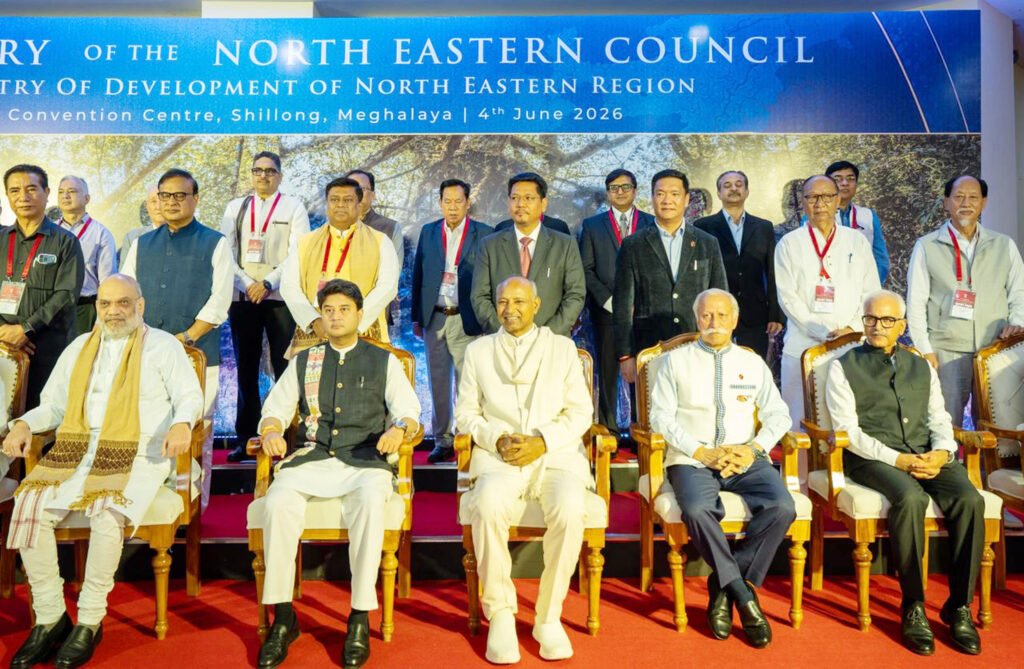
SHILLONG : Union Home Minister Amit Shah on Thursday chaired the 73rd plenary session of the North Eastern Council, where leaders from the eight northeastern states resolved to work towards a stronger and more prosperous region and deliberated on the North East Vision Plan 2047. The session brought together governors, chief ministers, deputy chief ministers and senior officials from across the Northeast. “Union Home Minister Amit Shah, Union Minister for DoNER Jyotiraditya M Scindia, governors, chief ministers, deputy chief ministers, and senior officials assembled ahead of the plenary deliberations,” the NEC said in a post on X. All the leaders reaffirmed their collective commitment to the growth, connectivity and prosperity of the region, it added. Union Minister of the Development of North Eastern Region (DoNER) Scindia said all the leaders are united in their resolve to create a “stronger and more prosperous” Northeast. According to an official communique, stakeholders from all eight northeastern states discussed the North East Vision Plan 2047 and key regional development priorities. “The plenary session discussed and deliberated on progress made by the CM High-Level Task Forces constituted for critical sectors of regional development,” the DoNER Ministry said on X. The session also reviewed important initiatives of the DoNER ministry, including updates on major schemes and programmes, outcomes of the North East Investment Summit and Bankers’ Conclave, it added.   The ministry said leaders analysed youth-focused initiatives, efforts related to tourism and logistics, and the region’s unique selling proposition (USP) projects. Presentations were made on tourism, agriculture and horticulture, investment promotion, self-reliance in milk, eggs, fish and meat production, sports promotion, economic corridor development, infrastructure and connectivity, and handloom and handicrafts. “The deliberations are expected to facilitate coordinated action among states and stakeholders for achieving shared development goals,” an official said. The North East Vision Plan 2047 seeks to provide a long-term roadmap for transforming the region into a vibrant hub of economic growth, connectivity, innovation, sustainability and cultural prosperity by the centenary year of India’s independence. Earlier in the day, Meghalaya Chief Minister Conrad K Sangma welcomed Shah to Shillong for the meeting. “Glad to welcome Hon’ble Union Home Minister and Chairman of the North Eastern Council, Shri @AmitShah ji to Shillong for the 73rd NEC Plenary Session,” he said. Ahead of the main session, a pre-Plenary meeting was held, bringing together senior officials from the government of India and all eight Northeastern states on Wednesday. The meeting was attended by chief secretaries, state planning secretaries, senior officers of DoNER ministry, NEC officials and other key stakeholders. The North Eastern Council, established under the North Eastern Council Act, 1971, serves as the apex regional planning body for the Northeastern region and plays a pivotal role in fostering coordinated development and strengthening cooperative federalism in the region. It is the nodal agency for the economic and social development of the region, which consists of Arunachal Pradesh, Assam, Manipur, Meghalaya, Mizoram, Nagaland, Sikkim and Tripura. (Source: PTI)    

REGIONAL

Assam to roll out emergency mobile alert system to warn citizens about impending disasters

GUWAHATI : The Assam State Disaster Management Authority (ASDMA) on Thursday said it will implement the Cell Broadcast System (CBS), a public warning mechanism launched by the central government, across the northeastern state in the coming days. Developed by C-DOT under the Department of Telecommunications in collaboration with the National Disaster Management Authority (NDMA) and Ministry of Home Affairs, the system enables authorities to send instant, geo-targeted emergency alerts directly to all mobile phones in a specific area. The CBS has been made available for implementation across India, including Assam, and a nationwide test was conducted in May. The system has already proven effective during real disasters in several states. “However, in the states including Assam wherein, Model Code of Conduct was in force, the test was excluded. Hence now, the Government of Assam is planning to implement the activity across the state as instructed by the Government of India,” ASDMA said in a statement. The CBS involves dissemination of critical and time-sensitive messages for impending disasters to all mobile devices within a designated geographical area, irrespective of whether the recipients are residents or visitors. “During the implementation of the said CBS, the citizens may receive emergency alerts on their mobile devices pertaining to disasters. The CBS alerts are highly sensitive, which trigger a loud audio alarm/notification on mobile handsets for approximately 30 seconds whenever received,” the ASDMA said. These alerts are official messages issued only by authorised government agencies during genuine emergencies such as extreme weather conditions like storms, heavy rain, lightning, cyclones, floods, flash floods or other disasters like gas leaks, it said. The alert would appear as a pop-up message on a person’s mobile phone accompanied by a distinctive loud tone and vibration. On supported handsets, the message would also be read aloud. “The CBS system is far more reliable than traditional SMS alerts. It works even during network congestion, reaches all mobile users in the targeted area, including roaming users. It supports messages in multiple languages and is functional across 2G, 3G, 4G, and 5G networks,” the ASDMA said. Citizens are also requested to share the information with family members, especially the elderly and those living in remote areas, it added. (Source: PTI)      

Latest News, Popular News, REGIONAL, State News

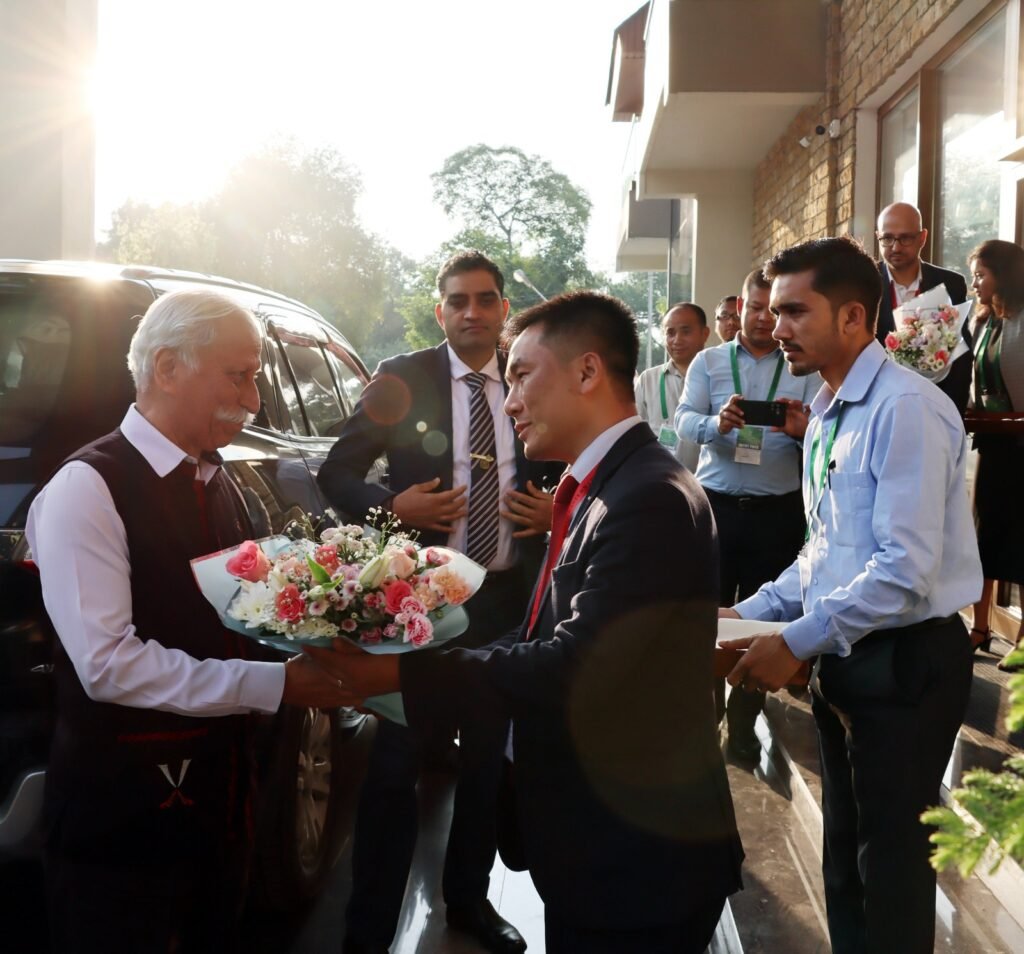
Governor arrives at Shillong to attend NEC Plenary

SHILLONG : Governor Lt Gen KT Parnaik (Retd.), arrived in Shillong on Wednesday to participate in the 73rd Plenary Session of the North Eastern Council (NEC). The Governor, accompanied by Commissioner to Governor, Pawan Kumar Sain, was received by officials of the NEC upon his arrival. The day-long session will be chaired by Union Home Minister and Chairman of the North Eastern Council, Amit Shah. It will also be attended by the Vice-Chairman of the NEC, Jyotiraditya Scindia, along with the Governors and Chief Ministers of the North Eastern States, Chief Secretaries, senior officials of the Government of India, and other distinguished delegates. The plenary is expected to review the progress of ongoing developmental initiatives in the region and chart a forward-looking roadmap to accelerate growth, enhance connectivity, strengthen border infrastructure, and improve the quality of life of the people of the North East in line with the vision of a developed and prosperous India.      

National, REGIONAL

Himanta calls on President Murmu, briefs her on Assam’s growth trajectory

NEW DELHI/GUWAHATI : Assam Chief Minister Himanta Biswa Sarma on Wednesday called on President Droupadi Murmu at the Rashtrapati Bhavan. The President’s office shared a picture of the meeting in a post on X. “Chief Minister of Assam Dr Himanta Biswa Sarma called on President Droupadi Murmu at Rashtrapati Bhavan,” it said. Sarma said that after assuming office for the second time, he briefed the president on Assam’s ongoing journey as India’s fastest-growing state and how his government plans to take this momentum forward. “An epitome of courage, resilience and leadership, meeting Hon’ble President is always an inspiring experience, and her words act as an encouragement in our path of public service,” he said in a social media post. Sarma said that he sought her blessings and guidance to continue the journey of public welfare and development. Sarma was sworn in on May 12 as the chief minister of Assam for the second time in a row. (Source: PTI)          

REGIONAL

Meghalaya govt intensifies efforts to check spread of African Swine Fever

SHILLONG  (PTI) : Meghalaya government has intensified efforts to contain the spread of African Swine Fever (ASF) and imposed restrictions on pig transportation and trade in affected districts, Chief Minister Conrad K Sangma said on Wednesday. Sangma said the outbreak was being closely monitored and immediate measures had been put in place to prevent the disease from spreading further. “This has been a problem in the past also. We are monitoring the situation and taking immediate action. The department is taking measures to ensure that ASF doesn’t spread on a large scale,” he told reporters. According to officials, confirmed cases have been detected in Pynursla and Mawlai blocks of East Khasi Hills district, Mawthadraishan block of West Khasi Hills district, Umsning and Bhoirymbong blocks in Ri-Bhoi district, Mairang block of Eastern West Khasi Hills district, as well as at the Regional Pig Breeding Farm in Kyrdemkulai. The affected villages include Urksew Wahpathaw, Mawkajem, Mawlai Mawkynroh, Nongkasen, Kyrdemkulai, Lum Umpih, Mawkyrdep and Mawphanniew. Invoking provisions of the Prevention and Control of Infectious and Contagious Diseases in Animals Act, 2009, the animal husbandry and veterinary department has declared areas within a 1 km radius of infected premises as infected zones, while areas extending up to 10 km have been designated as surveillance zones. A complete ban has been imposed on the movement of live pigs, pig feed, pork and pork products into or out of affected areas. Pig markets, slaughterhouses and abattoirs in the affected zones have been ordered closed until further notice. Authorities have also prohibited swill feeding using kitchen or restaurant waste and barred the removal of infected or dead pigs and contaminated materials from designated zones. Officials said disposal of pig carcasses in rivers, lakes or other water bodies would attract penalties ranging from Rs 2,000 to Rs 5,000, while repeat offenders could face imprisonment of up to three months. Carcasses are required to be disposed of through deep burial with lime cover as per veterinary guidelines. Farm owners have been directed to maintain strict biosecurity protocols, restrict visitor access and ensure proper cleaning and disinfection of vehicles operating in affected areas. Veterinary teams have intensified surveillance and sample collection to assess the extent of the outbreak, while the forest department has been asked to monitor wild boar populations in adjoining forest areas to prevent possible transmission between domestic and wild pig populations. The government has also appealed to village dorbars, dollois, nokmas, municipalities and other local bodies to cooperate with veterinary officials and rapid response teams engaged in containment efforts. Farmers in disease-free areas outside surveillance zones have been advised to confine their animals, prevent contact with wild boars and stray animals, maintain strict hygiene standards and immediately report any unusual illness or mortality to veterinary authorities, officials said. (Source: PTI)    

REGIONAL

Meghalaya CM reviews education sector performance, stresses better learning outcomes

SHILLONG : Meghalaya Chief Minister Conrad K Sangma on Wednesday said the state is undertaking major reforms in the education sector to improve learning outcomes and quality of schools, as he reviewed its progress under the national Performance Grading Index (PGI) framework. Chairing a high-level meeting with officials of the education department, Sangma assessed the state’s PGI performance and reviewed initiatives to strengthen the education ecosystem, including investments in foundational learning, school infrastructure, vocational education, digital governance and student welfare. The 2022-23 PGI ranking put Meghalaya among the worst-performing states in the country “We have ensured that every child has access to a school. Our next goal is to ensure that every school delivers the highest quality of learning,” Sangma said. He said directions have been issued to the education department to put in place a focused strategy and stronger mechanisms to improve performance, learning outcomes, and build on our commitment for infrastructure improvements in schools in order to ensure the state achieves a better PGI ranking in the coming years. Officials informed the meeting that the state’s extensive network of nearly 14,600 schools reflects the government’s commitment to ensuring access to education even in remote areas, making it one of the most accessible schooling systems in the Northeast. The review highlighted that learning outcomes, which carry the highest weightage under the PGI framework, remain a key focus area. “The government is implementing several initiatives to strengthen foundational literacy and numeracy, improve classroom teaching and provide greater support to students,” a senior education official said. The meeting also reviewed ongoing efforts to upgrade school infrastructure, including the establishment of science laboratories, ICT facilities, smart classrooms, libraries, kitchen gardens, rainwater harvesting systems, drinking water facilities and solar-powered infrastructure. Officials said vocational and skill-based education is being expanded through the community skill integrated curriculum, which introduces practical and skill-oriented learning to students from primary to secondary levels. The government is also strengthening student welfare measures, including improvements to the midday meal programme and the installation of sanitary pad vending machines and incinerators in girl schools. The meeting reviewed efforts to improve digital governance and educational data systems through better reporting, Aadhaar integration, digital compliance and institutional record management, aimed at ensuring educational progress is accurately reflected in national assessment frameworks. Officials also highlighted progress under the school rationalisation programme, under which 3,198 of the state’s 14,582 schools have already been merged or consolidated to optimise teacher deployment and improve resource utilisation. An official said Meghalaya’s PGI score largely reflects structural, administrative and data-reporting challenges and does not accurately represent the talent and potential of the state’s children. The chief minister directed the department to continue adopting a scientific and data-driven approach to improving educational performance through regular assessments, evidence-based interventions and stronger coordination between schools, districts and the state government, officials said. (Source: PTI)        

REGIONAL

New yellow-throated marten found in Assam’s Kaziranga

GUWAHATI : A new species of marten has been found in Kaziranga National Park in Assam, the government said on Tuesday. In a social media post, the Chief Minister’s Office said the sighting of the yellow-throated marten in Kaziranga underscores the strength of Assam’s conservation model, where protected habitats continue to support remarkable biodiversity and wildlife resilience. “Under the leadership of HCM Dr. @himantabiswa (Himanta Biswa Sarma), Assam is creating conservation success stories that extend beyond protecting landscapes to nurturing thriving ecosystems,” it said. The Kaziranga National Park & Tiger Reserve is the largest in the Northeast and is thronged by domestic and international tourists in large numbers for its famed one-horned rhinoceros. Tourist footfall to the forest rose by over 15 per cent in 2025-26 to 4.68 lakh, of which foreign tourist arrivals increased from 17,693 to 30,474 in a year. The Kaziranga National Park, a UNESCO World Heritage Site, was declared a national park in 1974. It is inhabited by the world’s largest population of one-horned rhinos as well as many mammals, including tigers, elephants, panthers and bears, and thousands of birds. The park is located in Golaghat and Nagaon districts of Assam. It is also located beside the Brahmaputra river on the north and the Karbi Anglong Mountains on the south. (Source: PTI)