

PASIGHAT : The Central Agricultural University (CAU) has intensified its awareness initiatives on sustainable agriculture, climate-resilient farming and alternative energy use across the North Eastern Hill (NEH) region through a series of outreach programmes.
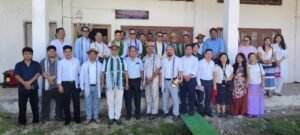
Addressing the media on Friday, a team of faculty members led by CAU Prof BR Phukan highlighted the university’s initiative titled “Alternative Energy Initiatives and Increasing Nutrient Use Efficiency through Organic Sources.”
The programme aims to create awareness among farmers and stakeholders on sustainable agricultural practices, renewable energy, and efficient nutrient management.
He said agriculture in the NEH region continues to face multiple challenges, including fragile ecosystems, difficult terrain, soil degradation, nutrient leaching, acidic soils, biodiversity loss and poor accessibility in remote areas.
“Despite these challenges, CAU has consistently worked to bridge the gap between scientific institutions and farming communities through education, training and dissemination of technology,” Prof Phukan added.
Over the past few months, the university has conducted extensive awareness campaigns across the seven hill states through print media and field outreach programmes.
With 13 campuses spread across the region, CAU has been sensitising farmers and stakeholders on climate-resilient agricultural practices.
The awareness programmes focused on technologies and practices such as solar irrigation systems, agrivoltaics, solar-powered farm operations, artificial intelligence-based greenhouse management, precision farming, conservation tillage, biomass gasification, vermicomposting, solar dryers, wind energy applications and smart farming techniques aimed at improving nutrient-use efficiency and reducing dependence on fossil fuels.
Faculty members also spoke on bio-fertilisers, natural farming, soil health management, biodiversity conservation, protected cultivation of high-value crops and flowers, post-harvest management through solar dryers and conversion of agricultural and kitchen waste into vermicompost for sustainable organic manure production.
The university appealed to media organisations and stakeholders to actively support awareness initiatives related to sustainable agriculture, alternative energy use, soil health improvement, biodiversity conservation and long-term agricultural sustainability in the Northeast. (DIPR)