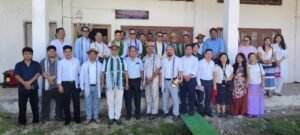


KOHIMA : Nagaland Social Welfare department Advisor Wangpang Konyak on Friday called for a whole-of-society approach to combat drug abuse, urging churches, community organisations and educational institutions to play a proactive role in prevention, counselling and rehabilitation, saying the fight against substance abuse cannot be won by law enforcement alone.
Addressing the observance of the International Day Against Drug Abuse and Illicit Trafficking here, MLA Konyak expressed concern over the growing threat posed by drug abuse in the state and stressed that addiction should be treated as a public health issue rather than merely a criminal problem.
Referring to this year’s global theme, “World Drug Problem: Persisting Issues, New Challenges, Innovative Responses,” Konyak said traditional narcotics have been replaced by highly addictive synthetic drugs and technology-driven trafficking networks that increasingly target young people through smartphones and digital platforms.
He noted that Nagaland’s proximity to international border routes has made the state vulnerable to illicit drug trafficking, with generations of youth falling victim to substance dependency.
Highlighting government initiatives, Konyak said the Centre’s Nasha Mukt Bharat Abhiyaan (NMBA) has shifted the focus from punitive measures to demand reduction, counselling, rehabilitation and data-driven interventions.
He said the state government has intensified awareness campaigns through district-level NMBA committees, strengthened enforcement of the NDPS Act, tightened border surveillance and is working to expand de-addiction centres.
While reiterating the state’s “War on Drugs” campaign, Konyak said government agencies alone cannot eliminate the menace.
Appealing directly to church leaders, he said churches possess unmatched moral influence within communities and should establish counselling units, remove the stigma surrounding addiction, support recovery groups such as Alcoholics Anonymous and Narcotics Anonymous, and strengthen youth mentorship programmes focusing on mental health and peer support.
He also urged mothers’ associations, youth organisations, student unions and village communities to create drug-free localities through awareness, sports, music and skill development initiatives, while calling on teachers to identify early signs of substance abuse and mental health challenges among students.
Stating that “addiction thrives in isolation, but dies in the light of community,” Konyak said the government, churches, civil society and families must work together to build an effective support system for those struggling with addiction.
The Advisor also voiced concern over the recent cases of child abuse and sexual harassment in Nagaland, urging investigating agencies to ensure justice without delay.
Delivering the keynote address, Social Welfare department Secretary Limawabang Jamir said substance abuse is not merely a law enforcement challenge but also a public health, social development and family issue.
He said achieving the vision of Viksit Bharat requires a drug-free India under the Nasha Mukt Bharat Abhiyaan, adding that Nagaland’s location near the Golden Triangle has made it particularly vulnerable to drug trafficking over the decades.
Jamir pointed to the growing challenges posed by synthetic drugs, digital trafficking through social media and encrypted messaging platforms, and the increasing link between substance abuse and mental health issues such as anxiety, depression and unemployment.
Calling for innovative and evidence-based responses, he advocated early prevention in schools, digital awareness campaigns, tele-counselling, integration of mental health services into rehabilitation, and stronger community participation through churches, village councils, Hohos, mothers’ associations and student bodies.
He also stressed the need to strengthen rehabilitation by providing vocational training, employment opportunities and social reintegration for recovering addicts, saying recovery is achievable through sustained community support and collective action.
Meanwhile, Mima village council of Kohima district was awarded the Suposhit Gram Panchayat Abhiyaan award, which is a Rs 1 lakh incentive grant awarded to the top 1,000 performing Gram Panchayats across India that demonstrate sustained improvements in local nutrition and infrastructure metrics. (Source: PTI)