ONLINE AGE

(Online version of the Arunachal Age newspaper)

Author name: OnlineAge

Latest News, Popular News, State News

14 Kuki hostages released after month of abduction in Manipur’s Senapati

IMPHAL : Nearly a month after 14 Kuki individuals were abducted by armed groups in Manipur’s Senapati district, all the hostages were released on Tuesday, an official said. The release of the 14, who were abducted on May 13 following the killing of three church leaders in an ambush in Kangpokpi district, was facilitated by the United Naga Council (UNC), the apex body of the Naga community in Manipur, and other Senapati district-based civil society organisations. “All of them were released safe and sound at the Senapati district headquarters in the presence of police and security forces,” the official said. UNC president Ng Lorho said the hostages were set free following appeals by the central and state governments, church bodies and apex tribal organisation. (Source: PTI)            

REGIONAL

Assam moving to centre of India’s economy: EU envoy

GUWAHATI : Ambassador of the European Union to India Herve Delphin on Tuesday asserted that Assam is not at the periphery of India’s geography, but the northeastern state is moving to the centre of its economy. Addressing a press conference here on the second day of the European Union delegation’s high-level visit to the state, Delphin said that the EU has been engaging with and supporting the development of the northeast region, particularly Assam. “Assam is not at the periphery of India’s geography, but is moving to the centre of its economy,” he said. Delphin said what is distinct in Assam is the “resources that nature offers. The quality of the people… their talent, hospitality and the incredible leadership to develop the state, and it is this that makes Assam the go-to destination for European business”. ”At the core, we want to bring the EU-India ecosystem and economies closer, and the launch of ‘Blue Valley Cluster-Flavours, Fragrance and Ayush’ is a step towards this materialising at the state level,” he said. The Blue Valley Cluster pilot project in Assam is expected to demonstrate a new model of sustainable industrial cooperation by connecting local biodiversity, innovation and enterprise with international value chains and market opportunities, officials said. (Source: PTI)    

REGIONAL

India exports 1-tonne of GI-tagged Tezpur Litchi to Dubai

NEW DELHI : India has exported one tonne of GI-tagged Tezpur Litchi from Assam to Dubai, marking a step forward in promoting the premium fruit, known for its exceptional sweetness, bright-red colour and distinctive aroma, in overseas markets, the Commerce Ministry said on Tuesday. The ministry is promoting exports of agri products from the North Eastern Region. It said that the Tezpur region cultivates several notable varieties of Litchi, including Bombaya, Bilati, Elaichi, Piyaji and Sahi. “The Geographical Indication (GI) status has strengthened the identity and market recognition of Tezpur Litchi, enhancing its appeal among international buyers and creating new opportunities for premium agricultural exports from Assam,” it said. (Source: PTI)    

REGIONAL

Assam’s partnership with EU reflects shared vision of innovation-driven economies: Himanta

GUWAHATI : Assam Chief Minister Himanta Biswa Sarma on Tuesday said the state’s partnership with the European Union (EU) reflects a shared vision of building resilient, sustainable, and innovation-driven economies that create opportunities for people, while strengthening the India-Europe cooperation. Addressing a press conference here on the final day of the EU delegation’s two-day visit to the state, Sarma said that India and the European Union have established an ambitious roadmap in areas including trade, investment, technology, innovation, connectivity and security. He said this was possible due to the leadership of Prime Minister Narendra Modi, and that ”Assam stands to tremendously benefit from it”. There is immense potential for collaboration across strategic sectors like semiconductors and electronics, defence and aviation, tea, agarwood, organic foods, natural fragrances and flavours, and AYUSH-based wellness products, where Assam and the wider northeast region possess unique strengths and global market opportunities, the CM said. ”Assam also looks forward to leverage European cooperation in sunrise and other emerging sectors such as semiconductors, electronics, manufacturing, AI, biotechnology, etc, to create high-quality opportunities for our youth and to cater to the growing domestic demand for these avenues,” he said. The chief minister said that the launch of the ‘Blue Valley Cluster’ project is a landmark India-EU cooperation, which will directly benefit local farmers. ”Through initiatives such as the Blue Valleys platform, we aim to connect thousands of farmers, women-led self-help groups, startups, researchers, and industries with international value chains, enabling inclusive growth, technology transfer, quality employment, and sustainable prosperity across Assam and the northeast,” he said. The initiative opens immense avenues for European companies to process state-grown products, successfully positioning Assam on the global trade map, Sarma asserted. The Blue Valley initiative is a key outcome of Advantage Assam Investment Summit 2.0 and is a new chapter in the Assam-Europe partnership, he said. “The Blue Valley initiative translates this global strategic cooperation into local opportunities, fostering innovation, entrepreneurship and sustainable growth,” he said. India and the EU have established an ambitious roadmap for cooperation across diverse sectors with the adoption of the ‘Towards 2030 agenda’, Sarma said. “Assam is rapidly emerging as the gateway connecting India with Southeast Asia and the initiative seeks to link Assam’s natural strengths with global value chains, creating new avenues for growth, innovation and investment,” he said. Sarma also said that the achievement of the state government during the last five years was only the beginning. “With a strong economic momentum and growing investor confidence, Assam is steadily emerging as one of India’s most sought after destinations for investment,” he added. (Source: PTI)    

REGIONAL

Nagaland launches mentorship, livelihood programmes to prepare athletes for life beyond arena

KOHIMA : The Nagaland Department of Youth Resources and Sports on Tuesday launched two initiatives aimed at equipping young athletes with life skills, career guidance and economic opportunities beyond their sporting careers. The Mentorship Programme for Holistic Development of Student Athletes and the Skill-Based Economic Sustenance Programme for Athletes were launched at the Indira Gandhi Stadium here by Youth Resources and Sports Secretary Anthony Ngullie. The programmes, designed for athletes of the Indira Gandhi Academy, seek to address a long-standing challenge faced by young sportspersons — preparing for life after sports while balancing education, personal growth and future employment prospects. Speaking at the launch, department officials said the initiatives reflect a broader vision of athlete welfare, recognising that sporting excellence alone cannot guarantee long-term security and success. Under the mentorship programme, 11 officers of the department, including the Secretary himself, will serve as mentors to approximately 140 athletes. Each mentor will guide 12 to 13 athletes through regular interactions focused on academics, physical and mental well-being, discipline, life skills and career planning. The programme, which will run until March next year, is expected to create a structured support system where athletes can receive individual guidance beyond the training ground. In his address, Ngullie said that while coaches will continue to oversee sporting performance, mentors will help athletes navigate personal and educational challenges, encouraging a more balanced and holistic development model. The launch marks one of the first structured attempts by the state government to integrate sports development with career mentorship and livelihood creation, he said. He expressed confidence that the twin initiatives would create a lasting impact on the lives of young athletes by expanding their opportunities both on and off the field, reinforcing the message that sporting success and economic empowerment can go hand in hand. Alongside mentorship, the department also launched a skill development initiative aimed at strengthening the economic resilience of athletes. Targeting athletes aged 15 years and above, the Skill-Based Economic Sustenance Programme will commence on Thursday and continue until October, YRS Officer Naroenla said. Participants will receive training in practical vocational trades including mobile phone repairing, crochet, pickle making and food processing, baking and confectionery, and floristry, she said. The programme has been designed around the idea that athletes should possess alternative skills that can generate income, support entrepreneurship and provide economic security after their competitive careers, she said. Each training module will span one month, comprising two weeks of expert-led instruction followed by two weeks of guided practical work. (Source: PTI)    

Latest News, Popular News, State News

Pradhan reviews NEET retest preparations

NEW DELHI : Union Education Minister Dharmendra Pradhan on Tuesday visited the National Testing Agency (NRA) headquarters to review preparations for the NEET-UG 2026 retest on June 21 and reiterated the commitment to conduct an error-free exam and declare results on time. “I would like to request the students and their parents. As we said earlier, we assure you that this time NEET will be conducted without any errors. Once again, I would like to assure you that this time the results of the examination will be declared on time so that students’ learning is not affected and there is not much loss of time,” he said. “NTA is going to conduct the re-NEET exam on June 21. In this regard, we have reviewed the process several times. Today, I myself came to the NTA headquarters to review how the preparations for the re-NEET are going,” he said. Highlighting the preparations for maintaining confidentiality of the re-test, he said, “Along with this, strict confidentiality must be maintained, from question paper setting to ensuring that the examination process is properly managed and the papers reach the exam centres safely. Whatever departments are assigned for this purpose, this time we have taken greater precautions.” Pradhan said, “The Cabinet Secretary, Home Secretary, and other senior leadership of the government are involved, and the Prime Minister himself is taking responsibility and is concerned. The Prime Minister wants to ensure that the children of the country are reassured through this entire administrative system…We will not repeat the mistakes that have happened.” Shedding light on the ongoing investigation into the paper leak, Pradhan said, “The investigation into this matter is currently underway. The CBI is looking into it in detail-what irregularities happened and where they occurred in the past few days.” “I have full trust in the CBI, and we have also requested the CBI. The two accused arrested this time should be given the strictest possible punishment, said the Minister. “Their criminality should be examined, cases should be filed against them, and they should be given a speedy trial in a fast-track court. They should also be given exemplary punishment,” said Pradhan. (Source: IANS)

Latest News, Popular News, State News

RGU distributes millet seeds to farmers

DOIMUKH :  The Faculty of Agricultural Sciences (FoAS), Rajiv Gandhi University (RGU), has distributed foxtail millet seeds to farmers in Namsai district under a millet promotion project for the North Eastern Region funded by the Indian Council of Agricultural Research–Indian Institute of Millet Research (ICAR-IIMR), Hyderabad, for the 2026-27 financial year. The initiative aims to promote millet cultivation and strengthen farmers’ livelihoods through value addition and capacity-building interventions. Under the project, farmers in Namsai, Lower Dibang Valley (Roing) and Papum Pare districts will be covered during the current financial year. In addition to seed distribution, a series of millet processing training programmes will be organised to enhance farmers’ technical skills and entrepreneurial opportunities. The project also envisages support for establishing millet-processing, bakery and noodle-making units to improve value addition, generate income and create sustainable livelihood opportunities for farming communities. The project is being implemented under the principal investigatorship of Faculty of Agricultural Sciences Dean Dr Sandeep Janghu.

Editorial

A long, rough road for TMC

In the unravelling of the Trinamool Congress (TMC), shortly after its electoral rout in West Bengal, history is repeating itself. Voted out after three consecutive terms in power, the TMC is witnessing a post-defeat breakdown similar to what other parties have experienced. Former chief minister and the TMC’s founder-leader, Mamata Banerjee, has lost operational control, with most members of the legislature party rebelling against her. As many as 58 of the 80 TMC legislators, led by Ritabrata Banerjee, wrote to Assembly Speaker Rathindra Basu stating they were the “real” TMC. The Speaker accepted them as the recognised Opposition in the House, with Ritabrata – expelled from the TMC for anti-party activities – as the Leader of the Opposition. Ritabrata and his group of rebels framed their move as dissent against Abhishek Banerjee, TMC general secretary and Mamata’s nephew, who is seen as her successor. They have not denounced Mamata in public and have even requested her to be their guide and adviser. But these strategic positions notwithstanding, they have broken away from the party and what it stands for. Abhishek’s rising prominence in the party had already left some of the senior leaders disgruntled. It is not just the MLAs and leaders who are leaving; the TMC faces the threat of an exodus of the rank and file. Widespread public disenchantment with the party, now identified with corruption, criminality, and authoritarian internal structures, was reflected in the Assembly election results. For a breakaway group trying to establish itself as the real Trinamool, it makes political sense to distance itself from a leadership that has lost the people’s mandate. The ruling Bharatiya Janata Party (BJP) cannot complain, given that the dissidents have left a weakened opposition in further disarray. This exit staged by Ritabrata, who has travelled through parties, has parallels with the one led by Eknath Shinde against the Shiv Sena leadership in Maharashtra. There, the revolt was managed by the BJP. Regional parties in other states that aligned with the BJP have seen their bases deplete. With more dissent and defections a clear possibility, the TMC and its beleaguered leader are in for testing times. For Mamata, who fought long, tough fights to hold on to power for 15 years, a fractured TMC raises existential questions. Her loss also diminishes the Opposition I.N.D.I.A bloc. On her home turf, she will now have to brace for longer legal and political battles with an adversary who spares no trick to eliminate opposition. (Source: DH)  

Latest News, Popular News, State News

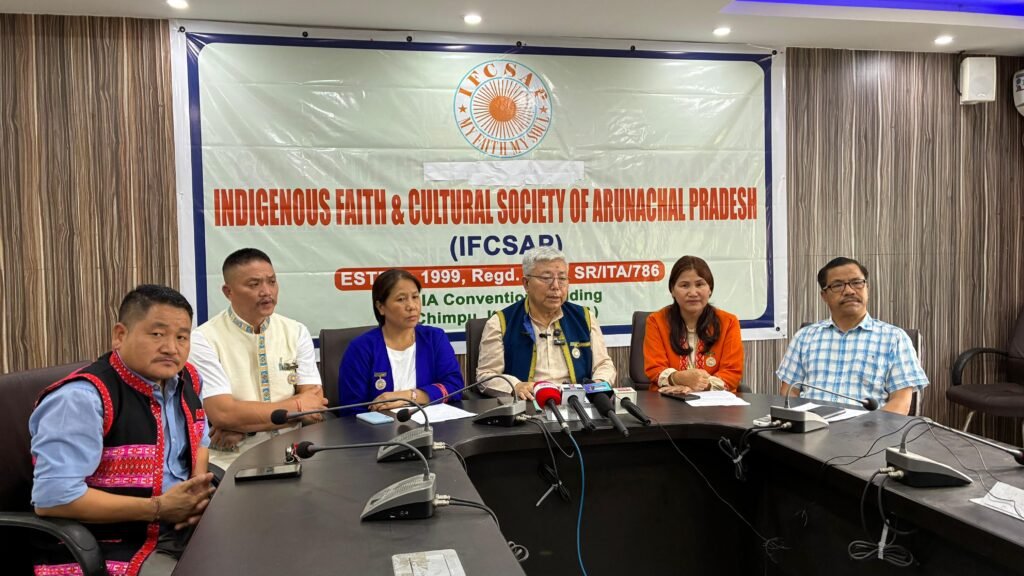
IFCSAP seeks timely notification of APFRA rules following HPC report submission

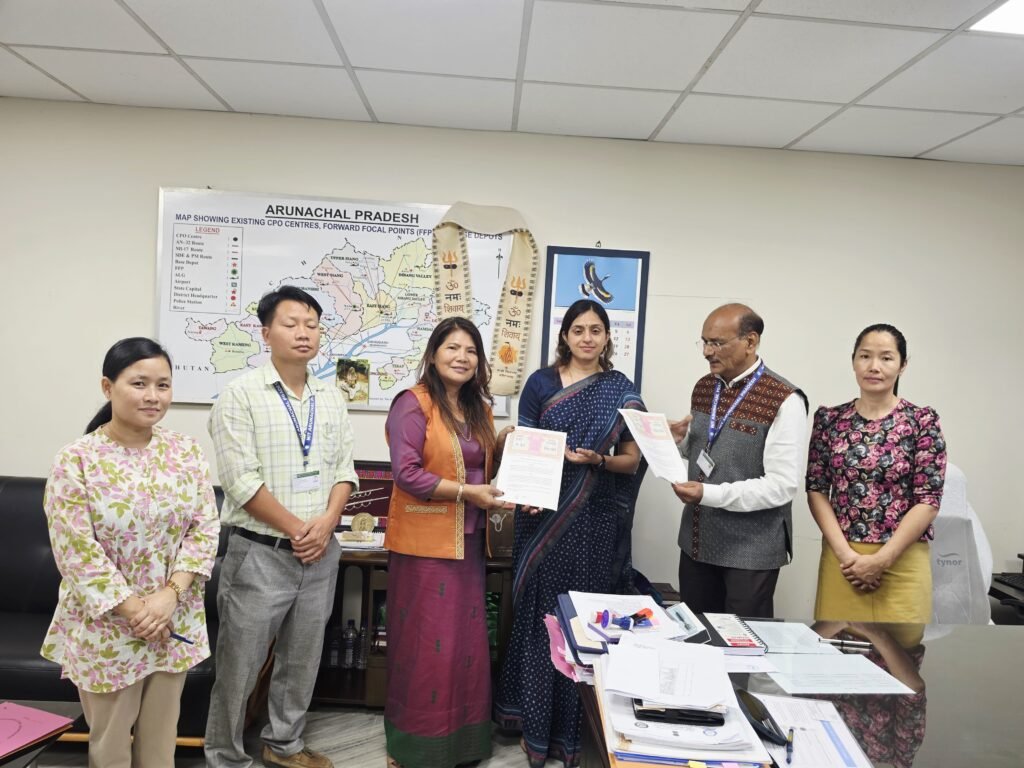
ITANAGAR : The Indigenous Faith and Cultural Society of Arunachal Pradesh (IFCSAP) has urged the state government to take timely steps towards notifying the Rules under the Arunachal Pradesh Freedom of Religion Act, 1978 (APFRA), following the submission of the report of the High-Power Committee (HPC) constituted to examine issues relating to the Act’s implementation. In a statement, IFCSAP appreciated the state government and the HPC for conducting extensive consultations with stakeholders and facilitating what it described as a democratic, transparent and participatory process. With the consultative exercise now concluded, the organisation expressed hope that the government would consider the committee’s recommendations and bring the Rules into force within a reasonable timeframe in accordance with legal and constitutional requirements. The society stated that it would continue to monitor developments related to the implementation process and, if necessary, pursue appropriate legal remedies to ensure compliance with the directions of the Gauhati High Court and the applicable statutory framework. Clarifying its position, IFCSAP said the issue of repealing the Arunachal Pradesh Freedom of Religion Act, 1978, was never part of the High-Power Committee’s mandate. According to the society, the committee’s role was limited to matters concerning the implementation of the Act and the framing of Rules and did not extend to examining the validity or continuance of the legislation itself. It further noted that the issue of framing Rules under the APFRA remained uncontested during proceedings before the Gauhati High Court and stated that the Arunachal Christian Forum (ACF) had not opposed the framing of Rules during the court process. The organisation maintained that the government had provided adequate opportunities to all stakeholders, including ACF, to present their views and concerns. It said constructive participation and dialogue were essential for strengthening democratic consultation and promoting consensus-building. Rejecting claims that the framing of Rules is directed against any particular religion or community, IFCSAP described such perceptions as misleading and asserted that the Rules are intended solely to facilitate implementation of an existing law enacted by the Legislature. The society also pointed out that once notified, the Rules would be public documents accessible to all citizens, thereby promoting transparency and informed public discourse. It added that, like other forms of subordinate legislation, the Rules could be reviewed, amended or modified by the Government in future in accordance with constitutional principles, public interest and changing circumstances. Expressing concern over attempts to delay the notification process through public pressure or confrontational approaches, IFCSAP said differences of opinion should be addressed through constitutional procedures, legal processes and institutional mechanisms. The organisation reiterated its commitment to constitutional values, indigenous rights, religious freedom, social harmony and peaceful coexistence among all communities of Arunachal Pradesh, while expressing hope that stakeholders would continue to engage in constructive dialogue and mutual respect.    

Latest News, Popular News, State News

Arunachal inks pact for AI centre of excellence at NIT

ITANAGAR : Arunachal Pradesh on Monday took a step towards advancing its digital transformation agenda with the signing of a pact for setting up an Artificial Intelligence Centre of Excellence (AI CoE) at NIT here. The MoU was signed between the State Council of IT and e-Governance (SCITeG), under the state Information Technology and Communication department, and the National Institute of Technology (NIT) Arunachal Pradesh, an official statement said. The agreement was signed by NIT Arunachal Pradesh director Prof MV Aware and SCITeG Director-cum-Member Secretary Neelam Yapin Tana in the presence of state IT and Communication secretary Dr Sonal Swaroop. The initiative, approved by the state government, is part of Chief Minister Pema Khandu’s vision of building a Digital Arunachal through the strategic adoption of Artificial Intelligence. The proposed AI CoE will be established with financial and technical support from IndiaAI under the Union ministry of Electronics and Information Technology (MeitY). SCITeG, the state’s nodal agency for information technology and e-governance, has been entrusted with leading the initiative. Under the chairmanship of Nyamar Karbak, the council will spearhead efforts to promote innovation and accelerate digital transformation across government, industry, academia and society. The AI CoE is envisaged as a research and innovation hub focused on cutting-edge technologies. It will serve as a think tank, incubator and skill development centre aimed at fostering AI-driven solutions, supporting startups, strengthening governance mechanisms and enhancing capacity building in the state. NIT Arunachal Pradesh, a premier technical institution of national importance, will play a key role in supporting the initiative through its academic and research ecosystem. The institute’s faculty expertise, research capabilities and talent pool are expected to contribute significantly to advanced AI research, innovation and human resource development in the sector, the statement added. (Source: PTI)