ONLINE AGE

(Online version of the Arunachal Age newspaper)

Author name: OnlineAge

Latest News, Popular News, State News

1 AP Battalion NCC concludes CATC-68, YAMS camp in Itanagar

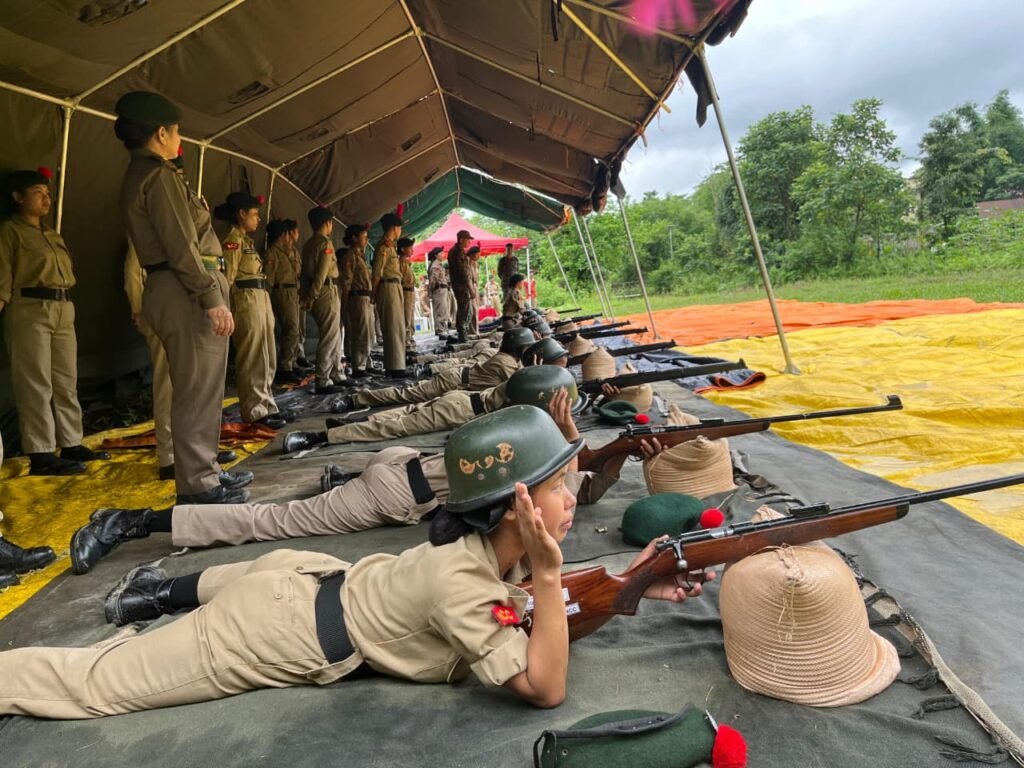
ITANAGAR : The 1 Arunachal Pradesh Battalion National Cadet Corps (NCC), under the aegis of the NCC Group Headquarters Tezpur, concluded its 10-day Combined Annual Training Camp (CATC-68) and Yuva Aapda Mitra Scheme (YAMS) programme at Rajiv Gandhi Government Polytechnic College (RGGPC), Itanagar, on Friday. The camp brought together 247 NCC cadets from across the state under the leadership of the Commanding Officer of 1 Arunachal Pradesh Battalion NCC. Despite persistent rainfall and weather-related disruptions, many cadets travelled from remote areas, with some taking long detours to reach the camp. The training was conducted with the support of 10 military personnel, four Associate NCC Officers (ANOs) and one Caretaker Officer (CTO), who supervised the training and welfare of the cadets. The camp received a morale boost with the visit of Brigadier Mayank Vaid, Commander of NCC Group Headquarters Tezpur, who interacted with the cadets and encouraged them to uphold the values of discipline, leadership and national service. The training programme familiarised cadets with the discipline and ethos of military camp life while providing instruction in physical training, field craft and battle craft, weapon handling and musketry, small arms firing, sword drill, yoga, games and personality development through expert lectures. A major component of the camp was the Yuva Aapda Mitra Scheme, under which cadets received disaster preparedness and emergency response training from certified instructors of the Arunachal Pradesh State Disaster Management Authority (SDMA). The sessions covered disaster risk reduction, relief and rescue operations, and emergency management techniques to respond to floods, cloudbursts and earthquakes. The concluding phase of the camp featured Survival Day and Fun Day, aimed at strengthening teamwork, camaraderie and cultural integration through interactive activities and the sharing of traditional cuisines from different parts of the state. According to the organisers, the camp successfully contributed to the holistic development of the cadets by combining military-oriented training with leadership, discipline and disaster management skills.      

Latest News, Popular News, State News

Stakeholders discuss prison health, de-addiction and HIV response at Jully jail

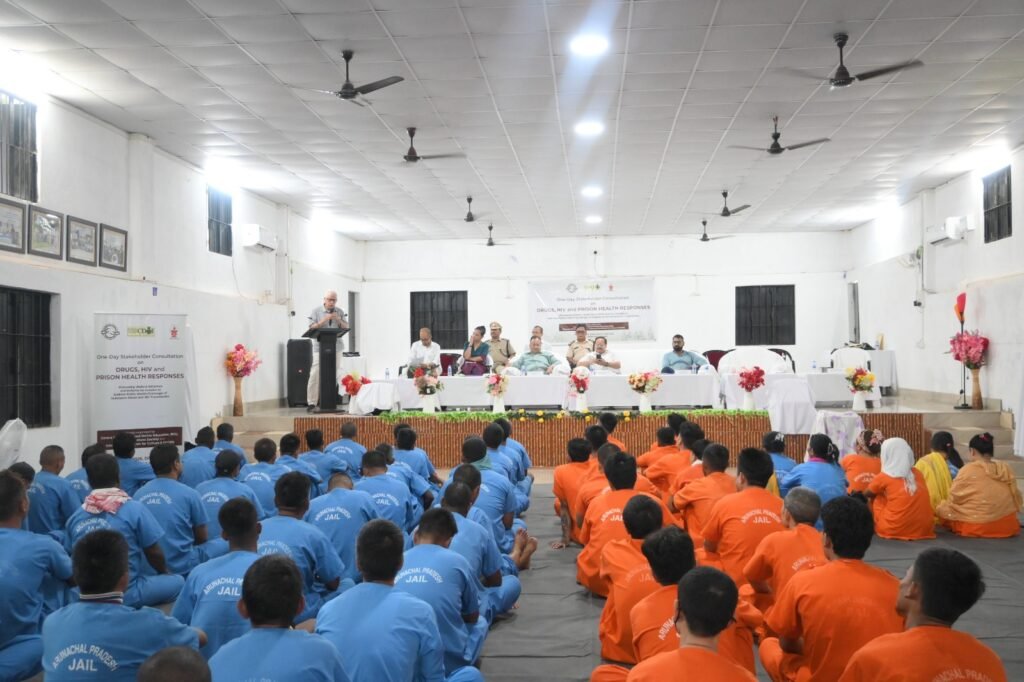
ITANAGAR : A one-day stakeholder consultation on “Drugs, HIV and Prison Health Responses” was held at District Jail Jully on Friday to discuss prison health, substance abuse prevention, HIV response and inmate rehabilitation. The programme was jointly organised by the Centre for Distance and Online Education (CDOE), Rajiv Gandhi University (RGU), the Recovery Wellness Society and the Srimanta Foundation for Culture & Society. The consultation brought together prison officials, inmates, faculty members of CDOE, and representatives of the organising organisations to promote awareness on prison health, correctional reforms and public health interventions aimed at addressing substance abuse and HIV transmission. Delivering the keynote address on the theme “Building a New Life,” former Assam Director General of Police Bhaskar Jyoti Mahanta encouraged inmates to embrace hope, discipline and resilience while preparing for life after release. Stressing that everyone deserves a second chance, he urged them to become responsible citizens and contribute positively to society. Addressing the gathering, Arunachal Pradesh Inspector General of Prisons Tojo Karga highlighted the state’s efforts towards correctional reforms and inmate welfare. He urged inmates to use their period of incarceration for self-reflection, personal growth and behavioural change, adding that moderation in life is essential to avoid adverse consequences. He also said the prison has earned recognition as one of the best correctional facilities in the region and reaffirmed the department’s commitment to providing a safe and reformative environment. Earlier, CDOE Assistant Professor Kiri Taso welcomed the participants and resource persons. During the first technical session, Recovery Wellness Society founder and project head Anupam Rohit spoke on “Understanding Substance Abuse: Causes, Consequences, Recovery and Hope.” Drawing on his experience in addiction recovery, he said lasting recovery requires determination, self-discipline and a willingness to rebuild one’s life. He also emphasised that positive thinking and disciplined living are essential for successful reintegration into society. An educational documentary titled “Myths and Truths About Substance Abuse” was also screened to create awareness on addiction, treatment and recovery. The second technical session was conducted by Srimanta Foundation for Culture & Society trustee Dipankar Mahanta, who spoke on “Yoga, Spirituality and Inner Well-being.” He highlighted the role of yoga, meditation and spiritual practices in improving physical and mental health, emotional resilience and overall well-being, and encouraged inmates to adopt these practices in their daily lives. The programme concluded with an interactive session during which inmates shared their experiences and sought guidance on rehabilitation, addiction recovery and reintegration into society. CDOE Assistant Professor-cum-Coordinator Moyir Riba proposed the vote of thanks, expressing appreciation to the prison administration, resource persons and participants for contributing to the success of the programme. One inmate, responding to a discussion on strengthening de-addiction initiatives in prisons, remarked, “It is not about what we want, or even what we need, but whether we are ready to work with what we have.”  

Latest News, National, Popular News, State News

PM took full credit for Ram Temple; must break silence on ‘thefts’: Congress

NEW DELHI : Amid the raging row over the alleged theft of donations at the Ram temple in Ayodhya, the Congress on Friday pushed for its demands that the Shri Ram Janmabhoomi Teerth Kshetra Trust be dissolved, a Supreme Court-monitored probe be conducted, and Prime Minister Narendra Modi break his “silence” on the issue. The opposition party also demanded a public accounting of the nearly Rs 1,400 crore collected in donations for the construction of the temple before the formation of the trust. Congress leader Ragini Nayak questioned why the Special Investigation Team (SIT) report was not being made public. “Who exactly are they trying to protect in the end? Narendra Modi took full credit for the Ram Temple, but today he remains silent on the theft of offerings… when he took the credit, he must also take responsibility. This is a betrayal of the people’s trust,” Nayak said at a press conference here. Reiterating the party’s demands, Nayak said the Shri Ram Janmabhoomi Teerth Kshetra Trust should be dissolved immediately, its operations and financial transactions investigated under the supervision of the Supreme Court, and Modi should “break his silence” on the alleged theft of donations. “A public accounting of the approximately Rs 1,400 crore in donations collected in the name of Ram Mandir construction before the formation of the trust should be disclosed,” the Congress spokesperson said. Nayak alleged that in major cases, small people get arrested, while the “big fish” are let off the hook. “But now, in the Ram Temple donation theft case, some BJP goons are saying that this is our internal matter, we’ll handle it ourselves. But they forgot that in the temple, from the poorest of the poor to the richest of the rich in the country, everyone contributed donations according to their means; this doesn’t belong to anyone personally,” she said. “Today, Narendra Modi is sitting tight-lipped on the donation theft, whereas he should come forward and answer to the public,” she said. Nayak claimed that 70 thefts occurred in 40 days at the Ram Temple, there was no backup of CCTV footage, no information is available on how many thefts occurred in the last five years, and no FIR has been filed against Champat Rai, who has resigned from the trust. “Could this be possible without the government’s protection?” she asked. The alleged embezzlement came to light after an SIT constituted by the Uttar Pradesh government submitted its preliminary findings, following which an FIR was registered on June 25. Eight accused were subsequently arrested, and police said nearly Rs 80 lakh in cash, besides some foreign currency, has been recovered so far from six of them. The investigation is continuing.        

Latest News, Popular News, State News

Two militants arrested in Manipur

IMPHAL : Security forces arrested two militants belonging to proscribed outfits from two districts of Manipur, police said on Friday. A 45-year-old active cadre of the banned People’s Liberation Army was apprehended from Sanjenbam Khullen in Imphal East district on Wednesday, a police statement said. The security forces also arrested a 44-year-old member of the outlawed Prepak from Nagamapal Kangjabi Leirak in Imphal West district on the same day, it said. In another operation, the police seized a cache of arms, explosives and ammunition from Wakha Ching area under the Porompat Police Station limits in Imphal East district on Thursday, the statement said. Security forces have been conducting search operations and area domination in the fringe and vulnerable localities across Manipur since ethnic violence broke out three years ago. More than 260 people have been killed and thousands rendered homeless in ethnic strife between Meiteis and Kuki-Zo groups. (Source: PTI)

Latest News, Popular News, REGIONAL, State News

‘Climate change an existential crisis’

SHILLONG :  Meghalaya Chief Minister Conrad K. Sangma on Friday described climate change as an “existential crisis” and called for immediate, coordinated action to strengthen the state’s preparedness against the possible impact of El Nino, warning that Meghalaya recorded an alarming rainfall deficit of over 80 per cent in June. Addressing a workshop on “Developing State Response for El Nino Preparedness: Strengthening Food and Water Security” here, the Chief Minister said climate change is no longer a distant concern but a present-day reality that requires governments, communities and institutions to work together with urgency. “Climate change is no longer a future challenge; it is our present reality. While forecasts may change, preparedness cannot wait,” Sangma said, stressing that the state cannot afford to delay action while waiting for weather predictions to improve. Referring to the severe rainfall deficiency recorded during June, the Chief Minister said the situation demands proactive planning to minimise the impact on agriculture, drinking water availability and livelihoods. He urged officials to adopt a flexible, data-driven and adaptive approach while implementing mitigation measures, saying every intervention taken today would determine the resilience of future generations. “We cannot wait for perfect plans. We must act now. Every step we take today will shape the resilience of future generations,” he said. Highlighting sustainable agriculture as a key component of climate resilience, Sangma said Meghalaya’s initiatives in natural farming have received national recognition, including appreciation from Prime Minister Narendra Modi. He said natural farming offers a practical pathway to reduce the adverse effects of climate change but stressed the need to innovate and develop farming practices suited to Meghalaya’s unique geographical and climatic conditions. The Chief Minister also emphasised the need for integrated measures such as water conservation, spring rejuvenation, construction of check dams and reservoirs, and other water-retention structures to enhance long-term water security. Calling for greater community participation, Sangma urged elected representatives, traditional institutions, self-help groups, scientists, students and youth organisations to actively contribute towards climate resilience efforts. The workshop was attended by senior government officials, Deputy Commissioners, agricultural experts and other stakeholders, who deliberated on strategies to strengthen Meghalaya’s preparedness against El Niño while ensuring long-term food and water security. (Source: IANS)

REGIONAL

Manipur govt committed to conserving, promoting state’s rich cultural heritage: CM

IMPHAL : Manipur Chief Minister Y Khemchand Singh on Friday said his government remains committed to conserving and promoting the state’s rich cultural and historical heritage. Singh made the remarks after attending the 34th meeting of the Kangla Board along with Arts and Culture Minister Kh Loken Singh and other board officials. In a post on social media, the chief minister said the meeting focused on development initiatives within Kangla Fort while ensuring the preservation of its historical and cultural significance. “The government remains steadfast in its commitment to conserving and promoting Manipur’s rich heritage for the benefit of future generations,” he added. Kangla Board is the governing body responsible for the administration, control, and preservation of the historic Kangla Fort in Imphal, which served as the ancient political and cultural centre of the erstwhile Manipur kingdom. (Source: PTI)    

REGIONAL

Assam tea estate becomes ‘first in India’ to commercially manufacture ‘Matcha’ brew

GUWAHATI : An estate in Assam’s Tinsukia district has created history by producing and launching India’s first-ever commercially manufactured ‘Matcha’ tea, Chief Minister Himanta Biswa Sarma said on Friday. Chota Tingrai Tea Estate in the Upper Assam district has successfully produced and launched ‘Matcha’ tea, with the lot selling at the Gauhati Tea Auction for Rs 3,000. “Your favourite Matcha brew, will now be produced in Assam. Furthering our glorious tea legacy, Assam becomes the first State in India to commercially produce Matcha tea at the Chota Tingrai Tea Estate in Tinsukia,” Sarma said in a post on X. The diversification of the viral drink will help strengthen brand Assam Tea in the global markets, he said. “This has been made possible due to the strong India-Japan ties and our collaboration in various fields, and has fetched a handsome price at the Guwahati Tea Auction Centre,” the CM said. Mrityunjay Jalan, the director of the tea estate, said it has spent the past decade collaborating closely with Japanese tea manufacturers, agronomists, equipment suppliers, and tea experts to bring this vision to life. “By establishing a fully automated, state-of-the-art Japanese tea manufacturing facility on its estate, Chota Tingrai has successfully bridged traditional Assam tea heritage with authentic Japanese expertise,” he said. ‘Matcha’ is a highly sought-after, premium green tea product primarily manufactured in Japan, China, and Vietnam, which is currently facing global shortage due to skyrocketing demand, officials said. Assam is globally celebrated for its rich and robust black teas, and the introduction of high-quality specialty teas like ‘Matcha’ marks a monumental shift, they said. Jalan said the development adds a valuable new dimension to Assam’s tea portfolio, opening lucrative new export opportunities and strengthening India’s position in the global specialty tea market. “We have been working with tea experts from Japan for the past decade to introduce the highest quality of green tea to the Indian market,” he said. Jalan said they have successfully sold whole-leaf green tea grades for the past 10 years, but the “launch of authentic Indian ‘Matcha’ is a milestone we are incredibly proud of”. It is the result of a dedicated partnership with our Japanese counterparts, and ”we are confident that ‘Matcha’ from Chota Tingrai will soon find a home in both Indian and international households”, he added. (Source: PTI)    

REGIONAL

Climate change disrupting Nagaland’s farming cycle: Chief Secretary

KOHIMA : Nagaland Chief Secretary Sentiyanger Imchen on Friday said climate change is disrupting the state’s traditional agricultural calendar, making it imperative to adopt climate-smart technologies and renewable energy to secure rural livelihoods. Addressing the inauguration of the ‘Women-led enterprises for a climate-smart Nagaland’ trade facilitation fair here, Imchen said erratic rainfall has significantly altered the state’s farming cycle. He noted that sowing, which traditionally began in early April, is now being delayed until June, often resulting in crop losses due to inadequate rainfall. Calling for an urgent transition to a low-carbon economy, he stressed that renewable energy — particularly solar power — must become an integral part of rural enterprises to help communities adapt to changing climatic conditions while improving productivity and incomes. Imchen also said that although the self-help group (SHG) movement has empowered thousands of rural women, many entrepreneurs continue to face challenges in accessing modern technology, institutional finance, markets, and business support. “It is a collective governance and societal responsibility to build an enabling ecosystem capable of translating local skills and resources into viable, self-sustaining businesses,” he said. The fair, organised by the Nagaland State Rural Livelihood Mission (NSRLM) in partnership with the SELCO Foundation, showcases 19 exhibition stalls featuring clean-energy technologies and financing solutions for sectors such as weaving, horticulture, piggery, bamboo, and food processing. Imchen said decentralised solar-powered equipment, including dryers, grinders, and cold storage units, can help reduce post-harvest losses, improve product quality, lower production costs, and generate employment in rural areas. (Source: PTI)  

National, REGIONAL

Honeymoon murder case: SC refuses to stay Meghalaya HC order granting bail to Sonam Raghuvanshi

NEW DELHI : The Supreme Court on Friday refused to stay a Meghalaya High Court order granting bail to Sonam Raghuvanshi, accused of killing her husband during their honeymoon in the northeastern state in 2025. A bench of Justices M M Sundresh and Sheel Nagu expressed reservation over the high court order but refused to stay it, noting that Raghuvanshi has been released from jail and is in Shillong pursuant to the bail conditions imposed by the trial court. Appearing in the court for the State, Solicitor General Tushar Mehta said the allegations against Raghuvanshi are serious in nature and she cannot be released on technical grounds. Mehta said the case is “really shocking” and sought a stay of the high court order granting bail as it was given citing non-supply of full grounds of arrest. “This is the case where both of them went on honeymoon in Meghalaya. It was a premeditated murder. There were three of her accomplices. She killed the husband on a hill and threw the dead body into a gorge. The three assailants and the lady herself were part of the physical assault. She absconded and was later arrested from a place in Uttar Pradesh,” Mehta said. If the high court order is not stayed, she may abscond, he said and referred to the order of the magistrate, who issued the order for transit remand in Uttar Pradesh and had recorded satisfaction that the grounds of arrest were supplied to her. Mehta submitted that multiple bail applications of Raghuvanshi have been rejected and the ground of non-supply of documents was not taken in any of those. He said it was a typographical error to refer to section 403(1) of the Bharatiya Nyaya Sanhita (BNS) instead of section 103(1) (punishment for murder) and the high court upheld the grant of bail on this ground. When the bench asked about the stage of the trial, Mehta said the trial is going on, adding that of the 94 witnesses, four have been examined. The bench told the counsel, appearing for Raghuvanshi, “Prima facie, we have some reservation with the high court’s judgment. The way the high court has dealt with the issue, we have a reservation with that.” Justice Sundresh pointed out that the grounds of arrest were explained to Raghuvanshi and it was recorded in the magistrate’s order, and this ground was not raised in the previous bail applications. “After that, somehow, wisdom dawned on you and you raised this ground. Is the court right in granting bail on the technical ground that a wrong provision was quoted, especially when bail was rejected on merits earlier?” Justice Sundresh asked. The lawyer, however, claimed that the grounds of arrest were never communicated to Raghuvanshi at any point. He submitted that the magistrate’s order was for transit remand, when she was not represented by her counsel and only a memo was given to her. Justice Sundresh asked if that is the case, could this ground be raised belatedly. “If bail is granted only on this reason, the State is not barred under the law from arresting her again,” the bench said. The accused’s counsel then submitted that she has been put to strict bail conditions by the trial court and has to remain in Shillong itself, and hence, there is no likelihood of her absconding. The bench then noted that the accused has already been released and expressed its reluctance to stay the bail order. “If she is released, then we cannot stay the order,” it said, adding that the court was under the impression that she was still under custody. The solicitor general then attempted to persuade the bench by highlighting the gravity of the crime. He said instances of wives killing husbands are increasing and referred to the recent Lohagad case, where a woman allegedly killed her fiance. Justice Sundresh said an element of introspection is needed from all stakeholders and referred to another case from Bengaluru. The Meghalaya government moved the Supreme Court on Thursday against the bail granted to the prime accused in the case. Sonam Raghuvanshi, a resident of Indore in Madhya Pradesh, was arrested in June last year in connection with the killing of her businessman husband, Raja Raghuvanshi. The couple had gone missing while vacationing in Meghalaya’s Sohra area on May 23 last year. Subsequently, Raja Raghuvanshi’s body was found in a deep gorge on June 2, 2025. Police have alleged that Sonam Raghuvanshi conspired with hired assailants to kill her husband for financial gains. On June 29, the Meghalaya High Court upheld a trial court order granting bail to Sonam Raghuvanshi. The high court had dismissed a criminal petition filed by the state government, seeking cancellation of the bail granted by the trial court on April 27. It had held that the manner in which the grounds of arrest were prepared reflected a “total non-application of judicious mind”. (Source: PTI)        

Editorial

State powers and a blurry red line

Two bills passed this week by the West Bengal Assembly – the Public Safety and Control of Anti-Social Activities Bill, 2026, and the Maintenance of Public Order (Amendment) Bill, 2026 – risk arbitrary application of state powers. While the first bill expands powers to combat crime and “anti-social activities”, the second allows the state government to recover compensation for property damage caused during riots and violent protests. Both pieces of legislation contain stringent provisions that bypass standard democratic procedures. Notably, the Public Safety Bill authorises the government to enforce preventive detention for up to 12 months without trial. The Bill’s broad use of terms such as “anti-social activity” and “goonda” makes it vulnerable to potential misuse against political dissenters or others targeted for government action. Additionally, it empowers the state to attach properties allegedly linked to these activities, raising concerns over civil liberties. The Bill explicitly names several activities while leaving room for many more to fall under its purview. This may encourage defining dissent and protests as anti-social behaviour. While it proposes advisory boards to review applications of the detainees, it bars access to legal counsel without the board’s approval and mandates confidential proceedings, making the process opaque and undermining due process. Critics have drawn sharp comparisons with the National Security Act, 1980, and the colonial-era Bengal Regulation III of 1818, under which freedom fighters were indefinitely detained or deported. Chief Minister Suvendu Adhikari has assured that the Bill will not be misused. However, such assurances ring hollow given the government’s record of weaponising existing laws against political opponents. The Maintenance of Public Order Bill seeks to establish a statutory claims commission to assess and recover compensation for damage to public and private property during riots, unlawful assemblies, and violent protests. Its powers extend beyond those directly involved in the violence to organisers, financiers, and others who may be held financially liable. While framed as a mechanism to fix responsibility, these provisions raise concerns about potential misuse against politicians in the opposition ranks, activists, and citizens protesting government policies. The broad wording of the Bill enables arbitrary action, with limited safeguards or effective redress systems. The provisions on preventive detention may facilitate executive overreach at the expense of civil liberties. Preventive detention has long been viewed with constitutional scepticism, and courts have cautioned against its misuse. By proposing a stronger statutory basis to exercise such powers, the West Bengal government has invited legal scrutiny, making constitutional challenges to the legislation almost inevitable. (Source: DH)