

ONLINE AGE

(Online version of the Arunachal Age newspaper)

Author name: OnlineAge

REGIONAL

New species of gecko discovered in Assam

GUWAHATI : A new species of gecko – Cyrtodactylus Bapme – has been discovered in Goalpara district of Assam, Chief Minister Himanta Biswa Sarma said on Thursday. “Nature continues to reveal new wonders from Assam. The first confirmed record of the bent-toed gecko (Cyrtodactylus bapme) in Assam from Urpad Beel highlights the extraordinary biodiversity our ecosystems support,” he said in a post on X. The government’s continued conservation efforts are helping preserve these fragile habitats where diverse species continue to thrive, Sarma said. (Source: PTI)

National, REGIONAL

Delhi court issues notice to Assam CM Himanta Sarma over remarks on ‘Miya Muslims’

NEW DELHI : A Delhi court has issued a notice to Himanta Biswa Sarma on a plea filed by activist Harsh Mander seeking the registration of an FIR against the Assam chief minister for his “provocative” remarks on “Miya Muslims”. Additional Sessions Judge Sonu Agnihotri issued the notice to Biswa while hearing a revision petition filed by Mander against the April 20 order of a magisterial court, which refused to order the filing of an FIR against the BJP leader. In its order dated May 26, the court said, “The counsel for the petitioner further drew my attention to the standard operating procedure (SOP) for Zero FIR and E-FIR issued by the Ministry of Home Affairs filed by the petitioner on record with the revision petition. In view of the submissions made by the counsel for the petitioner, issue a notice of revision petition to the respondents on filing of appropriate reply for July 15, 2026.” In April, Mander had moved an application seeking an FIR against Sarma over an allegedly communally charged statement made on January 27 during an event at Digboi in Assam’s Tinsukia district. According to the plea, Sarma allegedly said that “four to five lakh Miya voters” would be removed from the electoral rolls during the Special Intensive Revision (SIR) of electoral rolls in Assam. ‘Miya’ is a pejorative term used for Bengali-speaking Muslims in Assam, and the non-Bengali-speaking people generally identify them as Bangladeshi immigrants. In recent years, activists from the community have started adopting the term as a gesture of defiance. Mander’s application also claimed that the Assam chief minister incited people against ‘Miyas’ by allegedly saying that “only if they face troubles will they leave Assam” and that “we are ensuring that they cannot vote in Assam”. Before the sessions court, the counsel for Mander argued that the trial court had wrongly dismissed the application on grounds of lack of territorial jurisdiction. The counsel submitted that information relating to a cognisable offence could be provided to any police station irrespective of where the offence was committed, relying upon the concept of Zero FIR. The court noted the submissions and said, “Issue notice of revision petition to the respondents.” (Source: PTI)

Latest News, Popular News, State News

NCORD meeting held

PASIGHAT :  The 21st monthly meeting of the Narco Coordination Centre (NCORD) was held on Thursday under the chairmanship of East Siang Deputy Commissioner Sonalika Jiwani to review enforcement measures, rehabilitation initiatives and awareness programmes against drug abuse, alcoholism and related social issues in the district. The meeting was attended by East Siang Superintendent of Police Pankaj Lamba and officers from various departments and stakeholder organisations. Reviewing the Action Taken Report of the previous meeting, the Superintendent of Police informed that intensive joint checking and inspection drives were conducted by the Police Department, District Administration and Department of Tax and Excise against the illegal sale of liquor, tobacco and narcotic substances across different parts of the district. During the month, enforcement agencies carried out several raids, checking drives and seizures of Indian Made Foreign Liquor, beer and breezer products from various locations. The meeting also reviewed destruction drives against wild cannabis cultivation conducted jointly by the District Administration, Police and Forest Department in identified areas of Pasighat and adjoining regions. Awareness campaigns against drug abuse and substance addiction were organised across the district through coordinated efforts of the Police Department and stakeholders, reaching a large number of people. The functioning of seven de-addiction centres and ongoing rehabilitation initiatives in the district were also reviewed. Officials informed that recovering addicts are being encouraged to undertake vocational and skill-based training programmes, including computer training, mushroom cultivation and electrician courses. East Siang DC Sonalika Jiwani stressed the need to engage youth through constructive activities such as sports events, exposure tours and educational campus visits for students aspiring for higher studies and career opportunities. The meeting also emphasised strict implementation of the Cigarettes and Other Tobacco Products Act, particularly the prohibition on the sale of tobacco products within 500 metres of educational institutions. The Education Department was directed to identify vulnerable areas where tobacco counters are operating illegally for necessary action. Concerned departments were also directed to conduct surveys in areas associated with alcohol abuse and gambling activities. The DC stressed the need to make such illegal activities economically unviable through sustained enforcement and strict adherence to bar timing regulations. East Siang SP Pankaj Lamba appreciated the role of government rehabilitation centres and stated that success stories of recovering addicts and facilities available at rehabilitation centres would be promoted through media platforms to spread awareness and encourage more individuals to seek help. The meeting concluded with a collective commitment from all stakeholders to continue coordinated efforts towards building a drug-free and socially responsible society in East Siang district. (DIPR)

Latest News, Popular News, State News

DC inspects Subansiri bridge works

DAPORIJO : Upper Subansiri Deputy Commissioner Tasso Gambo on Thursday inspected the ongoing construction work of the Subansiri Bridge being developed under the Trans Arunachal Highway (TAH) project. The bridge project, initiated during 2022-23, is expected to improve connectivity between West Siang and Leparada districts. During the inspection, the DC reviewed the progress and quality of the ongoing construction work and directed the executing agency to expedite the remaining concrete works while ensuring adherence to quality standards. He also assessed the ground-level status of the project and instructed the concerned officials to maintain the pace of work for timely completion. The DC was accompanied by officials from the Highway Department and representatives of the construction agency. (DIPR)

Latest News, Popular News, State News

SUMP awareness campaign held

PANGKANG : A two-day public awareness and community engagement programme on the proposed Siang Upper Multipurpose Project (SUMP) was conducted at Pangkang (Jorkong) and Pangkang (Kumku) on May 25 and 26 respectively, with active participation from villagers and local households. The initiative was organised to strengthen public understanding of the proposed project and its potential impact on infrastructure development, regional growth and community welfare. The awareness drive commenced at Pangkang (Jorkong) on May 25 in the presence of Village Development and SUMP Development Committee President Tamyo Mingki. The programme also witnessed participation from SUMP Vice President Tamo Jerang and Village Development Committee Secretary Omak Tali, who encouraged interaction and discussion among villagers regarding the project. The outreach programme continued at Pangkang (Kumku) on May 26 in the presence of SUMP Development Committee Chairman Bakin Tali and Vice Chairman Omin Tamut. At both venues, the organising teams facilitated open interaction sessions, enabling villagers to raise queries, share concerns and offer suggestions related to the proposed project. To promote transparency and sustained public awareness, SUMP information booklets were distributed among the villagers following the discussions. The organisers stated that the programme aimed to encourage informed participation and strengthen community engagement through direct dialogue with local residents regarding the proposed Siang Upper Multipurpose Project.

Editorial

A poorly timed language mandate

The Central Board of Secondary Education’s (CBSE) recent directive to schools on the mandatory introduction of a third language in the curriculum is poorly conceived and difficult to implement. In a May 15 circular, the Board told over 33,000 schools to initiate steps to teach a third language in Class 9, starting July 1. It stipulates that at least two of the three languages students learn under the three-language formula must be native Indian languages; the options include Hindi and Sanskrit. This order, issued at the beginning of the school year, will disrupt the academic programme and greatly inconvenience students, teachers, parents, and schools. Requiring students to learn what is essentially a new subject at an advanced stage of schooling can cause poor learning outcomes. It is difficult to imagine how the CBSE could take such an arbitrary decision that has serious consequences for the students. The move is particularly harsh on those who have been learning foreign languages and are now expected to start afresh with another language. It will place a burden on the students, which will reflect on their overall performance, given the additional time the new subject demands. Most schools lack the infrastructure to ensure that the new subject is taught well. Textbooks are unavailable, and schools lack trained teachers. The CBSE has told schools to make temporary arrangements, such as assigning the work to teachers in other subjects who have “functional proficiency” in the additional language. It also recommended Class 6 textbooks, supplemented with local material, to be used in Class 9. The Board is reported to have stated, on April 9, that the compulsory three-language requirement for Class 9 would not be implemented until the 2029-30 academic year. What pushed it to reverse this decision, in just over a month? The move is also seen as going against the NEP (National Education Policy)’s position on teaching of languages and the National Curriculum Framework for School Education, 2023. The CBSE held no consultations before taking this critical decision. The haste defies logic. Hindi is obviously the main beneficiary of the directive. Any move to teach Hindi in schools is likely to become contentious in non-Hindi states, and the manner in which it is sought to be done is particularly so. The Board has stuck to its position despite credible apprehensions and protests. It cannot lose sight of its primary concern – the students and their interests – and must withdraw this directive. (Source: DH)

Latest News, Popular News, State News

Arunachal govt to form high-level committee on ILP, demographic concerns

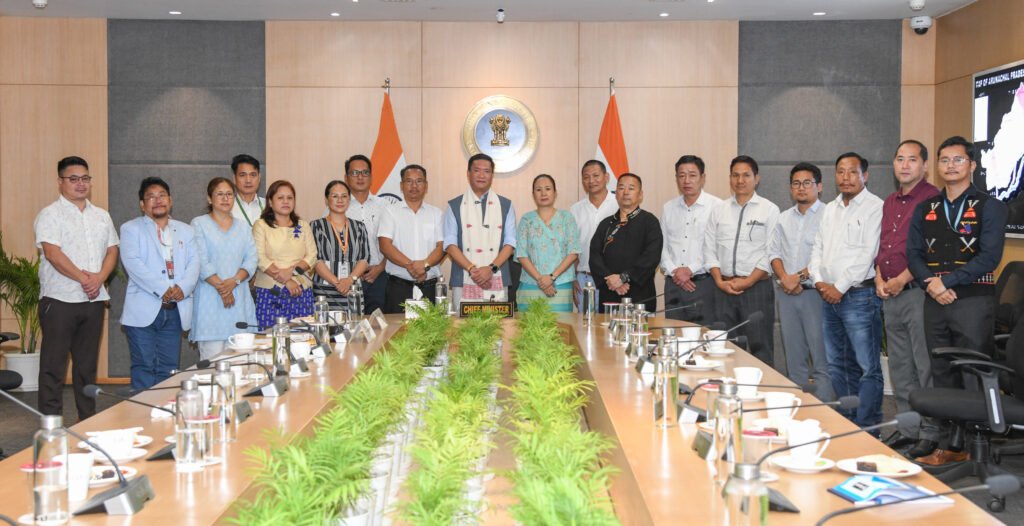
ITANAGAR : Chief Minister Pema Khandu on Wednesday announced that the state government would constitute a high-level committee to deliberate on issues relating to Inner Line Permit (ILP) regulation, demographic concerns, indigenous tribal rights and APST-related matters. Addressing a high-level consultative meeting at the State Banquet Hall in Niti Vihar, Khandu assured that the government would work collectively with all stakeholders to evolve concrete and long-term solutions on the issues. Describing the deliberations as “historic,” the Chief Minister said the nearly seven-and-a-half-hour meeting witnessed participation from community-based organisations (CBOs), student bodies, legal experts, civil society representatives, political leaders and senior government officials. Representatives of the Arunachal Indigenous Tribes Forum (AITF), All Arunachal Pradesh Students’ Union (AAPSU), ST Bachao Andolan Committee (STBAC), political parties and officers from the Home, Law and Political departments, besides the Directorate of Indigenous Affairs and other departments, attended the meeting. Khandu expressed gratitude to the ST Bachao Andolan Committee for drawing the government’s attention to what he termed a “long-burning issue” linked to illegal immigration, demographic imbalance and threats to indigenous identity and cultural preservation. Referring to Prime Minister Narendra Modi’s Independence Day address on August 15, 2025, the Chief Minister said the Union Government has already recognised demographic imbalance and illegal immigration as serious concerns affecting law and order, indigenous culture and national security. He also informed the gathering that Union Home Minister Amit Shah has constituted a national-level High-Level Committee on Demographic Change comprising a retired judge, retired Indian Administrative Service (IAS) and Indian Police Service (IPS) officers, and senior officials of the Ministry of Home Affairs. The Chief Minister stated that the state government has, in principle, accepted the four major demands raised during the meeting, including the long-pending demand for creation of a separate department for management and regulation of the ILP system under the Bengal Eastern Frontier Regulation (BEFR). Announcing in-principle approval for creation of a dedicated ILP Department, Khandu said the proposal had been consistently advocated by both AAPSU and STBAC. Highlighting the need for long-term solutions, the Chief Minister strongly advocated skilling and capacity-building of local youths to reduce dependency on outside labour and workforce. He urged apex CBOs to actively encourage vocational skill development initiatives across the state. As a follow-up to the meeting, Khandu informed that another meeting would be convened on May 29 for formal constitution of the high-level committee. He invited seven representatives each from AITF, AAPSU and STBAC, along with members from the legal fraternity, to participate in the process. The Chief Minister assured that the committee would be officially notified after finalisation of members and that all recommendations submitted by the panel would be discussed transparently before any final policy decisions are taken. Reiterating the spirit of “Team Arunachal,” Khandu called upon all stakeholders to work collectively towards safeguarding indigenous rights, strengthening governance and ensuring the long-term development and stability of the state.        

Latest News, National, Popular News, State News

Demographic changes due to illegal migration not limited to border areas: MHA

NEW DELHI : The demographic changes due to illegal migration are not limited just to border areas, but their impact has extended, “affecting urban centres, industrial corridors, tribal regions, and other socially and economically sensitive areas,” said a government notification. The notification issued by the Union Ministry of Home Affairs on the constitution of a High-Level Committee on Demographic Changes (HLCDC) under Justice Prakash Prabhakar Naolekar, a retired Supreme Court judge, said “extensive challenges” have arisen from demographic changes due to illegal immigration. Union Home Minister Amit Shah had announced the formation of the committee to assess demographic changes across India due to “illegal immigration and other unnatural causes”. Headquartered in New Delhi, the committee will also include the Census Commissioner, along with retired IAS officer Durga Shankar Mishra, ex-IPS officer Balaji Srivastava and Dr Shamika Ravi as members and will submit its report in a year. “The joint secretary (foreigners-l), Ministry of Home Affairs, will serve as the member secretary of this committee,” Shah had said on Tuesday. The notification said demographic changes have been observed in certain regions of the country, which are “not attributable to normal fertility or mortality trends” but are instead emerging due to external abnormal factors such as “illegal immigration, irregular population mobility, and administrative laxity”. “Although these changes are most visibly concentrated in the border districts, their impact has extended beyond those areas, now affecting urban centres, industrial corridors, tribal regions, and other socially and economically sensitive areas, thereby severely impacting public service delivery, local governance, resource distribution, and social cohesion,” it said. The existing institutional framework has not been adequately equipped to undertake coordinated, evidence-based, and time-bound evaluation and response to such demographic shifts, the notification said. “…therefore, the Government of India resolves to constitute a High-Level Committee on Demographic Changes (HLCDC) under the Ministry of Home Affairs to undertake scientific study of the nature, causes and consequences of such demographic changes occurring across the country and to recommend appropriate policy, administrative and legal measures,” it said. The committee is tasked to submit its report within a year after undertaking an extensive consideration of the challenges arising from demographic changes, including illegal immigration. The panel will study the possible causes of such demographic changes, such as variations in fertility, cross-border movement (including illegal immigration), economic opportunities, and other socio-environmental factors and underlying factors behind changes, including illegal immigration, abnormal settlement patterns, and planned migration. It will analyse the structural population changes at the level of religious or social communities, especially those diverging from uniform trends and recommend a well-organised and permanent operational system for the “legal, fair and time-bound identification, detention, and deportation of illegal immigrants already residing in the country.” The panel will also recommend an institutional mechanism to strengthen border management, population stabilisation, and identification systems for sustained monitoring of such trends, besides proposing a comprehensive policy framework to enhance coordination between the Centre and state governments in such matters, it said. (Source: PTI)    

Latest News, Popular News, State News

Arunachal signs MoA for 1750 MW Demwe Lower Hydroelectric Project

ITANAGAR : In a major boost to Arunachal Pradesh’s hydropower sector and India’s renewable energy ambitions, the Government of Arunachal Pradesh on Wednesday signed a Memorandum of Agreement (MoA) with Greenko Demwe Power Limited for implementation of the 1750 MW Demwe Lower Hydroelectric Project in Lohit district. The project will be executed on a BOOT (Build, Own, Operate and Transfer) basis and is among the largest hydropower collaborations undertaken with a private sector developer in the state. The MoA was signed between the Government of Arunachal Pradesh and Greenko Demwe Power Limited, formerly Athena Demwe Power Limited, for execution of the project near Parasuram Kund and Brahma Kund on the Lohit River. Joint Secretary (Hydropower) Hage Lailang signed the agreement on behalf of the state government in the presence of Deputy Chief Minister and Hydropower Minister Chowna Mein and Hydropower Commissioner Sonam Chombay. The project forms part of the Government of India’s ambitious 50,000 MW Hydroelectric Initiative aimed at expanding the country’s renewable energy capacity. The Demwe Lower Hydroelectric Project will have an installed capacity of 1750 MW, comprising five generating units of 342 MW each and one unit of 40 MW. The project is expected to generate around 7,326 million units of electricity annually in a 90 per cent dependable year at 95 per cent plant availability. According to official details, the project will feature a concrete gravity dam with a maximum height of 163.12 metres and a crest length of 474.35 metres. The reservoir at Full Reservoir Level will have a storage capacity of 516.38 million cubic metres and a water spread area of around 1,131 hectares. The hydropower infrastructure will include six diversion tunnels, underground pressure shafts and a large surface powerhouse on the right bank of the Lohit River. The powerhouse will operate with Vertical Francis Turbines designed for a head of 112 metres and a discharge of 1,729 cumecs. The project site in Lohit district is strategically connected through Dibrugarh Airport, Tinsukia railhead and road access from Parasuram Kund. Besides strengthening India’s renewable energy capacity, the project is expected to generate large-scale direct and indirect employment opportunities during both construction and operational phases. It is also expected to contribute to infrastructure development, improved connectivity and economic growth in the region. The state government reiterated its commitment to environmentally responsible and sustainable hydropower development while ensuring benefits reach local communities. Officials said the agreement reflects growing investor confidence in Arunachal Pradesh as a key destination for clean energy and infrastructure investment, expressing confidence that the Demwe Lower Hydroelectric Project will emerge as one of the flagship hydropower projects in the country.      

Latest News, Popular News, State News

Guv calls upon youths to eliminate regional barriers, strengthen national unity

ITANAGAR : Governor K T Parnaik on Wednesday urged the youths to connect with people from different parts of the country, preserve traditional values and work towards eliminating regional barriers through greater interaction and mutual respect. Participating in the Yuva Sangam programme under the ‘Ek Bharat Shreshtha Bharat’ initiative at Lok Bhavan here, the governor said such exchanges help strengthen national integration and deepen the spirit of “oneness” among people, an official statement said. Interacting with students from Uttar Pradesh and the North Eastern Regional Institute of Science and Technology (NERIST) here, Parnaik encouraged young people to actively participate in programmes promoting cultural understanding, emotional bonding and shared national pride. He said curiosity and inquisitiveness are essential for learning, innovation and personal growth. NERIST is the nodal institution for Arunachal Pradesh for Yuva Sangam Phase VI and has been paired with the Indian Institute of Management (IIM) Lucknow. Parnaik also called upon the youth to preserve indigenous knowledge, languages and cultural practices while contributing towards environmental protection and sustainable living. Stressing the role of young people in nation-building, he advised them to remain educated, disciplined and self-motivated. Addressing the visiting students from Uttar Pradesh, Parnaik highlighted Arunachal Pradesh’s rich history, vibrant culture and development journey. He spoke about the state’s potential in hydropower, horticulture, tourism and organic farming, while also referring to the geographical and infrastructural challenges faced by the frontier state. The governor said Arunachal Pradesh continues to make steady progress with the support of the Centre and the determination of its people. He highlighted the state’s civilisational and cultural heritage, referring to Parashuram Kund as an important spiritual destination linked to Indian mythology and faith. He also mentioned the historical and archaeological significance of Bhismaknagar and Malinithan, saying these sites reflect Arunachal Pradesh’s deep cultural links with the rest of the country. Parnaik urged the visiting students to carry back fond memories of Arunachal Pradesh’s culture, traditions and natural beauty, along with the warmth and hospitality of its people. He expressed hope that their visit would strengthen friendship and improve understanding about the Northeast and its people. The governor said the people of the Northeast are equally patriotic and committed to the nation’s unity, security and development, and therefore deserve equal respect, opportunities and understanding in every sphere. The programme also featured a vibrant cultural exchange showcasing the spirit of unity in diversity. (Source: PRO/PTI)