

ONLINE AGE

(Online version of the Arunachal Age newspaper)

Author name: OnlineAge

Latest News, Popular News, State News

JAC seeks impartial probe into SIR hearing violence in Bordumsa

BORDUMSA, SEP 6: The Joint Action Committee (JAC) of Chakma and Hajong community-based organisations (CBOs) of Arunachal Pradesh has called for a prompt, impartial and transparent investigation into the incidents that occurred at Bordumsa on September 3 and 4 during and SIR hearing. According to the JAC, around 600 Chakma electors from Bijoypur-I, II and III had assembled peacefully outside the Panchayat Hall, Bordumsa, on September 3 for the hearing. The proceedings were subsequently disrupted amid disturbances at the venue and were adjourned and rescheduled for September 4. The JAC said that during the rescheduled hearing on September 4, a large crowd reportedly entered the ADC Office Chamber, which had been designated as the hearing venue. It alleged that the Electoral Registration Officer (ERO) conducting the hearing was assaulted and government property, including the ADC’s vehicle, was damaged. The committee said applicants waiting outside the premises reportedly remained peaceful, while there were also reports of provocation and stone-pelting in the vicinity. It further said communal slogans were allegedly raised on the public road as the gathering dispersed, followed by a verbal exchange and brief physical confrontation. The JAC also referred to reports of firearms being displayed and sounds resembling gunfire before security personnel intervened and dispersed the gathering using tear gas. However, it clarified that these were reports and allegations requiring verification through a proper investigation. Stressing that the incidents occurred in a large and fluid gathering, the JAC said responsibility for any specific act, including injuries or damage to property, should be established through a fair and evidence-based investigation. The committee expressed concern over the reported injuries sustained by an AAPSU member and some Chakma electors during the confrontation, and wished all those injured a speedy recovery. The JAC condemned any disruption of a lawful electoral hearing, assault on public officials, damage to government property, communal provocation, violence or display or use of firearms around a public hearing venue, irrespective of those responsible. It appreciated what it described as the restraint maintained by Chakma applicants and community leaders during the incidents and appealed to all stakeholders to uphold peace and non-violence. The JAC acknowledged that AAPSU and sections of the Singpho and Khamti communities may have concerns regarding the Form 6, 7 and 8 hearing process and its implications. It said such concerns should be addressed through constitutional, administrative and lawful mechanisms rather than confrontation or disruption of electoral proceedings. The committee urged the district administration to conduct a prompt and impartial investigation and take action in accordance with law based on the evidence collected. It also proposed a structured dialogue involving AAPSU, representatives of the Singpho and Khamti communities, Chakma and Hajong representatives and the State administration to address the concerns of all stakeholders. Appealing for restraint, the JAC urged all communities to refrain from retaliation and inflammatory rhetoric, avoid circulating unverified information on social media and allow the investigation and electoral process to proceed according to law. The committee said the communities of 49-Diyun-Bordumsa Assembly Constituency, despite having distinct histories and differing views on the present electoral process, share a long history of coexistence and a common future. It reiterated its commitment to peace, dignity and the rule of law in the constituency.    

Latest News, Popular News, State News

Namsai DCC condemns FIR against Rahul Gandhi, seeks withdrawal

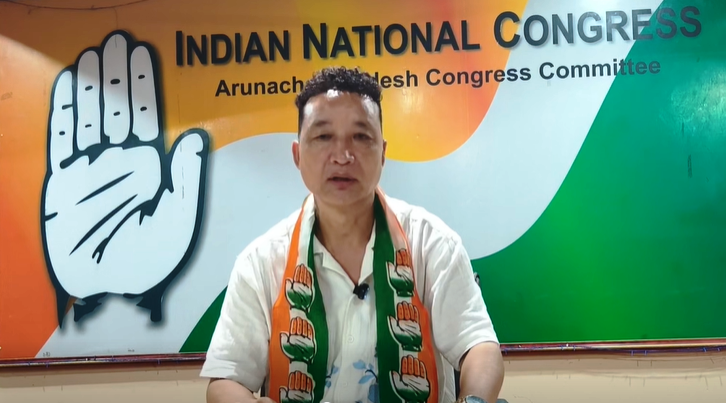
NAMSAI, SEP 6: The District Congress Committee (DCC), Namsai, has strongly protested against the FIR registered against Leader of Opposition Rahul Gandhi over his remarks concerning an alleged “purification ritual” at a venue in Haldwani, Uttarakhand, where Congress President Mallikarjun Kharge had addressed a political rally. Led by DCC President Chau Ambika Engling, the party alleged that the FIR was politically motivated and questioned why action was initiated against Rahul Gandhi for raising the issue while those allegedly responsible for the purported ritual had not faced similar scrutiny. The DCC said that if the alleged ritual was conducted because Kharge, a Dalit leader, had addressed the venue, it would amount to a serious manifestation of caste prejudice and would be contrary to the constitutional principles of equality and dignity. It maintained that speaking against caste discrimination and demanding accountability cannot be treated as a crime. The party also questioned what it described as an attempt to turn the complainant into an accused, alleging selective application of the law and misuse of state machinery to intimidate the Opposition. The DCC demanded immediate withdrawal of the FIR against Rahul Gandhi and sought registration of an FIR against all persons found responsible for the alleged ritual if the allegations are established. It also called for a fair, impartial, independent and time-bound investigation into the incident, equal application of the law without political interference and strict action against anyone found promoting caste discrimination or untouchability. The DCC said the issue was not merely about Rahul Gandhi but concerned the protection of constitutional values, equality and justice. It reiterated the Congress’ opposition to caste discrimination, untouchability and social humiliation.    

Latest News, National, Popular News, State News

Every student’s life precious, protection must be ensured: Rahul Gandhi

NEW DELHI, SEP 6: The Congress on Sunday attacked the Modi government after a building housing a boys’ PG collapsed in southwest Delhi’s Satya Niketan area, with Rahul Gandhi asserting that every student’s life is precious and their protection must be ensured under all circumstances. The five-storey building collapsed this afternoon, leaving one dead and several people trapped under the debris, officials said. The area is close to the heart of Delhi University’s South Campus and has congested lanes lined with student hostels and eateries. In a post on X in Hindi, Gandhi said, “The news of the building collapse in Satya Niketan, Delhi, is extremely heartbreaking and alarming. Reports indicate that several people are trapped under the debris, including many students from Delhi University.” “My appeal is that NDRF, Delhi Fire Service, and all rescue teams reach every single student by making every possible effort, ensuring that the injured receive the best possible immediate treatment, so that no effort is spared in saving anyone,” he said. Congress and NSUI workers are present at the scene and are ready to provide every possible assistance, the leader of opposition in the Lok Sabha said. “In this hour of difficulty, we all stand with the victims and their families. Students’ lives were already filled with struggles, now the situation has turned life-threatening. “Due to the lack of good hostels in colleges or universities, students are forced to live in PG accommodations, 40-40 at a time under one roof, in inhumane conditions. Every student’s life is precious, and their protection must be ensured under all circumstances,” Gandhi said. Senior Congress leader Abhishek Manu Singhvi said just a day ago, PM Modi was at Delhi University’s SRCC for a carefully staged spectacle, celebrating the university and speaking of its students and today, at Satya Niketan in South Campus, DU students are trapped under the rubble of an unsafe PG building. “If the PM truly considers himself a DU student, perhaps he should ask why building safety audits failed the very students who need the Government’s protection most,” Singhvi said on X. Congress treasurer Ajay Maken said he stands with the families who have lost someone, and those whose loved ones are still trapped in that building. “Just this year, on May 30, the building that collapsed in Saidulajab had students preparing for exams among those who died. Therefore, the Delhi Municipal Corporation must disclose how many of the buildings around both DU campuses running PG accommodations have undergone safety inspections, and what issues were found in which buildings. This list must be made public building by building,” Maken said in a post in Hindi on X. A child who has left home to come study has the right to know whether the building in which he is sleeping will still be standing by morning or not, he said. Delhi Congress chief Devendra Yadav said the news of the PG building collapse at the South Campus (Saty Niketan) of Delhi University and students being trapped under the debris is deeply disturbing and raises serious questions about the government’s policies. “Young people come to Delhi from across the country with dreams of a bright future, but is no one responsible for their safety? Prime Minister ji, merely delivering speeches at DU won’t suffice; in the country’s capital, the lives and safety of our students must be the topmost priority,” he said. NSUI chief Vinod Jakhar claimed that the administration arrived nearly two hours after the incident. “As soon as we received the information, the NSUI team jumped into action to pull the students out from under the debris. While the students were struggling between life and death, both the preparedness and sensitivity of the Delhi administration were nowhere to be found,” he said. How long will this tampering with the safety of innocent students continue, Jakhar asked. Accountability must be fixed for the negligence of the Delhi administration, he said. Congress MP Rajeev Shukla said he was deeply saddened by the tragic building collapse. “My thoughts and prayers are with those affected and their families. I pray for the safety of those feared trapped and for their swift rescue. May every life be saved,” Shukla said on X. According to a police officer, local police staff, fire brigade, CAT Ambulance and other emergency services are present at the spot. The NDRF team has also reached, and rescue and relief operations are underway, the officer said. A PCR call was received at South Campus police station at 1.34 pm regarding the collapse of a building near Nanakpura Gurdwara, police said in a statement. The police said they have identified the building’s owner and have formed teams to trace him. According to officials, the collapsed building was known as ‘Hostel Daze’. (Source: PTI)    

Latest News, Popular News, State News

Sikkim identifies 40 high-hazard glacial lakes, 16 at highest risk

GANGTOK, SEP 6: The eastern Himalayan state of Sikkim has identified 40 high-hazard glacial lakes, with 16 of them classified as being at the highest risk of catastrophic outbursts that could threaten downstream settlements. The data is significant as it comes against the backdrop of the recent flash flood in Nepal, triggered by a glacial collapse near the Nepal-Tibet border on August 26 that left a trail of destruction with hundreds of people dead and scores missing. Though the catastrophe was not linked to a Glacial Lake Outburst Flood (GLOF), the flash flood has highlighted a broader transformation across the Himalayas as glaciers retreat, new lakes are forming in their place, while existing ones are expanding. Glacial lakes are formed by the melting of glaciers and accumulation of meltwater in depressions on or near the glacier’s surface. GLOFs occur when these lakes suddenly burst open due to factors such as excessive water accumulation or triggers like earthquakes. These floods can cause significant destruction and pose serious risks to people and the environment downstream. One such outburst in Sikkim in October 2023 resulted in at least 60 fatalities and extensive damage in the Mangan, Gangtok, Pakyong and Namchi districts. It also destroyed the Chungthang dam, a crucial part of a major hydropower project. At a media sensitisation workshop on GLOF Risk Mitigation held here on Thursday, Principal Secretary Sandeep Tambe said remote sensing and satellite imagery were being used to monitor changes in glacial lakes. Of the 40 high-hazard lakes, 16 are in Category A (highest risk), two in Category B (high risk) and nine in Category C (moderate to low risk), while 13 remain unclassified, he said. The workshop focused on strengthening public understanding of GLOF risks and ensuring that verified, science-based information reaches the public. Yougan Tamang, the press secretary to Chief Minister Prem Singh Tamang, said media sensitisation was crucial to communicating the scientific measures being undertaken to mitigate GLOF risks. Sikkim’s Department of Science and Technology was designated the nodal department for GLOF hazard assessment and mitigation studies in February 2025, with the work being carried out through an interdisciplinary approach, Tamang said. The state is also working towards what could be the country’s first dedicated GLOF Risk Mitigation Protocol, aimed at creating a standardised scientific framework for assessing, preparing for and mitigating glacial flood risks. It could also serve as a model for other Himalayan regions, an official release said. Field studies cover water-level and discharge monitoring, Electrical Resistivity Tomography, geophysical and differential global positioning system surveys, bathymetry, flood modelling, hazard assessment and feasibility studies for lowering lake levels and constructing flood-retention structures. Tambe said a uniform strategy could not be applied to all lakes, and separate proposals had therefore been prepared for the Lhonak Complex, Shako Chho Lake and Gurudongmar Complex, according to the release. The Sikkim government has identified Shako Chho as most vulnerable to GLOF. The Detailed Project Report (DPR) for Shako Chho has been submitted to the National Disaster Management Authority, and a preliminary project report has been sent to the Jal Shakti Ministry. The Central Water Commission is preparing a DPR along with the Sikkim government for a flood-retention structure at Dolma Sampa near Muguthang in the Lhonak Complex. For the Gurudongmar Complex, a moraine plug wall at the lake outlet has been proposed. The Department of Science and Technology and Brahmaputra Board are jointly working on the proposal, taking into account both GLOF risk and the lake’s cultural and religious significance. The Science and Technology Department’s principal director-cum-secretary D G Shrestha said Sikkim’s devastating 2023 GLOF had underscored the urgency of strengthening preparedness. At the policy level, Sikkim is pursuing a whole-of-government approach, clearer business rules, measures to bridge technical expertise gaps and a proposal for a commission on glacial hazards. Various lake-level lowering techniques are being examined, including siphoning, pumping, improving existing channels, artificial channels, moraine cutting with safety walls and tunnelling. Shrestha outlined a four-stage mitigation process — preliminary assessment, comprehensive assessment, designing mitigation measures and execution — and stressed the need to strengthen institutional, technical and financial capacity. He also said additional early-warning sensors had been proposed across Sikkim following a virtual meeting with Union Home Secretary Govind Mohan, who gave a positive assurance on the proposal. On Thursday, Union Home Secretary Govind Mohan reviewed the preparedness of Himalayan states and Union Territories in dealing with GLOF risks and snow avalanches. The chief secretaries and State Disaster Management Authorities of Uttarakhand, Himachal Pradesh, Sikkim, Arunachal Pradesh and Jammu and Kashmir, along with senior officers of the Ministry of Home Affairs, National Disaster Management Authority, Central Water Commission, India Meteorological Department and the Defence Geoinformatics Research Establishment attended the meeting. (Source: PTI)    

Latest News, National, Popular News, State News

War against drugs: Modi govt has prepared roadmap to make India drug-free by 2029: Shah

PANAJI, SEP 6: Union Home Minister Amit Shah on Sunday said it is Prime Minister Narendra Modi’s objective that drug-free youth power will lead to Viksit Bharat in 2047, and asserted the Union government has prepared a roadmap to make India drug-free by 2029. The Modi government is committed to making the country drug-free to realise the dream of a developed India, just as it has worked to end the menace of Naxalism and terrorism, Shah said. The Centre has adopted a coordinated, nationwide strategy to dismantle the entire narcotics network, from drug trafficking and financing to rehabilitation, as part of its goal of ‘Drug-Free India’ by 2029, he said. “It is Narendra Modi’s objective that drug-free youth power will lead to Viksit Bharat in 2047,” Shah said while addressing a press conference after chairing a high level meeting on narcotics that was attended by Goa Chief Minister Pramod Sawant as well as MHA and state government officials. “Before 2014, the fight against narcotics was largely conducted in small units and isolation. Agencies were often satisfied catching small time accused. Our government is making the fight national security priority,” he said. In 2019, a four-tier National Coordination Committee for Countering Drug Trafficking (NCORD) mechanism was created at the executive, state and district levels to ensure coordinated action against the drug menace. “Dedicated Anti-Narcotics Task Forces (ANTFs) have been constituted in all states and Union Territories and local police have been linked with the national strategy,” Shah said. He said a Joint Coordination Committee was also formed in 2019 to enable central agencies and state governments to take joint decisions against major drug networks, their international connections and operational gaps. The Narcotics Control Bureau (NCB) has been strengthened by reorganising its cadre and enhancing its manpower, zonal presence and operational capabilities, Shah said while emphasising that the fight against drugs was not just limited to enforcement. The government has linked awareness, treatment, counselling, rehabilitation and livelihood opportunities with the anti-narcotics campaign, he pointed out, adding that the 1933 MANAS helpline has been introduced to support persons with drug addiction. The government is committed to achieving the goal of ‘Drug-Free India 2029’ through political will, coordinated enforcement and measures aimed at preventing addiction and rehabilitating victims, he said. The Modi government’s three-year roadmap to a drug-free India is based on a four-pillared approach to destroy narcotic networks, Shah said. “These pillars include intelligence and operation-based enforcement, control on synthetic drugs, demand and harm reduction and creation of capacity and coordination,” he explained. Under the Narendra Modi regime, Jammu and Kashmir is on the path to progress and development after the decline of terrorism, which is gradually approaching zero there, he said. The sentiment of separatism has lessened since the abrogation of Article 370, Shah said. The Modi government’s broader internal security strategy had succeeded in addressing three long-standing challenges — terrorism in Jammu and Kashmir, insurgency in the Northeast and Left-Wing Extremism, Shah said. “The Modi government has taken various steps to improve and strengthen internal security. Those who dreamt of a ‘red’ (Maoist) corridor from Tirupati to Pashupati have laid down arms and joined the mainstream,” he said. Referring to the Northeast, Shah said 14 major peace agreements had been signed since 2019 and around 11,000 armed youths had laid down their weapons and joined the mainstream. He said India ended the nearly six-decade-old challenge of Left-Wing Extremism on March 31, 2026, through a coordinated strategy combining security, development and trust. “We have eradicated Naxalism and will deal with menace of narcotics in the same manner,” the Union minister asserted. Shah said the Centre has a target to demolish 100 national and international networks by March 2029 and bring back 100 fugitives to the country. By March 2027, there will be clear end-to-end visibility of the supply chain while at least 75 secret labs would be destroyed in 2026, he said. He said the government had also adopted a mission-mode approach to bring back fugitives hiding abroad. Between July 2019 and July 2026, as many as 274 wanted or absconding criminals were brought back to India from 36 countries, he said. Over the past three years, 401 Red Corner Notices have been issued, including 182 up to July 2026, Shah said. He said more than 1,400 Central and state agencies were connected through Interpol, facilitating faster information sharing. Between 2019 and 2026, assets worth Rs 17,874 crore belonging to fugitives were attached, while Rs 18,762 crore was recovered or restored, Shah informed. Shah also highlighted the government’s efforts against cybercrime, saying the cyber system had helped save more than Rs 11,158 crore across 32.8 lakh complaints as of June 30, 2026. He said strengthening border and coastal security, implementation of three new criminal laws and the Vibrant Villages Programme were among the measures taken to strengthen internal security. The Union minister said the government has adopted a “zero tolerance” policy towards terrorism and a first-responder approach to disaster management. He also praised the Goa police for effective implementation of the three new criminal laws saying the conviction rate has increased from 22 percent to 53.2 percent. (Source: PTI)    

Latest News, National, Popular News, State News

Rs 11,639 cr, 2,616 villages: How India is rebuilding its border communities

NEW DELHI, SEP 6: India’s border villages are being transformed from remote and isolated settlements into vibrant centres of development and strategic partners in national security under the government’s Vibrant Villages Programme (VVP), which is being implemented in two phases with a combined outlay of Rs 11,639 crore, it was announced on Sunday. The programme seeks to improve living standards and create sustainable livelihood opportunities in communities along the country’s international land borders by expanding road connectivity, electricity, telecommunications, healthcare, education and other essential infrastructure. The government’s approach marks a shift in the way frontier settlements are viewed, with border villages being positioned as the country’s “first villages” rather than its last settlements. The programme seeks to ensure that thriving communities remain rooted in border areas, thereby contributing to stronger border security. India shares more than 15,000 km of international land borders with seven neighbouring countries. The longest stretch is with Bangladesh at 4,096.7 km, followed by China at 3,488 km and Pakistan at 3,323 km. The remaining border stretches are shared with Nepal, Myanmar, Bhutan and Afghanistan. For decades, difficult terrain, inadequate connectivity, limited infrastructure and a shortage of livelihood opportunities left several border villages isolated. These challenges also contributed to out-migration, leaving some frontier areas sparsely populated. The Vibrant Villages Programme was launched in 2023 to address these longstanding challenges through comprehensive development of selected border settlements. The programme recognises border residents as an important component of the country’s security architecture and seeks to create vibrant, secure and prosperous communities along the frontier. The programme is being implemented through VVP-I and VVP-II, which together aim to cover more than 2,616 villages along India’s international land borders. While VVP-I focuses on villages along the northern border, VVP-II extends the development approach to the country’s other international land borders. The two phases have different implementation structures. VVP-I is a Centrally Sponsored Scheme implemented in partnership with the states, while VVP-II is a Central Sector Scheme funded entirely by the Centre. Despite the difference in funding and implementation, both phases focus on improving living conditions, strengthening local economies and empowering border communities. VVP-I was announced in the Union Budget 2022-23 for villages along India’s northern border and was formally launched at Kibithoo in Anjaw district of Arunachal Pradesh on April 10, 2023. (Source: IANS)      

REGIONAL

Manipur: 2 militants killed, 2 injured in joint ops by Army-Assam Rifles

IMPHAL, SEPT 6: Two UKNA militants were killed and two others injured in a gunfight with a joint team of the Indian Army and Assam Rifles in Manipur’s Churachandpur district, officials said. Acting on intelligence inputs, the security forces launched an operation at Phaibong village in the Henglep subdivision on the night of August 29, they said. The forces established surveillance over a UKNA camp and commenced tactical closing-in at 5 am on September 2, they said. The UKNA cadres opened “indiscriminate firing” around 5.30 am, prompting the troops to retaliate with controlled fire, they added. “Intel confirms 2 UKNA cadres neutralised and 2 injured,” the Assam Rifles said in a social media post on Saturday night. The United Kuki National Army (UKNA) is not a signatory to the Suspension of Operations (SoO) pact signed between the Centre, Manipur government and several Kuki and Zomi armed outfits. The Assam Rifles said a subsequent search of the camp led to the recovery of two MA rifles, one AK-56 rifle, one lathode gun, seven lathod grenades, 15 AK magazines, 371 AK-56 rounds, 601 MA rifle rounds, 172 SLR rounds, 15 combat uniforms and seven ammunition pouches. The operation is continuing in the surrounding jungles, it said. (Source: PTI)    

REGIONAL

Post-SIR Manipur voter list released with 19.6 lakh electors; 1.89 lakh deleted, 56,871 added

IMPHAL, SEP 6: The Election Commission on Sunday released Manipur’s final electoral roll following the Special Intensive Revision, with 19.60 lakh voters figured on the list, deleting 1.89 lakh and adding 56,871 during the exercise. State Chief Electoral Officer Arun Kumar Sinha said women outnumbered men in the post-SIR voter roll. “After the SIR exercise, the state now has over 19.60 lakh electors across 60 assembly constituencies. Of the total voters, 9,53,350 are men and 10.06 women. There are 308 third-gender electors,” he said. Sinha said the revision exercise began with 20.93 lakh electors on the voter list as of May 18 this year. The number of voters in the final roll is 6.33 per cent less than the number of electors before the beginning of the revision exercise. The draft electoral roll, published on July 5, had 19.34 lakh electors. “During the claims and objections period from July 5 to August 4, the authorities received 96,985 claims and objections, all of which were processed for final publication. The final list includes 56,871 additions, while 30,650 electors were deleted from the draft roll,” he said. The gender ratio stands at 1,056, while the electoral participation ratio is recorded at 51.99, he said. “Enumeration forms were generated and distributed to all electors, of which 19,34,399 forms were returned,” he said, adding that the remaining 1,58,677 electors were excluded. Based on probable reasons, including being absent, shifted, deceased, duplicate entries and other reasons, the excluded electors were categorised, he said. “As many as 34,740 were classified as absent electors, 72,473 as shifted electors, 43,000 as deceased electors, 7,394 as duplicate entries and 1,070 cases were given under other reasons,” he added. (Source: PTI)  

National, REGIONAL

Assam govt team visits Bhupen Hazarika’s Kolkata home, mulls steps to preserve his memories

KOLKATA, SEP 6: An Assam government team on Sunday inspected a building in Kolkata, where legendary singer Bhupen Hazarika had lived for several years, and mulled over steps in coordination with the West Bengal administration to preserve part of the property to keep his memory alive, officials said. Assam Additional Chief Secretary B Kalyan Chakravarthy, a member of the delegation, said they were considering whether the matter could be taken up with the West Bengal government and cultural institutions to preserve a first-floor room associated with Hazarika. “This is a very important place associated with Bhupen Hazarika. I have come here to see the place and will take up the matter at the highest level so that we can explore how it can be renovated and preserved,” he said. The visit came when the country was celebrating the birth centenary of Bharat Ratna Bhupen Hazarika. The legendary singer-composer had initially lived as a tenant on the first floor of the three-storey building at 77 B Golf Club Road in Tollygunge in south Kolkata and later purchased it in 1981. He sold his property in the late 1990s and relocated to Mumbai, said Tridib Sharma, a member of the Assam Association, a platform preserving Hazarika’s legacy in Bengal. “Big names like Lata Mangeshkar and Manna Dey used to come here. This was not merely a residence but a platform symbolising how Hazarika was a unifying icon of music. He has composed and lent his voice to many Assamese, Bengali and Hindi songs, which endeared him to generations,” Sharma told PTI. He said there are multiple owners of the property, which has made the process of turning it into a memorial difficult. “The house is now inhabited and owned by multiple families. None of whom is related to Hazarika,” he said. Sharma said former Assam CM Sarbananda Sonowal had wanted to start the process to set up a memorial, but the “previous TMC government here was not able to take it forward”. “We hope the Suvendu Adhikari government in West Bengal will take necessary steps so that the room can be acquired and efforts be made to pave the way for a memorial in collaboration with Assam,” Sharma said. The senior Assam government official, who could not have access to the inside of the building floors due to the presence of multiple owners and tenants, hoped that a “joint strategy will be chalked out to preserve Hazarika’s living room on the first floor and turn it into a memorial”. “Hazarika’s music transcended linguistic and social boundaries. We need to pay due respect to the music icon whose songs always brought cultures together. He sang in many languages, and his music exemplified the spirit of going beyond caste, creed and religion,” the official said. He said Kolkata and Bengal had historically been an important centre of Indian culture. “How can the room where one of the great singers of Bengali music had lived lie in decrepit condition? Hazarika loved Bengal and its people and culture. He has millions of fans. The city must pay its due respect to him,” the Assam government official said. To a question, he said the Assam government will raise the issue with the Bengal administration. “The year marks the 100th birth anniversary of Hazarika, and the authorities are planning a series of programmes to celebrate his contribution to Indian music and culture. A special concert is being organised in Kolkata on September 6 as part of the centenary celebrations,” the Assam official said. He said Hazarika’s work, particularly his folk-inspired music, continues to hold a special place in the cultural traditions of Assam, Bengal and the wider Indian subcontinent. (Source: PTI)              

Editorial

Kyrgyzstan signals shared roads for SCO

The Shanghai Cooperation Organisation (SCO)’s two-day summit in Bishkek, Kyrgyzstan, was notable for the united positions it projected in spite of the diverse political, economic, and security interests of the constituent members. The Bishkek Declaration reflected shared interests arising from a sense of territorial contiguity and an awareness of common challenges and possibilities. Its condemnation of the United States-Israel war on Iran is significant, not only for the support it extends to Iran, a member of the group, but also for its strong messaging against the Donald Trump administration. India joining the other members in this position is an important development. Members strongly criticised Western sanctions that violated the United Nations Charter. The Declaration also underlined the rights of all countries to pursue peaceful nuclear programmes. At the summit, members chose a broadly accommodative approach on some of the polarising issues. The Declaration expressed the grouping’s commitment to fight terrorism, including cross-border transgressions. This reflected Prime Minister Narendra Modi’s call to dismantle terror infrastructure and end double standards in handling the issue. His words were aimed at Pakistan, which signed the declaration after Prime Minister Shehbaz Sharif noted that his country, too, was a victim of terrorism. The summit underlined the role of China as the leader of the Global South and an evolving multipolar world. President Xi Jinping called upon the member states to support multilateralism and contribute towards reforming global governance. Xi’s words and China’s positions are seen as providing direction to a world order that has a diminished role for the US. These developments align with China’s continuing efforts to shape a yuan-based international system and Russia’s moves to de-dollarise trade. Since its origins as a security-oriented organisation, the SCO has widened its scope, now covering economic cooperation, trade, and infrastructure. The Bishkek Declaration has called for industrial cooperation and the development of transport corridors, multimodal connectivity, digital commerce, and national currency settlements. The idea of a transport corridor connecting South Asia to Europe through Central Asia has immense potential. India’s continuing focus on the Central Asian region draws on economic and security objectives. Before attending the summit, Modi visited Uzbekistan, where an agreement was firmed up for the long-term supply of uranium and critical minerals to India. The two countries have upgraded their ties to a strategic partnership and expanded their trade and economic relations. India’s increasing engagement with the SCO members marks an important turn in the shifting geopolitical environment. (Source: DH)