


ONLINE AGE

(Online version of the Arunachal Age newspaper)

Author name: OnlineAge

Latest News, Popular News, State News

Lower Subansiri achieves 100 pc tap water coverage under JJM

ZIRO : In a significant achievement under the Jal Jeevan Mission (JJM), Lower Subansiri district, has attained 100 per cent Functional Household Tap Connection (FHTC) coverage, providing clean and reliable tap water to all rural households across the district. The milestone was highlighted during a strategic meeting of the District Water and Sanitation Mission (DWSM) held at Ziro under the chairmanship of Lower Subansiri Deputy Commissioner Oli Perme. According to official figures, the achievement covers two administrative blocks, 109 gram panchayats, 200 villages and 271 habitations, benefiting 5,740 rural households with assured tap water supply. The meeting reviewed the progress of rural water supply and sanitation initiatives and discussed measures to ensure the long-term sustainability of water infrastructure. The session commenced with a welcome address by the Public Health Engineering Department (PHED) Executive Engineer and was attended by district officials and heads of various departments. To strengthen technical support and monitoring of rural water supply systems, the DWSM constituted a 10-member District Technical Unit (DTU). Comprising engineers, laboratory assistants, consultants and operators, the unit will provide technical assistance, field-level supervision and regular monitoring to ensure the efficient functioning of water supply schemes. The meeting also deliberated on recommendations submitted by the Source Finding Committee (SFC), chaired by the Water Resources Department Executive Engineer, for identifying and protecting dependable water sources to ensure sustainable supply in the face of seasonal variations and future demand. The DWSM further outlined strategies for extending water supply coverage to newly emerged habitations, strengthening Village Water and Sanitation Committees (VWSCs), improving revenue collection mechanisms and implementing the Jal Seva Ankalan framework. Reaffirming its commitment to sustainable rural development, the DWSM resolved to continue strengthening water supply and sanitation services in line with the objectives of the Jal Jeevan Mission and the Swachh Bharat Mission (Gramin).    
Latest News, Popular News, State News

Landslide blocks Akajan–Likabali–Bame road

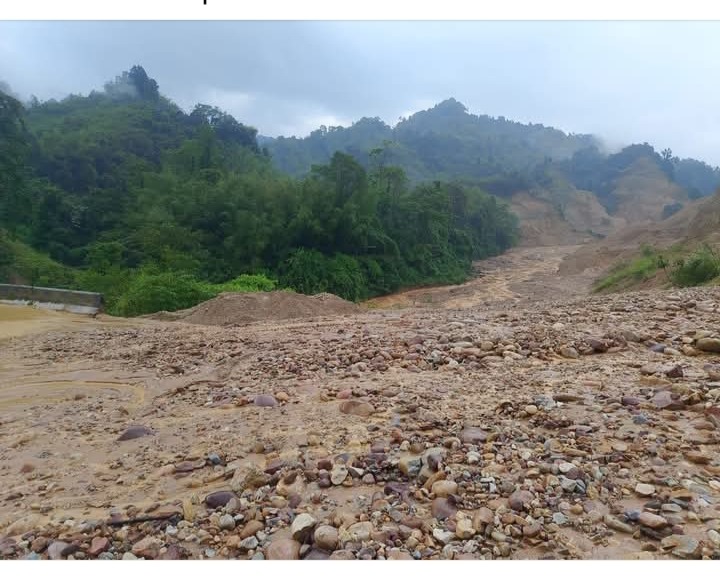
LIKABALI : The Akajan–Likabali–Bame Road, a vital lifeline connecting the upper districts, was blocked at several locations on Wednesday morning following heavy rainfall, disrupting vehicular movement to and from the region. According to the District Disaster Management Officer (DDMO), Tarik Nyitan, landslides and debris accumulation caused road blockages at Siji, Hathi Nallah, and the Brahmaputra View Point. On receiving information about the disruptions, the Lower Siang district administration immediately launched restoration efforts by deploying earth movers and excavators to the affected locations. The teams worked continuously to clear the debris and restore connectivity. Due to the prompt response and coordinated efforts of the district administration, traffic movement along the affected stretches was successfully restored by the afternoon, bringing relief to commuters and residents of the upper districts. The district administration has advised commuters to remain cautious while travelling along the route, as continued rainfall may trigger further landslides and road blockages. (DIPR)            

Latest News, Popular News, State News

Hands-on training on SIR held

BOMDILA : A hands-on training programme on the Special Intensive Revision (SIR)-2026 of electoral rolls for Electoral Registration Officers (EROs) and Assistant Electoral Registration Officers (AEROs) was conducted at the Deputy Commissioner’s Conference Hall in Bomdila on Wednesday. The programme was chaired by West Kameng District Election Officer Dr Dilip Kumar, who highlighted the objectives of SIR-2026 and underscored the importance of maintaining an accurate and inclusive electoral roll. He stressed that no eligible voter should be left out of the electoral roll and no ineligible person should be included during the revision process. He noted that controversies often arise when ineligible voters are found on electoral rolls and directed officials to address such issues impartially and strictly in accordance with the Election Commission of India guidelines. The DEO also urged all stakeholders associated with the revision exercise to discharge their responsibilities with sincerity and seriousness. He further advised EROs and AEROs to adequately sensitise Booth Level Officers (BLOs) regarding their roles and duties in the revision process. State Level Master Trainer Sougato Maity delivered a detailed presentation on the functions, responsibilities and procedures to be followed by EROs, AEROs and BLOs during SIR-2026. Important dates related to the revision exercise were also shared with participants. As part of the training, a demonstration video on the process of filling up the Enumeration Form was screened. During an interactive session, Maity addressed and clarified various queries raised by the participants. (DIPR)      

Latest News, National, Popular News, State News

Need of hour is to use petro products with restraint: PM Modi

HYDERABAD : Prime Minister Narendra Modi on Sunday said that the need of the hour, in the wake of the West Asia crisis, is to use petro products with restraint. Speaking at an event here where he virtually laid the foundation stone and inaugurated development projects worth around ₹9,400 crore in Telangana, he said the imported petro products should be used only as per need, as it will not only save foreign exchange but also reduce the adverse impact of war. Observing that, over the past few years, India has reached a spot among the top countries in the world in terms of solar power, he said, unprecedented work has been done in ethanol blending in petrol. First, the government is focused on 100 per cent LPG coverage, and now, it is focused on the supply of piped gas economically. The government is also promoting a CNG-based system. Due to all these efforts, India is dealing with the major energy crisis in the world, he said. “But, today, the need of the hour is also to use petrol, gas, diesel and such things with great restraint. We have to use imported petro products only as per need. This will not only save foreign exchange but reduce the adverse impact of war,” he said. He also said India is moving on reforms express today, and also building modern infrastructure. He said he would like to assure every family in Telangana, Centre will continue to work with greater speed to realise your dreams. Modi on Sunday virtually laid the foundation stone and inaugurated development projects worth around ₹9,400 crore in Telangana at the HICC here. Telangana Governor Shiv Pratap Shukla, Chief Minister A Revanth Reddy, Union Ministers G Kishan Reddy, Bandi Sanjay Kumar, and several other leaders attended the event at the Hyderabad International Convention Centre (HICC). Modi laid the foundation for projects, including the four-laning of National Highway-167 from Gudebellur to Mahabubnagar on the Hyderabad-Panaji Economic Corridor and Zaheerabad Industrial Area in Sangareddy district. He inaugurated various sections of Kazipet-Vijayawada multi-tracking project of railways, Greenfield POL (Petroleum, Oil, Lubricants) Terminal in Hyderabad, Kazipet Rail Under Rail Bypass and PM MITRA Park at Warangal (Kakatiya Mega Textile Park). Developed at an estimated cost of around ₹1,700 crore, the Kakatiya Mega Textile Park is India’s first fully functional PM MITRA Park and operationalises the Centre’s 5F vision – Farm to Fibre to Factory to Fashion to Foreign. (Source: PTI)        

National, REGIONAL

Himanta calls on President Murmu, briefs her on Assam’s growth trajectory

NEW DELHI/GUWAHATI : Assam Chief Minister Himanta Biswa Sarma on Wednesday called on President Droupadi Murmu at the Rashtrapati Bhavan. The President’s office shared a picture of the meeting in a post on X. “Chief Minister of Assam Dr Himanta Biswa Sarma called on President Droupadi Murmu at Rashtrapati Bhavan,” it said. Sarma said that after assuming office for the second time, he briefed the president on Assam’s ongoing journey as India’s fastest-growing state and how his government plans to take this momentum forward. “An epitome of courage, resilience and leadership, meeting Hon’ble President is always an inspiring experience, and her words act as an encouragement in our path of public service,” he said in a social media post. Sarma said that he sought her blessings and guidance to continue the journey of public welfare and development. Sarma was sworn in on May 12 as the chief minister of Assam for the second time in a row. (Source: PTI)          

REGIONAL

Meghalaya govt intensifies efforts to check spread of African Swine Fever

SHILLONG  (PTI) : Meghalaya government has intensified efforts to contain the spread of African Swine Fever (ASF) and imposed restrictions on pig transportation and trade in affected districts, Chief Minister Conrad K Sangma said on Wednesday. Sangma said the outbreak was being closely monitored and immediate measures had been put in place to prevent the disease from spreading further. “This has been a problem in the past also. We are monitoring the situation and taking immediate action. The department is taking measures to ensure that ASF doesn’t spread on a large scale,” he told reporters. According to officials, confirmed cases have been detected in Pynursla and Mawlai blocks of East Khasi Hills district, Mawthadraishan block of West Khasi Hills district, Umsning and Bhoirymbong blocks in Ri-Bhoi district, Mairang block of Eastern West Khasi Hills district, as well as at the Regional Pig Breeding Farm in Kyrdemkulai. The affected villages include Urksew Wahpathaw, Mawkajem, Mawlai Mawkynroh, Nongkasen, Kyrdemkulai, Lum Umpih, Mawkyrdep and Mawphanniew. Invoking provisions of the Prevention and Control of Infectious and Contagious Diseases in Animals Act, 2009, the animal husbandry and veterinary department has declared areas within a 1 km radius of infected premises as infected zones, while areas extending up to 10 km have been designated as surveillance zones. A complete ban has been imposed on the movement of live pigs, pig feed, pork and pork products into or out of affected areas. Pig markets, slaughterhouses and abattoirs in the affected zones have been ordered closed until further notice. Authorities have also prohibited swill feeding using kitchen or restaurant waste and barred the removal of infected or dead pigs and contaminated materials from designated zones. Officials said disposal of pig carcasses in rivers, lakes or other water bodies would attract penalties ranging from Rs 2,000 to Rs 5,000, while repeat offenders could face imprisonment of up to three months. Carcasses are required to be disposed of through deep burial with lime cover as per veterinary guidelines. Farm owners have been directed to maintain strict biosecurity protocols, restrict visitor access and ensure proper cleaning and disinfection of vehicles operating in affected areas. Veterinary teams have intensified surveillance and sample collection to assess the extent of the outbreak, while the forest department has been asked to monitor wild boar populations in adjoining forest areas to prevent possible transmission between domestic and wild pig populations. The government has also appealed to village dorbars, dollois, nokmas, municipalities and other local bodies to cooperate with veterinary officials and rapid response teams engaged in containment efforts. Farmers in disease-free areas outside surveillance zones have been advised to confine their animals, prevent contact with wild boars and stray animals, maintain strict hygiene standards and immediately report any unusual illness or mortality to veterinary authorities, officials said. (Source: PTI)    

REGIONAL

Meghalaya CM reviews education sector performance, stresses better learning outcomes

SHILLONG : Meghalaya Chief Minister Conrad K Sangma on Wednesday said the state is undertaking major reforms in the education sector to improve learning outcomes and quality of schools, as he reviewed its progress under the national Performance Grading Index (PGI) framework. Chairing a high-level meeting with officials of the education department, Sangma assessed the state’s PGI performance and reviewed initiatives to strengthen the education ecosystem, including investments in foundational learning, school infrastructure, vocational education, digital governance and student welfare. The 2022-23 PGI ranking put Meghalaya among the worst-performing states in the country “We have ensured that every child has access to a school. Our next goal is to ensure that every school delivers the highest quality of learning,” Sangma said. He said directions have been issued to the education department to put in place a focused strategy and stronger mechanisms to improve performance, learning outcomes, and build on our commitment for infrastructure improvements in schools in order to ensure the state achieves a better PGI ranking in the coming years. Officials informed the meeting that the state’s extensive network of nearly 14,600 schools reflects the government’s commitment to ensuring access to education even in remote areas, making it one of the most accessible schooling systems in the Northeast. The review highlighted that learning outcomes, which carry the highest weightage under the PGI framework, remain a key focus area. “The government is implementing several initiatives to strengthen foundational literacy and numeracy, improve classroom teaching and provide greater support to students,” a senior education official said. The meeting also reviewed ongoing efforts to upgrade school infrastructure, including the establishment of science laboratories, ICT facilities, smart classrooms, libraries, kitchen gardens, rainwater harvesting systems, drinking water facilities and solar-powered infrastructure. Officials said vocational and skill-based education is being expanded through the community skill integrated curriculum, which introduces practical and skill-oriented learning to students from primary to secondary levels. The government is also strengthening student welfare measures, including improvements to the midday meal programme and the installation of sanitary pad vending machines and incinerators in girl schools. The meeting reviewed efforts to improve digital governance and educational data systems through better reporting, Aadhaar integration, digital compliance and institutional record management, aimed at ensuring educational progress is accurately reflected in national assessment frameworks. Officials also highlighted progress under the school rationalisation programme, under which 3,198 of the state’s 14,582 schools have already been merged or consolidated to optimise teacher deployment and improve resource utilisation. An official said Meghalaya’s PGI score largely reflects structural, administrative and data-reporting challenges and does not accurately represent the talent and potential of the state’s children. The chief minister directed the department to continue adopting a scientific and data-driven approach to improving educational performance through regular assessments, evidence-based interventions and stronger coordination between schools, districts and the state government, officials said. (Source: PTI)        

Latest News, Popular News, State News

Cosmos flower plantation drive

    YACHULI : In a bid to beautify public spaces and promote environmental sustainability, the Keyi Panyor district administration on Wednesday conducted a mass cosmos flower plantation drive at the District Secretariat complex and along the main gate area of the Divisional Commissioner’s office at Yachuli. The initiative aimed at enhancing the aesthetic appeal of the district headquarters while encouraging environmental awareness and community participation in conservation efforts. Cosmos flower saplings and organic manure used during the programme were provided by the Krishi Vigyan Kendra (KVK), Yachuli. The district administration acknowledged the institution’s support and contribution to the initiative. The plantation drive witnessed participation from Keyi Panyor Deputy Commissioner Shweta Nagarkoti Mehta, Additional Deputy Commissioner Likha Tejji, Assistant Commissioner Mumne Borang, heads of departments, government officials, police personnel, political interpreters and members of the Yachuli Market Welfare Committee. Addressing the gathering, Mehta underscored the importance of collective efforts in creating cleaner, greener and more attractive public spaces. She also called for continued public participation in environmental conservation and beautification initiatives. The district administration reaffirmed its commitment to promoting sustainable environmental practices and undertaking similar initiatives to improve the landscape and ecological well-being of the district headquarters. (DIPR)

Latest News, Popular News, State News

Illegally sold fish seized

AALO : The West Siang district administration conducted a seizure operation at a local market here and confiscated locally caught fish being sold in violation of the district-wide ban on all fishing activities. The enforcement drive was carried out by Aalo Town Magistrate Jumkar Karbi and Aalo Police Station Officer-in-Charge Inspector Yomken Riram to ensure compliance with the prohibition order issued by the District Magistrate in May 2026. The confiscated fish were subsequently disposed of in the presence of the District Magistrate as part of efforts to enforce the ban strictly and deter future violations. The district administration has reiterated its commitment to ensuring strict adherence to the fishing prohibition order and warned that appropriate action will be taken against defaulters. (DIPR)

Editorial

Hate speech: The case against another law

India’s criminal justice system has never suffered from a scarcity of laws, but rather from a paralysis of performance. The Union Home Ministry’s dismissal of the Karnataka Hate Speech and Hate Crimes (Prevention) Bill, 2025, as “redundant” is a reminder of this reality. By pointing out that the Bharatiya Nyaya Sanhita (BNS) already contains adequate provisions to deal with hate speech and communal incitement, the Centre has effectively ruled out the possibility of the Bill receiving presidential assent. The Bill, passed in the Belagavi session in December amidst fierce Opposition protests, sought to criminalise hate speech through a dedicated state statute. It defined hate speech broadly to include verbal, written, electronic, and symbolic expressions intended to create disharmony or enmity. It expanded protected categories to include gender and sexual orientation, and prescribed stringent punishments, including imprisonment of up to 10 years for repeat offenders. The legislation also empowered designated officers to order the removal of online content and authorised police and executive magistrates to take preventive action if they believed an offence was likely to occur. While the intent to curb communal poison and protect vulnerable communities was legitimate, the Bill raised serious concerns. Critics argued that its definitions of “disharmony” and “ill-will” were vague and elastic, leaving enormous room for subjective interpretation and misuse. The preventive powers granted to law enforcement based merely on “reason to believe” appeared dangerously broad and vulnerable to political abuse. The provisions relating to online content removal also risked creating a parallel censorship framework outside the established processes. Governor Thaawarchand Gehlot flagged these constitutional concerns while reserving the Bill for presidential consideration. The Union Home Ministry reinforced those objections, pointing out that erecting overlapping state-level criminal structures on subjects already governed by central law would only breed legal confusion and constitutional friction. None of this diminishes the grave danger posed by hate speech. It remains one of the most corrosive threats to social harmony, capable of normalising discrimination and triggering violence. But the answer does not lie in the endless multiplication of laws. India already possesses sufficient legal provisions to prosecute offenders. The real failure lies in weak investigation, poor evidence-gathering, and delayed prosecution, resulting in abysmally low conviction rates. The lack of consequences emboldens those indulging in hate speech. The government must first close these administrative gaps that feed a culture where hatred is deployed as a weapon. Laws do not deter by virtue of novelty, but by the credible certainty of their enforcement. (Source: DH)