

ONLINE AGE

(Online version of the Arunachal Age newspaper)

Author name: OnlineAge

REGIONAL

40 per cent of budget funds kept for tribal welfare in Tripura, says CM

AGARTALA, NOV 7: Tripura Chief Minister Manik Saha said that his government has kept 40 per cent of the total budgetary outlay during the 2025-26 financial year for tribal welfare. The state’s budget for the current fiscal stands at Rs 32,000 crore. While speaking at a progamme at Chailengta in Dhalai district on Thursday, the chief Minister said the development of the northeastern state is not possible without upliftment of the tribal people. “Driven by this reality, the state government has kept over 40 per cent of the budget for tribal area development during the 2025-26 financial year. The government is also focusing on skill development of the tribal, especially the resettled Bru people,” he said. Several thousand Bru families, who were living in Tripura since late 1990s because of ethnic violence in their home state Mizoram, were rehabilitated in several districts of this state following an agreement signed in 2020. “Under the PM Kaushalya Yojana and MukhyamantriDakkhata Yojana, the government provides skill training to these Bru people,” the chief minister said. Saha said that Union Home Minister Amit Shah, during a visit to a Bru resettled village in Ambassa, had asserted that providing houses, water, and other benefits would not be enough for sustainable livelihood for them. “The Skill Development Department is providing training to them. The Bru people have said that they are happy and thanked Prime Minister Narendra Modi. We must provide skills to the Bru people to ensure their employment,” he said. The chief minister claimed that no political party or government had raised a voice for a permanent solution to the Bru people for the past 23 years. “The BJP-led government, on humanitarian grounds, solved their issues by signing an agreement. Our government is with you and working for your development. The government is working to make people self-reliant,” he said. Saha said when the agreement was signed in 2020 for the Bru people, a series of talks were held, and finally they were resettled in 12 locations in the northeastern state. “We have provided toolkits to 895 people and driving licences to 200, for which Rs 1.45 crore was spent,” he said. Earlier, the chief minister distributed toolkits for skilled Bru candidates and virtually inaugurated new buildings of a school and several government departments. (Source: PTI)
Blog, Editorial

Evasive EC erodes trust in poll processes

Allegations made by Leader of the Opposition Rahul Gandhi about electoral malpractices in Haryana raise questions about the integrity of the polls and the credibility of the Election Commission of India (ECI). Gandhi’s charges, made during his media interaction on Wednesday, are not a blanket statement on elections in the country, but with no credible explanations coming from the EC, apprehensions about its functioning will remain. If the LoP’s previous allegations were about individual constituencies, such as Mahadevapura and Aland in Karnataka, he has now claimed that the entire Assembly election in Haryana, held in November 2024, was ‘stolen’ by the BJP, with support from the EC. ‘Operation Sarkar Chori’, he said, was orchestrated to deny the Congress a landslide victory as predicted by multiple exit polls and opinion polls. Gandhi shared the list of voters in Haryana’s Rai Assembly constituency, in which the photograph of a Brazilian female model was seen as used 22 times across 10 booths, as voters with different names. He claimed that one in eight voters in Haryana was fake (over 25 lakh voters) and 1,24,177 voters in the state had fake photographs on the rolls. Despite this, the Congress lost eight seats by a cumulative margin of 22,779 votes. Gandhi’s statements are based on the EC’s records, and the malpractices he has pointed out are similar to the ones he has highlighted in the past. There is a pattern of manipulation in voters’ lists, and with similar discrepancies coming to the fore in other parts of the country, it is upon the EC to address, with credible evidence, the allegations of a centralised plan to tamper with the elections, to the advantage of the BJP. Neither the EC nor the BJP has given convincing responses to Gandhi’s charges. The Commission has outrightly denied any malpractice and has asked why the voters’ lists were not vetted by the Congress booth agents. Gandhi has pointed out that the lists were made available too late for an examination. In any case, the EC should not be deflecting the questions by posing its own questions when the responsibility of fair conduct of the polls rests with the Commission. The BJP, on expected lines, has sought to ridicule and vilify Gandhi. Still, there are no answers. Asking the LoP to approach the court does not make sense. The situation warrants urgent correction, not long-drawn legal redress. Citizens have a right to free and fair elections, and faltering institutions weaken the country’s democratic foundations. (Source: DH)    

National

Step-by-step guide to check your name in the electoral roll of 2002/2005 SIR

With the Tamil Nadu Assembly elections just months away in 2026, it’s time for every voter to do one simple but crucial thing, that is check whether your name or your relative’s name is on the Tamil Nadu voter list. The Election Commission of India (ECI) has kicked off a Special Intensive Revision (SIR) of the electoral rolls across Tamil Nadu and several other states. The goal? To ensure every eligible citizen is correctly listed and ready to vote when the state goes to polls next year. Last month, the ECI told the Madras High Court that the revision exercise would begin in Tamil Nadu as part of a nationwide effort to clean up and update voter lists. The Commission has already consulted Chief Electoral Officers across the country to keep the process smooth. Story continues below this ad This SIR exercise is not just limited to Tamil Nadu; it’s also being carried out in Andaman and Nicobar Islands, Chhattisgarh, Goa, Gujarat, Kerala, Lakshadweep, Madhya Pradesh, Puducherry, Rajasthan, Uttar Pradesh, and West Bengal. So, if you’re unsure whether your name or that of your parents or relatives is still on the list, don’t worry. You can easily check it online in just a few steps. Tamil Nadu voter list: Here is the step-by-step guide to check your name in Tamil Nadu voter list:  Visit the Official Website. Go to the Tamil Nadu Election Commission’s official website: https://www.elections.tn.gov.in/Electoral_Services.aspx Click on “Special Intensive Revision – 2002/2005”. Now, click on the option that says “Search your name in electoral roll.” You’ll see three options to search: Search by EPIC number (Elector’s Photo Identity Card) Search by Details Search by Mobile number Tamil Nadu voter id download: Option 1. To search by EPIC Number: This is the fastest and the most accurate method if you already have your voter ID card. Enter your EPIC number (as printed on your voter ID). Select Tamil Nadu from the state dropdown list. Type the Captcha code shown on the screen. Click on “Search.” Your voter details should appear on the screen instantly. Tamil Nadu election: Option 2. Search by Personal Details If you don’t have your EPIC number handy, you can still find your name using your personal details.

Latest News, Popular News, State News

Eight students apprehended in Sainik School death case

Maksam Tayeng PASIGHAT, NOV 5: Police have apprehended eight senior students of Sainik School, Niglok, in connection with the alleged ragging-related death of a Class VII student. The arrests follow an FIR filed by the father of the deceased boy after the 12-year-old was found dead on November 1, 2025. The case, initially registered under Section 194 of the Bharatiya Nyaya Sanhita (BNS), has been upgraded to Ruksin PS Case No. 20/25 under Sections 108 and 106(1)(3)(5) of the BNS, following an additional FIR lodged by the victim’s parent on November 3. The eight apprehended students, classified as Children in Conflict with Law (CCLs), were produced before the Juvenile Justice Board (JJB), Pasighat, on November 4. The Principal Magistrate of the JJB has remanded them to the custody of the Vice Principal of Sainik School, Niglok, for one week. The court also directed their guardians to execute an undertaking or bond in Form 8 under Rule 11(6) of the Juvenile Justice (Care and Protection of Children) Rules. Police officials said the investigation is ongoing to gather further evidence and ensure the case reaches its logical conclusion. “Further investigation is underway,” the police stated. Meanwhile, the Apatani Students’ Union (ASU) visited Sainik School, Niglok, to inquire into the incident. The ASU team was joined by the All Arunachal Pradesh Students’ Union (AAPSU), All Lower Subansiri District Students’ Union (ALSDSU), and the All East Siang District Students’ Union (ESDSU). During the visit, the student bodies expressed deep concern over the tragic death and issued a two-week ultimatum to the district administration and police to conduct a fair and transparent investigation. They warned that failure to do so within the stipulated time would compel them to launch a democratic movement. The unions jointly demanded a speedy, transparent, and accountable probe, urging strict punishment for those found guilty. They also appealed to the authorities to ensure justice for the bereaved family and to take steps to prevent such incidents in the future.

Latest News, Popular News, State News

Master volunteers trained

ZIRO, NOV 5: A one-day training programme for “Master Volunteers” under the Nasha Mukt Bharat Abhiyaan (NMBA) on Psychotropic Substance Abuse, Preventive Measures, and Life Skills was conducted at DC’s conference hall, district secretariat here on Wednesday. The programme was organized by the Department of Women and Child Development (WCD) in collaboration with the Lower Subansiri district administration, aimed at empowering volunteers to combat substance abuse and promote a healthy drug-free society. Lower Subansiri deputy commissioner Oli Perme, delivered the keynote address, highlighting the role of community participation and volunteerism in curbing the menace of drug abuse. She along with all the participants present took a vow of pledge to fight the menace of drugs in the district. Sub-inspector Kaken Yigam of Ziro Police Station spoke on the provisions of the NDPS Act and familiarization of NDPS substances. He also made the volunteers aware about the “MANAS App” and its helpline number 1933. He also briefly explained about the punishments associated with fines under the various sections of NDPS Act 1985 in regards to the quantity of drugs possessed by an individual (small, intermediate and commercial quantities). DPO (NP-NCD)-cum-DSO (IDSP), Ziro,Dr. Subu Habung,presented an informative session on the ill-effects of substance use and withdrawal symptoms. He expressed that abuse of psychotropic substances is self-inflicted disease/disorder. He also highlighted tobacco as the biggest killer, which kills approximately 60 lakh people every year and also causes more than 25 diseases. Later, Topi Sora, Project Manager, targeted intervention, Turbu Daleh Multipurpose Cooperative Society Ziro, spoke on creating awareness on stigma and promoting an enabling environment along with awareness on HIV/AIDS and Hepatitis. She highlighted about the co-existence of users with the society and to be empathetic towards them and to not rationalize them as bad or weak. Sora focused mainly in giving more meticulous awareness relating to drugs, HIV/AIDS & hepatitis and called for active involvement of schools, colleges, communities, various NGOs, and administrations in the fight for a drug-free society. The participants from Saint Claret College and IGTAMSU College, Ziro were branded as the “Master Volunteers”.

Latest News, Popular News, State News

Nyigyor inaugurates CO office

SIBE, NOV 5: Arunachal Pradesh Legislative Assembly (APLA) Deputy Speaker Kardo Nyigyor on Wednesday inaugurated the newly constructed office building of the Circle Officer (CO), Sibe, in Lower Siang district. Addressing the occasion, Nyigyortermed the event as a big milestone, calling it the realisation of the aspirations of the people of the area. He assured the early completion of the remaining works and the posting of officers and supporting staff to make the office fully functional at the earliest. Lower Siang Deputy Commissioner RujjumRakshapurged the people not to create hindrances to development works under the pretext of compensation claims. He congratulated the public for getting a beautiful new office building, which would ensure administrative services at their doorstep. The DC also appealed to all denizens to actively participate in the ensuing Panchayat election. ZPC Marpe Nguba, and Organising Secretary Dani Buchi, who is also the Chairman of the Sibe Circle HQ Development Committee, also addressed the gathering and extended their gratitude to all stakeholders for their support and cooperation. The programme concluded with a vote of thanks and a sense of collective pride among the people for this significant step in strengthening local administration. Among others, Lower Siang Superintendent of Police GothombuDajangju,  Circle Officer (in-charge) Kenter Lendo, Assistant Commissioner Gensi, various heads of departments, and a large number of public from the area attended the event. (DIPR)

Latest News, Popular News, State News

Karbak urges TSPs to enhance connectivity in remote areas

ITANAGAR, NOV 5: The Chairman of the State Council for IT & e-Governance, Nyamar Karbak, held a detailed meeting with officials from BSNL, Jio, and Airtel to explore ways to strengthen digital connectivity across Arunachal Pradesh. The discussion focused on setting up Wi-Fi booths at major institutions like Rajiv Gandhi University (RGU) and Tomo Riba Institute of Health and Medical Sciences (TRIHMS), along with other key locations. Karbak also proposed working with the telecom service providers (TSPs) to conduct awareness drives on cyber security and various digital initiatives. The review of ongoing USOF 4G projects in the state was another major agenda item. Speaking at the meeting, Karbak highlighted the crucial role of the telecom sector in driving India’s digital transformation. He urged the service providers to look beyond commercial goals and take proactive steps to enhance connectivity in remote and rural areas of the state. Citing several IT and e-Governance initiatives successfully rolled out in Arunachal Pradesh, the Chairman stressed the need for stronger last-mile connectivity so that people at the grassroots can truly benefit from government-led digital programmes. He further emphasized the importance of close coordination between telecom operators, local authorities, and the state government. A collaborative and planned approach, he said, would help build an inclusive, resilient, and future-ready digital infrastructure – one that supports both economic growth and the overall development vision of Arunachal Pradesh.

Blog, Latest News, Popular News

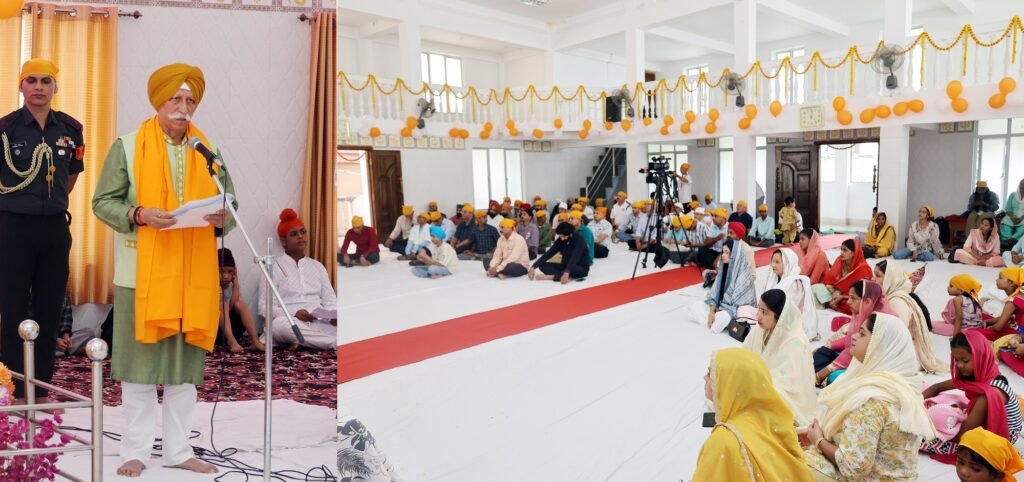
Guv urges citizens to imbibe Guru Nanak’s ideals

NAHARLAGUN, NOV 5: Governor Lt General KT Parnaik(retd)participated in the 556th birthday celebration of Guru Nanak Dev at Gurudwara Saheb here on Wednesday. He offered prayers before the Guru Granth Sahib and took part in the Anand Sahib Path and Ardaas, the solemn Sikh prayer seeking divine guidance and blessings for all. Extending his warm greetings to the people, particularly the Sikh community, on the sacred occasion, Parnaik said, “Guru Nanak Jayanti is a festival that reminds all that the true essence of religion lies in righteousness, in living truthfully, serving others selflessly, and recognizing the divine spark in every being”. Parnaik reflected on Guru Nanak Dev’s timeless teachings, emphasizing that his message of peace, humility, and service to humanity continues to hold deep relevance in today’s fast-changing world. He said that Guru Nanak Dev’s philosophy of justice, compassion, and equality transcends time and boundaries, inspiring people to lead lives rooted in truth and moral courage. Referring to the Guru Granth Sahib, the Governor described it as a universal guide that encourages purity of thought, honesty in action, and selfless service to mankind. He lauded the Sikh community for embodying these values through their extraordinary contribution to society, particularly their tradition of Seva (selfless service) and community welfare that continues to inspire all. Parnaik urged every citizen to imbibe the spirit of humility, honesty, and love in their daily lives. He said that the ideals of Guru Nanak Dev must reflect in our actions by building harmony within our families, compassion within our communities, and unity within our nation. He called upon the youth to uphold these values and make service to humanity a way of life, live with humility, work with honesty, and serve with love. The Governor later joined people from various communities in the ‘Guru Ka Langar’ organized by the Sikh community of the twin cities of Itanagar and Naharlagun, symbolizing unity, equality, and shared humanity, the very essence of Guru Nanak Dev’s message.

Blog, Latest News, Popular News, State News

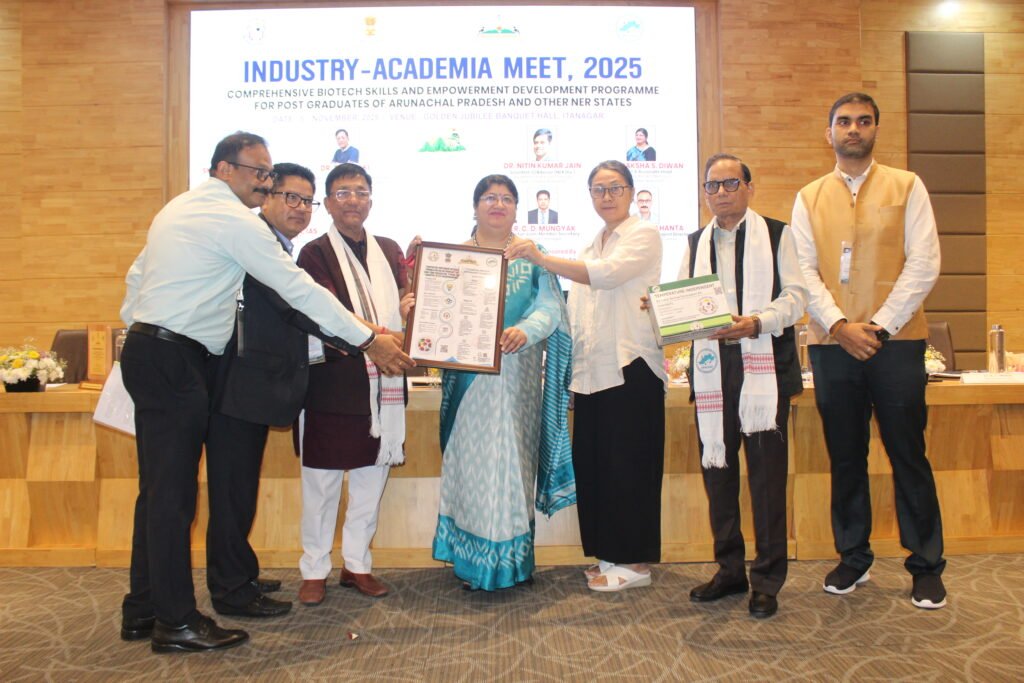
Industry-Academia Meet focuses on biotechnology collaboration in NE

ITANAGAR, NOV 5: The Arunachal Pradesh State Council for Science & Technology (APSCS&T), Centre of Excellence for Bioresources and Sustainable Development, Kimin (CoE for BRSD),Department of Science & Technology, Government of Arunachal Pradesh, with the support of Department of Biotechnology, Govt of India, organized the Industry-Academia Meet 2025 to strengthen biotechnology collaboration in Northeast India. The event, held with theme “Comprehensive Biotech Skills and Empowerment Development Programme for Postgraduates of Arunachal Pradesh and other NER States,” brought together scientists,academicians, policymakers and industry leaders to chart the future of biotechnology education, research, and employment in the North Eastern Region (NER). Designed as a dynamic platform for dialogue and collaboration, the meet sought to bridge the gap between academic learning and industrial application, while promoting employability, entrepreneurship, and innovation among biotechnology postgraduates across the region. Addressing the function as chief guest, former minister and APSCS&T Chairman Tage Taki highlighted the role of scientists, researchers and students in easing people’s lives with sustainable approach. Scientist-F & Associate Head, NER Division Dr Suraksha S Diwan emphasized DBT’s continued commitment to nurturing biotechnology talent and strengthening human resource capacity in the Northeast through sustained skill development and research support. Delivering the keynote address virtually, Dr Nitin Kumar Jain, Scientist-G/Advisor (NER Division), DBT, highlighted the need to align academic curricula with industrial needs to create a skilled and innovation-oriented biotechnology workforce for the region. The major highlight of the inaugural session was the launch of three innovative biotechnologies by the DBT-APSCS&T Centre of Excellence for Bioresources and Sustainable Development (CoE–BRSD), Kimin-namely, the Banana Fibre Tea Bag Technology, the Mobile Cohobation Platform, and the Temperature-Independent Microbial Revival Formulation – showcasing Arunachal Pradesh’s leadership in sustainable, eco-friendly, and entrepreneurship-driven bio-innovation in the Northeast. The four technical sessions were held during the day, featuring deliberations on biotechnology skill development, employability, and entrepreneurship. Industry representatives from Oil India Ltd., Assam Bio Ethanol Pvt. Ltd., Dabur India Ltd., and Patanjali Foods Ltd. shared insights on evolving manpower requirements, technological advances, and sectoral opportunities in the biotechnology landscape. Academic experts from NERIST, Rajiv Gandhi University, and Assam Agricultural University discussed strategies to bridge the gap between theoretical knowledge and industrial expectations through curriculum reform and practical exposure. Experts from IBSD, Manipur, ICAR–IARI, Assam, and BRDC, Meghalaya highlighted the importance of hands-on training, effective communication, and translational skills to ensure employability and industrial readiness among biotechnology graduates. Speakers from Guwahati Biotech Park, Oil India Ltd., and Pabhoi Greens Pvt. Ltd. inspired young professionals to pursue research-driven entrepreneurship and innovative bioresource-based ventures across the region. An open forum on Industry–Academia Interaction provided a valuable opportunity for participants to engage directly with industry experts, exchange ideas, discuss challenges, and explore avenues for collaboration. The Industry–Academia Meet 2025 reaffirmed the shared commitment of academia, industry, and government towards strengthening the biotechnology ecosystem of the Northeast. It underscored the importance of collaborative partnerships, the need to address existing skill gaps through future finishing school programmes, and the collective aspiration to promote research excellence, innovation, and entrepreneurship for the sustainable bioeconomic growth of the region.

Latest News, Popular News, REGIONAL

Pradyot Debbarma calls for united indigenous front across NE

AGARTALA, NOV 5: A day after his party and two others of the Northeast announced that they would form a single political entity to raise issues of the region, TIPRA Motha supremo Pradyot Kishore Debbarma on Wednesday urged the indigenous communities across the NE to unite and form a collective voice. On Tuesday, three parties of the Northeast, National People’s Party (NPP) of Meghalaya Chief Minister Conrad Sangma, Tipra Motha, People’s Party, Assam, signed a joint statement that announced that in the next 45 days, they would form a single political entity to raise issues of the North East region. Both NPP and TIPRA Motha are allies of the BJP. Speaking to reporters at Agartala Airport after returning from Delhi, Debbarma emphasised that a united effort among the indigenous groups such as the Tiprasa, Mizo, Naga, and Dimasa communities is essential to achieve lasting solutions. “Today, Tiprasa is not alone. The Mizo and Dimasa communities are standing with us, and now the entire Northeast is awakening,” said the TIPRA Motha supremo, underlining a growing sense of solidarity among the region’s indigenous people. Debbarma said that discussions are underway with leaders from various indigenous groups across the region to strengthen the movement for indigenous rights and ensure equitable development. Criticising the delay in holding the Tripura Tribal Areas Autonomous District Council (TTAADC) elections, Debbarma questioned why such a long gap was allowed despite earlier assurances. “The last election was held in 2016, and now 2026 is approaching. We are a democratic nation, not a monarchy. Why were elections not held for nine years? If they wanted to, they could have done it. The process moved forward only after we approached the Supreme Court and the High Court — not because of goodwill,” he said. On the proposed Tripura Accord, Debbarma said that he had met with Tripura Chief Minister and senior officials in Delhi, who assured him of their commitment to move ahead. “They said they want to do it, and we will see how soon that happens,” he said, adding that the time has come for concrete action rather than repeated promises. He said, “The media is focusing too much on what will happen to the party. But no party is bigger than the people. If solving people’s problems requires it, throw the party into the dustbin — the interests of the people must come first. Only then will Tripura, India and the Northeast truly develop.” (Source: PTI)