ONLINE AGE

(Online version of the Arunachal Age newspaper)

Author name: OnlineAge

Latest News, Popular News, State News

Workshop on Solid Waste Management Rules 2026 held

ANINI : The Department of Panchayati Raj, Dibang Valley, on Tuesday organised a district-level workshop on the implementation of the Solid Waste Management Rules, 2026 at the Circuit House in Anini. Dibang Valley Deputy Commissioner Bekir Nyorak attended the programme as the chief guest. The workshop was attended by Zilla Parishad Members Eta Mihu and Siyo Mihu, Heads of Departments, member secretaries and Panchayati Raj Institution (PRI) members. District Panchayat Development Officer (DPDO) Lijum Ete presented the district’s preparedness and action plan for effective implementation of the Rules. The deliberations focused on strengthening waste management systems in rural areas in compliance with the directions of the Supreme Court, with emphasis on coordinated and sustainable efforts. Addressing the participants, the DPDO directed PRI members to identify and geo-map campsites and other vulnerable locations prone to solid waste accumulation by October 31, 2026. He also urged Panchayats to promote source segregation and responsible waste disposal practices at the community level. Concerned authorities were further instructed to conduct detailed surveys and submit proposals for scientific solid waste management and door-to-door waste collection systems to ensure cleaner and healthier villages across the district. The workshop concluded with a collective commitment from all stakeholders to advance sustainable waste management practices and environmental stewardship throughout Dibang Valley. (DIPR)      

Latest News, Popular News, State News

RGU conducts AIFF D certificate coaching course

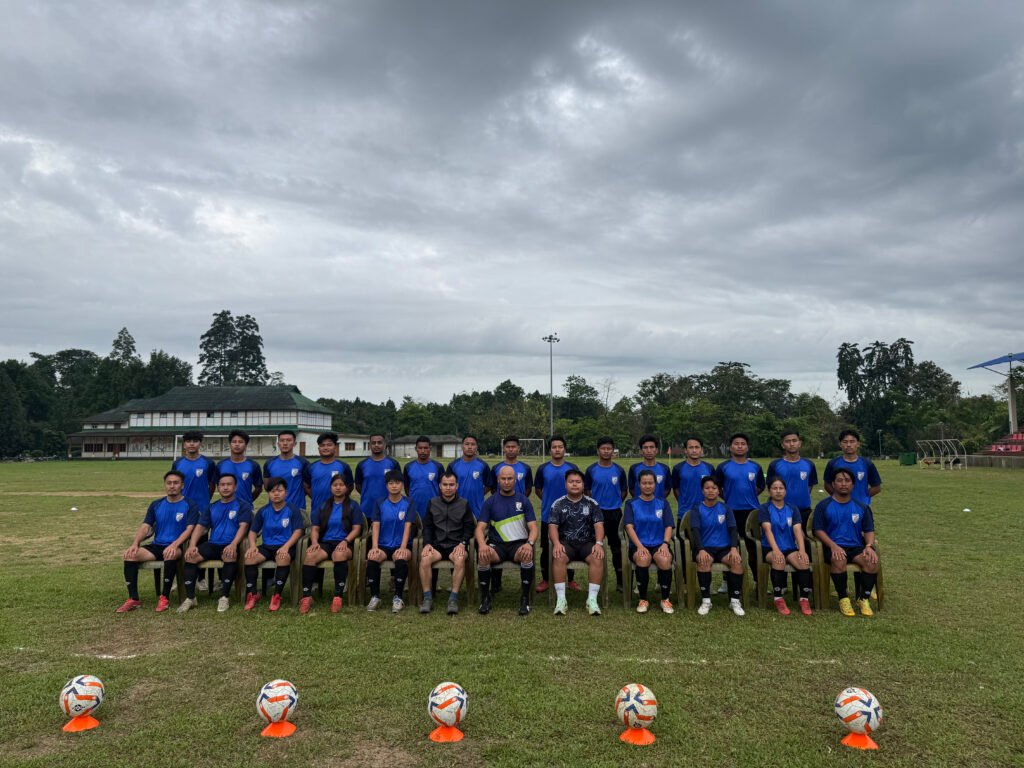
RONO HILLS :  The Department of Physical Education, Rajiv Gandhi University (RGU), successfully conducted the All India Football Federation (AIFF) D Certificate Coaching Course from May 28 to June 2 in collaboration with the Arunachal Pradesh Football Association (APFA). A total of 24 aspiring coaches from Arunachal Pradesh and Assam participated in the six-day programme aimed at enhancing grassroots football coaching skills and practical competencies. The course was conducted by AIFF-certified Coach Educator and RGU Assistant Professor Sangey Tsering, while Dawa Tsering served as Course Coordinator and Tasi Leya provided physiotherapy support. The training combined classroom sessions with extensive field-based instruction, covering coaching methodology, player development, session planning, football teaching principles and grassroots football development. More than 85 young football trainees from various academies across the state took part in practical sessions, enabling participants to gain valuable hands-on coaching experience. A key highlight of the programme was the Grassroots Football Festival, which provided trainee coaches with practical exposure to organising football activities for young players in a fun and development-oriented environment. The course concluded with a theory examination and a valedictory function at the university. Rajiv Gandhi University (RGU) Vice Chancellor Prof Jayadeba Sahoo attended the event as the chief guest, while RGU Registrar Dr NT Rikam was the guest of honour. Also present were Faculty of Physical Education and Sports Sciences Dean Prof Sambhu Prasad, Department of Physical Education Head Dr Tadang Minu, APFA representatives, faculty members and participants. Addressing the gathering, the dignitaries underscored the importance of coach education in strengthening grassroots football and nurturing future sporting talent. They congratulated the participants on successfully completing the course and encouraged them to contribute actively to football development in their respective communities. The programme concluded with a vote of thanks, group photograph and refreshments, marking another significant step towards the promotion of football in Arunachal Pradesh.    

Latest News, Popular News, State News

Nomination process begins for Arunachal’s lone RS seat election

ITANAGAR : The nomination process for polls to the lone Rajya Sabha seat from Arunachal Pradesh commenced on Monday with the issuance of the Election Commission notification, an official said. The last date for filing nominations is June 8, while scrutiny of papers will be taken up on June 9, he said. The last date for withdrawal of candidature is June 11. Sitting MP Nabam Rebia’s term ends on June 23. In the event of a contest, polling will take place on June 18 and counting of votes will be held the same day, the official said. The EC has earlier announced the elections to 27 Rajya Sabha seats, including 24 biennial vacancies in 10 states. A total of 14 candidates have submitted applications, seeking the ruling BJP’s nomination for the lone Rajya Sabha seat from Arunachal Pradesh, state party president Kaling Moyong said. Those in the fray include Environment and Forest Minister Wangki Lowang, incumbent Rajya Sabha MP Nabam Rebia, Pasighat West MLA Ninong Ering, former ministers Taba Tedir and Tage Taki, and former state BJP presidents Tai Tagak and Tangor Tapak. BJP sources, however, said that no candidate has been finalised and the party’s Parliamentary Board is yet to meet to decide on the nominee. With the BJP commanding an overwhelming majority in the 60-member Arunachal Pradesh Legislative Assembly, the party nominee is expected to comfortably win the Rajya Sabha seat. (Source: PTI)      

REGIONAL

New yellow-throated marten found in Assam’s Kaziranga

GUWAHATI : A new species of marten has been found in Kaziranga National Park in Assam, the government said on Tuesday. In a social media post, the Chief Minister’s Office said the sighting of the yellow-throated marten in Kaziranga underscores the strength of Assam’s conservation model, where protected habitats continue to support remarkable biodiversity and wildlife resilience. “Under the leadership of HCM Dr. @himantabiswa (Himanta Biswa Sarma), Assam is creating conservation success stories that extend beyond protecting landscapes to nurturing thriving ecosystems,” it said. The Kaziranga National Park & Tiger Reserve is the largest in the Northeast and is thronged by domestic and international tourists in large numbers for its famed one-horned rhinoceros. Tourist footfall to the forest rose by over 15 per cent in 2025-26 to 4.68 lakh, of which foreign tourist arrivals increased from 17,693 to 30,474 in a year. The Kaziranga National Park, a UNESCO World Heritage Site, was declared a national park in 1974. It is inhabited by the world’s largest population of one-horned rhinos as well as many mammals, including tigers, elephants, panthers and bears, and thousands of birds. The park is located in Golaghat and Nagaon districts of Assam. It is also located beside the Brahmaputra river on the north and the Karbi Anglong Mountains on the south. (Source: PTI)    

REGIONAL

3 militants arrested on extortion charges in Manipur

IMPHAL : Three militants were arrested on charges of extortion in Manipur, police said on Tuesday. Two cadres of the proscribed Peoples’ Liberation Army were arrested from Imphal East district on Monday, they said. The suspects were identified as Maibam Arun Singh (49) and Thangjam Surankumar Singh (30), they added. A member of the Kanglei Yawol Kanna Lup was arrested from an office complex in Imphal West district. He was identified as Bramacharimayum Sana Sharma alias Ibungo alias Manisana (38), police said. These militants used to threaten locals and small businesses, demanding money, they said. (Source: PTI)    

REGIONAL

Tripura: 6 forest personnel injured in attack by suspected timber smugglers

AGARTALA : Six forest personnel, including a range officer, were injured as suspected timber smugglers attacked them in a remote area of North Tripura, officials said on Tuesday. Two vehicles of the Forest Department were extensively damaged in the attack that happened in the Kanchapur police station area on Monday night, they said. Acting on a tip-off, a team of the department tried to intercept a timber-laden vehicle near Chandipur around 11 pm. As the driver did not stop the vehicle, the forest personnel chased it on a jeep, they said. “A few kilometres away, the driver fled, abandoning the timber-laden vehicle. But shortly after, a group of about 50 smugglers returned with dao and sticks, and attacked the forest personnel. To save their lives, the personnel took shelter in the dense forest,” said Sub Divisional Forest Officer (SDFO) Suman Mitra. “Six personnel, including a ranger officer, were injured in the attack and two departmental vehicles were vandalised,” he said. A case has been lodged in connection with the attack, Mitra said, adding that no arrest has been made so far. (Source: PTI)        

Latest News, Popular News, State News

Lower Siang reviews monsoon preparedness

LIKABALI  : A preparedness meeting for the ensuing South-West Monsoon 2026 was held at Likabali on Tuesday under the chairmanship of Lower Siang Additional Deputy Commissioner Mokar Riba to review disaster management measures and strengthen emergency response mechanisms across the district. The meeting was attended by administrative officers, Heads of Departments of Central and State government establishments, representatives of the Army, District Police, Indo-Tibetan Border Police (ITBP), Border Roads Task Force/Border Roads Organisation (BRTF/BRO) and other stakeholder agencies. The deliberations focused on formulating strategies to effectively manage and mitigate disaster or disaster-like situations that may arise during the monsoon season. Representatives of various departments and agencies shared updates on preparedness measures undertaken within their respective jurisdictions. Highlighting the vulnerability of the Akajan–Bame road stretch, a vital lifeline connecting several upper districts, ADC Riba advised commuters to avoid night travel and unnecessary journeys during adverse weather conditions. He emphasised that disaster management is a collective responsibility and requires close coordination among all stakeholders for effective response. Lower Siang Superintendent of Police Bomken Basar stressed the need for the District Disaster Control Room to remain operational round the clock throughout the monsoon period. He also underscored the importance of extending preparedness measures beyond the district headquarters and ensuring that all administrative circles remain alert and equipped to respond promptly to emergencies. Earlier, District Disaster Management Officer Tarik Nyitan welcomed the participants and outlined the agenda of the meeting. He urged all departments and agencies to furnish details of preventive and preparedness measures being undertaken to tackle monsoon-related disasters. Following detailed discussions, the participants resolved to strengthen coordination among departments and establish a robust framework for monsoon preparedness and disaster response across the district. (Source: DIPR)

Latest News, Popular News, State News

Sapling distribution drive

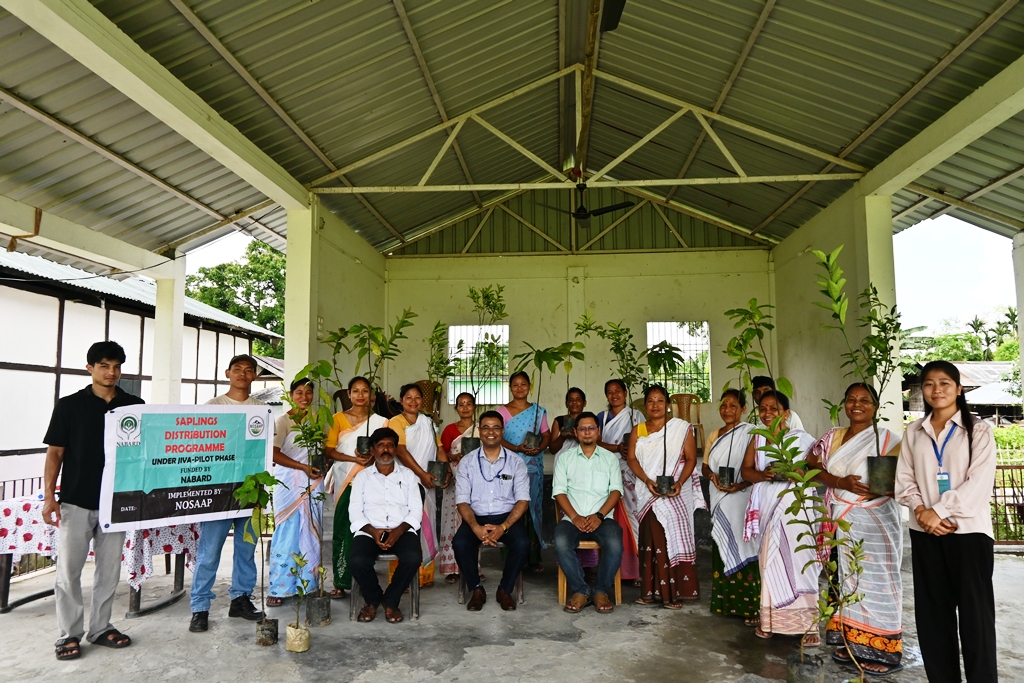
  NAMSAI : A sapling distribution programme was organised at Jona Kochari village in Namsai district on Tuesday under the NABARD-funded JIVA (Natural Farming) Project to promote sustainable and climate-resilient agricultural practices. As part of the initiative, saplings of guava, malta, mousambi, cocoa, lemon and other suitable species were distributed to project farmers for plantation along farm bunds. The programme was conducted under the project component, “Regeneration of Soils and Improving Moisture/Water – Plantation on Farm Bunds”, aimed at improving soil health, conserving moisture, preventing soil erosion, enhancing biodiversity and creating additional sources of nutrition and income for farming households. The JIVA Project, an agroecology-based initiative promoting environmentally sustainable and low-input natural farming practices, is being implemented by Namsai Organic Spices Agricultural Products Producer Company Limited (NOSAAP) as the Project Facilitating Agency. In his opening remarks, NOSAAP Chief Executive Officer Chau Athina Chauhai highlighted the project’s objectives, including restoration of soil health, promotion of natural farming, strengthening nutrition security and improving the livelihoods of tribal farmers. Addressing the gathering, NABARD Assistant General Manager (District Development) Kamal Roy informed farmers about the recently launched nationwide “Khet Bachao Abhiyan”, which will be observed throughout June. He said the campaign focuses on balanced fertiliser use, soil health management, promotion of natural and organic farming, prevention of counterfeit agricultural inputs and saturation of Kisan Credit Cards among eligible farmers. Roy noted that the JIVA Project complements the campaign’s objectives by encouraging the adoption of sustainable and nature-friendly farming practices. He further stated that the project was launched by NABARD following the successful implementation of the TRIBES/Integrated Tribal Development (WADI) Project and reflects the institution’s holistic approach towards sustainable agriculture, natural resource management and livelihood enhancement. The programme was attended by project beneficiaries and Self-Help Group (SHG) members. It concluded with the distribution of saplings and an appeal to farmers to actively participate in natural farming and environmental conservation initiatives. (DIPR)

Editorial

Paper leaks, blotched valuation, broken trust

After the fiasco of a paper leak in the National Eligibility-cum-Entrance Test (NEET) examination conducted by the National Testing Agency, the large-scale bungling of the evaluation of answer sheets of the Central Board of Secondary Education (CBSE) Class 12 exam has raised serious questions about the ability of educational authorities to conduct examinations. The On-Screen Marking (OSM) system, which was introduced with fanfare as a high-tech system, more efficient and transparent than the earlier one, turned out to be a flop, and has created anxiety and uncertainty for about 1.8 million students. The pass percentage was the lowest in recent years, and when students sought re-evaluation of their papers, it was found that the evaluation was done badly. Poor scanning left the answer scripts blurred. Some were mixed up and left unmarked. Some answer sheets were missing, and correct answers were not marked. The CBSE first tried to cover up the bungling. The student who first made the problem public faced online hostility and abuse. The Class 12 examination is very important, and the results define the careers of many students. Lakhs of students are now unsure of their results and marks. According to reports, four lakh students applied for the revaluation of their papers. It has now come to be known that the agency which was entrusted with implementing the system did not have the right credentials, and has been involved in controversies earlier. Adequate preparations were not made, and teachers were not trained before rolling out the system. The CBSE ignored warnings from teachers and others against its hasty deployment. It is now trying to defend the system. Its offices have sent unsigned messages to school principals telling them to make social media posts defending the system. IIT Madras has been asked to correct the technical problems in the OSM. There are demands for an independent investigation, and there is a case for it. On Saturday, another national examination, the Common University Entrance Test (CUET) UG 2026, faced disruption at many centres because of a technical glitch. Mismanagement of so many consequential exams has affected the students’ faith in the examination system. Hearing a petition on the NEET paper leakage, the Supreme Court said that responsibility for it must be fixed. The government told the court that the prime minister was himself monitoring the matter. Does that mean there was a lack of effective monitoring till now? It is unfortunate that the person at the top of the examination system, Union Education Minister Dharmendra Pradhan, continues to be at its helm, even though he has said that he accepted responsibility for the failures. Democracy demands accountability in deeds, not in words. (Source: DH)

Latest News, Popular News, State News

AAPSU rejects demand for ILP exemption to Mising community

ITANAGAR : The All Arunachal Pradesh Students’ Union (AAPSU) has firmly rejected the stand taken by the Assam-based Takam Mising Porin Kebang (TMPK) against the application of the Inner Line Permit (ILP) system to the Mising community in Arunachal Pradesh, asserting that the permit regime is a non-negotiable constitutional and legal safeguard applicable to all non-Arunachal Pradesh Scheduled Tribe (non-APST) individuals without exception. Responding to TMPK’s recent statement, AAPSU President Meje Taku said the Union respects the Mising community’s historical association with the region and acknowledges its longstanding cultural and social ties with several tribes of Arunachal Pradesh. However, he maintained that such ties cannot serve as grounds for exemption from a legal framework designed to protect the indigenous peoples of the state. “The Inner Line Permit system is not a matter of sentiment or community preference. It is a constitutional and statutory protection guaranteed to the indigenous peoples of Arunachal Pradesh. No community, regardless of its historical ties or ethnolinguistic affinities, can claim exemption from a rule that applies equally to all non-APST persons entering and residing in this state. AAPSU’s position is unambiguous: ILP is mandatory for all non-APST, and this is final,” Taku said. AAPSU emphasized that the ILP system is rooted in a robust constitutional and statutory framework. The Bengal Eastern Frontier Regulation, 1873, under which the permit system derives its authority, was retained to safeguard the indigenous character of the state. The Union also pointed to Article 371(H) of the Constitution, which grants special responsibilities to the Governor of Arunachal Pradesh in matters relating to law and order, reinforcing the state’s unique constitutional protections. Addressing TMPK’s reference to the Mising community’s ethnolinguistic proximity to tribes such as Nyishi, Adi, Galo, Apatani and Tagin, and its historical presence in districts including East Siang, Lower Siang, Namsai and Papum Pare, Taku drew a distinction between historical association and legal status. “We do not deny the historical and cultural bonds between the Mising people and the tribes of Arunachal Pradesh. These bonds are real and deserve acknowledgement. But historical affinity is not a legal category. The ILP framework is clear: if you are not an APST, you require an Inner Line Permit to enter and reside in this state. This is the law,” he said. The Union cautioned that granting ILP exemptions on the basis of historical or ethnolinguistic links would create a precedent capable of undermining the very purpose of the permit system, noting that many communities across the Northeast share cultural and ethnic ties with tribes of Arunachal Pradesh. “If historical ties become the criterion for ILP exemption, then the entire purpose of the permit system collapses. We cannot allow a precedent that unravels a protection that has stood for over 150 years and that every tribe of this state depends upon,” Taku said. AAPSU also appealed to individuals and organisations in both Arunachal Pradesh and Assam to exercise restraint and responsibility while commenting on the issue, warning that insensitive or inflammatory statements could strain the longstanding harmony shared by different communities. While affirming that its position carries no animosity towards the Mising community, the Union described the Misings as a proud indigenous people with a rich cultural heritage and expressed hope that all stakeholders would engage constructively within the existing legal framework. AAPSU further urged the Arunachal Pradesh government to ensure robust, impartial and uniform enforcement of the ILP system across all districts of the state.