ONLINE AGE

(Online version of the Arunachal Age newspaper)

Author name: OnlineAge

REGIONAL

‘Periphery to pole’: Mega summit focusing on Northeast growth kicks off in Shillong

SHILLONG : A mega two-day summit shining a spotlight on the growth potential of the eight northeastern states began here on Monday, in the presence of Union Minister Nitin Gadkari and chief ministers of Meghalaya and Nagaland. Before the inaugural session, Gadkari, the Union minister for road, transport and highways, also attended a CEO roundtable and inaugurated an exhibition by various companies for the summit hosted at Lariti Performing Centre here. In his address, Meghalaya Chief Secretary Shakil P Ahammed described the ‘North East India Infrastructure Summit and Exhibition 2026’, a first-of-its-kind event and a “historic moment” for the region. He underlined the growth of road and other infrastructure in Meghalaya and said the northeast, which earlier was seen as a “far away” and “peripheral place”, is now seen as a “hub for prosperity” and region with a potential for growth. Ahammed asserted that the central government’s focus on the northeast is “visible and palpable”. “The northeast is no more the periphery, but the pole of India’s future and growth,” he added. Meghalaya Chief Minister Conrad Sangma, Nagaland Chief Minister Neiphiu Rio and several other dignitaries were also present on the dais. (Source: PTI)    

REGIONAL

Infra development will be NE’s growth engine, says Gadkari; announces road project

SHILLONG : Union Minister Nitin Gadkari on Monday announced a slew of road projects for the northeast region and said infrastructure development here will serve as the “growth engine”. He was speaking at the inaugural session of the ‘North East India Infrastructure Summit and Exhibition 2026’, being hosted on June 15-16 at the Lariti Performing Centre in Shillong. Gadkari emphasised the central government’s commitment to the region’s development. “We’re committed to ensuring progress of the northeast region, equivalent to other states,” he said. Announcing a series of road infrastructure projects, the minister for road, transport and highways said, “Infrastructure development in northeast will serve as growth engine for the region.” Nagaland Chief Minister Neiphiu Rio and Meghalaya Chief Minister Conrad Sangma, along with several other dignitaries, were present on the dais. Speaking on the occasion, Sangma said, “Earlier, we didn’t dare to dream, but now we are, and that’s a confidence we wish to convey to the investors looking to invest in our region.” The mega summit aims to shine a spotlight on the growth potential of the eight northeastern states. Earlier in the day, Gadkari also attended a CEO roundtable and inaugurated an exhibition by various companies for the summit hosted at Lariti Performing Centre here. Ahead of the inaugural session, Meghalaya Chief Secretary Shakil P Ahammed described the summit as a first-of-its-kind event and a “historic moment” for the region. “The northeast is no more the periphery, but the pole of India’s future and growth,” he added. (Source: PTI)  

REGIONAL

Three youths injured in firing in Manipur’s Kangpokpi, brought to Imphal for treatment

IMPHAL : At least three persons were injured in an exchange of fire between two groups in Manipur’s Kangpokpi district on Monday, officials said. The firing took place near Leilon Vaiphei village around 6 am when armed persons belonging to two tribal communities exchanged fire in the Kuki-majority district, they said. The injured, all belonging to the Kuki community, were brought to the Regional Institute of Medical Sciences (RIMS) in Imphal for treatment by security forces. They were identified as Genlenmang Vaiphei (18), Lunliandaw Vaiphei (20) and Paogou Lal (18), officials said. Meanwhile, security has been tightened at the hospital complex with additional deployment of central forces. (Source: PTI)    

REGIONAL

Tripura mulling handing over some schools to private bodies to improve education: CM

AGARTALA : Tripura Chief Minister Manik Saha on Monday said the state government is considering amalgamating some schools and handing them over to reputed organisations such as the Ramakrishna Mission to improve the quality of education. The NITI Aayog, in a recent report, pointed to a shortage of more than 8,000 teachers in government-run schools in the northeastern state. “We are planning to merge some schools and entrust their management to organisations or societies like the Ramakrishna Mission so that students receive quality education,” Saha told reporters. He said many students, particularly in tribal areas, prefer English-medium institutions, leading to lower enrolment in government-run schools. “We are trying to create an environment in government schools comparable to that of private institutions to attract more students. The government is spending more than private schools,” he said. Most government schools in Tripura are Bengali-medium, while a majority of private schools offer English-medium education. In 2021, the state government converted 125 schools into Vidyajyoti Schools under the CBSE curriculum to improve educational standards. The chief minister also said the dropout rate in the state has been steadily declining and highlighted the government’s efforts to encourage girls to continue their education. Describing child marriage as a major social concern, Saha said the government has launched several initiatives to keep girls in school and help them become self-reliant. As part of those efforts, the state has expanded its bicycle distribution programme for class 9 girls by removing the family income ceiling, making more students eligible for the benefit, he said. Saha said around 41,800 class 9 girl students across Tripura are being provided free bicycles during the current financial year. (Source: PTI)    

REGIONAL

Assam: 10 drug traffickers nabbed, contraband items seized

DIBRUGARH : A total of 10 suspected drug traffickers have been arrested and several incriminating items, including contraband goods, seized in a major operation in Dibrugarh district of Assam, police said on Monday. According to Dibrugarh Senior Superintendent of Police Gaurav Abhijit Dilip, heroin, cash, vehicles, mobile phone and gold have been seized in the operation carried out on Sunday in Harijan Colony in Kalibari area near Dibrugarh Town railway station. “Acting on a tip-off, multiple police teams launched coordinated raids at several abandoned railway colony quarters and other locations in a crackdown on an organised drug trafficking network operating in the heart of the town,” he added. A total of 10 people have been arrested and are being interrogated, while several additional names have surfaced during questioning and efforts are underway to apprehend others allegedly linked to the network, the officer said. “During the operation, police seized 79.55 gm of suspected heroin concealed in eight containers. Police also seized a mobile handset along with a SIM card,” he added. A large number of syringes allegedly used for drug consumption and distribution were also seized, the SP said. “These included 40 packets containing six insulin syringes each, taking the total to 240 syringes, besides six packets containing 10 high-tech insulin syringes each, amounting to another 60 syringes,” he added. Dilip said police further seized cash amounting to Rs 4,92,710, suspected to be proceeds from the illegal drug trade. “Four vehicles were also confiscated during the operation. In addition, police seized several ornaments suspected to have been purchased from the proceeds of narcotics trafficking. The seized valuables include two pairs of gold earrings, a gold chain, a gold finger ring and a 5 gm silver coin,” he added. Investigators are examining the source of the seized narcotics, the financial transactions involved and the wider distribution network operating in the region, the SP said. “The operation is being viewed as one of the most significant anti-drug crackdowns in Dibrugarh in recent years. An organised drug syndicate had allegedly been operating from abandoned railway quarters near the old railway station for a prolonged period,” he added. While the operation resulted in major seizures and multiple arrests, the alleged kingpin of the network is reported to have escaped and remains at large, Dilip said. “A letter has already been issued to DRM Tinsukia for eviction of illegally settled people on railway land,” he added. Dilip said the investigation is continuing, and further arrests and seizures are expected in the coming days as police intensify their crackdown on drug trafficking in the district. (Source: PTI)    

Editorial

Abuse of process, justice at a price

By quashing the proceedings against Newsclick, the Delhi High Court ended the persistent harassment of the media house by the Enforcement Directorate (ED) and the Delhi Police’s Economic Offences Wing (EOW). Over six years, the news portal was subjected to a series of hostile actions, including raids, the arrest of its founder-editor Prabir Purkayastha, and cases under the Unlawful Activities [Prevention] Act (UAPA) and the Prevention of Money Laundering Act (PMLA). The court’s language is striking. Stating that the case would entail a “gross abuse of the process of law,” it noted “only bald assertions that did not even remotely point” to an offence. Justice Neena Bansal Krishna quashed both the cases. The ED and the Delhi Police EOW are set to appeal the High Court judgment. The Court’s ruling and observations are a serious indictment of the two agencies. In 2024, when the Supreme Court quashed Purkayastha’s arrest under the PMLA, it criticised the processes followed in the arrest: “…nothing but a clandestine attempt to circumvent the due process of law.” Purkayastha had already spent over seven months in jail by then. The High Court has now expressed similar views about the processes followed in the two cases. It said: “…there is not a whisper of any incriminating allegation which would suggest the commission of the offence punishable under the PMLA.” It took apart every charge raised by the agencies against the news portal and found no illegality or wrongdoing that attracted any provision of the law invoked. Questions about the authenticity of the charges were raised when Newsclick’s premises were raided, and its employees were interrogated. Condemned by the Editors Guild of India and the journalist community, the action was seen as a response to the independent journalism practised by the media house. This is not the first time cases filed by investigative agencies against critics of the government and dissenters under draconian laws have collapsed in court. Every charge has now been disproved, but establishing innocence involved pain, hardship, and losses, and that itself has become punishment. Agencies can go after any individual or organisation under the most stringent of laws, with little or no evidence of wrongdoing, as the court demonstrated in this case. The burden, still, falls on the accused. Notably, the court said the action against Newsclick was not only mala fide but also an attack on the free press. It also violated constitutional rights. (Source: DH)

Latest News, Popular News, State News

PPA opposes APFRA implementation, seeks special assembly session

ITANAGAR : The People’s Party of Arunachal (PPA) has strongly opposed the implementation of the Arunachal Pradesh Freedom of Religion Act (APRA), demanding that the state government immediately convene a special assembly session to discuss its relevance. PPA president Nabam Vivek on Saturday disclosed that the party passed a formal resolution against the law during its state executive meeting on June 11, which was attended by state office bearers and heads of various frontal wings. A high-powered committee headed by retired justice BP Katakey submitted the draft rules to the state government on June 8, nearly 48 years after the legislation was enacted. The Act, passed in 1978, prohibits religious conversion through force, fraud, or inducement, but remained unimplemented due to the absence of operational rules. Vivek questioned the government’s intent behind collecting religious demographic data under the draft rules of the act. “What will the government do with data regarding a citizen’s religion? Whether an individual chooses to practice Sikhism, Buddhism, Christianity, or Hinduism, keeping a record of this information serves no governance purpose,” Vivek said. The act aims to regulate religious conversions. However, the PPA chief argued that the law has lost all relevance in 2026 and warned that its enforcement could severely disrupt the long-standing communal harmony, tribal identity, and peace in the state. “This law will not save tribal identity, nor will it successfully stop anyone from choosing their faith. Instead, enforcing it creates a high risk of communal disharmony, leading to potential conflicts within families and tribes on religious lines,” he said. Highlighting Arunachal Pradesh’s historic reputation as a peaceful state, Vivek drew a contrast with the rest of the Northeast region, noting that while other states historically battled terrorism, Arunachal Pradesh remained largely peaceful. “Arunachal has always been a peace-loving state, and we intend to keep it that way. The PPA opposes this act from the bottom of our hearts and will challenge it through every democratic and legislative process available,” Vivek added, while urging the state government to halt the implementation of the act in the wider public interest. Meanwhile, the Human Rights of Arunachal (HRA) has urged the state government and the ruling Bharatiya Janata Party (BJP) to reconsider and reject the recommendations of the High-Power Committee concerning the implementation of the APFRA, 1978. In a memorandum submitted to Chief Minister Pema Khandu on Sunday, HRA expressed deep concern about the potential fallout if the Act is enforced and explicitly urged the state government not to implement APFRA in Arunachal Pradesh. Highlighting the state’s long-standing tradition of peaceful coexistence among various faiths and communities, the rights body cautioned that enforcing the decades-old Act could severely disrupt the prevailing peace, brotherhood, and communal harmony. It further contended that the implementation of APFRA yields limited public or administrative benefit. “In our view, the implementation of APFRA is unlikely to bring any significant benefit either to the people of Arunachal Pradesh or to the state government. Instead, it may create misunderstanding and division among communities,” it said in the memorandum. Critiquing the High-Power Committee’s recent findings, the organisation claimed that the recommendations fail to adequately represent the true aspirations and concerns of a vast section of the state’s population, warning of unintended consequences for Arunachal’s social fabric. (Source: PTI)

Latest News, Popular News, State News

Arunachal achieves milestone of 20 GI-registered products

ITANAGAR : Arunachal Pradesh has achieved a significant milestone in preserving and promoting its cultural heritage, traditional knowledge, indigenous crafts and unique agricultural products through Geographical Indication (GI) registration. The State now has 20 registered GI products, reflecting the diversity and distinctiveness of its tribal communities and traditional practices. The journey began in 2014-15 with the registration of Arunachal Orange and Idu Mishmi Textile, the State’s first two GI-tagged products. Recognising the potential of indigenous products, the National Bank for Agriculture and Rural Development (NABARD) subsequently supported the registration of several traditional agricultural products, handloom items, handicrafts, foods and beverages from different tribes and regions of the State. With NABARD’s support, 18 additional products secured GI registration from 2020-21 onwards. These include Khamti Rice, Yak Churpi, Tangsa Textile, Handmade Carpet, Wangcho Wooden Craft, Adi Kekir (Ginger), Apatani Textile, Monpa Textile, Nyishi Textile, Monpa Handmade Paper, Adi Textile, Singpho Tea, Galo Textile, Adi Apong, Dao (Traditional Sword), Angnyat Millet, Marua Apo and Tai Khamti Textile. A Geographical Indication tag is an intellectual property right that identifies a product as originating from a specific geographical region and possessing qualities, reputation or characteristics unique to that area. GI registration helps protect traditional knowledge, prevent misuse of product names, enhance product credibility and create opportunities for better market access and premium pricing. For a culturally rich and diverse State like Arunachal Pradesh, GI registration serves as an important tool for safeguarding tribal heritage, preserving traditional skills and promoting indigenous products in national and international markets. It also contributes to livelihood enhancement, entrepreneurship development, tourism promotion and sustainable rural development. NABARD’s support extends beyond the registration process. The institution is facilitating post-GI interventions such as registration of authorised users, capacity building of producers and artisans, branding, packaging, quality standardisation and market linkage initiatives. The objective is to ensure that GI recognition translates into enhanced market opportunities, higher incomes and sustainable livelihood benefits for local communities. Several other unique products from different districts of Arunachal Pradesh are currently in the pipeline for GI registration. The achievement of 20 GI registrations marks a major step towards preserving the state’s rich cultural legacy while creating sustainable economic opportunities for farmers, artisans, weavers and tribal communities.      

Latest News, Popular News, State News

CRO seeks central intervention over frontier highway tendering concerns

Staff Reporter ITANAGAR : The Consumer Rights Organisation (CRO), Arunachal Pradesh, has submitted a memorandum to the Union Ministry of Road Transport and Highways (MoRTH), raising concerns over the implementation of the Lada-Sarli section of National Highway-913, popularly known as the Frontier Highway Project. Addressing a press conference at the Arunachal Press Club here on Sunday, CRO State President Achu Bagang said the organisation fully supports the Government of India’s vision of strengthening connectivity and infrastructure in border areas and acknowledged the strategic importance of the Frontier Highway Project for socio-economic development, national security, tourism, employment generation and infrastructure growth in frontier regions. However, Bagang alleged that issues relating to transparency, public participation and administrative accountability have surfaced during the execution of the project. He claimed that adequate public consultation and consensus-building had not been ensured and alleged that public grievances were not being effectively addressed, leading to growing dissatisfaction among local communities. According to Bagang, the absence of transparent institutional dialogue and accountability mechanisms has contributed to public unrest in areas along the proposed highway corridor, particularly in the Lada-Sarli sector and adjoining regions. A key concern highlighted in the memorandum relates to the ongoing tendering process. Bagang claimed that some contractors had reportedly submitted bids ranging between 35 and 49 per cent below the estimated project cost. Referring to established engineering practices and Central Public Works Department norms, he said abnormally low bids could raise concerns regarding execution quality, contractor capability, financial viability and long-term accountability. He further alleged that such bidding practices may compromise the durability, safety standards and sustainability of the strategically significant highway project. The lack of public clarification from the concerned authorities, he said, has fuelled suspicions of irregularities and possible corruption. The organisation has sought urgent intervention from the Centre and urged the Ministry to establish transparent communication mechanisms involving local communities and stakeholders, conduct an independent inquiry into the alleged irregularities, review the feasibility of unusually low bids and strengthen monitoring and accountability measures. The CRO also called for stakeholder consultations involving local representatives, affected citizens, civil society organisations and government agencies to restore public confidence and ensure smooth implementation of the project. In its memorandum, the organisation reiterated its support for national development and strategic infrastructure expansion while emphasising the need to safeguard the rights, interests and aspirations of communities affected by the project. Copies of the memorandum were submitted to the Union Minister for Parliamentary Affairs and Minority Affairs, Chief Minister Pema Khandu, the Chief Secretary, the Public Works Department Commissioner, the Regional Officer of MoRTH, concerned Deputy Commissioners and other relevant authorities, Bagang informed.      

Latest News, Popular News, State News

Mebo, Temi-Namphing sign sister constituency pact to promote tourism

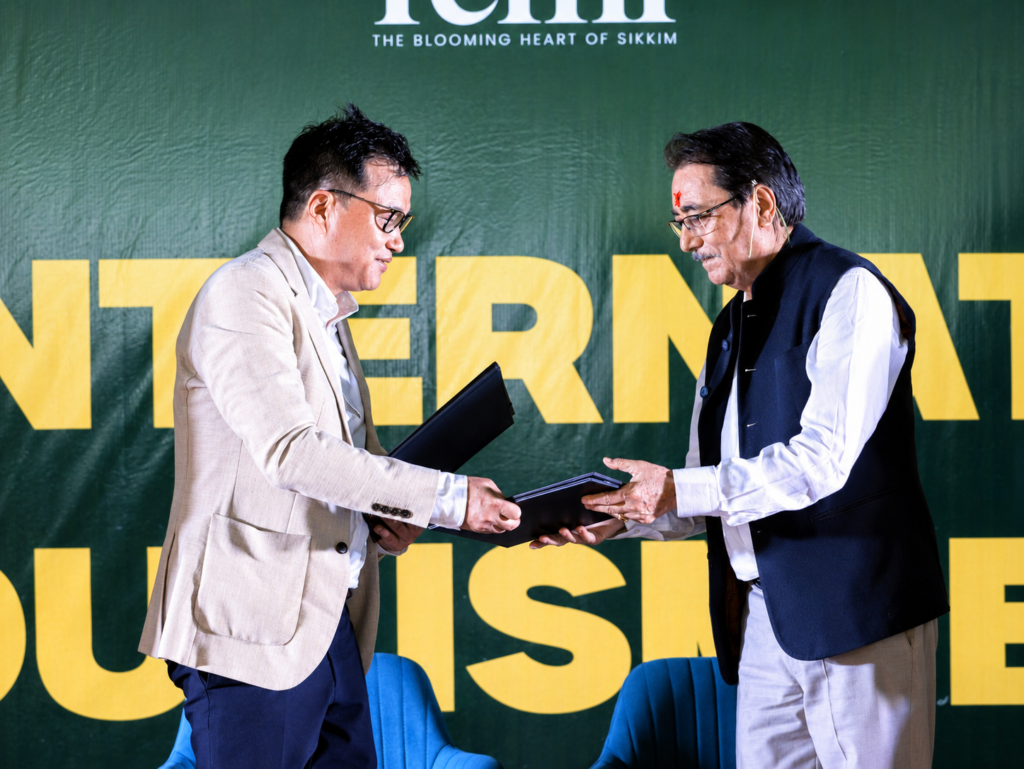
TEMI :  In a bid to strengthen inter-state cooperation and promote sustainable tourism, the Temi-Namphing Assembly Constituency of Sikkim and the Mebo Assembly Constituency of Arunachal Pradesh have signed a Memorandum of Understanding (MoU) to establish themselves as Sister Constituencies for a period of three years. The agreement was signed by Temi-Namphing MLA Bedu Singh Panth and Mebo MLA Oken Tayeng on the sidelines of the 1st International Agro-Tourism Festival 2026 held at Temi in South Sikkim. The partnership aims to foster quality tourism, cultural exchange, knowledge sharing and sustainable tourism practices between the two regions while creating opportunities for economic growth and stronger people-to-people ties. Tayeng, who attended the festival along with a delegation from the 39-Mebo Assembly Constituency, described the agreement as a significant step towards enhancing cooperation between the two northeastern states. He said the partnership would pave the way for greater collaboration in tourism development, cultural promotion and community-driven initiatives, while enabling both regions to showcase their unique heritage, natural landscapes and traditional knowledge systems. The Arunachal legislator also lauded Sikkim’s tourism model, saying the state had set an example in balancing development with environmental conservation through responsible tourism practices. There was much to learn from Sikkim’s experience in eco-tourism, community participation and destination management, he said. Tayeng further said stronger cooperation between hill and border regions could help develop integrated tourism circuits, improve visitor experiences and generate livelihood opportunities for local youth. The International Agro-Tourism Festival was inaugurated by Sikkim Legislative Assembly Deputy Speaker Raj Kumari Thapa and attended by Gelephu Mindfulness City Mayor Tshering Norbu from Bhutan and Jhapa Mayor Manoj Parchai from Nepal. Organisers said the Sister Constituency initiative would facilitate the exchange of best practices in tourism development, agro-tourism, cultural promotion and community-based enterprises, further strengthening ties between Sikkim and Arunachal Pradesh.